Vietnam’s coastline has turned into one vast concrete competition facing the sea. Cloned resorts, swimming pools overflowing with vanity and boredom, tropical luxury mass-produced as if Da Nang, Nha Trang and Phu Quoc had all signed some global pact of standardisation.
If not with the devil.
And then there is Villa Louise.
A place that seems to have deliberately missed the turn toward seaside commodification.
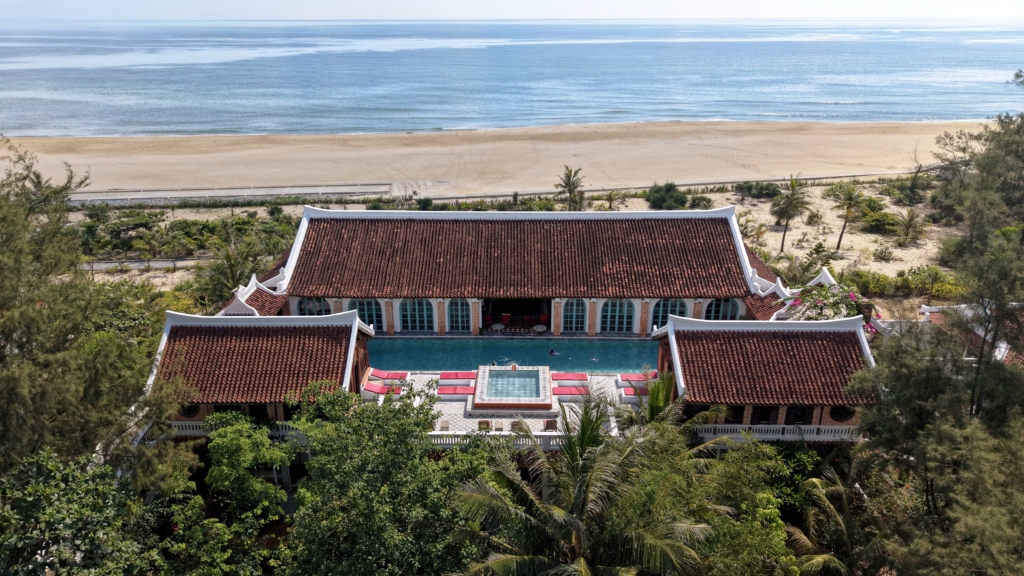
On Phu Thuan Beach, some twenty kilometres from Hué, stranded on this fragile tongue of land between the Tam Giang Lagoon and the East Sea, Villa Louise looks like something utterly improbable:
heritage washed up on the sand.
It all begins with one man’s gesture.
An obsession bordering on irreverence.
The owner bought, dismantled and rebuilt facing the waves real traditional wooden houses from Hué, alongside fragments of colonial architecture scavenged here and there, elsewhere doomed to disappear.
Old timber against salted winds.
An architectural folly grafted onto sand.
And against all odds, against wind and tide, it stands.
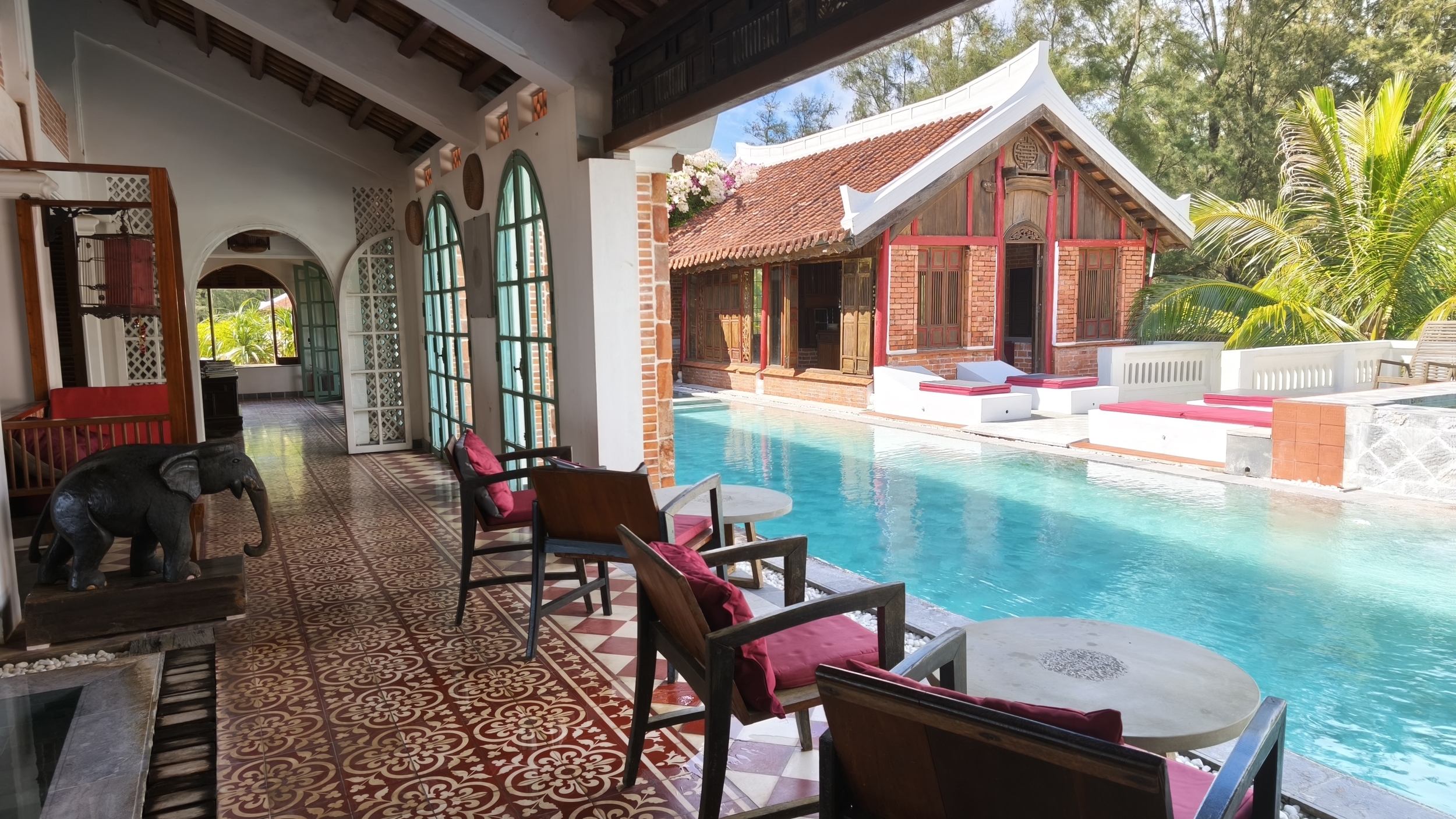
The magnificence of excess
Villa Louise is an architectural folly. The owner did not choose the easy durability of concrete; he accepted the idea that his creation would sweat, suffer and grow old alongside the elements.
What makes this ambition beautiful is its complete financial uselessness. Any tourism consultant would have screamed economic suicide.
And yet, that is precisely where its nobility lies.
This is vision triumphing over the Excel spreadsheet.
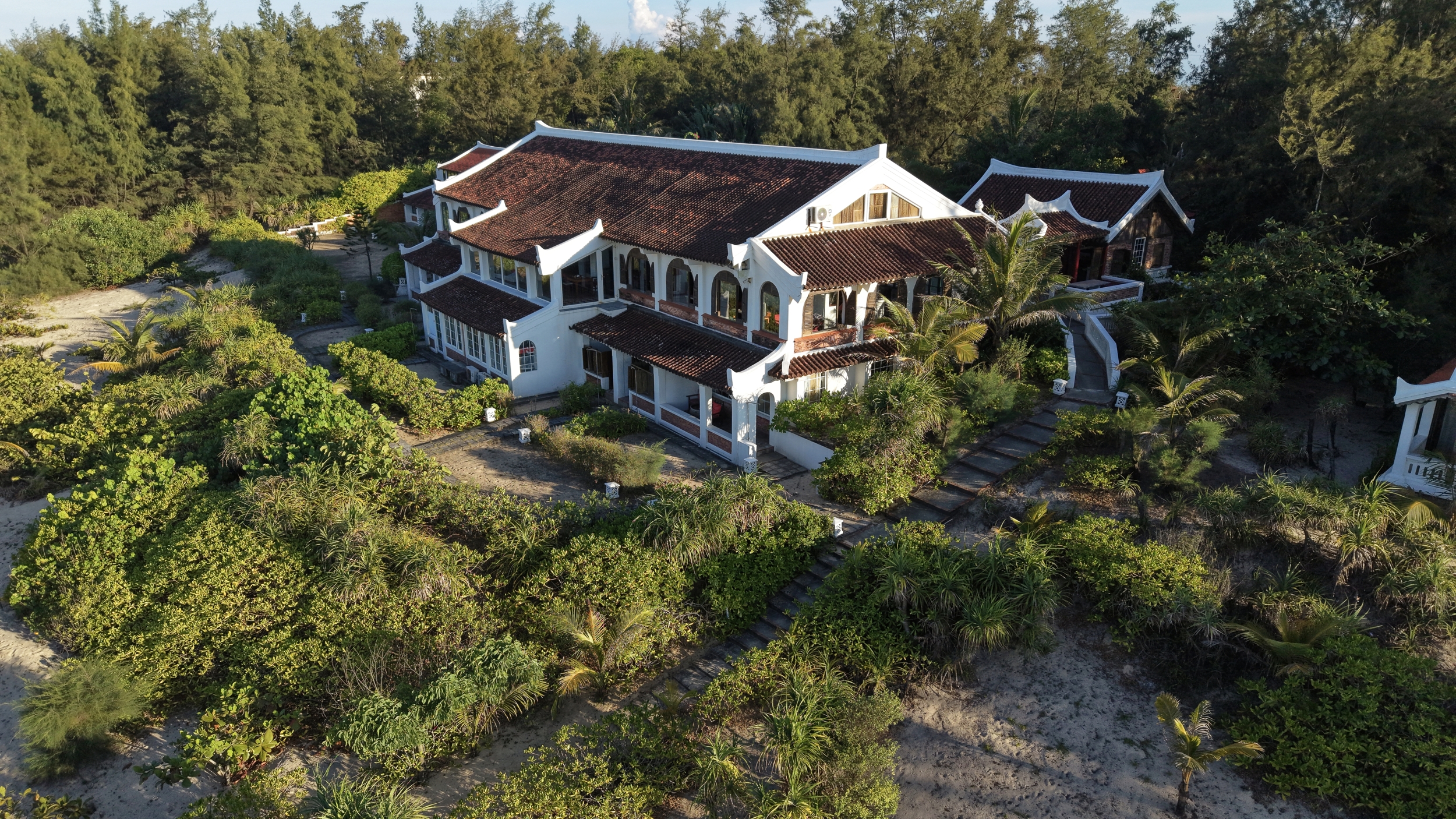
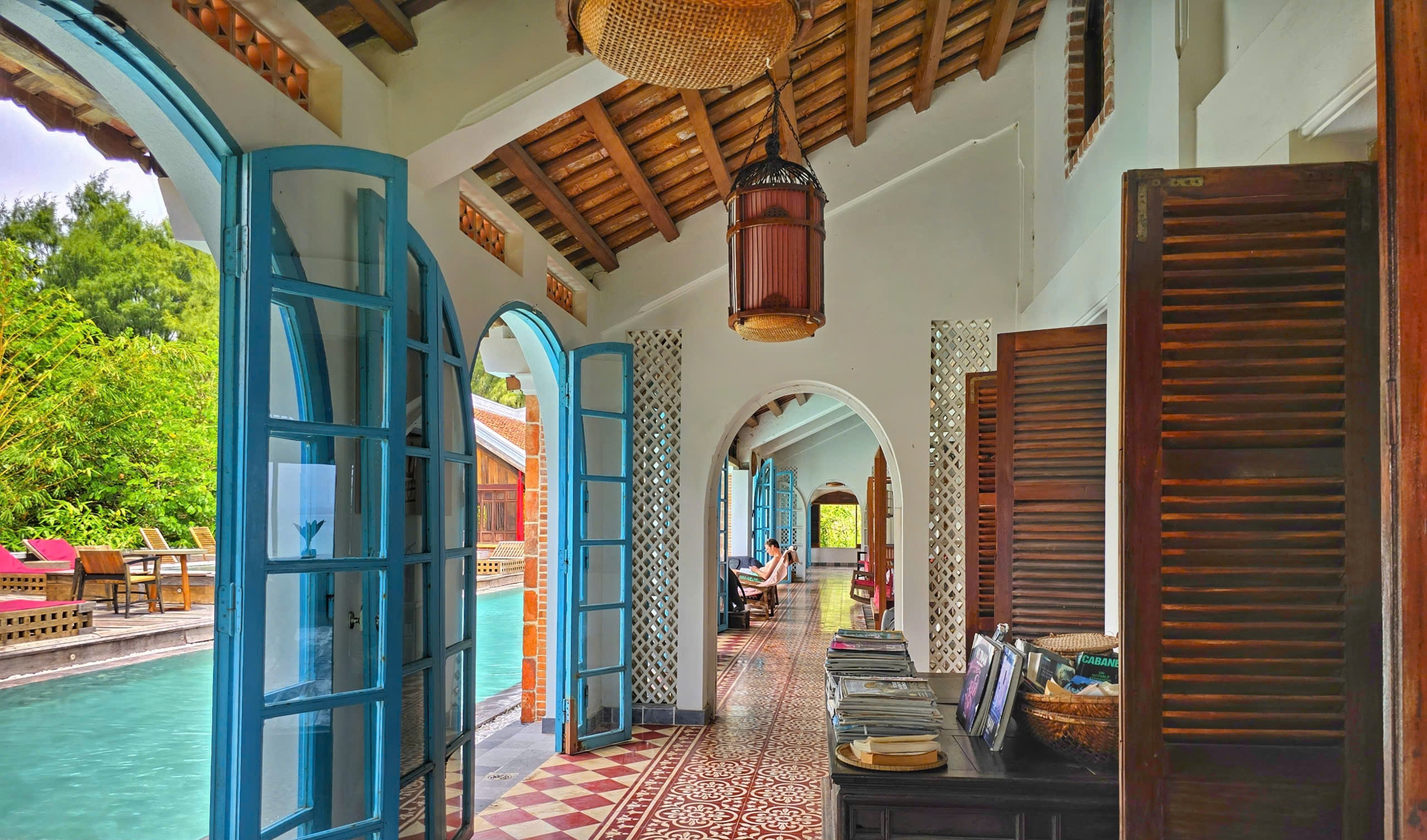
Michel did not build a hotel. He materialised his own Indochinese vertigo on an empty beach. A bubble of pride and nostalgia, a monumental whim imposing its own rhythm upon travellers.
You are not staying in a resort.
You are inhabiting someone else’s dream.
And that is why the place has this singular vibration, this face, this presence that the money of large hotel groups will never be able to buy.
Villa Louise flips international luxury the bird by placing its old timber facing the horizon and looking down upon the commodification of the coastline with a kind of distinctly Hué-like hauteur.
The place has wrinkles.
Salt, sea moisture and sand-laden winds gnaw at the varnish and weather the wood. It is imperfect, nostalgic, and precisely for that reason, it has class.
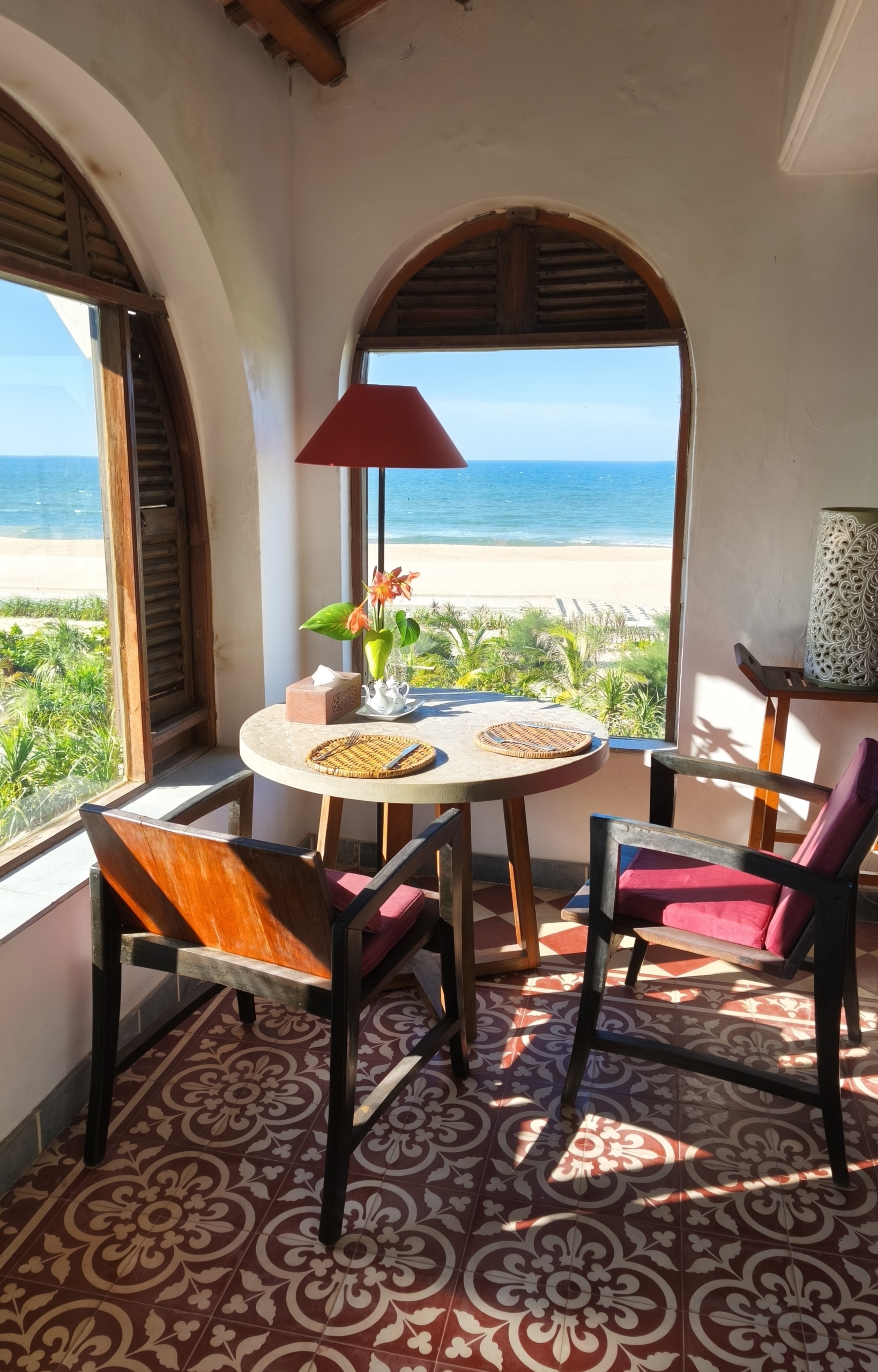
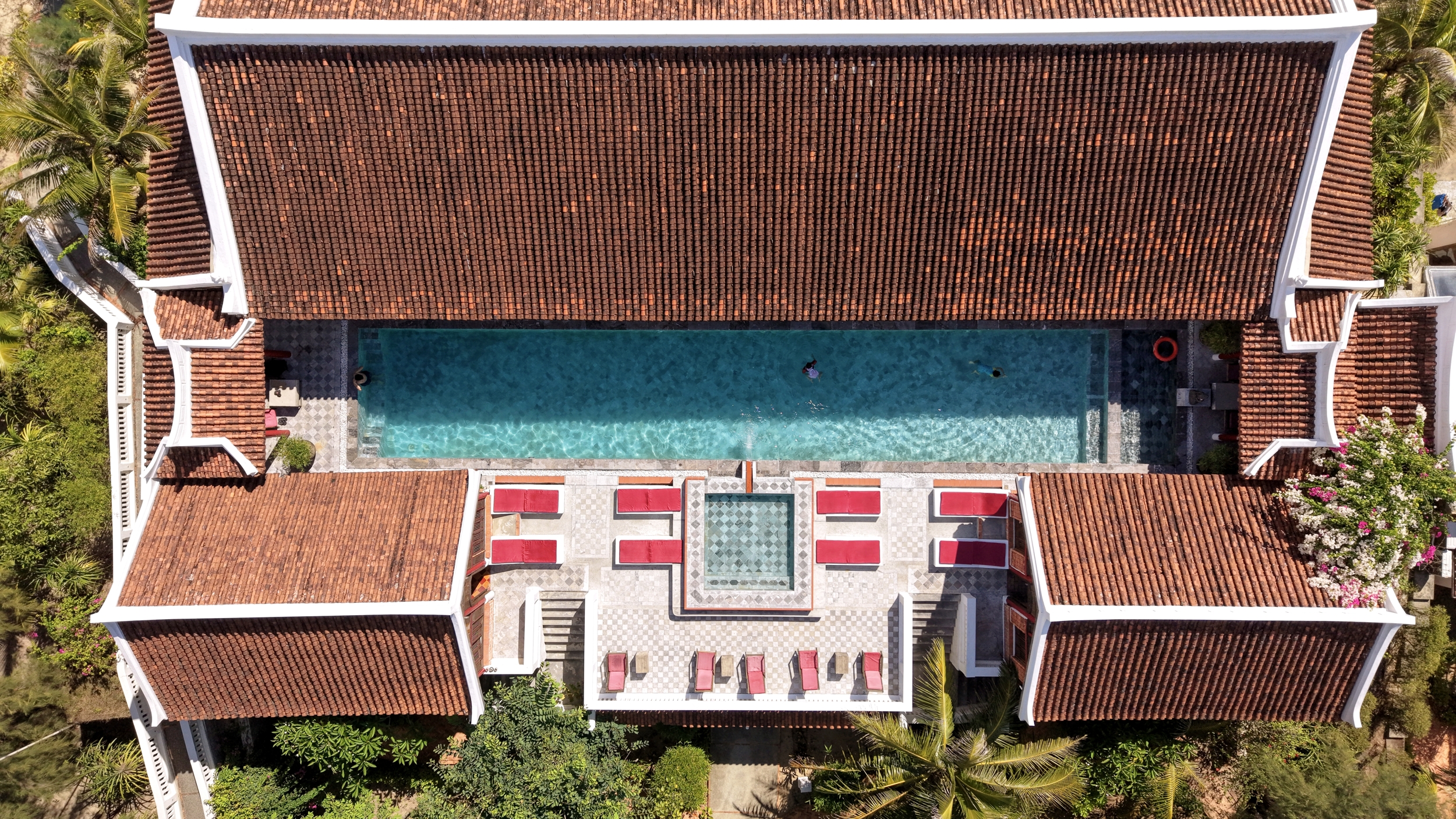
The beach is only here to carry the plates
The real main course is this body of wood and brick refusing to bend before the ocean.
Raw, often stubborn, with winds that crack hard and waves that hit even harder.
And sometimes take everything with them.
Villa Louise embraces this solitude.
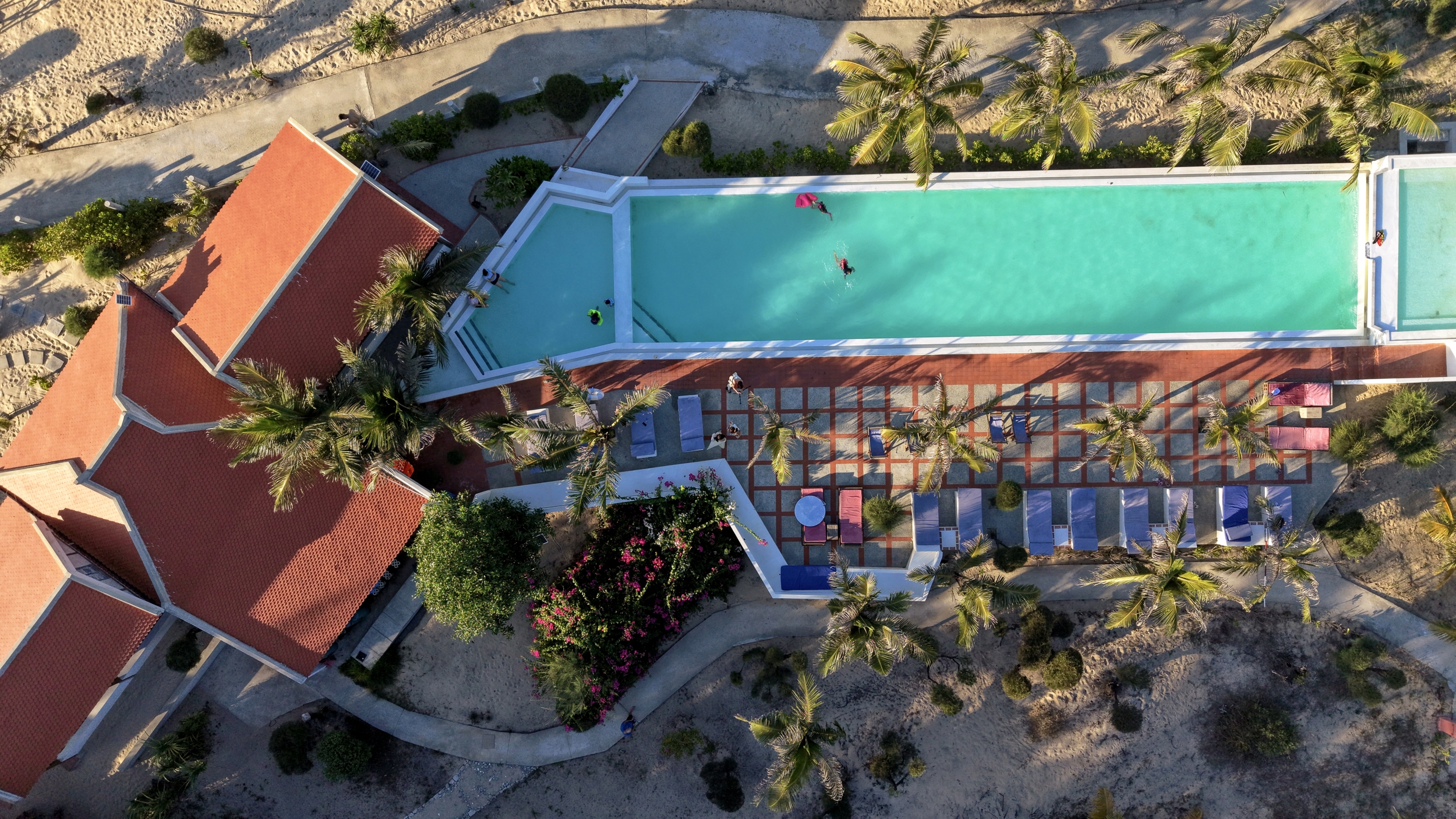
There is no privatised beachfront lined with obedient rows of sun loungers and screaming jet skis.
Instead, there are kilometres of grey-white sand, almost deserted, shared with local fishermen dragging patched-up boats toward the sea.
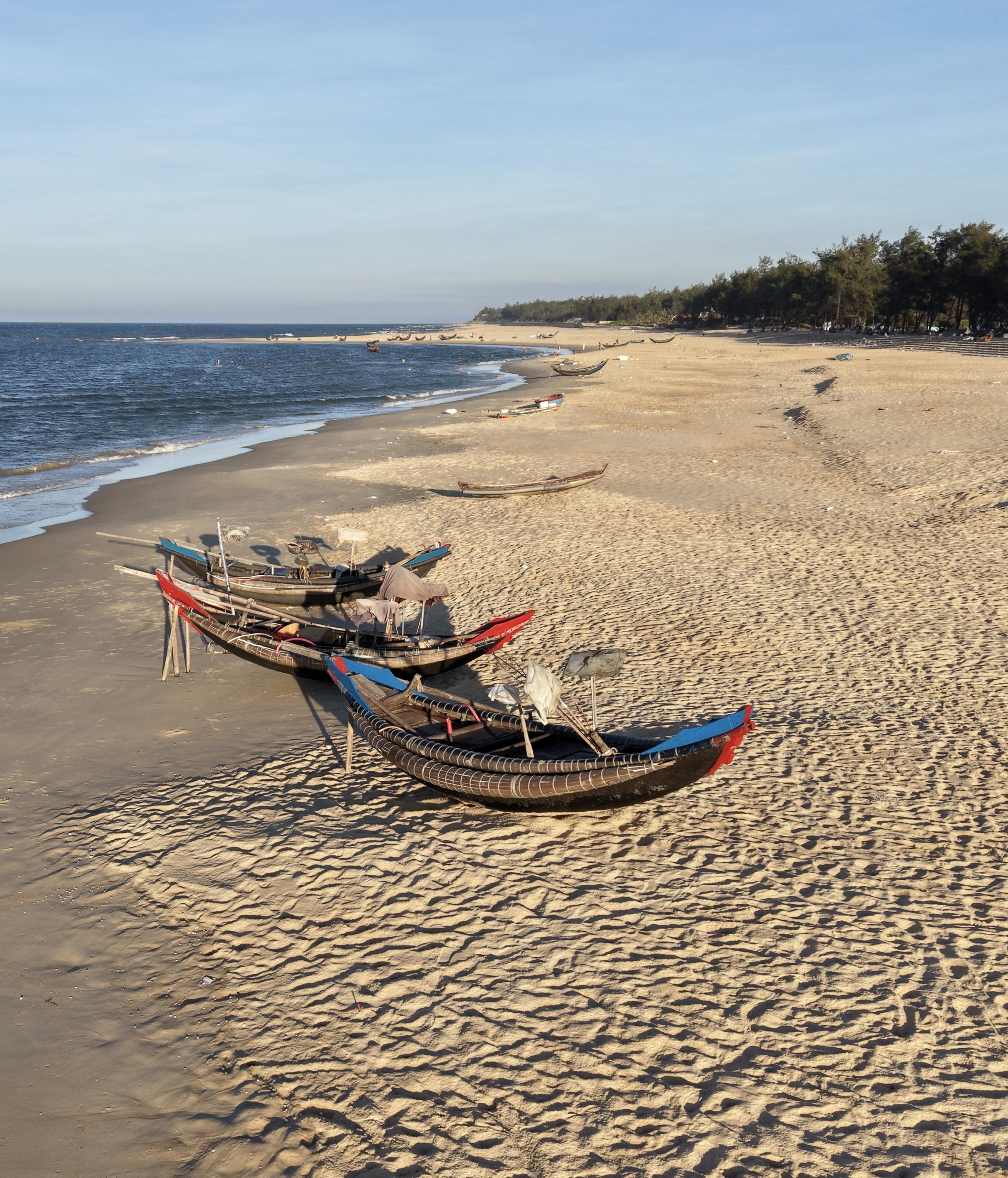
In any standard resort, the beach is the product. It gets raked, combed, styled and dressed up with juice bars and lounge beds designed to sell curated idleness.
At Villa Louise, the sea is almost an excuse.
Or more precisely, a force of contrast.
Take the beach away and replace it with rice paddies or a bamboo forest, and the proposition would remain almost entirely intact.
The sea is only there to answer the wood, the bricks, the stone and the terracotta roof tiles.
Coming to Villa Louise for the beach is like going to the theatre to admire the stage curtain.
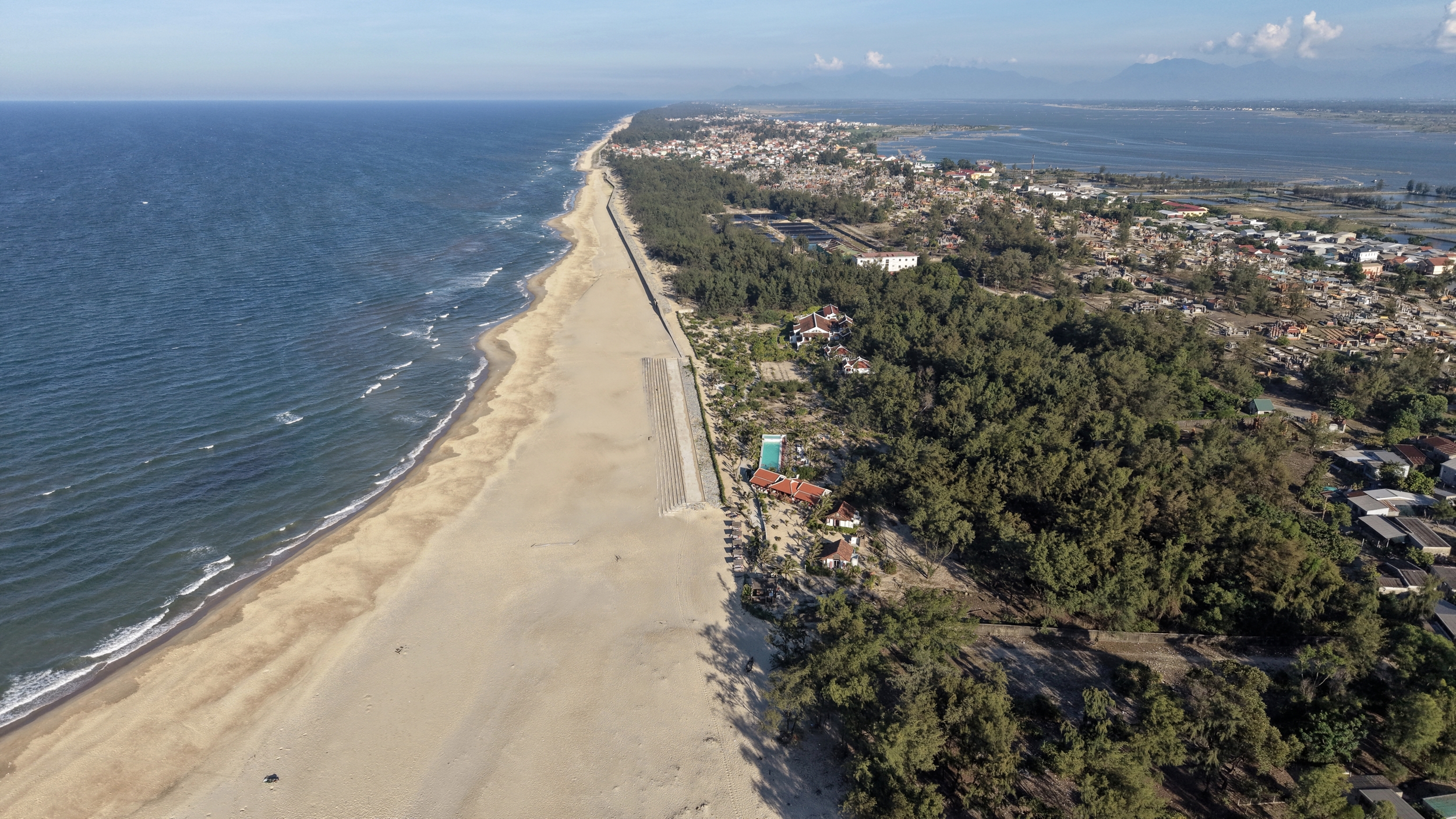
Villa Louise does not sell you the sea. It takes you antiquing.
While most resorts sell you a beach, Villa Louise invites you to rummage through the drawers of Hué.
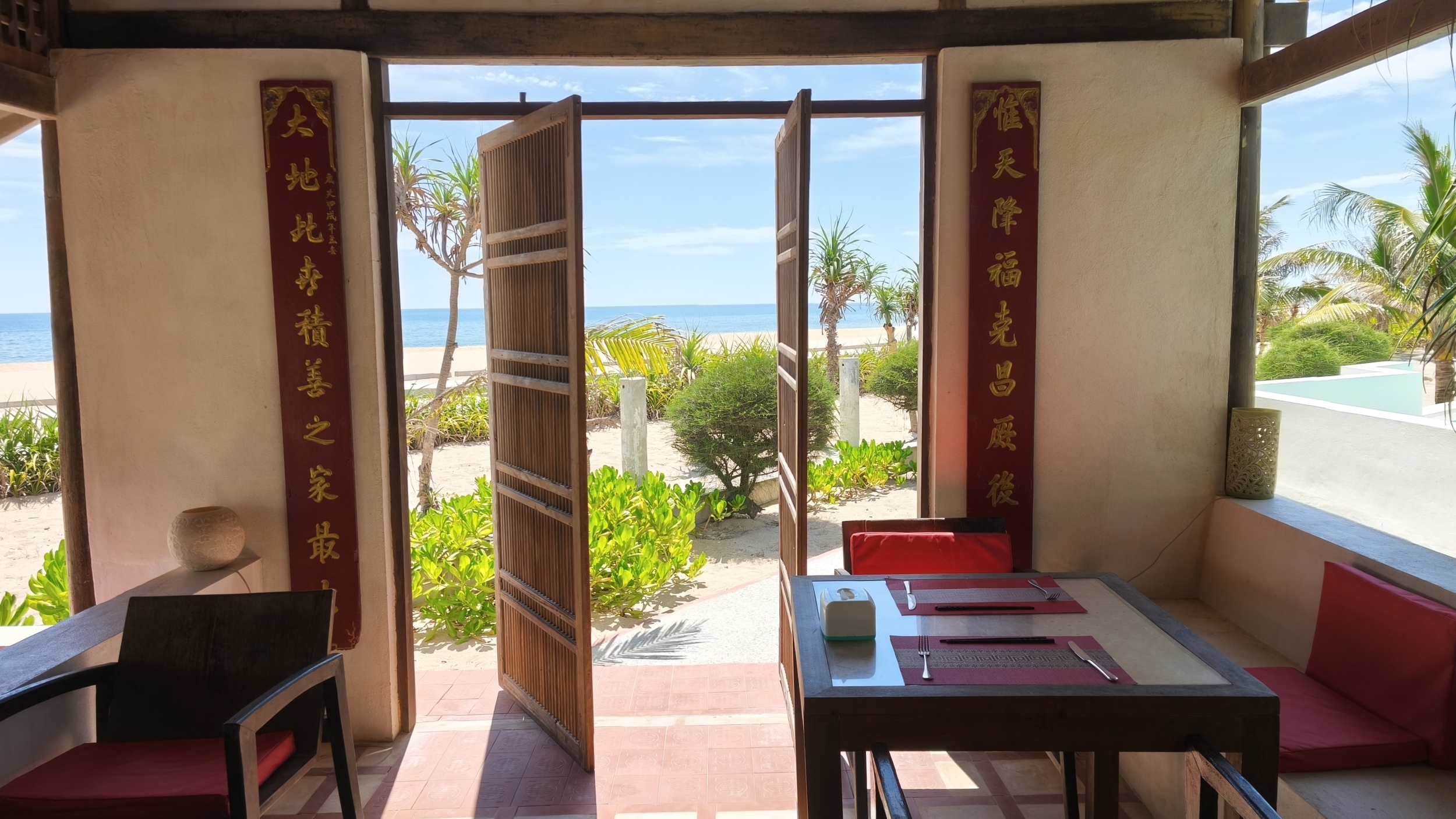
Villa Louise is a political and aesthetic manifesto for the survival of Hué craftsmanship, thrown in the face of an era obsessed with prefabrication, melamine furniture and factory-aged vintage décor.
This is not some dusty museum.
It is a living conservatory of Hué craftsmanship at its finest.
By rescuing these structures, the project restored dignity to the last guardians of the temple.
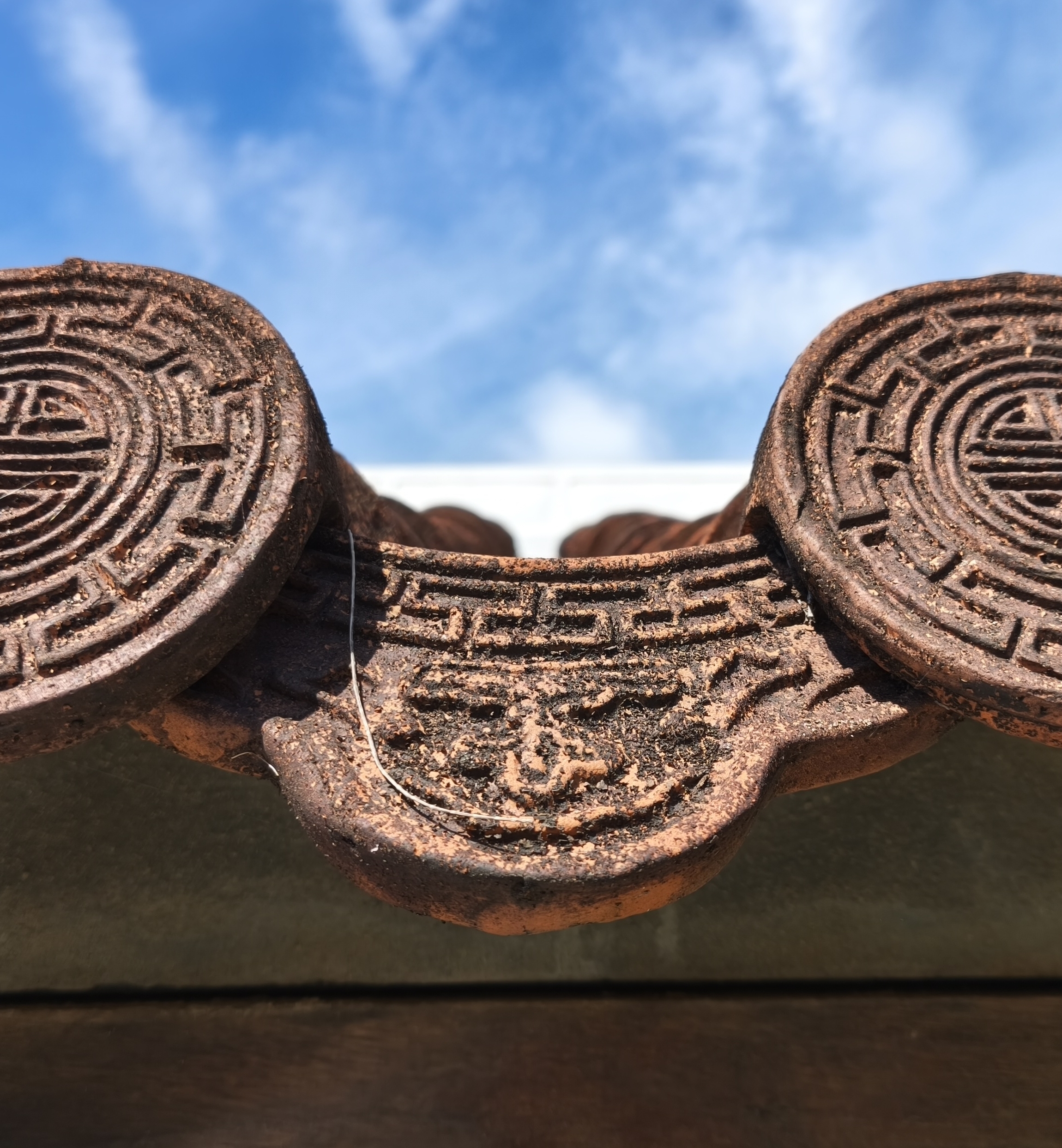
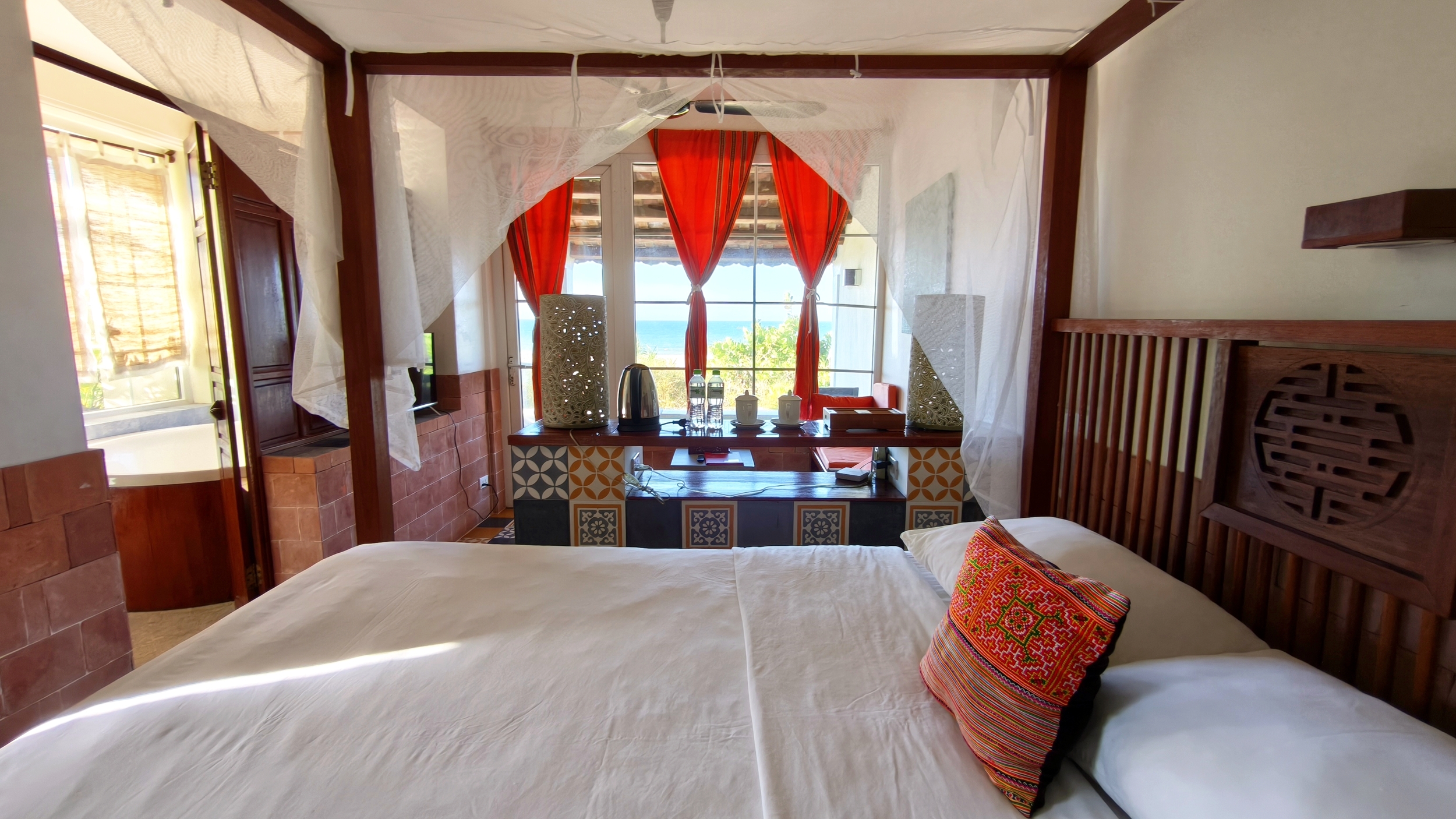
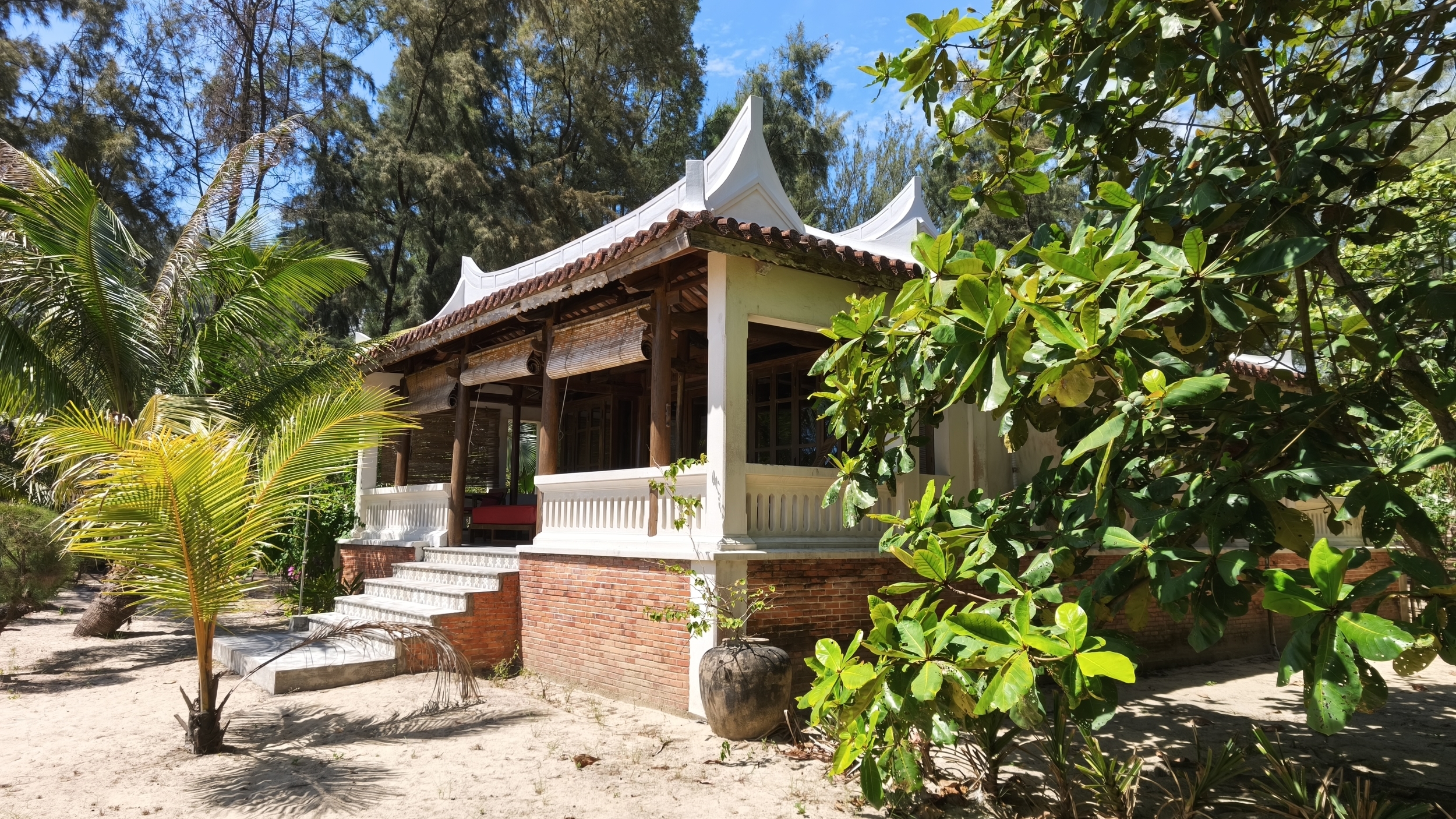
We are a long way from the coastal resort that slaps on some international “tropical chic” aesthetic with three wholesale rattan baskets and two lanterns pretending to feel local.
Villa Louise seems to be chasing something more sincere in atmosphere: restraint, sobriety, craftsmanship,natural materials, a taste for quiet details over spectacle.
Do not spend your days staring at the liquid horizon.
Look at the ground, the walls, the angles.
Touch.
Run your hands across surfaces.
Weigh things in your palm.
Enjoy deciphering the origin of a cracked ceramic tile, estimating the age of an ironwood pillar, guessing what purpose some tired old chest might once have served.
Villa Louise is the triumph of the antique hunter over the beach lounger.
Without public humiliation.
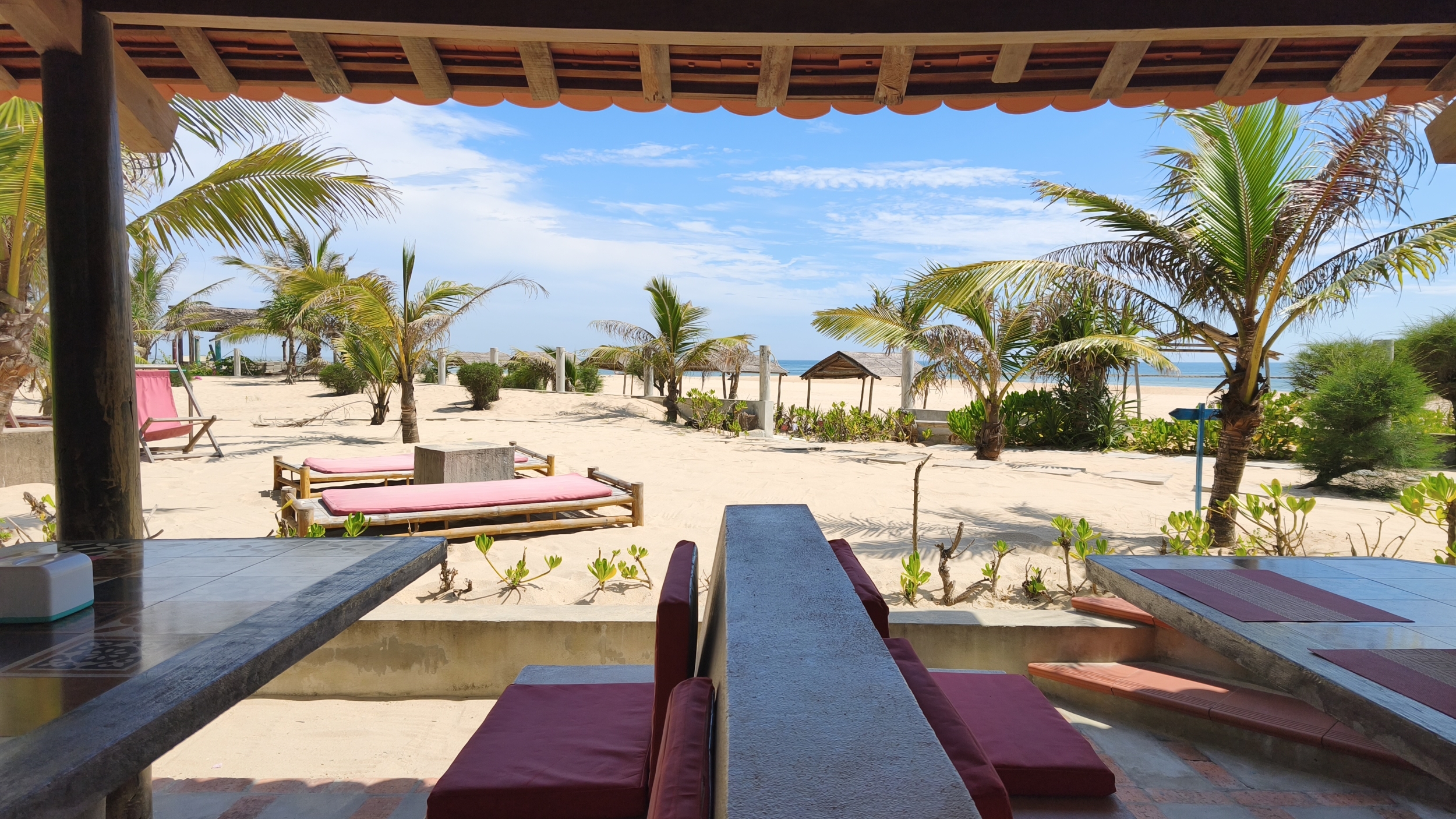
The beach lover still gets compensation in the end: at the Beach Bar.
After spending the entire day rummaging through Hué, one finally allows oneself a certain form of laziness.