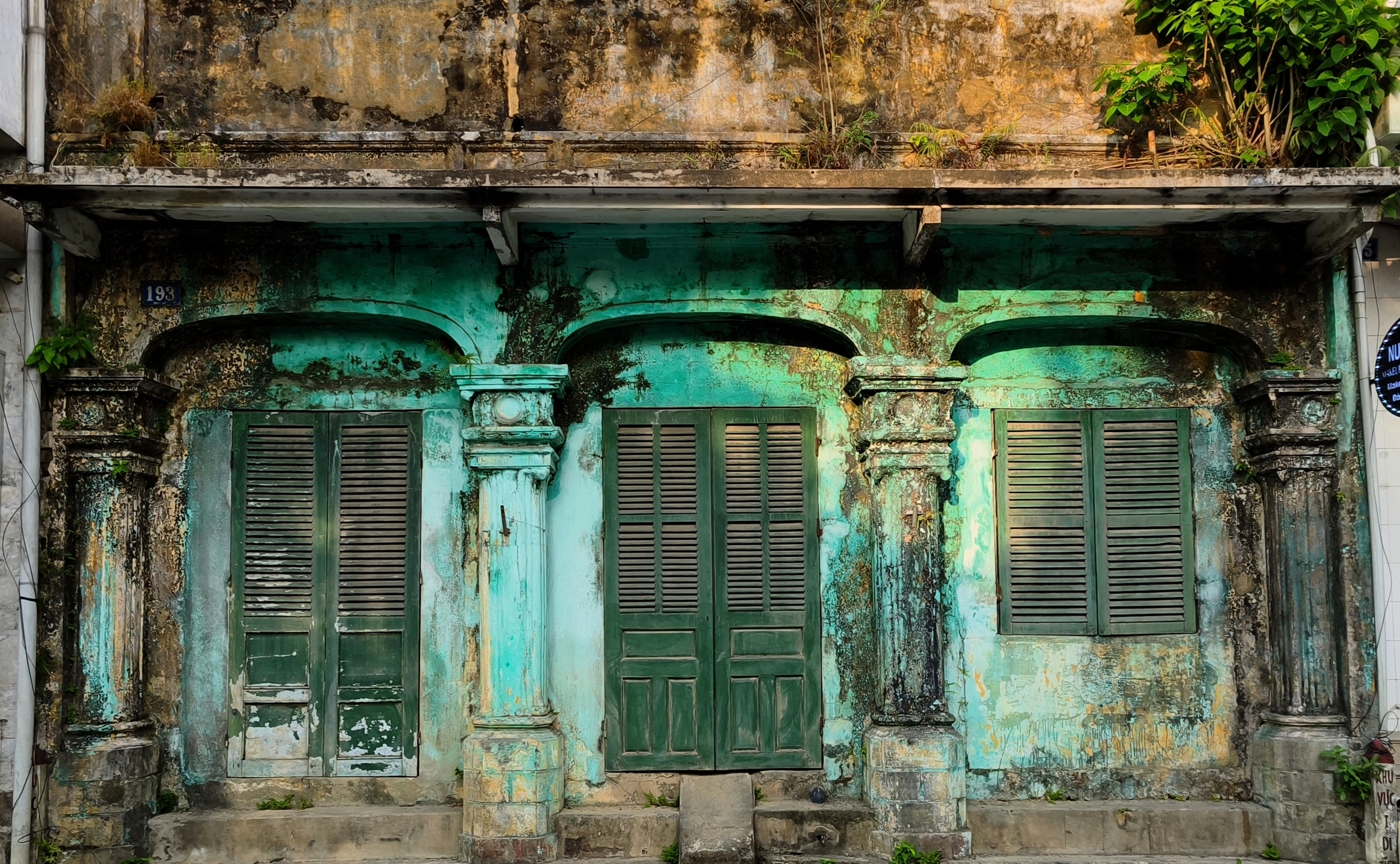
Hue can wear almost anything without ever betraying itself: the imperial grandeur of tombs and palaces, the weathered wounds of colonial neoclassicism, the insolence of Art Deco, the tropical modernist concrete of the 1960s and 70s, decaying villas, austere pagodas, anonymous houses eaten alive by moss.
Elsewhere, it would feel like an urban accident. Here, nothing ever truly clashes.
That is the privilege of great historical beauties: they never have to pick a side. They absorb eras, digest contradictions, and keep moving with that slightly distant elegance that humiliates everyone else just a little.
Hue irritates its rivals for one very simple reason: Everything suits her. She does not even pretend to be aware of it.
She opens her wardrobe ever so slightly, then leaves you alone with the vertigo.
Imperial Regalia
When Hue opens the wardrobe for special occasions, she reaches for the imperial garments.
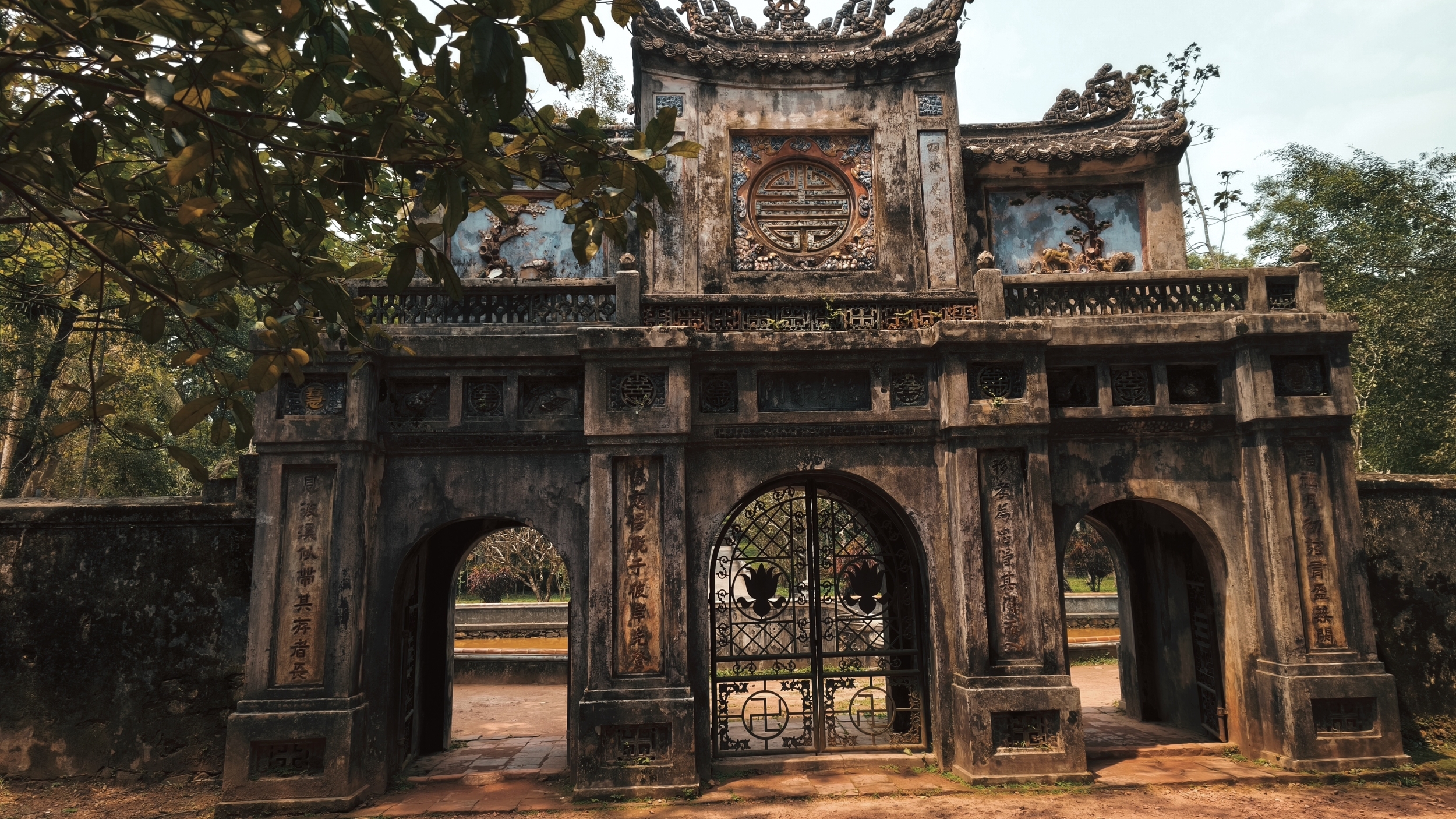
The Citadel, the tombs lined along the Perfume River, the silent pavilions, the hidden garden houses, the almost obsessive symmetries, everything here belongs to a theatre of power, though one that never needed to raise its voice.
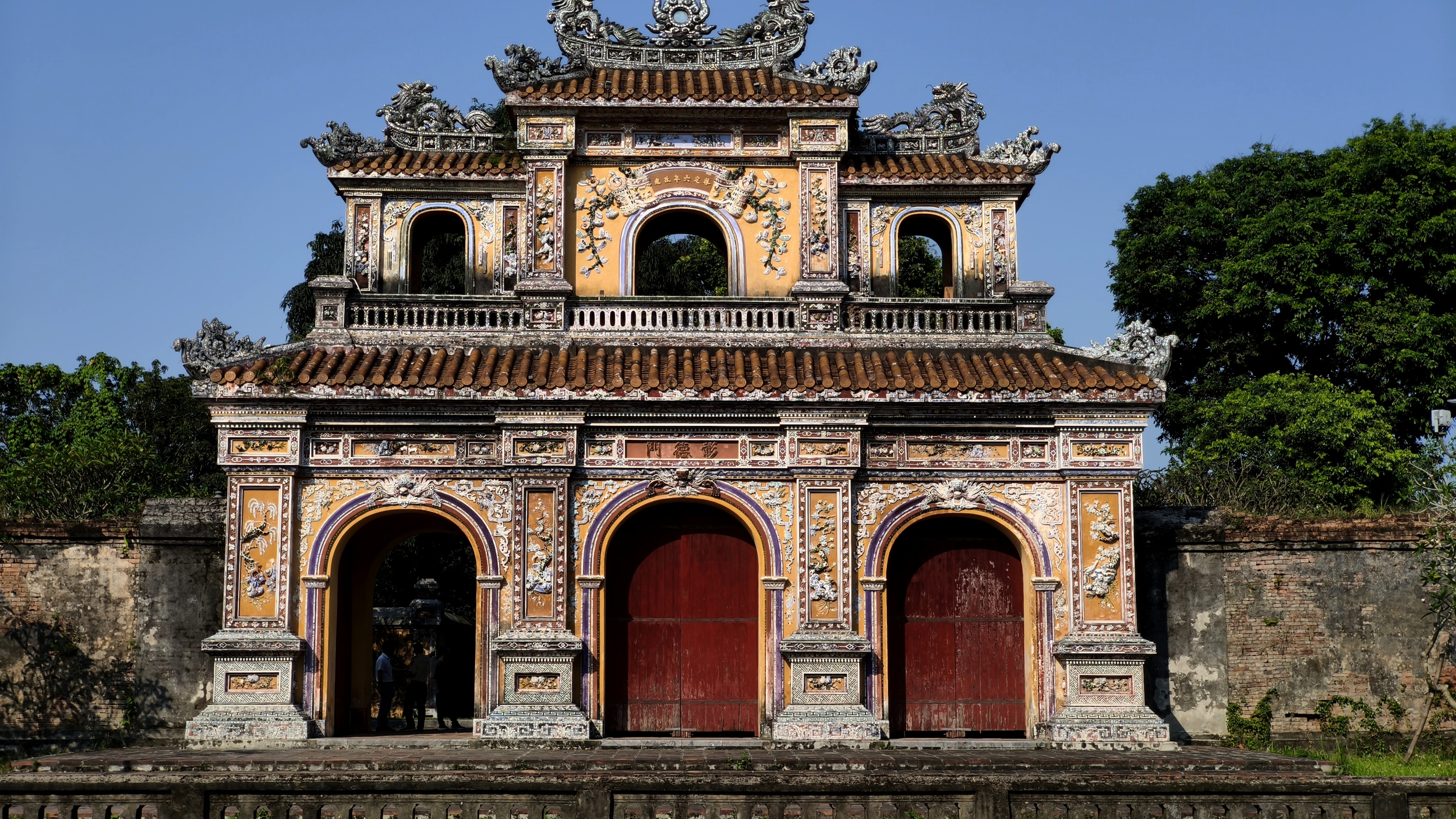
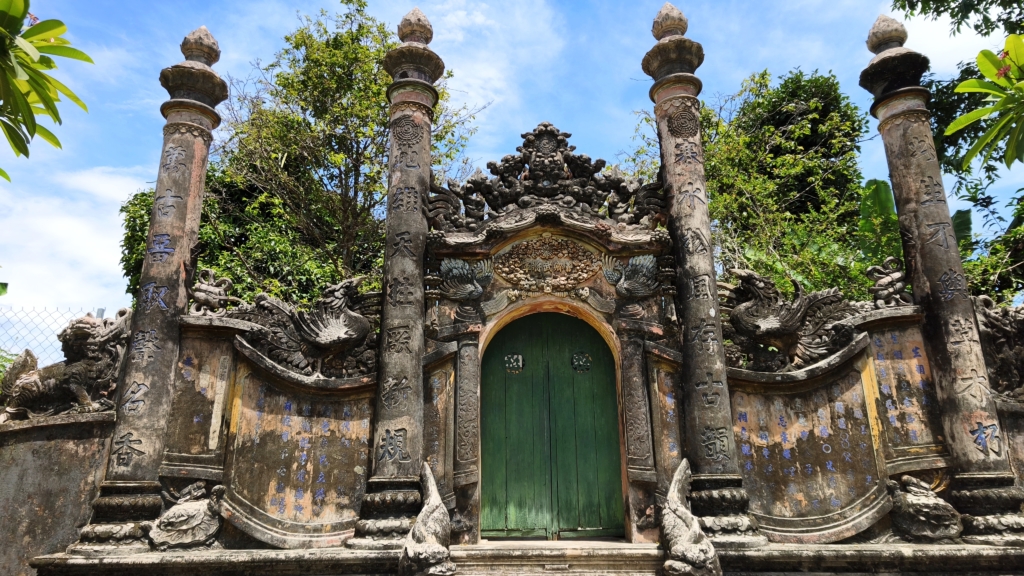
Hue’s imperial style does not seek to impress through force. It prefers restraint, slow rhythm, geometry. And when you wander through the tombs of Tu Duc or Minh Mang, what strikes you is not glitter. Most of the gold has long fucked off or dulled into rust.
What remains is structure. An elegance that embraces its own voids and shadowed corners, heavy with unspoken things, almost haughty.
This is old money luxury that never screams its price. Historical haute couture, perhaps. But worn with the aristocratic nonchalance of people who never had anything to prove.
The Colonial Suit
Once she crosses the river, Hue slips into her Indochinese suit. But here, colonial architecture never enters by force. It negotiates its way into the salons.
In Hanoi or Saigon, colonial power often staged itself more bluntly: grand opera houses, administrative palaces, architecture designed to assert authority. In Hue, pretending the Citadel does not exist, standing right there across the Perfume River — was never an option.
So the costume changes. No screaming neoclassicism. Instead, an architecture of gentleman-diplomates who seem to ask permission before entering.
The deep red of Quốc Học High School, the weathered yellow of administrative villas, the softened lines of Indochinese buildings, here, architecture aligns itself with trees, perspectives and the rhythm of the landscape rather than trying to dominate it.
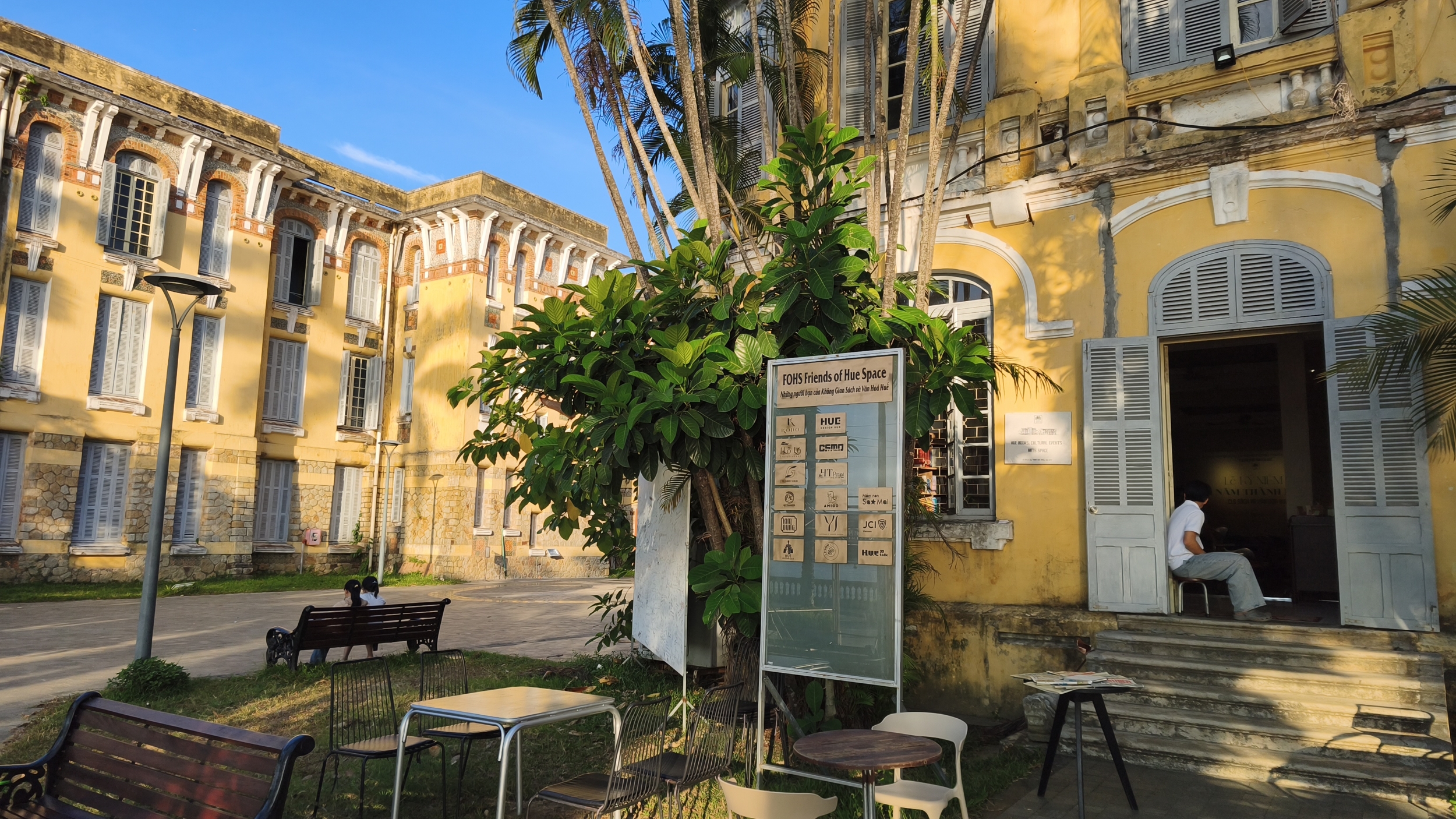
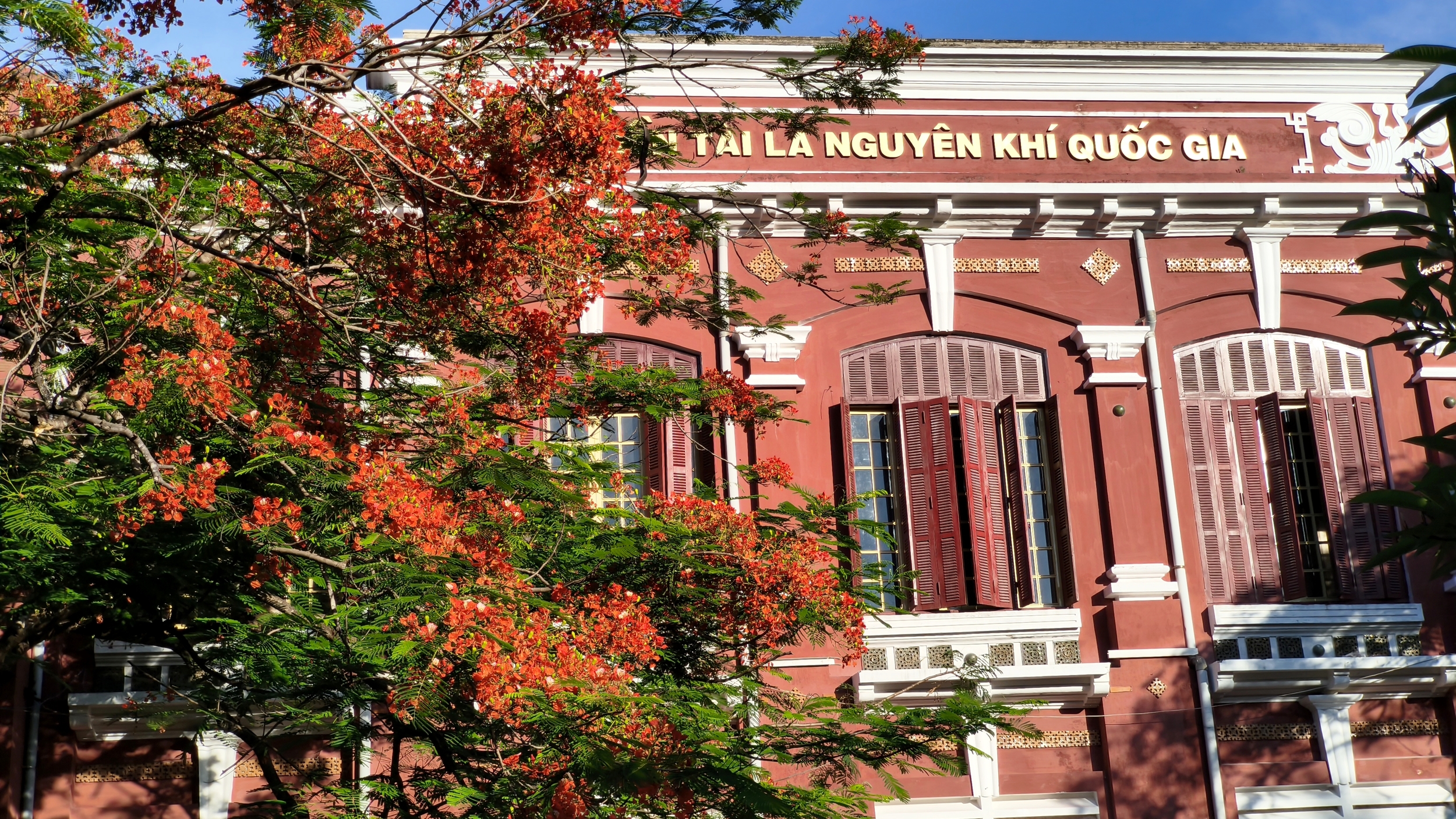
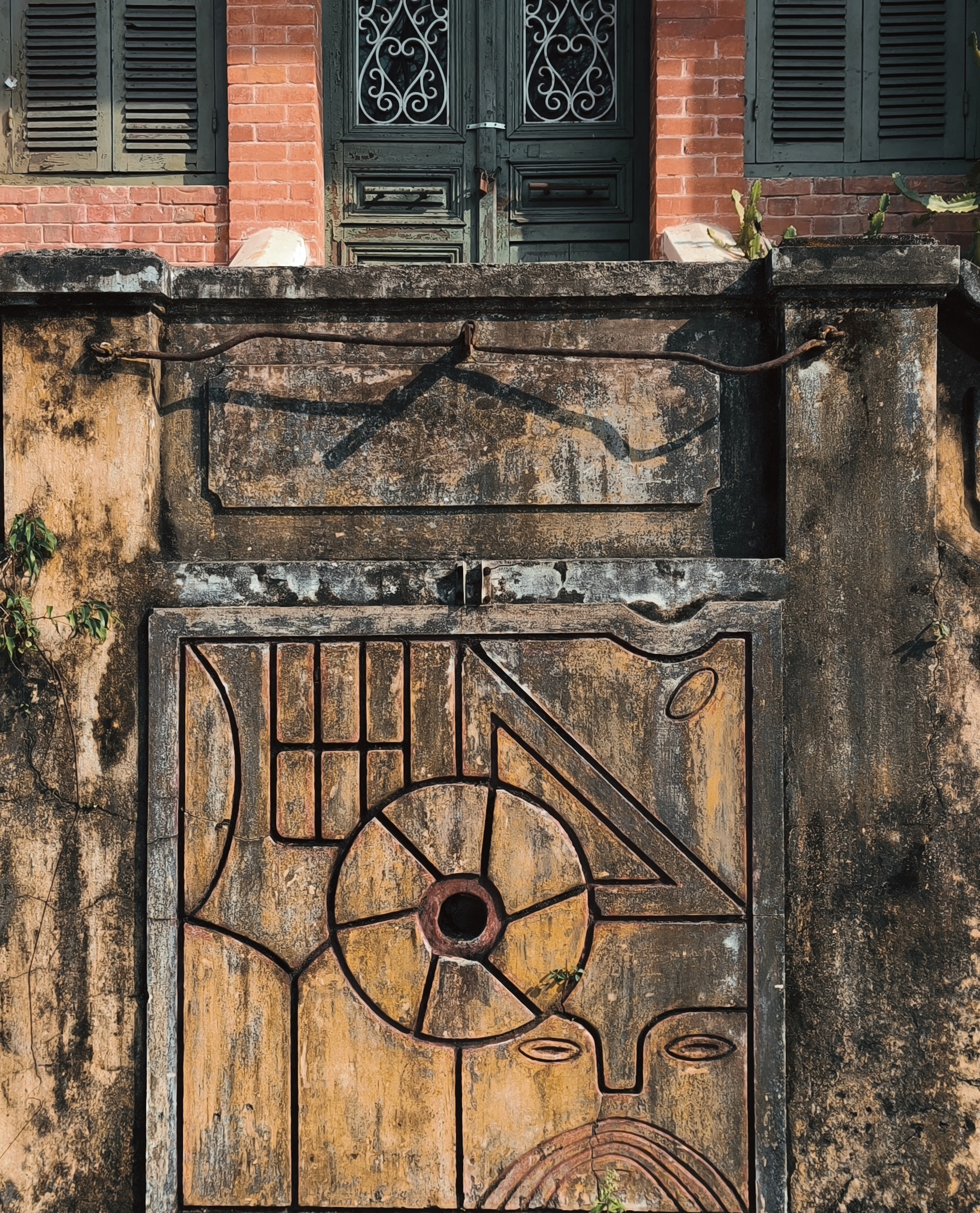
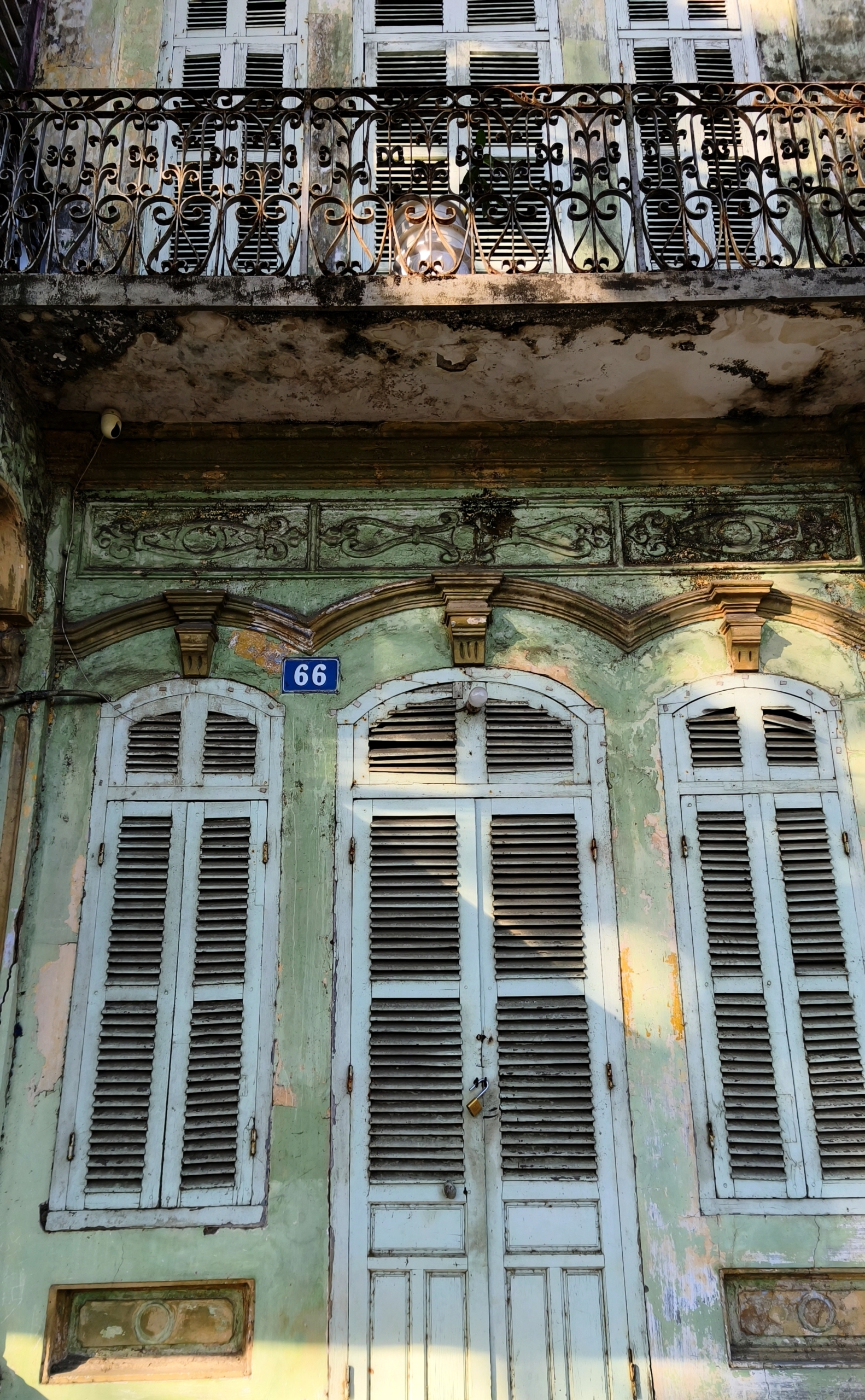
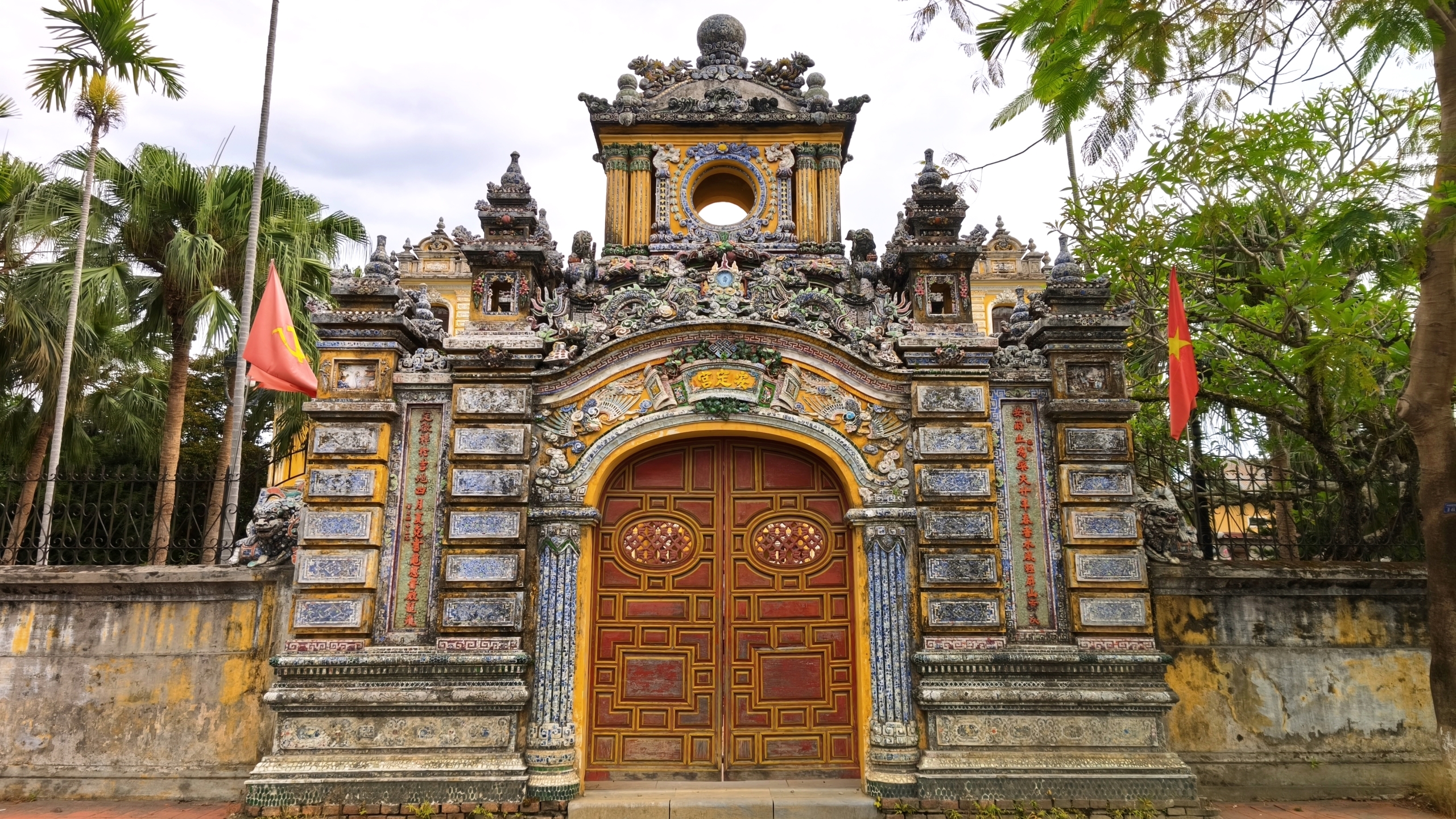
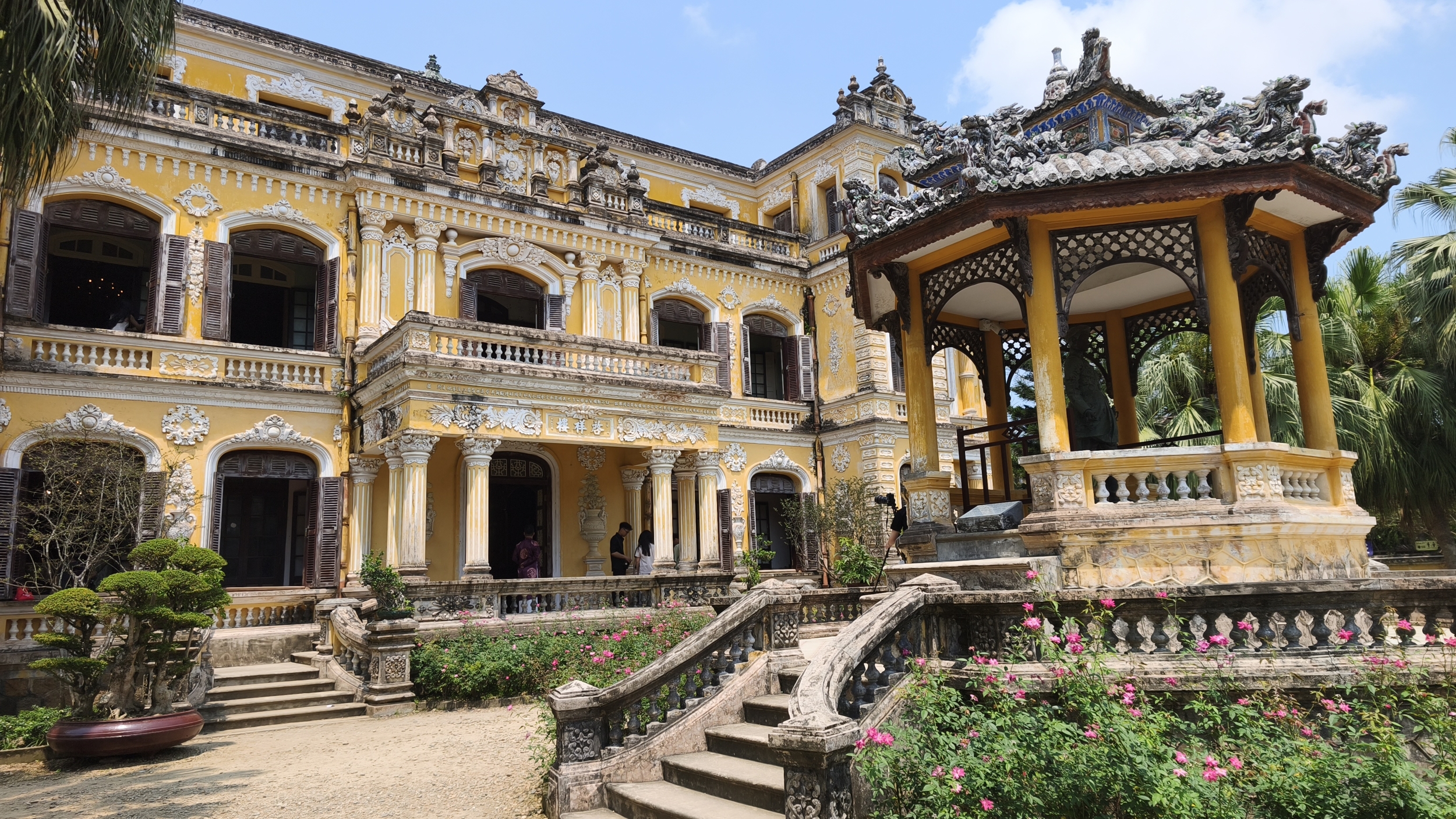
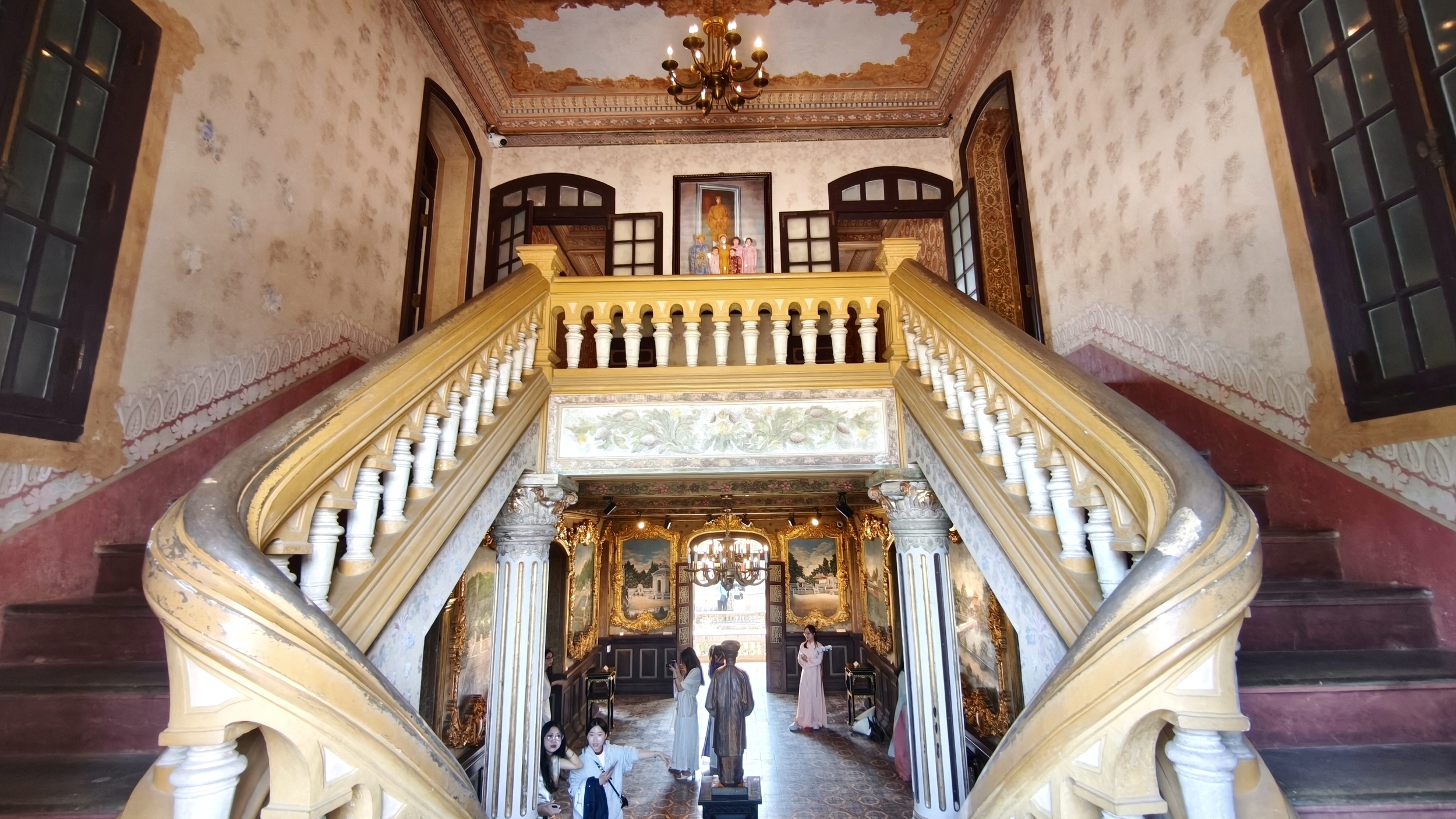
And when the imperial court decides to interfere, as it did at An Định Palace, the game becomes downright delicious. European vocabulary is absorbed, reinterpreted, almost maliciously exaggerated. The colonised digests the coloniser’s codes and commissions itself a custom-made ceremonial suit, overloaded with dragons, porcelain and wounded pride.
The diplomacy of brick and dragon reaches its perfect balance at the Cơ Mật Viện, the former imperial secret cabinet, now home to the conservation centre for Hue’s monuments. The building hesitates with elegance: a Nguyễn palace borrowing the administrative costume of the early twentieth century, or a colonial building that has learned to lower its voice?
It is neither entirely imperial nor fully Indochinese.
A very Hue sort of in-between, where even power itself seems to have learned court etiquette.
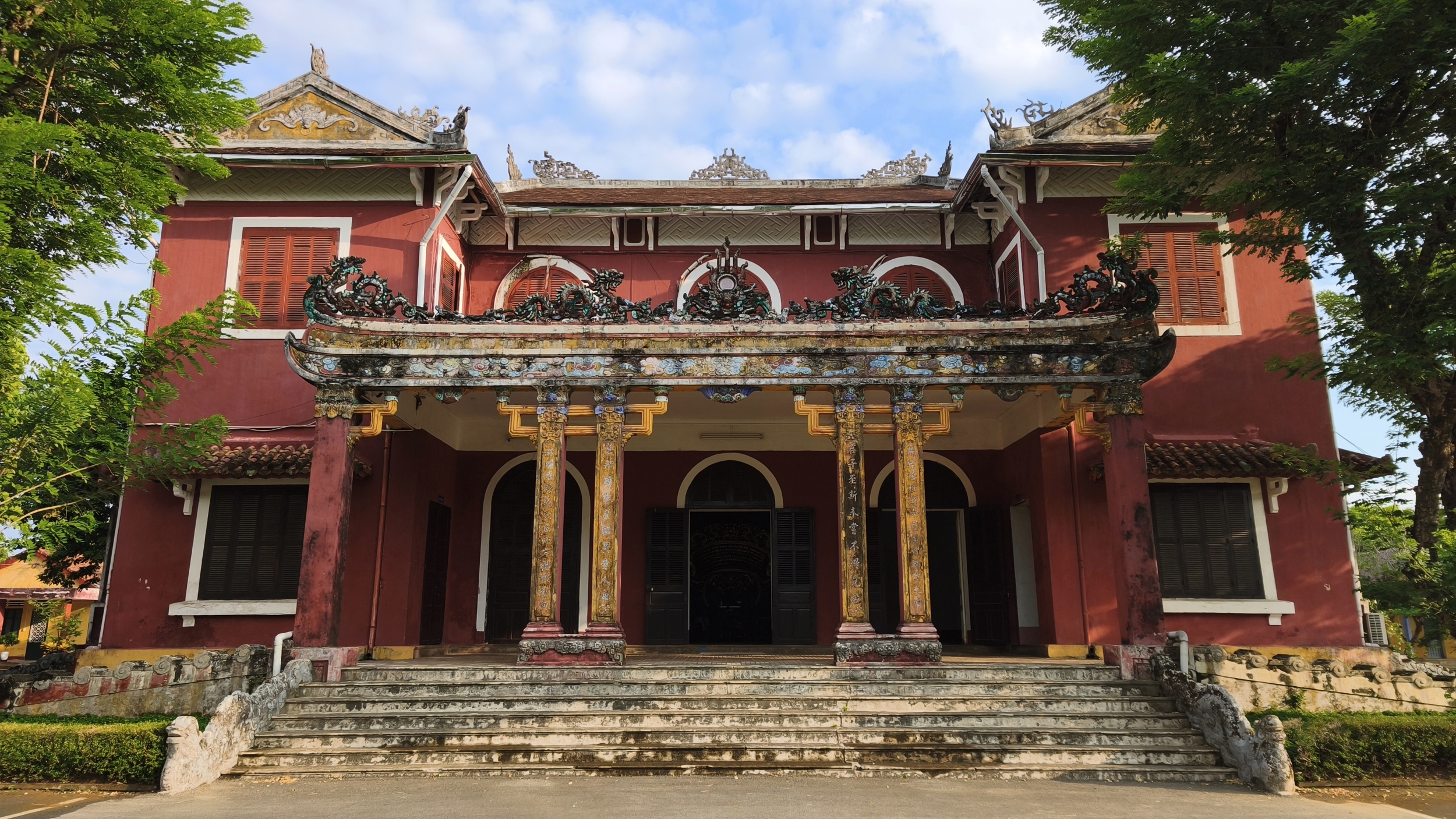
Perhaps that is Hue’s real refinement: Even colonisation learned some manners here.
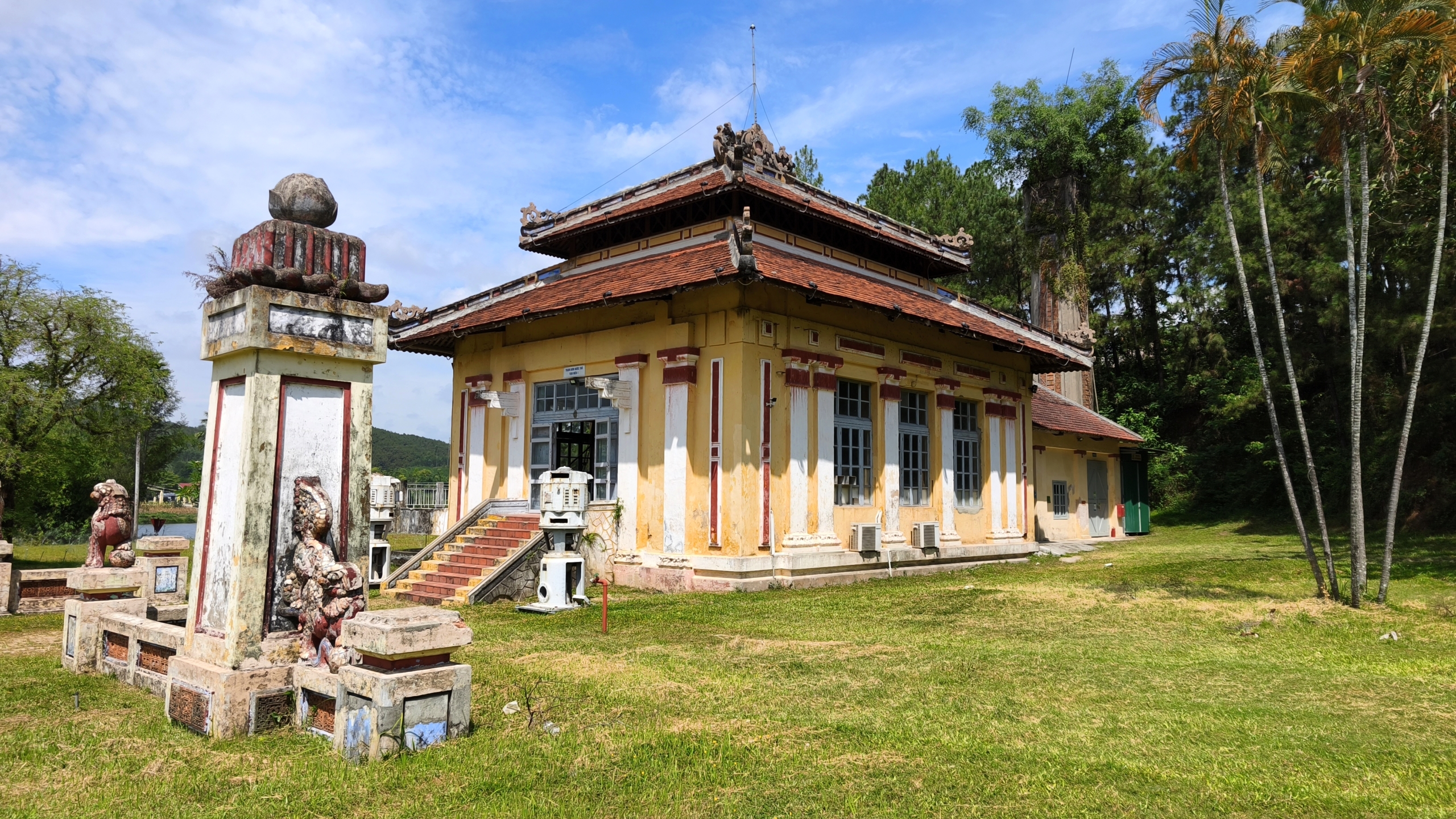
The old Waterworks building is almost an elegant caricature of this logic: colonial technical infrastructure disguised as a local notable. A Hue-style roof, softened manners, carefully ironed administrative arrogance.
Anywhere else, they would have built a machine to govern. Here, even the pipes seem to have received a court education.
Art Deco and Tropical Modernism: Breaking the Armour
Then Hué loosens its collar. Removes the white gloves.
Art Deco slips in quietly, almost insolently restrained. Even the concrete of the 1960s–70s ends up suiting her. Even when she puts on a tracksuit, Hué keeps its class.
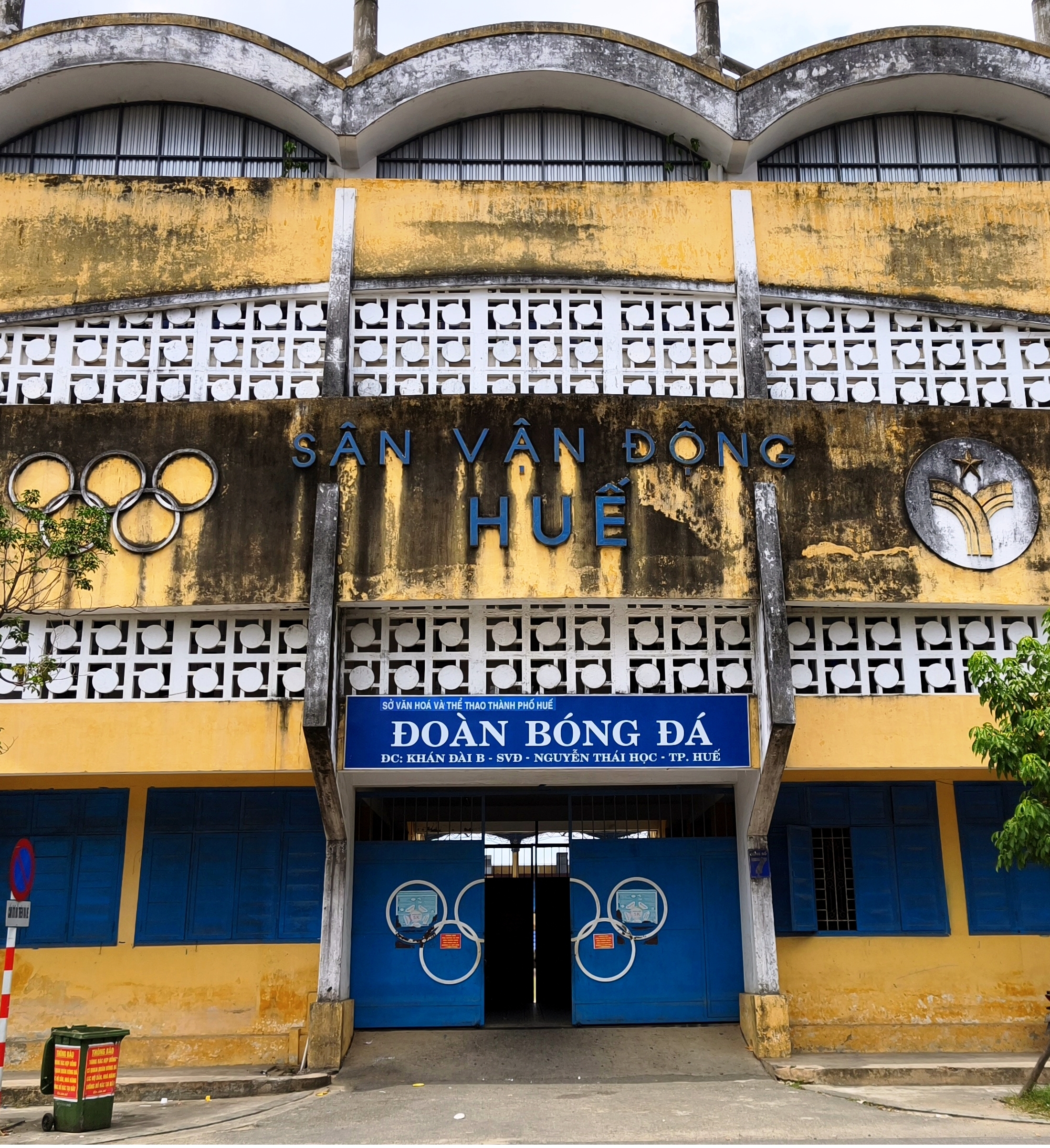
Look at the old municipal stadium: modernist façade blackened by rain, geometric brise-soleil, tired concrete, faded yellow and civic blue. Elsewhere, it would be a banal sports facility; here, even the rot seems to have learned court etiquette. Elsewhere, modernism chills a city; here, it sweats, greens, and decays with elegance. Frangipani trees drop onto it, humidity patinas it, vegetation always ends up reclaiming part of the costume.
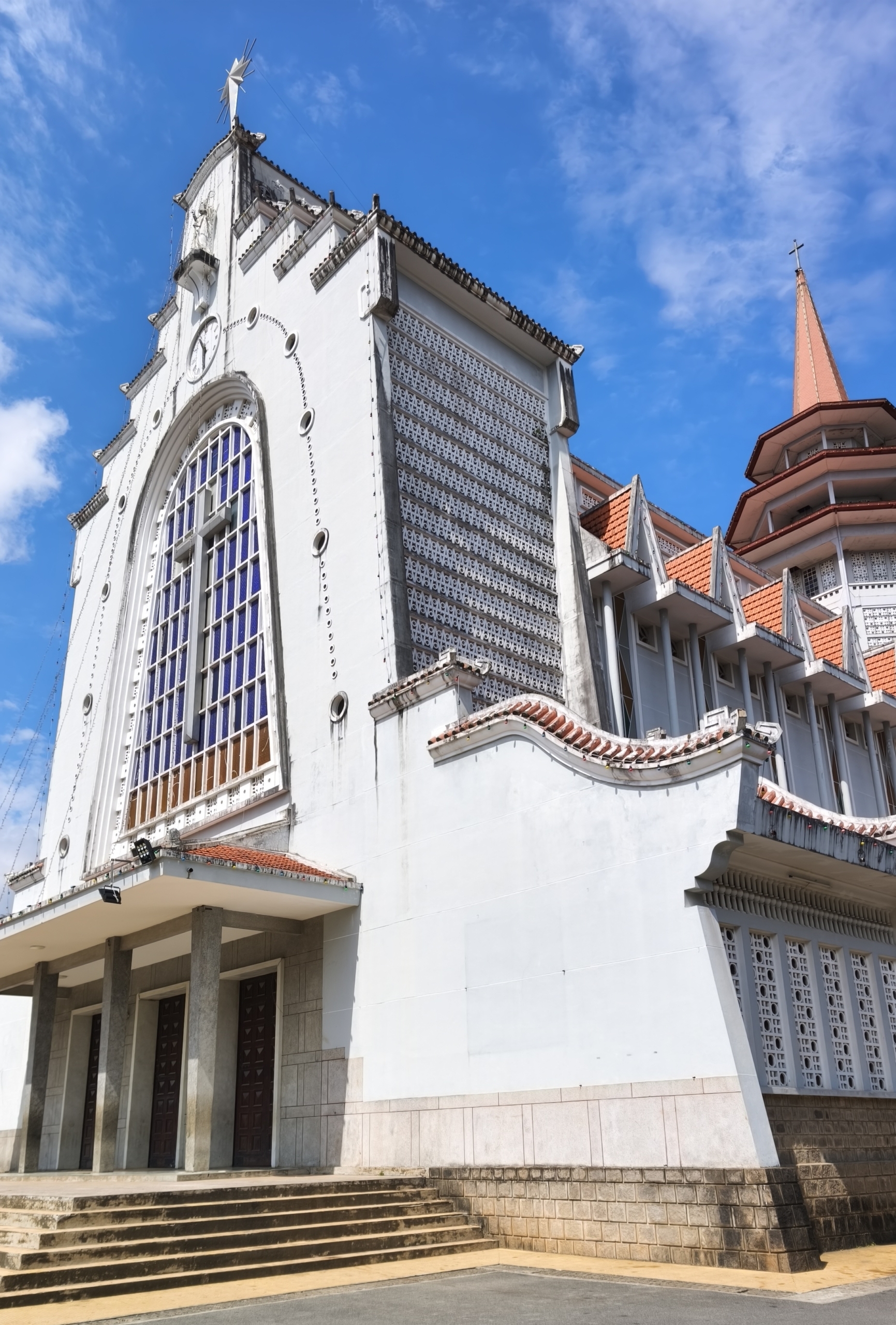
Take the Église du Sacré-Cœur. A vast white façade, almost abstract, assertive geometric lines, a radically modern vocabulary for Hué — and yet nothing feels out of place. The city absorbs the gesture and calms it down.
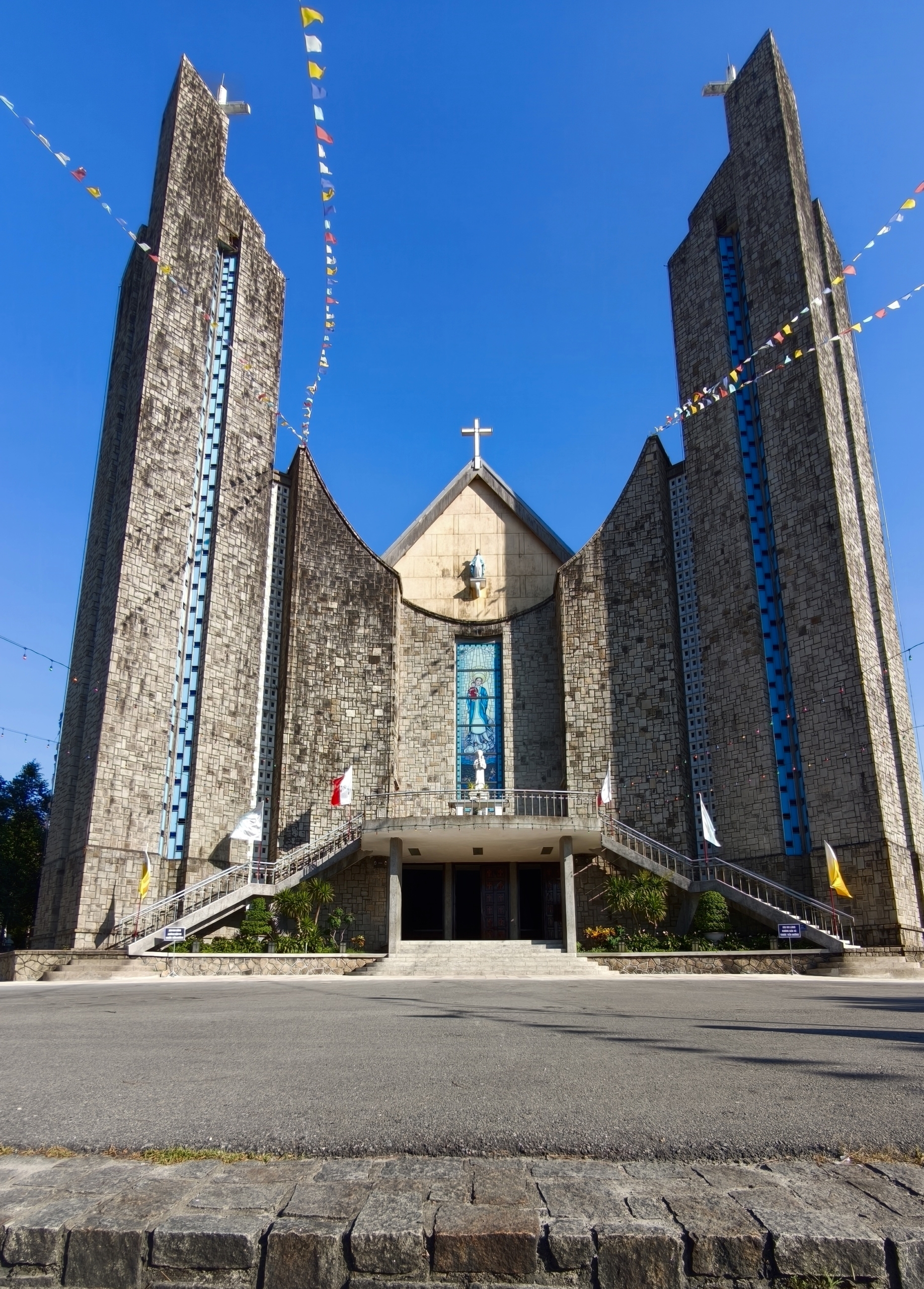
Then Hué raises its voice slightly with Cathédrale de Phủ Cam. No more polite restraint. Modernism becomes monumental: a mass of concrete, raw and sculptural, stretched toward the sky like a prow or a suspended gesture.
You might think it too imposing, too modern, almost arrogant for such a hushed city.
And yet no.
Even this architecture ends up fitting her.
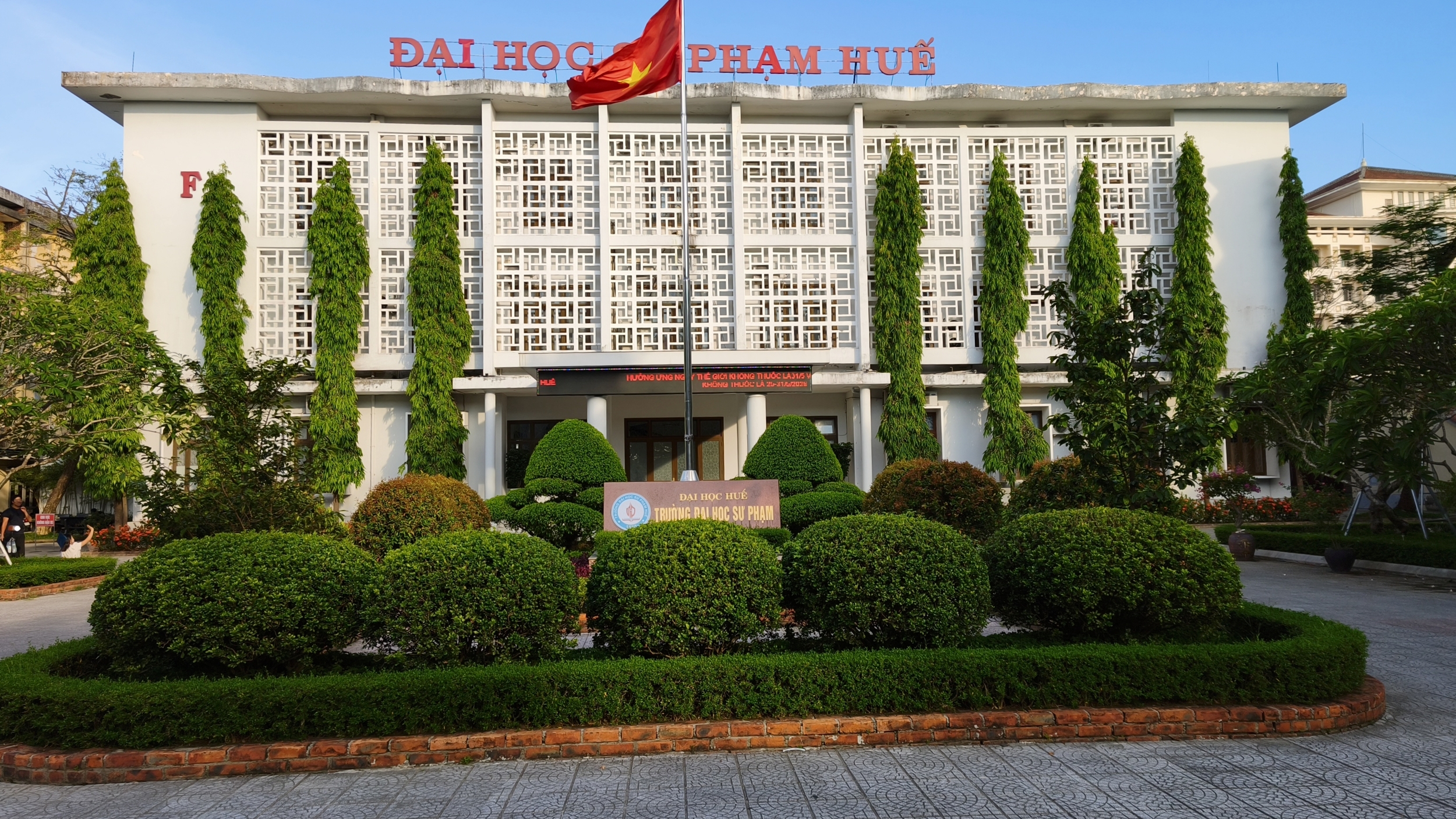
On Boulevard Lê Lợi, the university parades a tropical modernism of insolent distinction: brise-soleil, horizontal lines, an architecture that looks the river straight in the eye. The Vietnam of momentum, still believing in the future with a certain intellectual elegance.
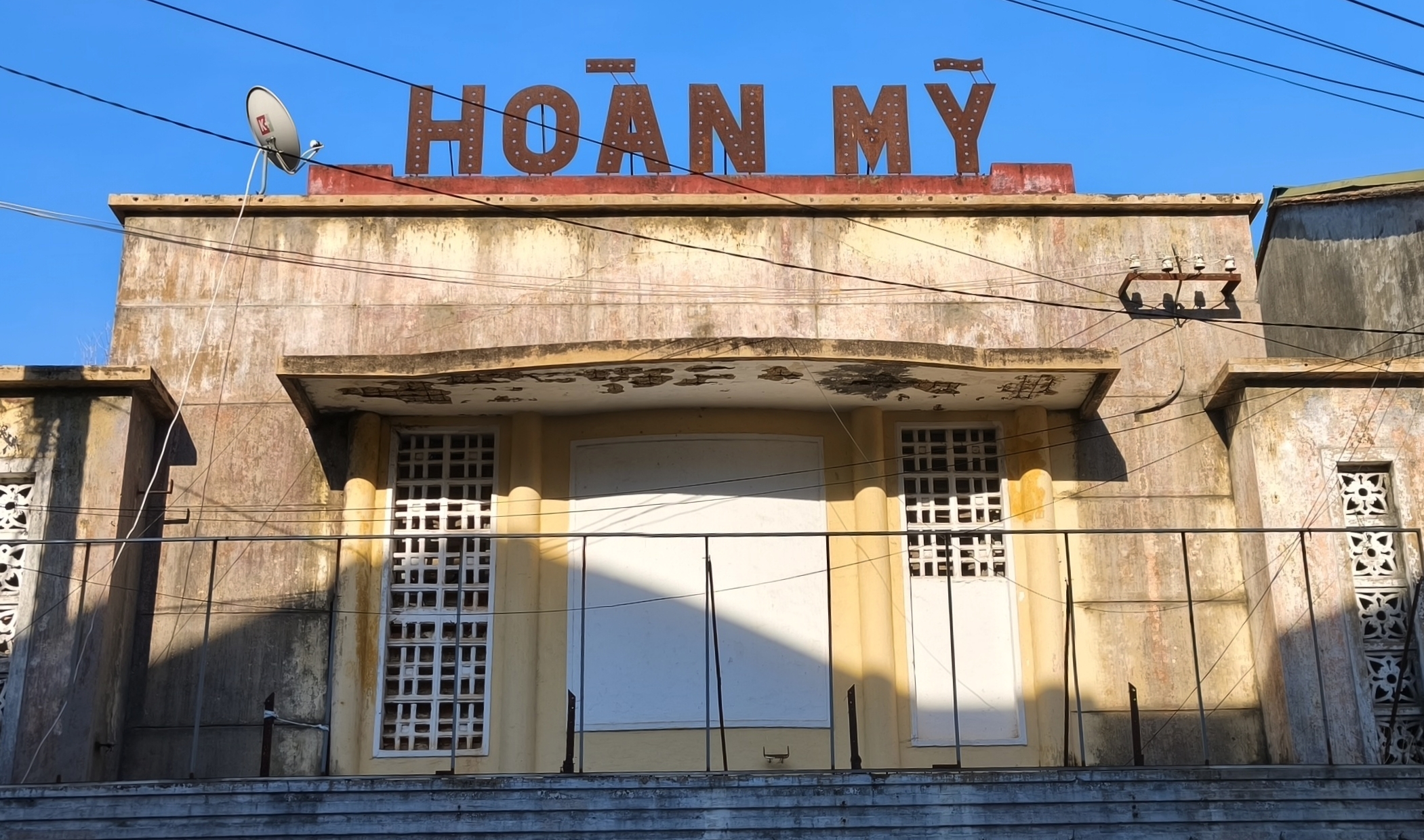
And then comes the final passage of the parade. The old Cinéma Hoàn Mỹ. Here, no more well-groomed luxury. This is popular Art Deco, modernism that has worked, sweated, aged badly, with visible wrinkles and absolutely no interest in pleasing glossy catalogues. Tired, raw, dented — and infinitely more interesting for it.
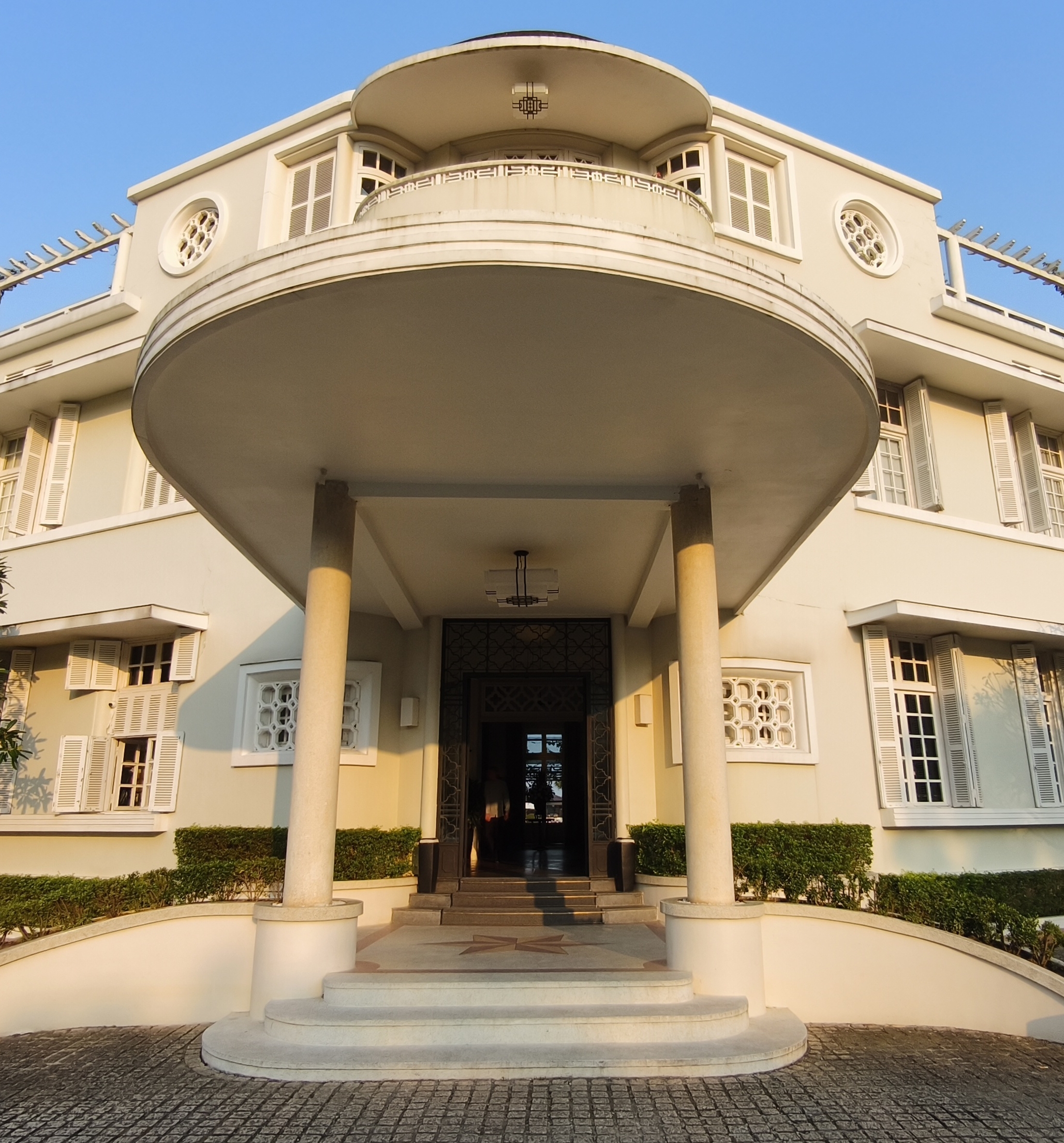
Put it next to the impeccable refinement of Azerai or the well-bred composure of the Cercle Sportif: Hué’s genius appears in the contrast. Pressed luxury on one side. Textured truth on the other.
Hoàn Mỹ doesn’t even try to seduce anymore.
And that is precisely why it ends up winning.
Let the parade end there.
Hué gently closes its wardrobe.
No triumph.
No effort.
Hué doesn’t crush its rivals.
It lets them exhaust themselves dressing up.