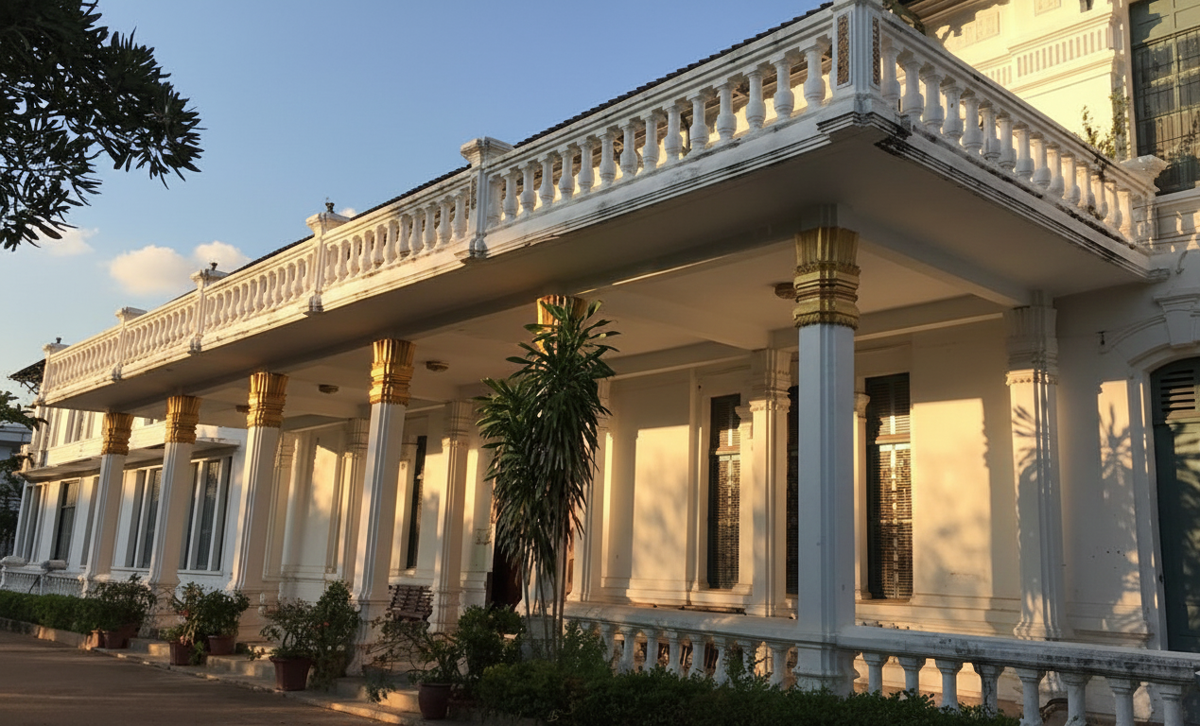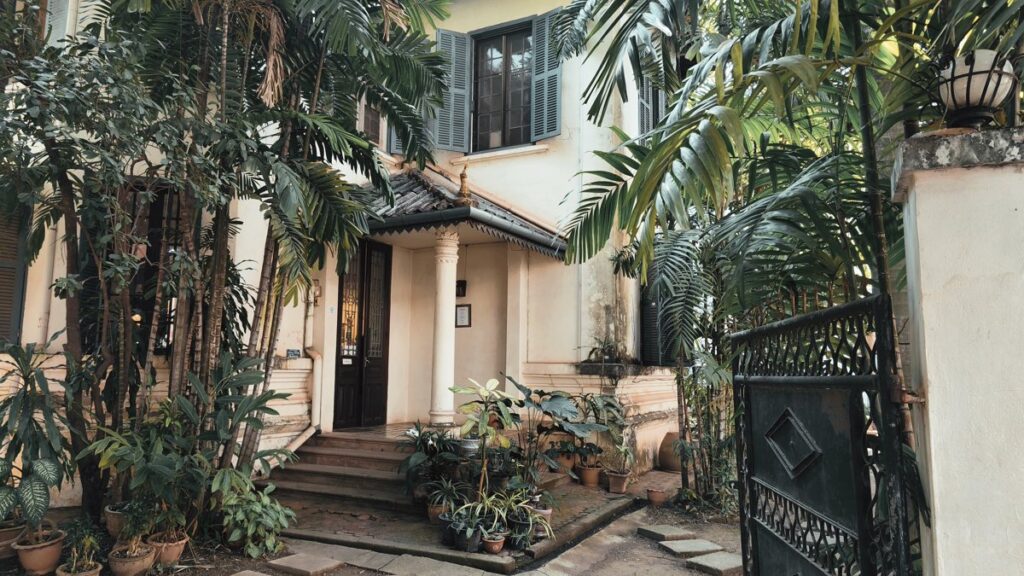
In Vientiane, the colonial is not a backdrop trying to impress or loom large. It’s a family. A tired, mismatched lineage that never chased glory or spectacle. No empire on display here, just figures sharing space, tolerating one another, sometimes ignoring each other altogether. Some still stand upright, others have let themselves go; a few have had work done, others expect nothing anymore. Nothing dominates, nothing imposes itself. Everything lives at human height, in the languor, the dust, and the slow light of the Mekong. In Vientiane, the colonial did not conquer the city, it simply grew old alongside
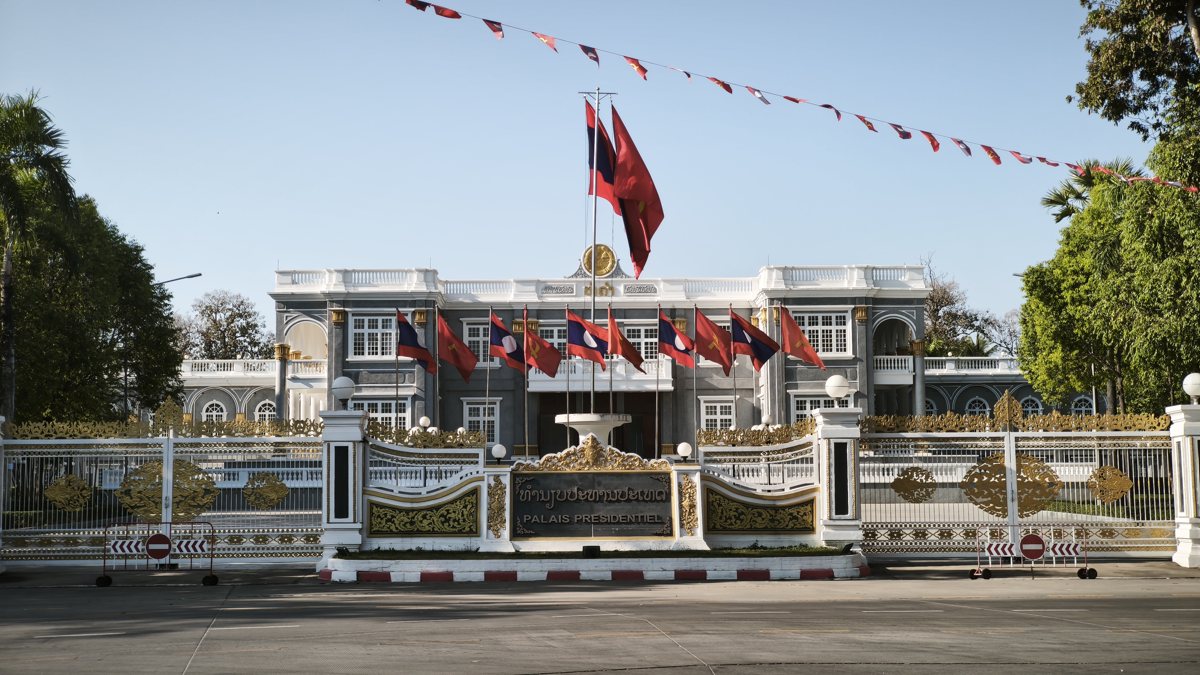
The city cousin : the Presidential Palace
The Presidential Palace (formerly the Governor’s Palace) feels like a rupture in this general modesty. Here, the colonial tried to play at power, erecting a façade of authority, lining up its colonnades, reminding everyone who signed the decrees. Beaux-Arts in style, very classical, with columns and wrought-iron balconies, it has the air of a manor house slightly too large for the town.
The Presidential Palace is the overdressed cousin no one ever really invited. Stiff, suit too new, posture borrowed. He speaks loudly when no one’s listening, strikes a pose for family photos, yet keeps his distance, slightly aloof, slightly out of place.
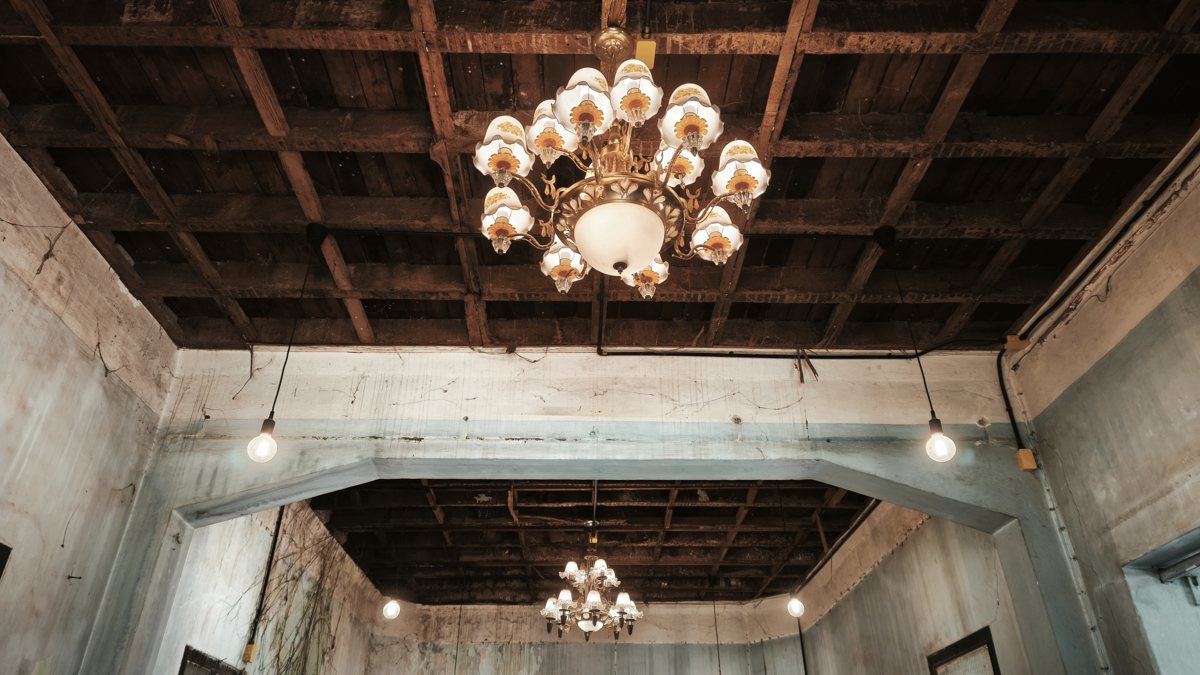
The dignified great-uncle : Settha Palace Hotel
Settha Palace is the great-uncle who limps slightly but refuses to slouch. He has known splendor, collapse, long eclipses, and still he stands upright, chin raised, imaginary moustache neatly groomed. Luxury here is no longer flamboyant, it is restrained, almost stubborn. Woodwork that creaks softly, ceiling fans turning with dignity, thick silences heavy with memory. He makes no attempt to seduce, certainly not to appear younger. He simply says : I held on. And in Vientiane, that already counts as a heroic form of elegance.
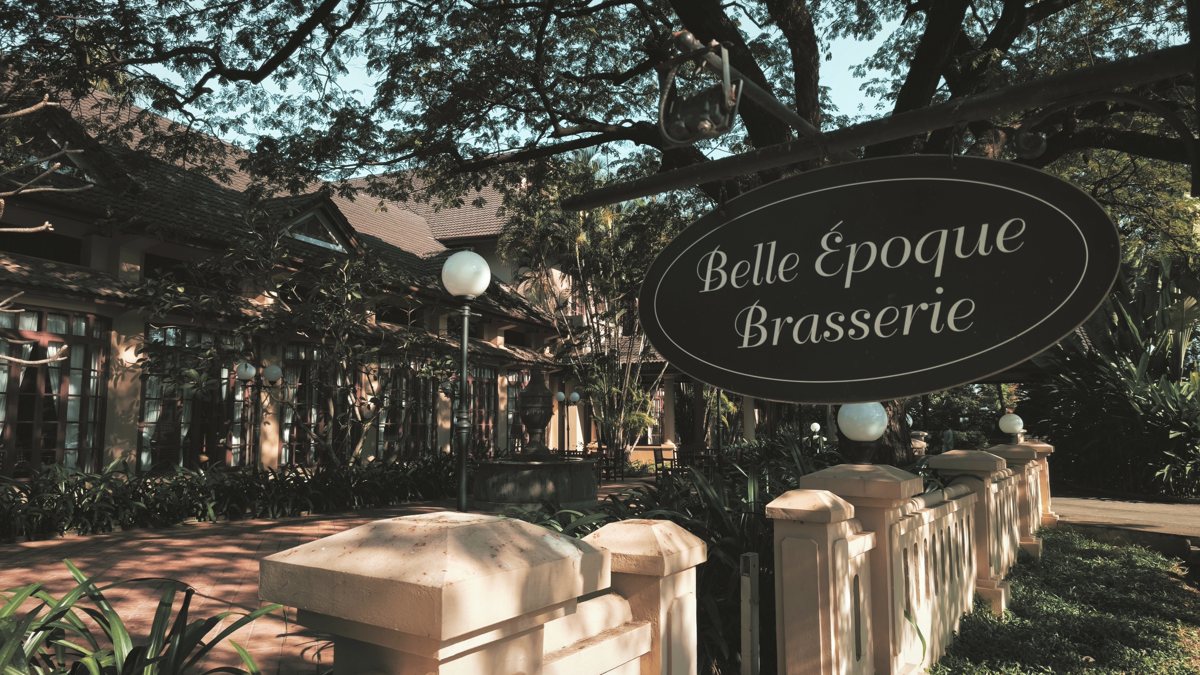
The old aunt: Vientiane’s small church
The small church of Vientiane has the air of an old aunt dressed for Sunday, frozen on the sidewalk of time, handbag clutched tight, waiting for a bus that will probably never come. She doesn’t preach, she doesn’t impose, she waits. A modest façade, restrained proportions, a discreet presence in a city that has never cared for grand gestures. You sense she once knew crowds, departures, full Sundays, then pews slowly emptying. In Vientiane, even God seems content to wait patiently for the Mekong to do the rest.
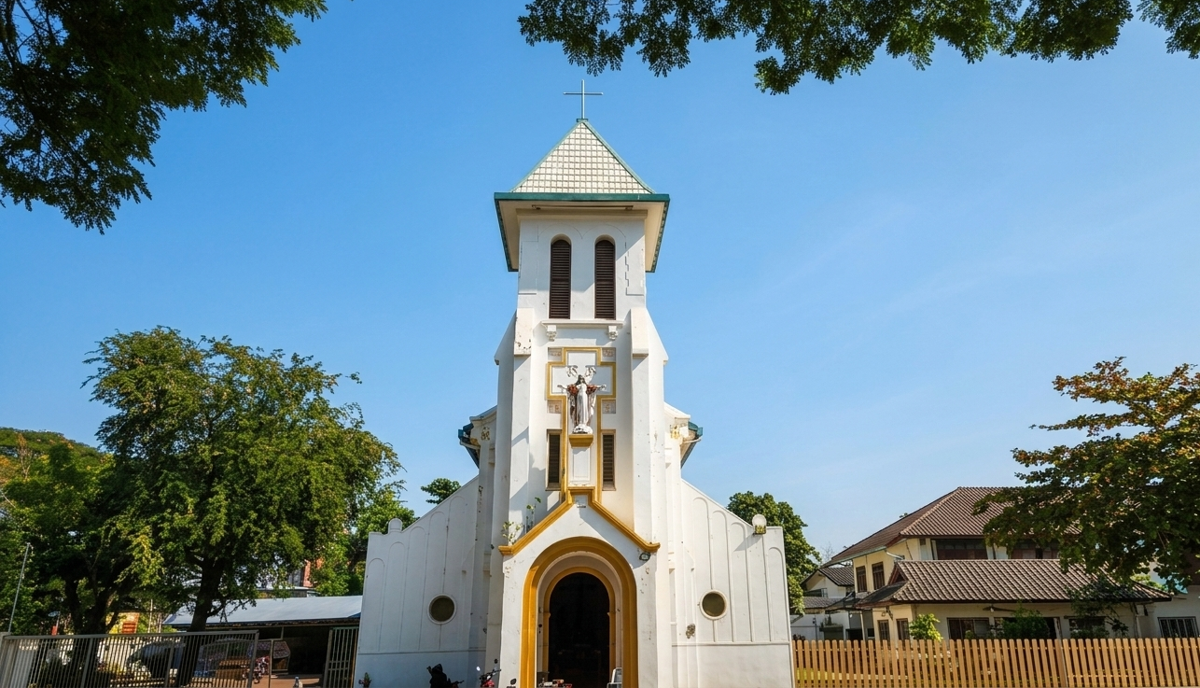
The family’s wayward one
The wayward one of the family is the renovated colonial villa, the ones that let go of propriety in order to survive. A former white house turned into a trendy bar, a digital-nomad guesthouse, or a restaurant with an overextended menu. Shutters hanging crooked, colors repainted without restraint, air-conditioning units grafted on like tasteless jewelry. They once belonged to administration and well-behaved weekends; now they serve cocktails and lounge music. They flirt with backpackers, tease expatriates, and leave the wealthy unimpressed by their lack of glitter. In Vientiane’s colonial family, these are the ones who dared to hike up their skirts. Once rigid and buttoned to the neck, they eventually loosened up, simply to stay alive.
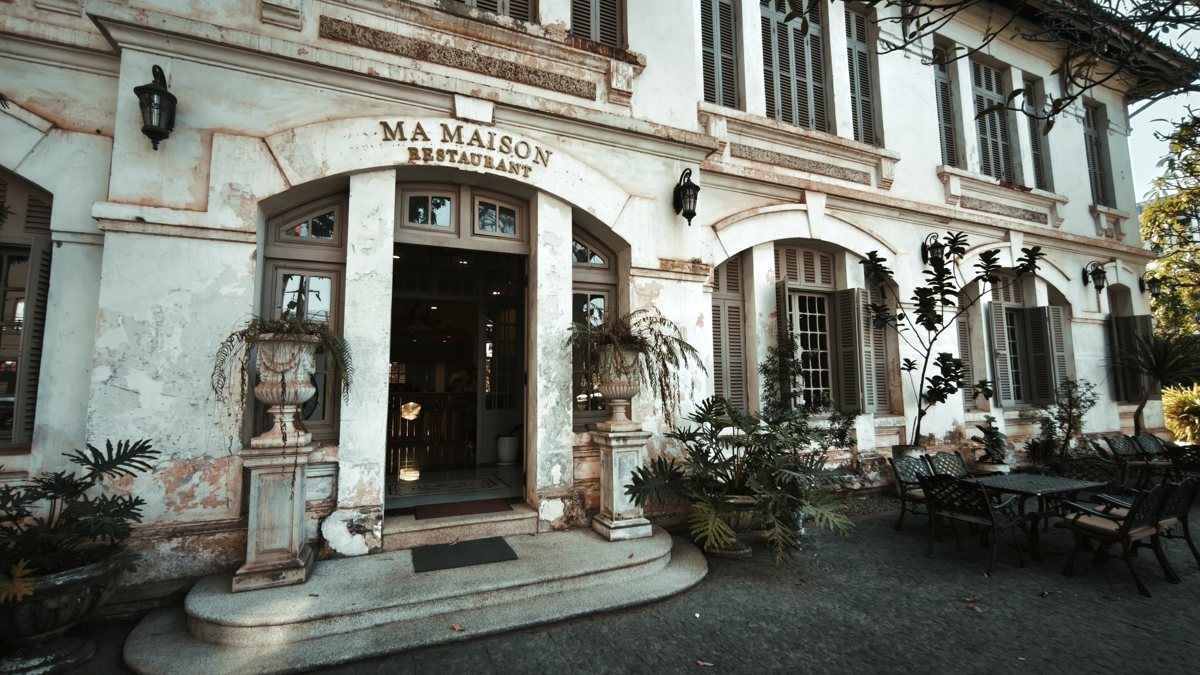
The absentee father
The absentee father is made up of forgotten pavilions, frozen behind sealed doors and shutters pulled shut in exhaustion. He slipped away quietly, no drama, no will, leaving hollow structures, evaporated authority, and that thick discomfort peculiar to prolonged absences. In this colonial genealogy, the father, alcoholic by metaphor, resigned by choice, is found in these buildings eaten away by humidity, gnawed at by climate and indifference. Too rigid to seduce, too bulky to embrace, they were left to stew on the sidelines. Blistered plaster, fixed shutters, yesterday’s prestige turned into today’s burden. They were meant to frame, transmit, hold the line. Instead, they faded away glass by glass, while the rest of the family reinvented order without them.
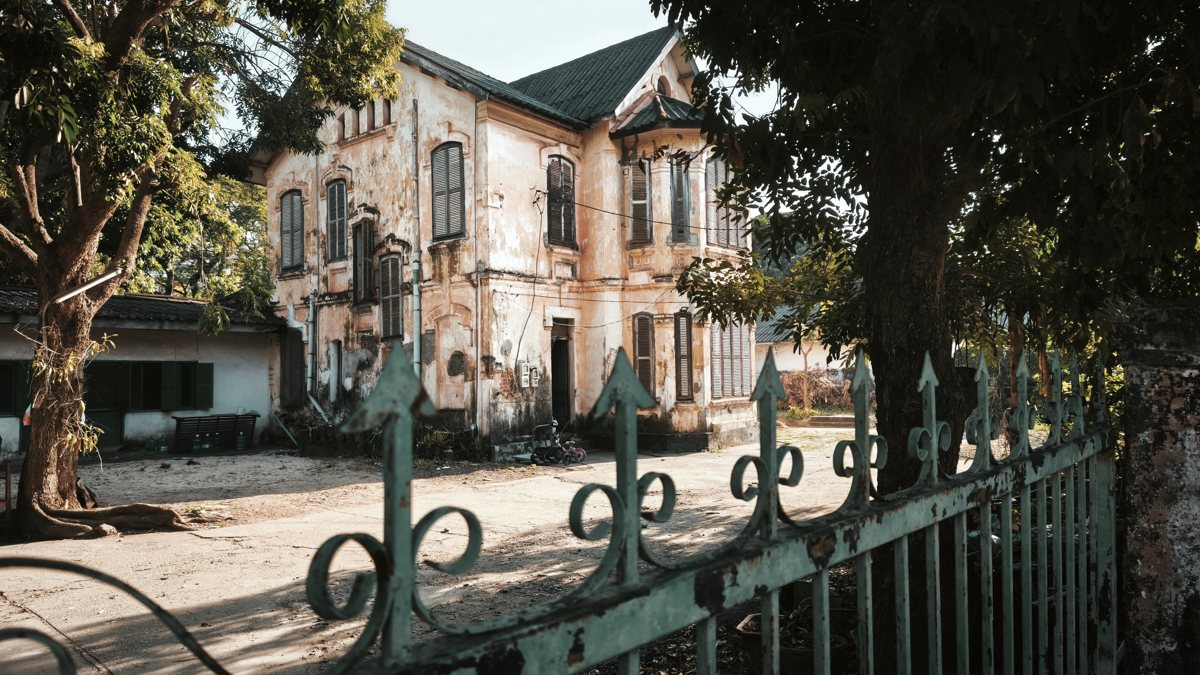
A mother who stands tall and carries on
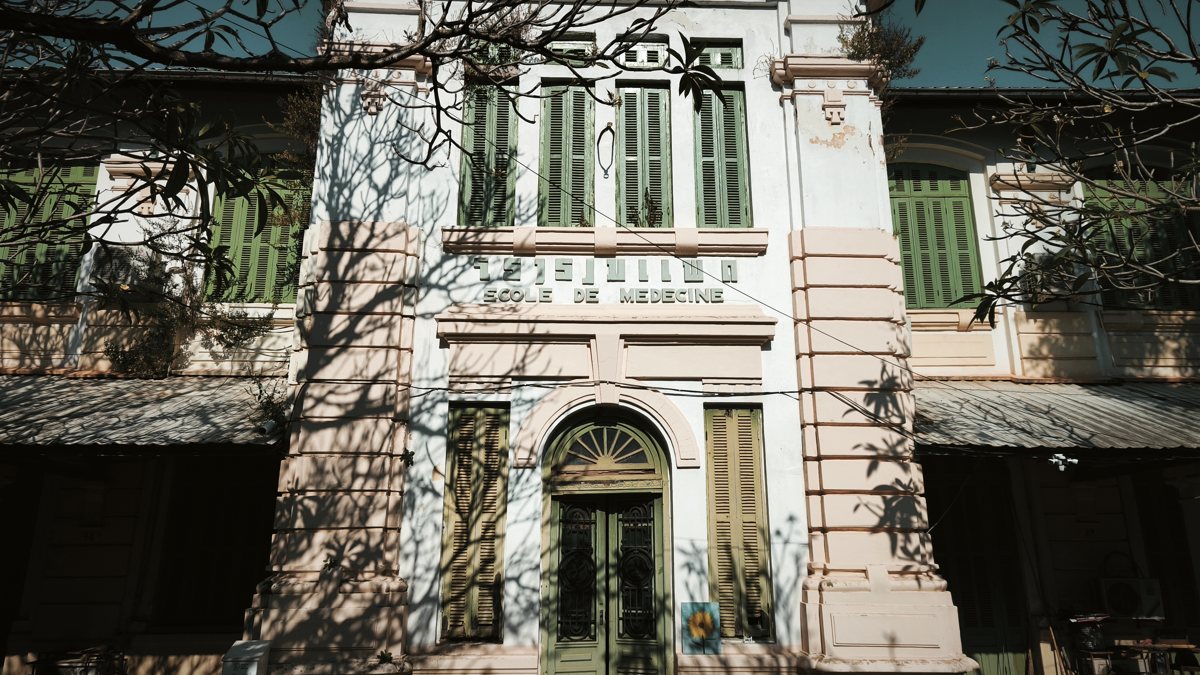
In Vientiane’s peculiar colonial family, the medical school is the mother. The one who carried, held, and tended to everyone without ever looking at herself in the mirror. At the entrance, she treated herself to a facelift : restored façade, tightened features, a fresh smile for official visits. But the wings tell the truth, the body didn’t quite follow, the skeleton still tires. Indochinese in style, symmetrical and restrained, her architecture commands respect without ever raising its voice or climbing twenty stories. A mother who doesn’t colonize the ground, she inhabits it, anchors it, and despite the wear, keeps the house standing.
The old living-room wardrobe : the Lao National Museum
Finally, the National Museum (formerly the police headquarters) is the old wardrobe in the living room, rarely opened. Massive, immobile, filled with important things arranged according to an order that no longer applies. It smells of mothballs, yellowed paper, and the seriousness of another age. No one doubts it holds the family memory, but no one really knows what’s hidden in the bottom drawers. People walk around it respectfully, touching it as little as possible, for fear everything might collapse, or that the dust might start talking. In Vientiane, the museum doesn’t tell history, it preserves it, locked away, waiting for someone brave enough to open it differently. A renovation project is underway. Let’s hope they don’t turn this old wardrobe into an IKEA unit : clean, light, and perfectly amnesiac.
In Vientiane, the colonial past was neither erased nor celebrated. It simply learned how to live with the rest of the family.