
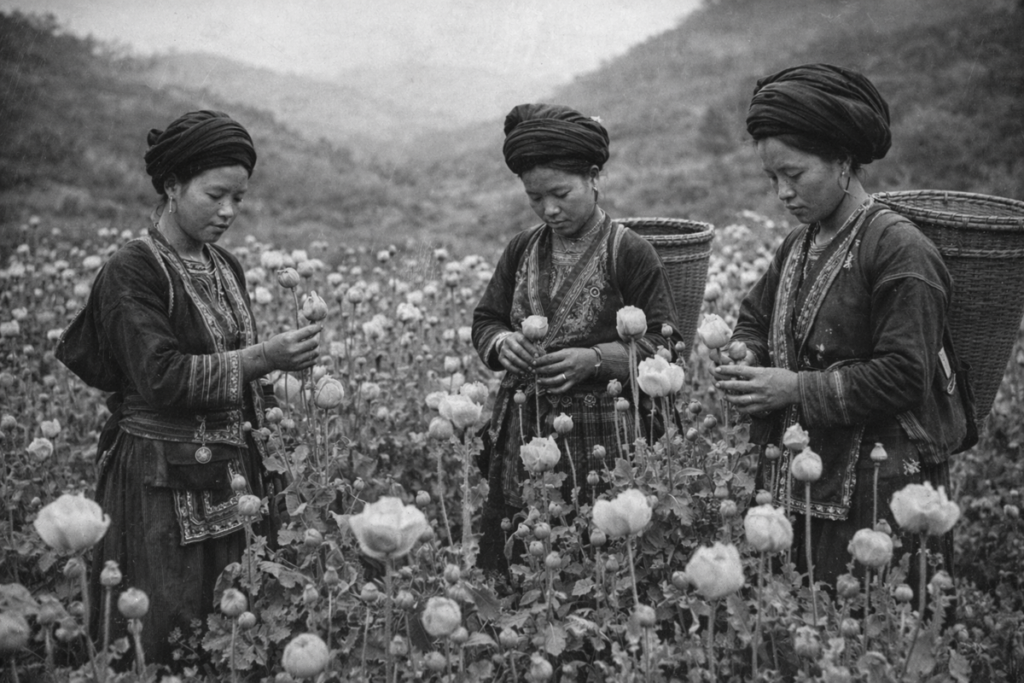
With Operation X, we step into the darkest, most compelling folds of the Indochina War.
This is the moment when the civilizing mission locks away its fine principles and climbs down into the mud of trafficking—where spotless stripes rub shoulders with dirty hands, where the military aristocracy learns you don’t win a colonial war by staying among the well-bred.
Push hard enough to save the Empire and you end up teaching it the language of the underworld.
The heirs of Saint-Cyr play at being apprentice gangsters; suited spooks discover a murky brotherhood with the thugs of Cholon, opium traffickers, and militia bosses.
Not out of ideology, but out of cynical necessity. From Operation X to the Guérini brothers, the method holds: when the State runs out of arms, it borrows those of the scum.
GCMA: recycling the untouchables
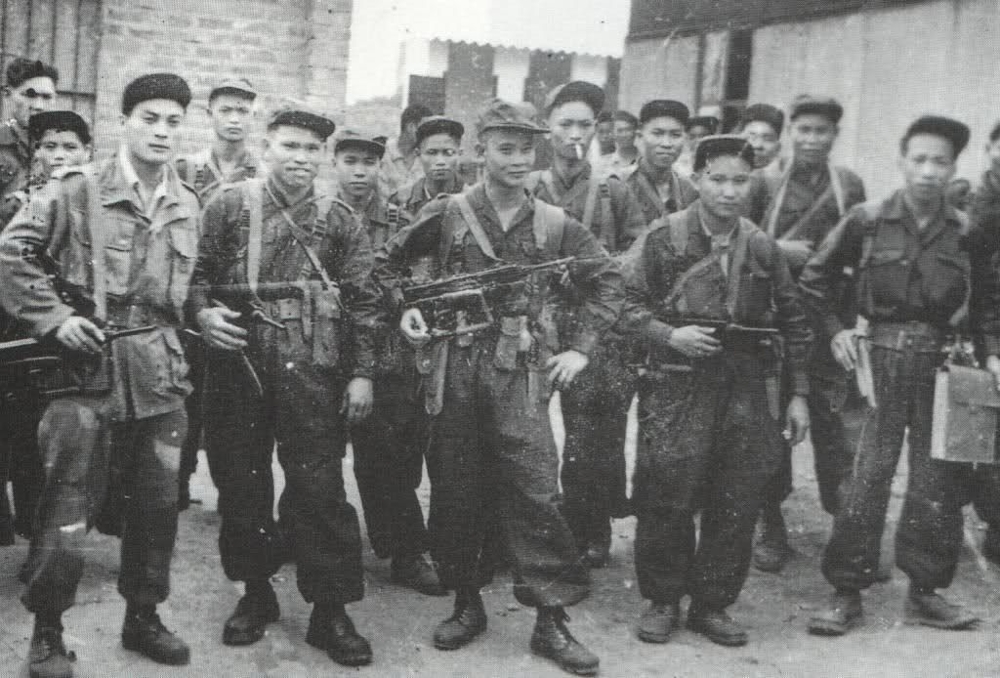
The story of the GCMA (Groupement de Commandos Mixtes Aéroportés) is a moral quagmire, a gray zone where a cornered Republic chose cynicism as a method. It wasn’t just a “cesspit,” but a catchment for everything the French army had most marginal, most burnt, most definitively out of bounds. You find former resistance fighters for whom the end of the war was an intimate tragedy, so much had they come to relish violence; but also former collaborators and survivors of the Charlemagne Division, for whom Indochina became a land of oblivion, or a way to commute a death sentence by spending other men’s blood.
A constellation of small local dictatorships, tolerated as long as they served the cause.
This murky universe was theorized and framed by Roger Trinquier, a cold, methodical mind for whom modern war no longer needed codes of honor. You had to turn the enemy’s methods against him, without scruple.
The GCMA was one of the laboratories of this so-called “revolutionary” warfare, whose ravages would later be felt, with grim consistency, in Algeria.
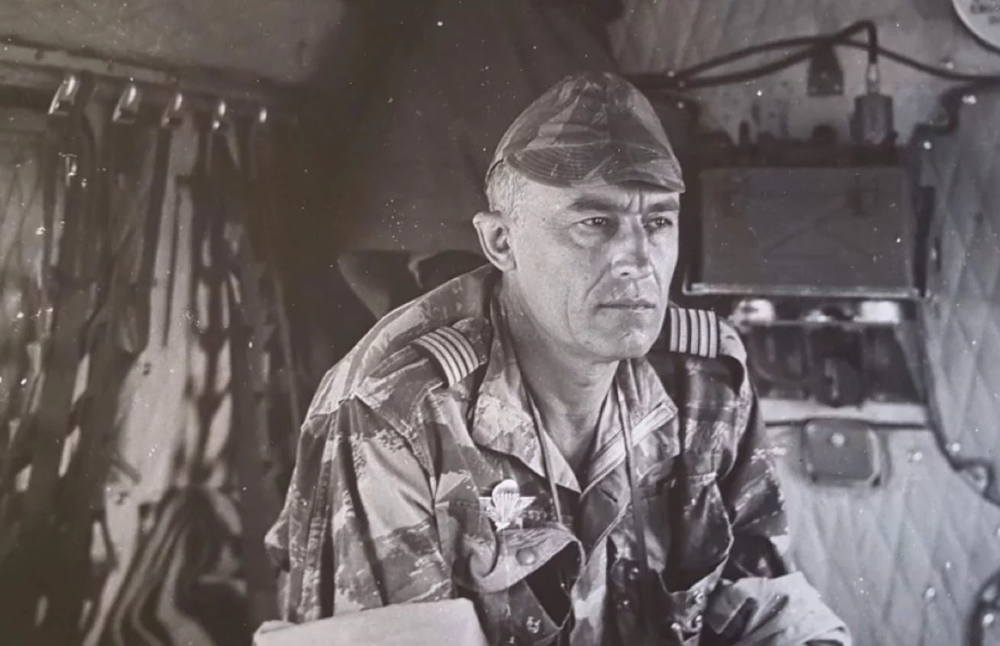
The hidden financing of the maquis war
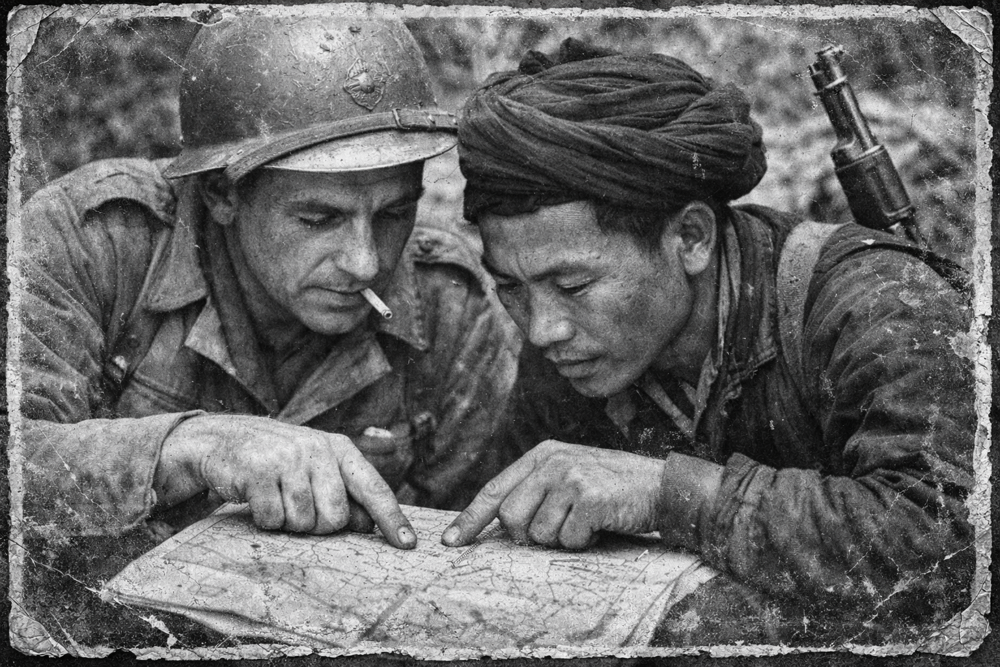
The GCMA, created to organize Hmong, Thai, and Dao minorities against the Viet Minh, had a vital need for secret funds to pay its partisans and buy intelligence.
Operation X was the covert opium circuit.
On the ground, it wasn’t a maneuver—it was a marketplace.
The State looked away; the underworld opened routes, dens, and cash boxes. The war was financed with opium; loyalties were bought by the kilo and called intelligence. Officers signed clean papers while others did the dirty work for them. Morality stayed in Paris, money moved in Saigon, and everyone got their cut. That day, France wasn’t fighting the enemy anymore—it was dealing like a street boss, running a territory the way a narcotrafficker runs his corners.
When the Empire withdrew and the generals put their white gloves back on and straightened their kepis, the Hmong, Thai, and Dao partisans were left alone with their dead.
They discovered that colonial loyalty had always been a fixed-term contract.
A monster that escapes its maker
Understand this: state-run opium trafficking in Indochina did not vanish with the Geneva Accords.
It simply relocated to the blind spots—still in the sun, elbow on the Mediterranean with a pastis.
The circuits, the men, and the administrative indulgences survived the war, recycled in the port cities of the metropole. Don’t believe the French Connection was born spontaneously in some grimy bar of the Vieux-Port. It fed on know-how, routes, protection, and habits forged when opium officially financed a colonial war.
What the country of human rights tolerated over there in the name of raison d’État, it took years to fight at home, discovering too late that the networks had not forgotten who let them prosper. The tie stayed knotted, but the blood eventually stained the carpets of the ministries when Richard Nixon, himself fond of special operations, forced France to dismantle its own monster.
A mirror to the present
France worries about becoming a narco-state the way one dreads a future already thoroughly experimented with elsewhere. Today, she trembles before what she once practiced far from home—with method, pragmatism, and a remarkable capacity for self-absolution.
The Republic, especially on its colonial fringes, long cultivated what it called, hand on heart and in an impeccable suit, a “pact of necessity.” It was an elegant way of saying she knew exactly how to crawl into bed with the underworld whenever virtue became a liability.
The Republic was never innocent; she was merely selective.
When the law got in the way, she worked the margins. When honor cost too much, she cut deals with those who had no use for it.
Pingback: Sapa: The Adopted Son Who Went Off the Rails - Thefaworld