
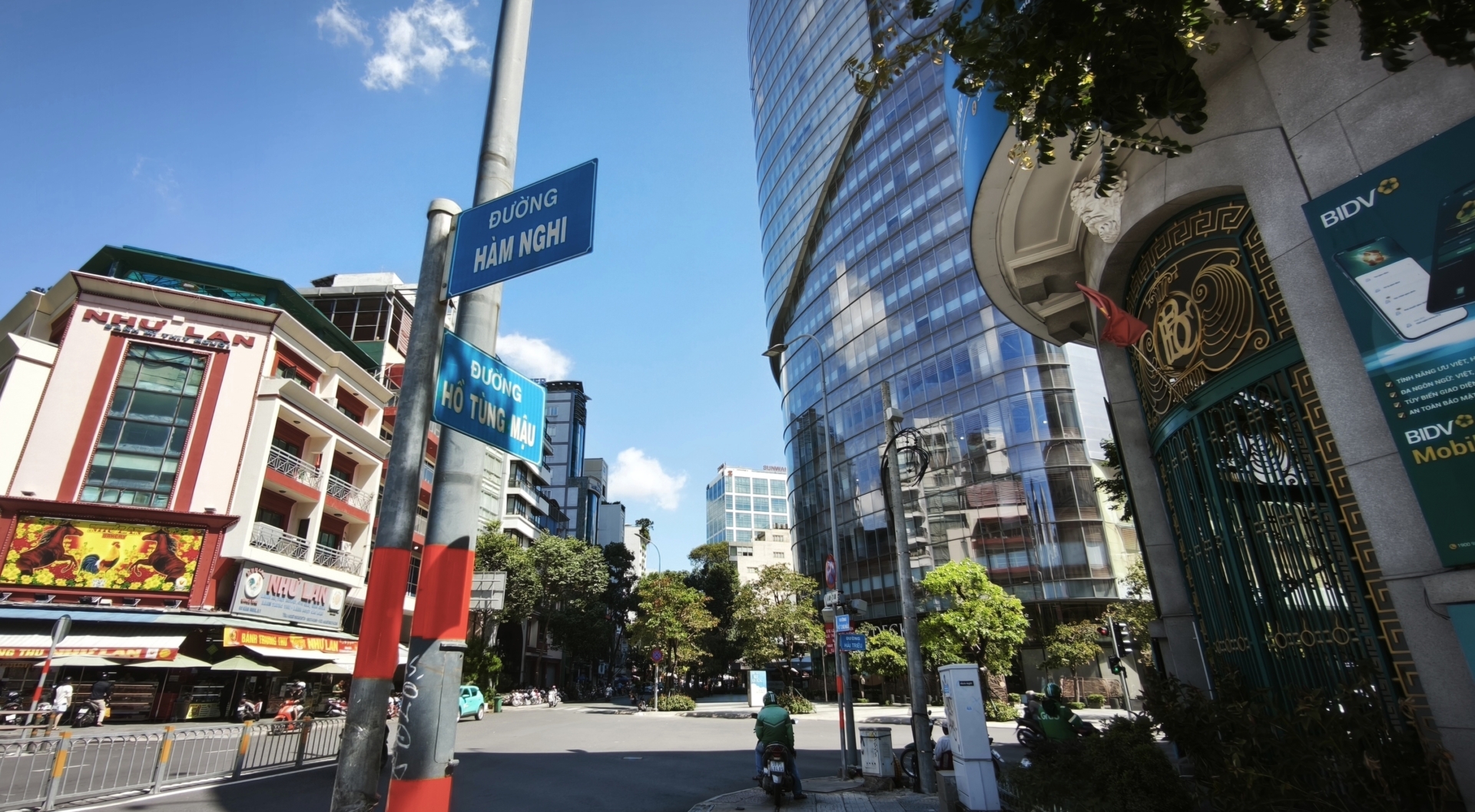
You can wear yourself out chasing the city with a guidebook that keeps serving the same soup, when all it takes is a few minutes standing at one crossroads to grasp a slice of a city’s history.
The Ham Nghi–Ho Tung Mau intersection is one of those.
No need to run around.
Just look around you.
And piece the puzzle together.
Sometimes all it takes is standing still at a crossroads to watch a century go by.
A Street Born from Mud
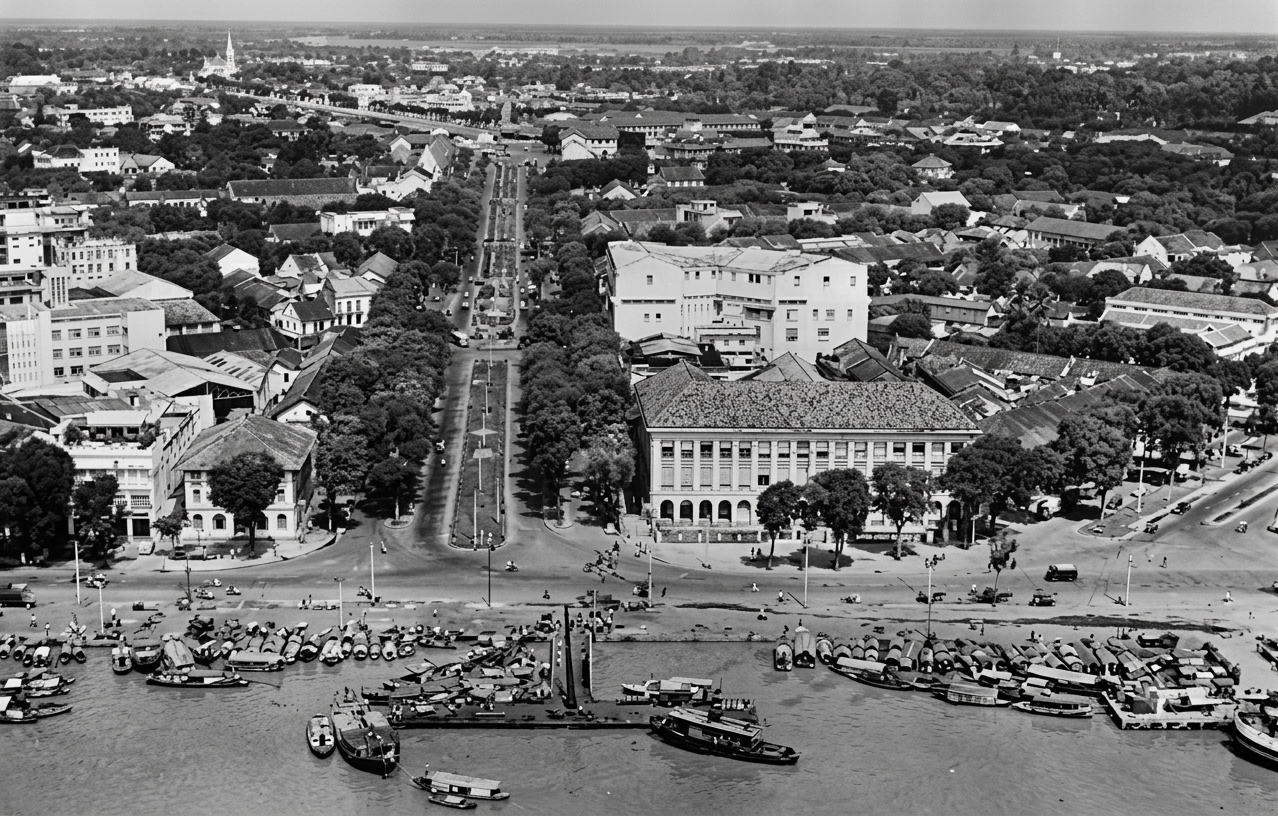
Before it was a boulevard, Ham Nghi was a canal.
The rạch Cau Sau, the “canal of the crocodile bridge.” Crocodiles were raised there for meat. The skin and teeth found buyers too.
Then the French filled it in.
Mud became an avenue.
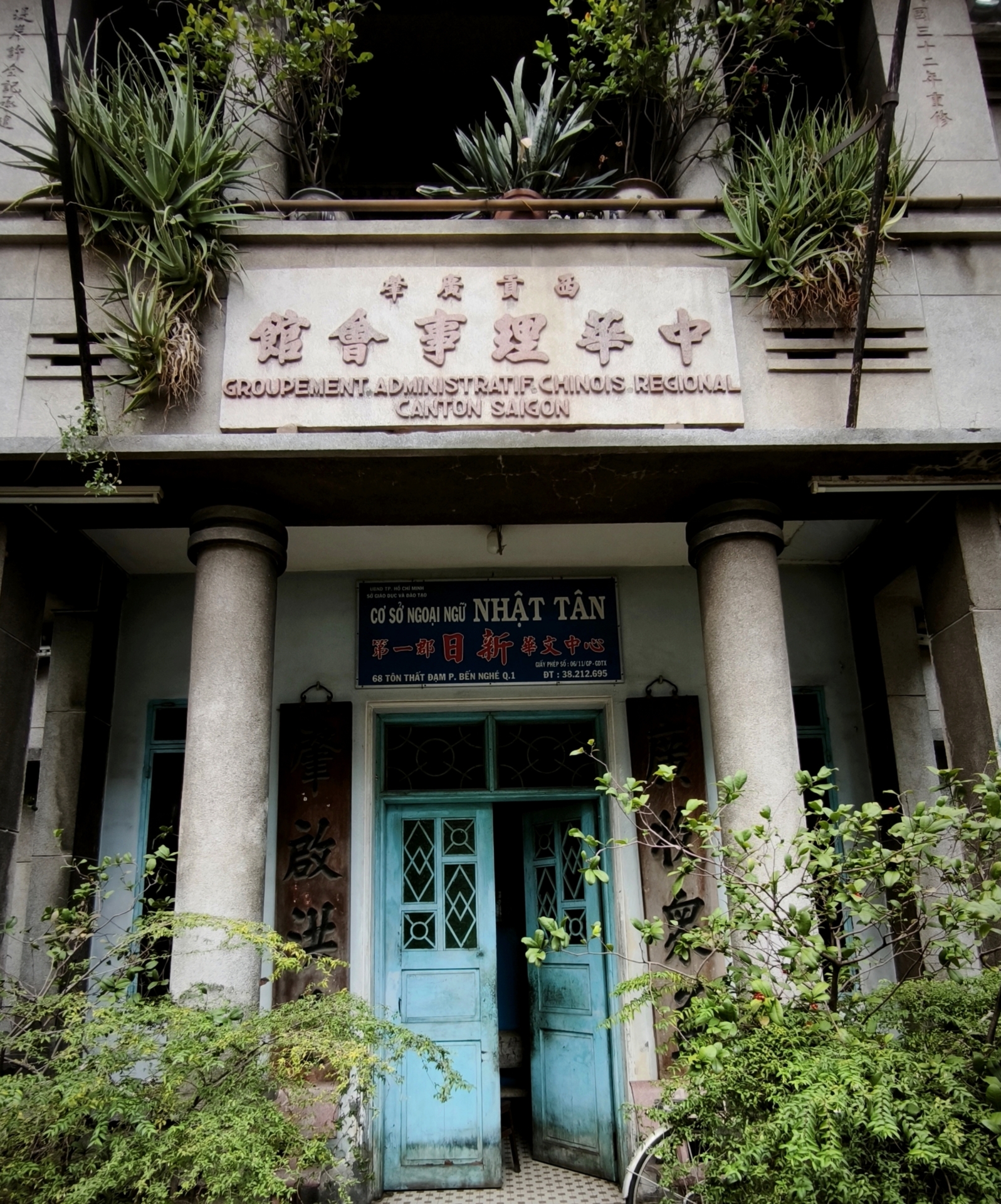
In 1877, it took the name Boulevard de Canton, after the heavy presence of Cantonese merchants settled in the district.
Then came the railway.
In 1885, the Saigon–My Tho line, French Indochina’s first railway, set off from Boulevard de Canton — later renamed Boulevard de la Somme — and ran toward the delta.
Not exactly for tourism.
Colonial business didn’t give a damn about the Mekong’s poetry.
It wanted things moving.
The math was simple: put the loot on rails.
The triumph of the truck and the road did it in. The line was shut down and dismantled for good in 1958.

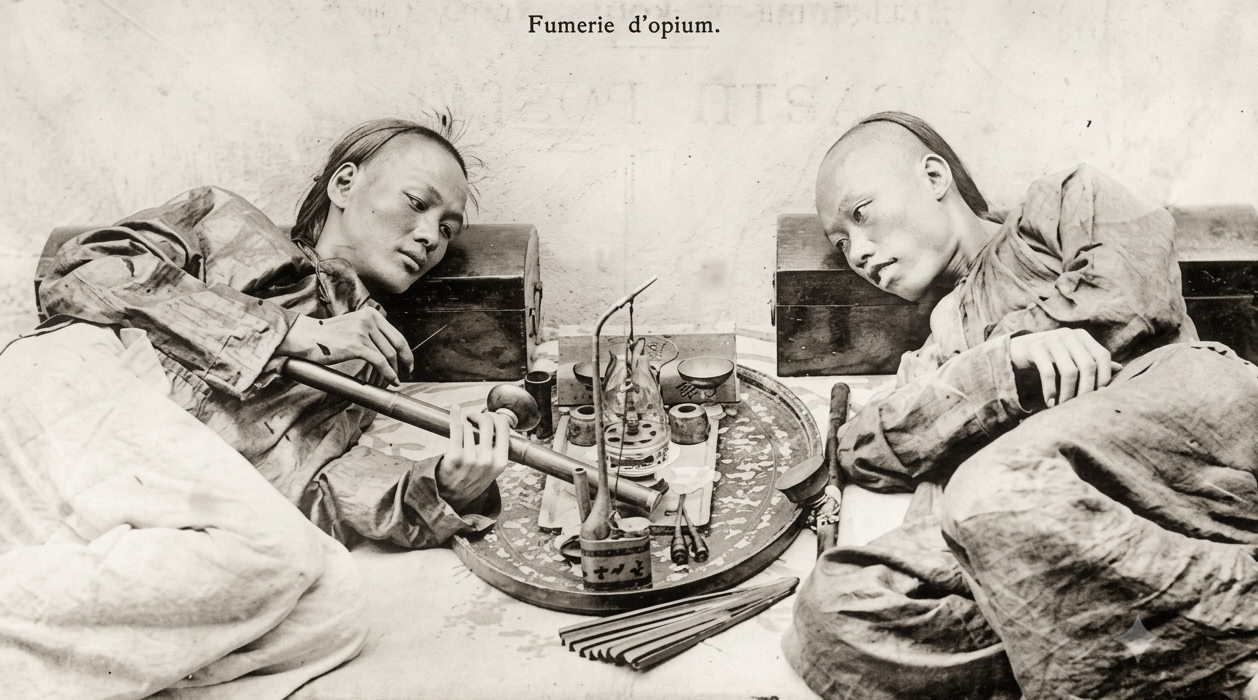
At the end of the boulevard, facing the river, stood the Opium Regie. The high-water mark of colonial Indochina’s cynical exploitation. A state-run poison that filled the coffers nicely.
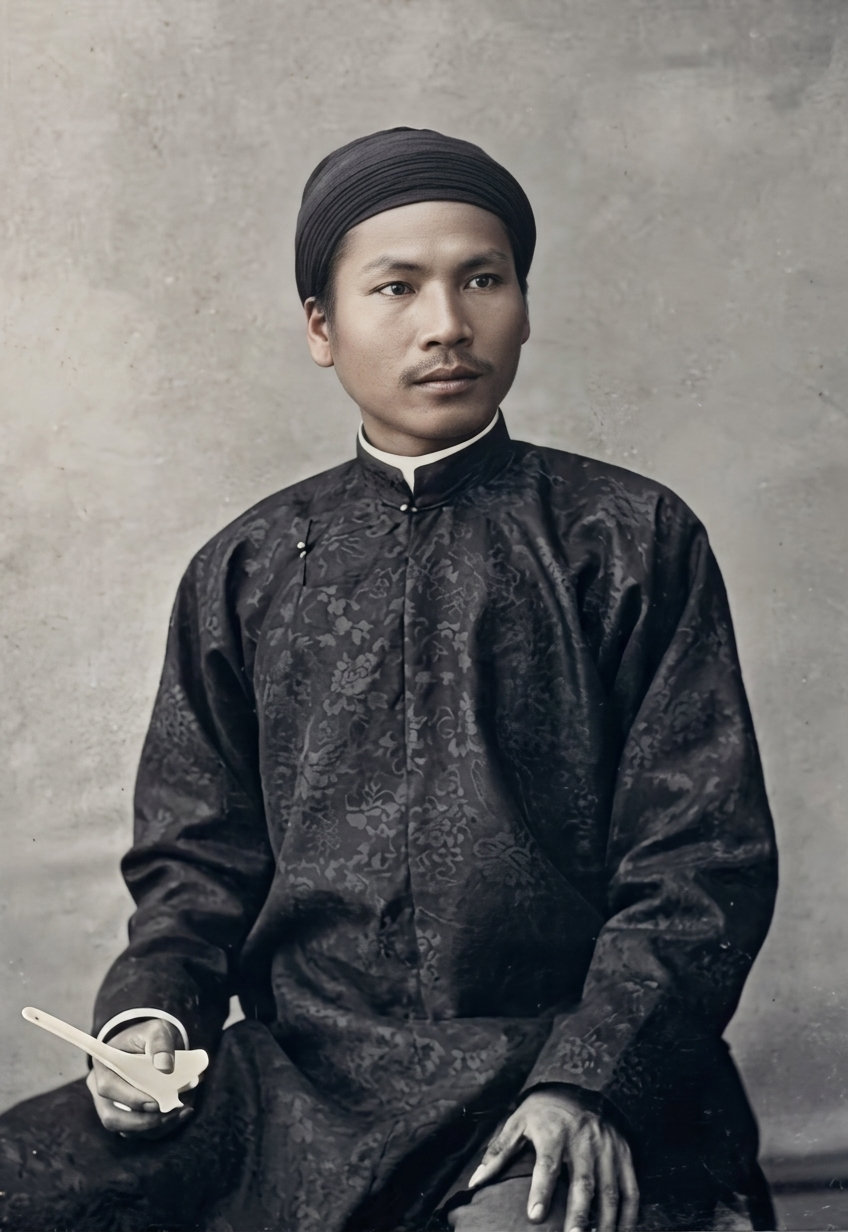
When the French left, the government of the Republic of Vietnam renamed the boulevard after Emperor Ham Nghi.
The one who’d refused to bow to men who arrived with grand airs.
Civilizing mission, morality, progress.
Behind the big words: white-collar scum in waxed mustaches.
The Rogues of Finance
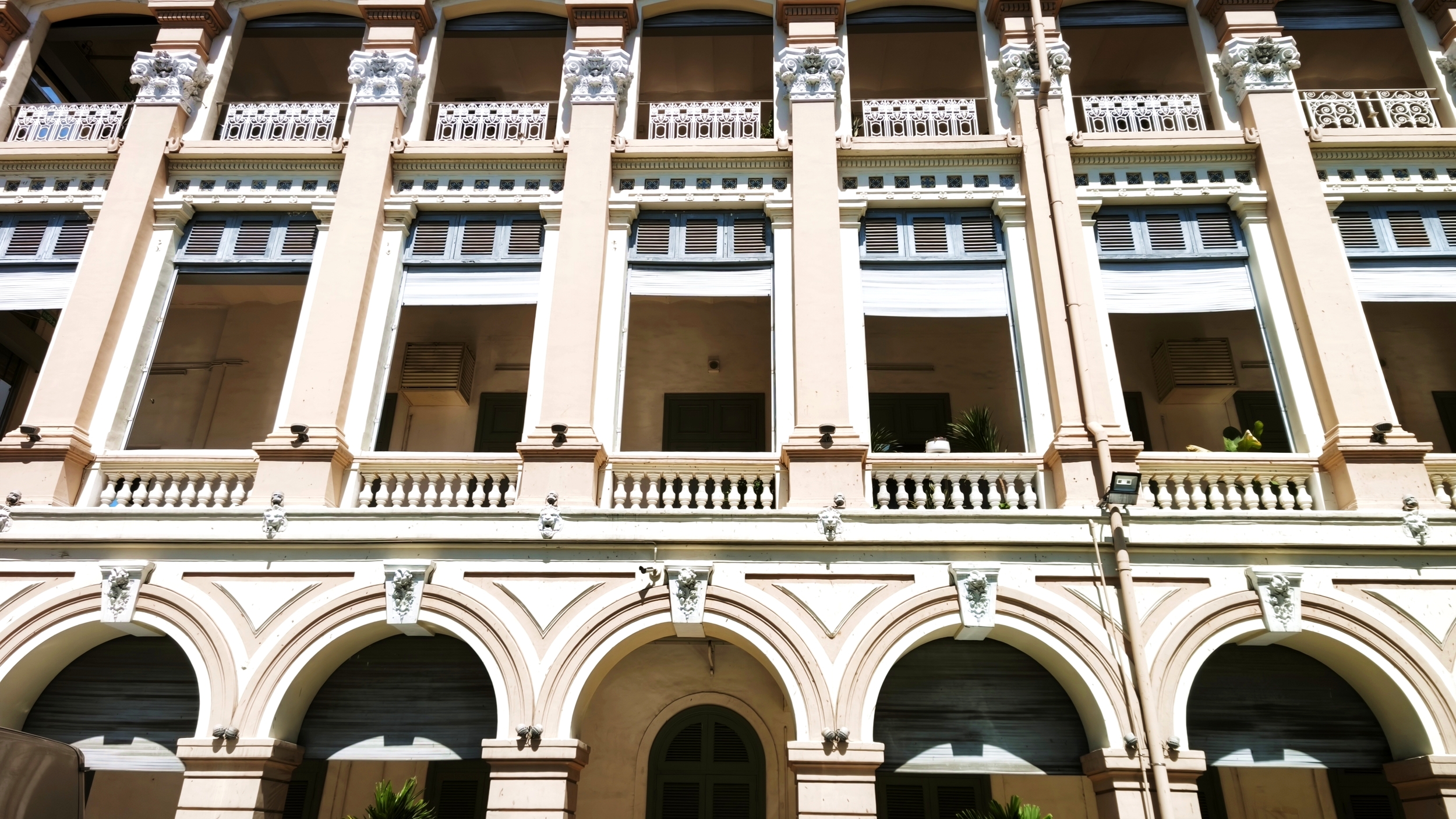
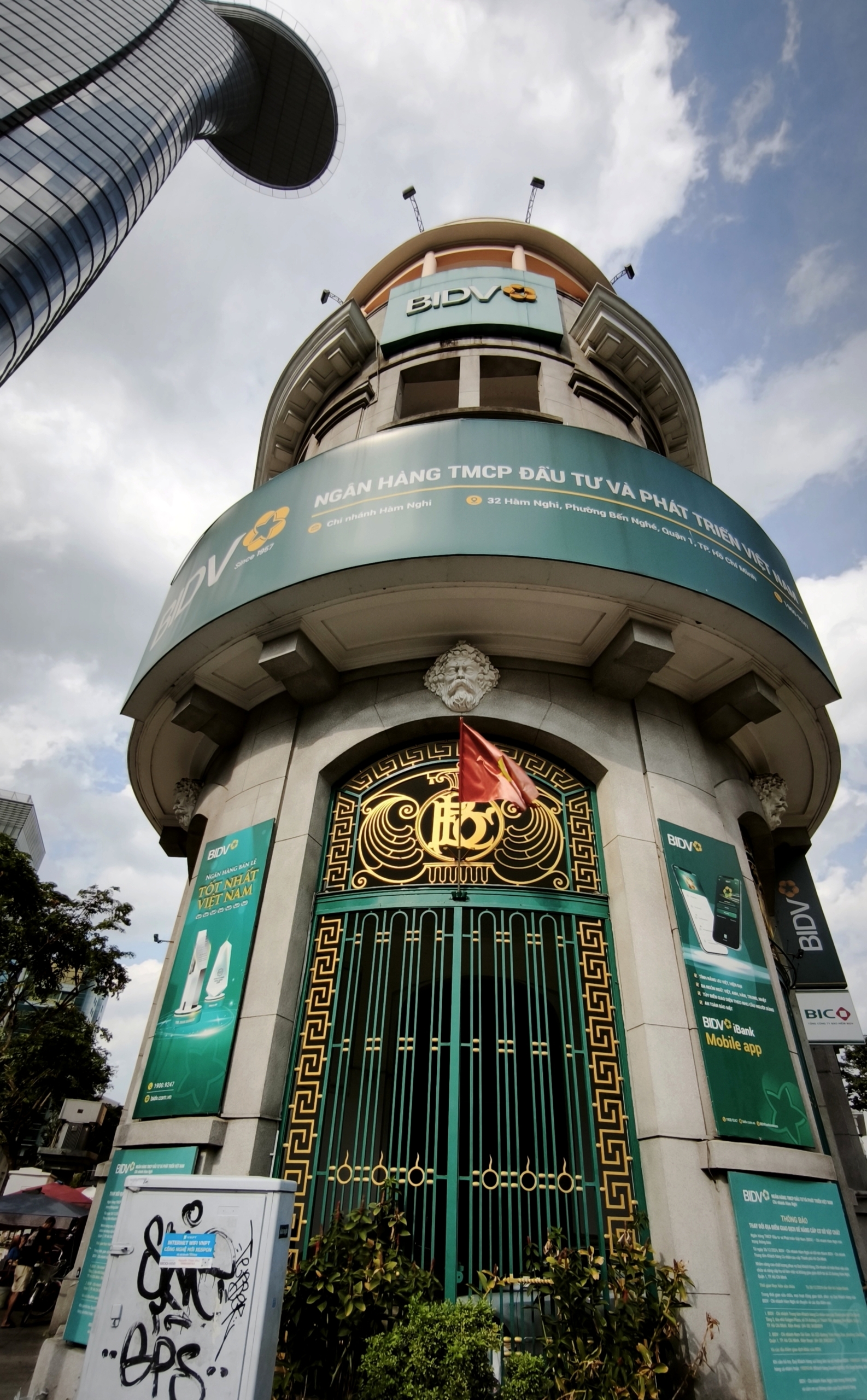
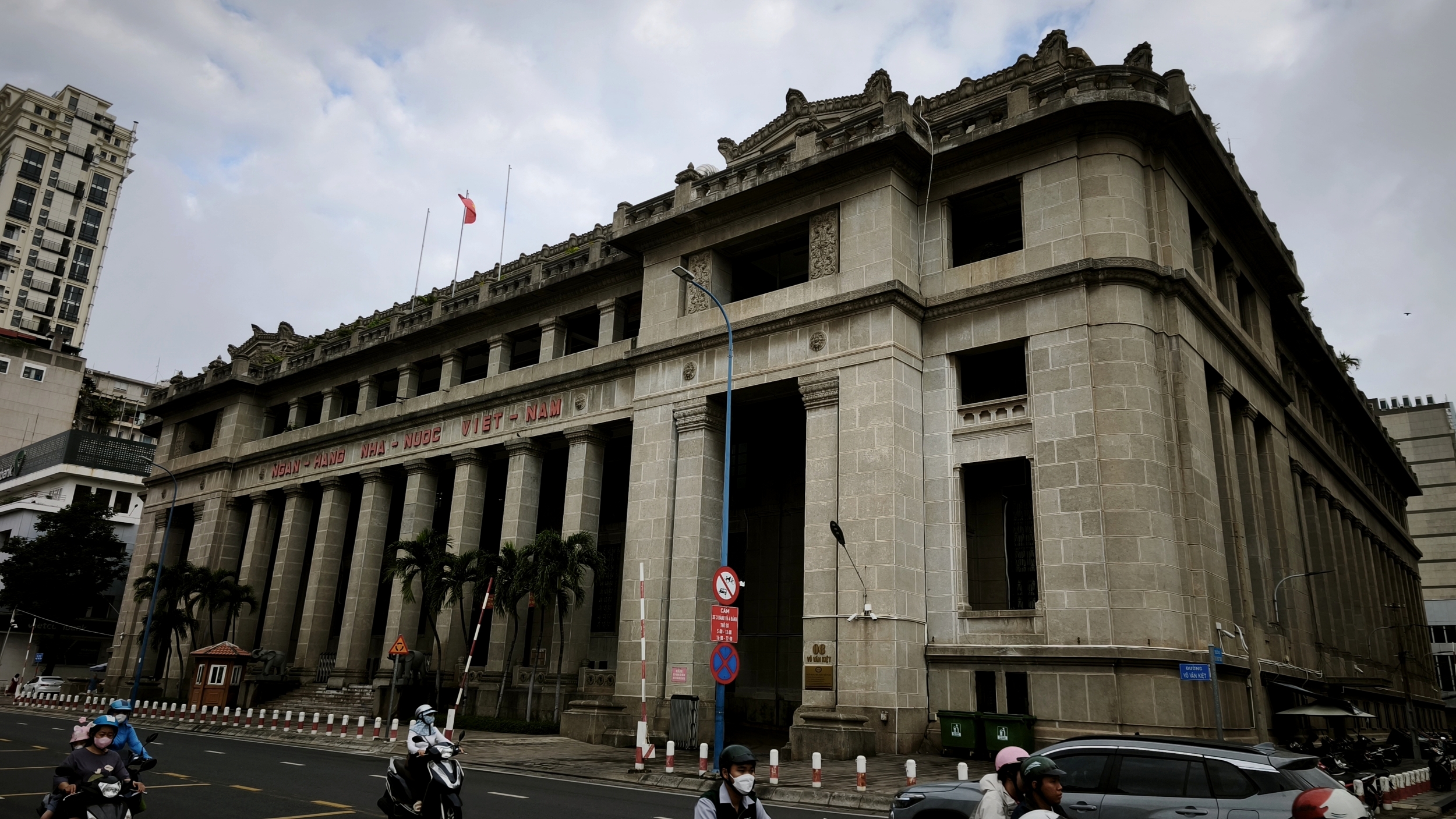
A few meters further, at 32 Ham Nghi, on the corner of Ho Tung Mau, stands a proud Art Deco building put up in 1925–1926 for the Société Financière Française et Coloniale — the SFFC.
A financial octopus with its tentacles in everything that ran the colonial economy: rubber, distilleries, electricity, sugar mills, credit, mines…
Behind the elegant facades, the cornices, the crisp lines, there’s capital, concessions, plantations, mines, infrastructure, and finance.
The set dressing has style.
The machine behind it, a lot less.
A few dozen meters on: Cho Cu market.
Here, off come the white gloves. Hands run through hair. The dealing no longer happens under gilding in a three-piece suit, but right on the pavement or in the back room of a café, in a tank top and rumpled trousers.
And it still hustles.
Colonial finance and the street market end up almost nose to nose.
On one side, the financial firms exploiting and organizing Indochina’s resources.
On the other, the traders, the shopkeepers, Saigon’s Chinese, the merchants, the flow of goods.
Two economies. Two scales. Two ways of hustling.
And between them, barely a few dozen meters.
And a few quiet arrangements.
The mud of the old canal never fully went away.
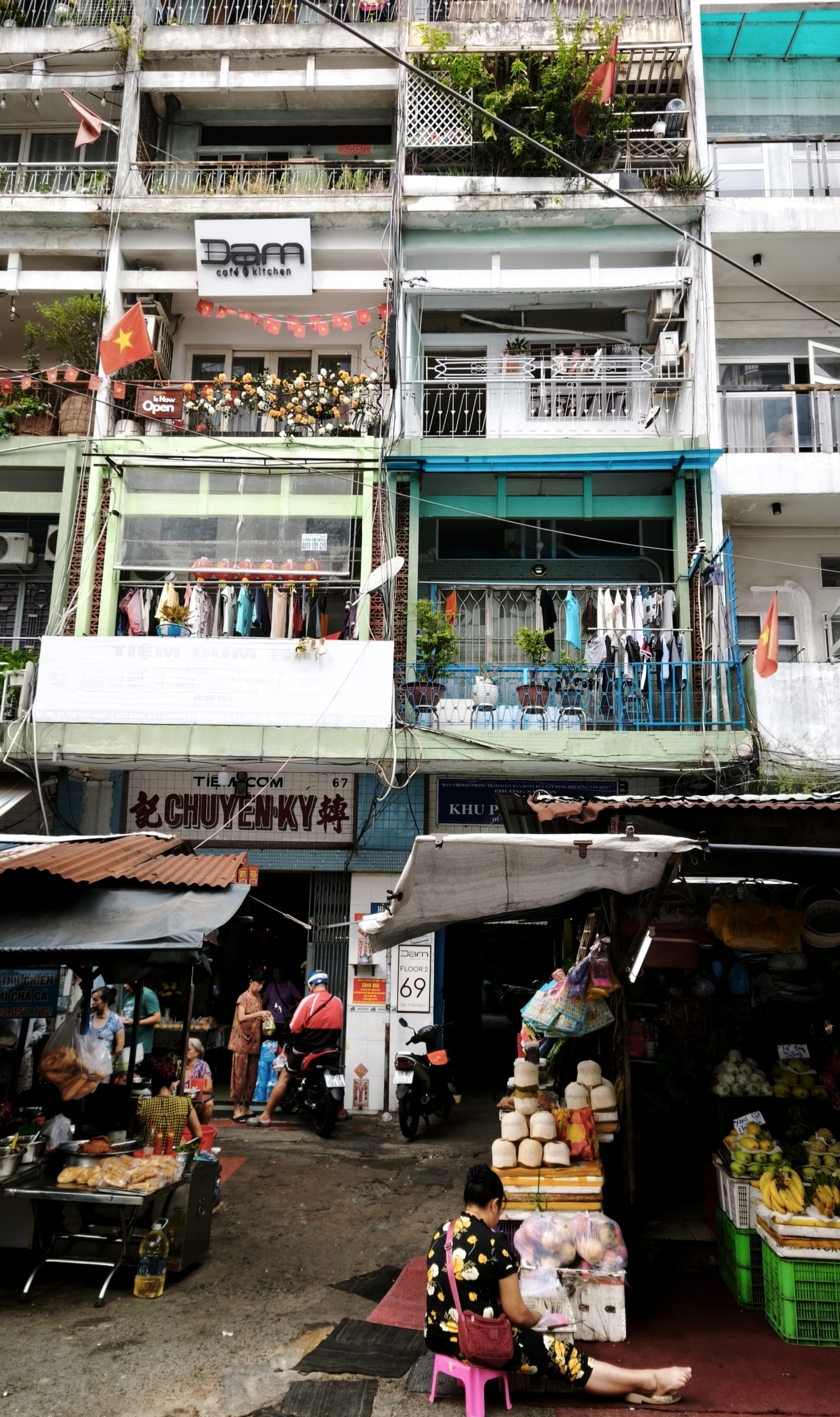
The Tipping-Point Crossroads
Out of the canal where it had been hiding, the Viet Cong emerged on March 30, 1965, to blow up a Citroën Traction Avant packed with 150 kilos of TNT at 39 Ham Nghi. The blast tore through part of the American embassy, killing 22 and wounding more than 180.
Until then, the war had mostly played out in the jungle or the countryside.
By striking the heart of the business and commercial district, at this nerve-center crossroads of the city, the Viet Cong proved downtown Saigon was no longer a sanctuary.
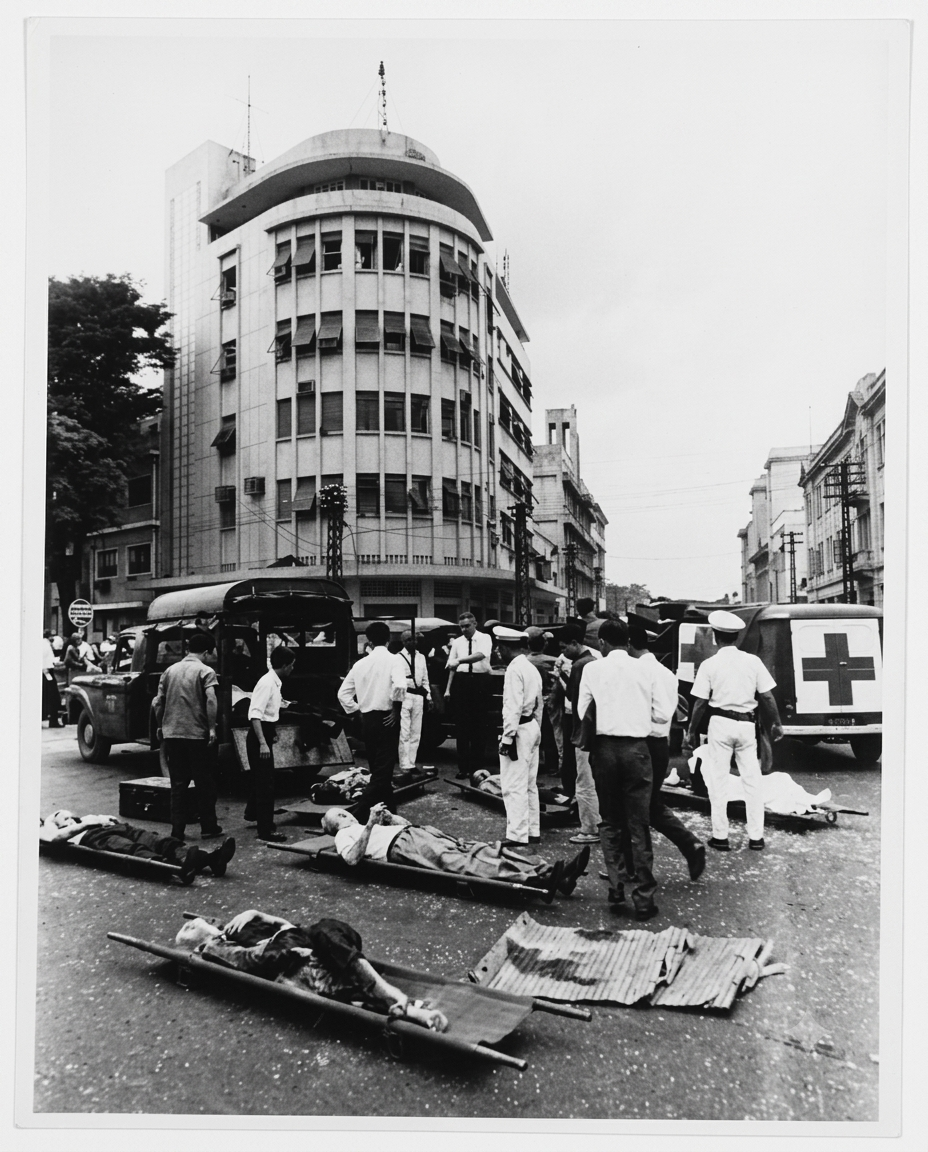
The event would later feature in Greene’s novel and Phillip Noyce’s film, The Quiet American.
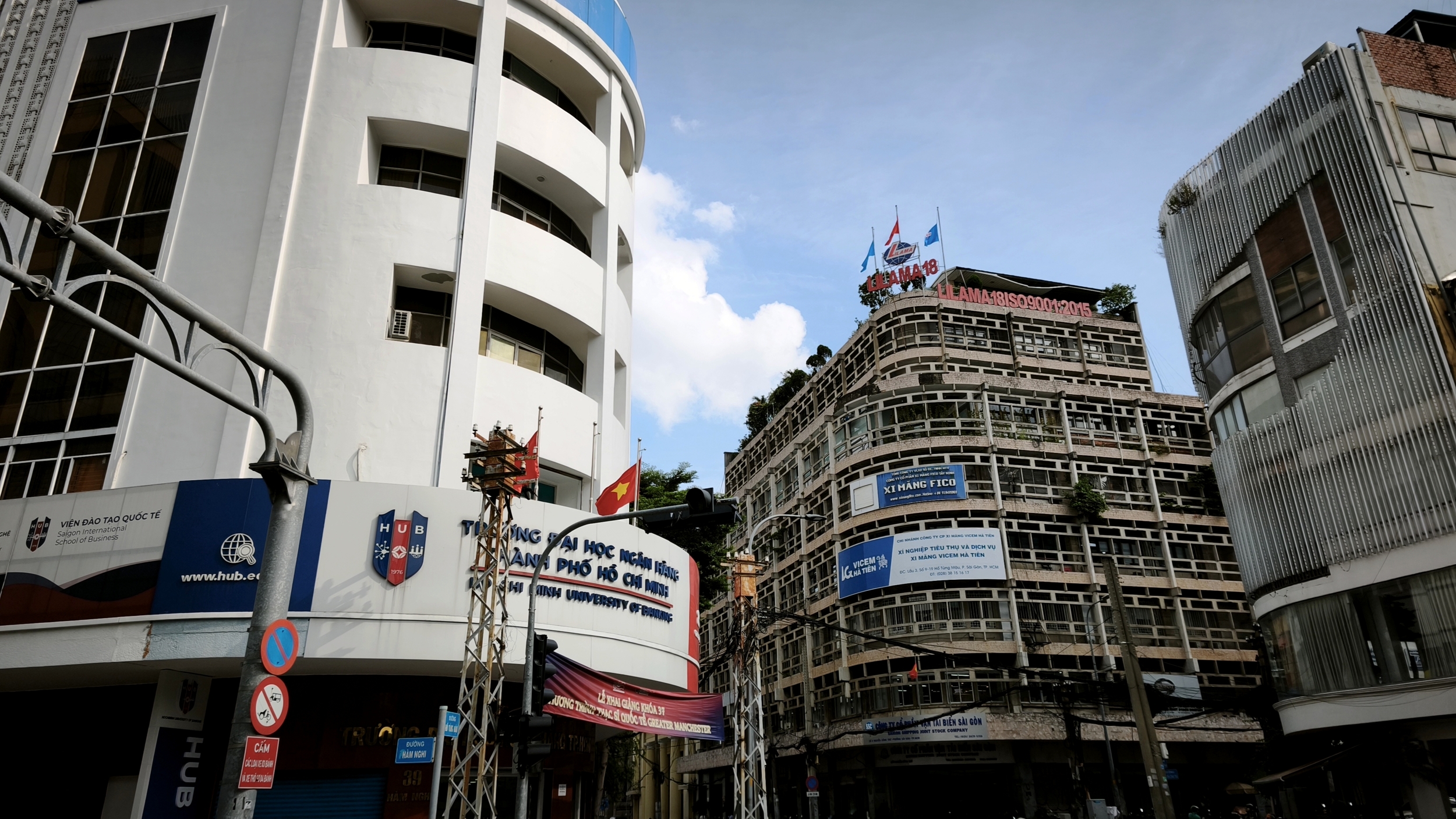
The building is still standing. It faces off against one of Brutalism’s concrete beasts — a massive, vertical, reinforced-concrete structure crushing the old world underfoot.
Art Deco. TNT. Concrete.
Three eras staring each other down.
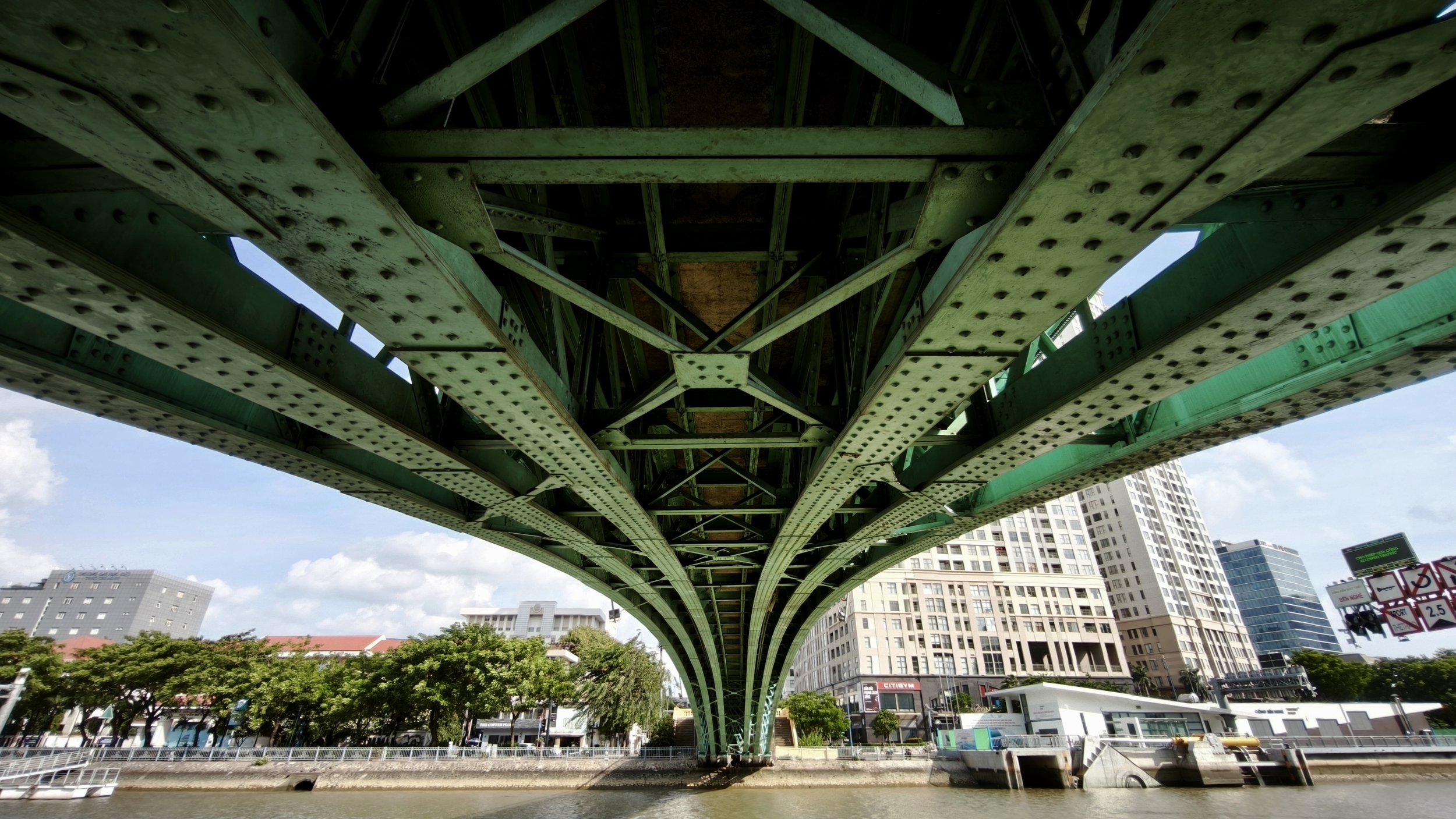
The Matcha Revolution
A few dozen meters on, Eiffel couldn’t resist flinging some handsome riveted steel across the river.
The gilded youth have moved back into the old building next door with Daddy’s money, earned on the stock exchange right across the street.
Eiffel? They couldn’t care less.
They’d rather spray slogans on the walls that they don’t understand, sip matcha with the detachment of people who’ve just discovered vintage, and show themselves off in whatever the city has to offer that’s most desirable right now.
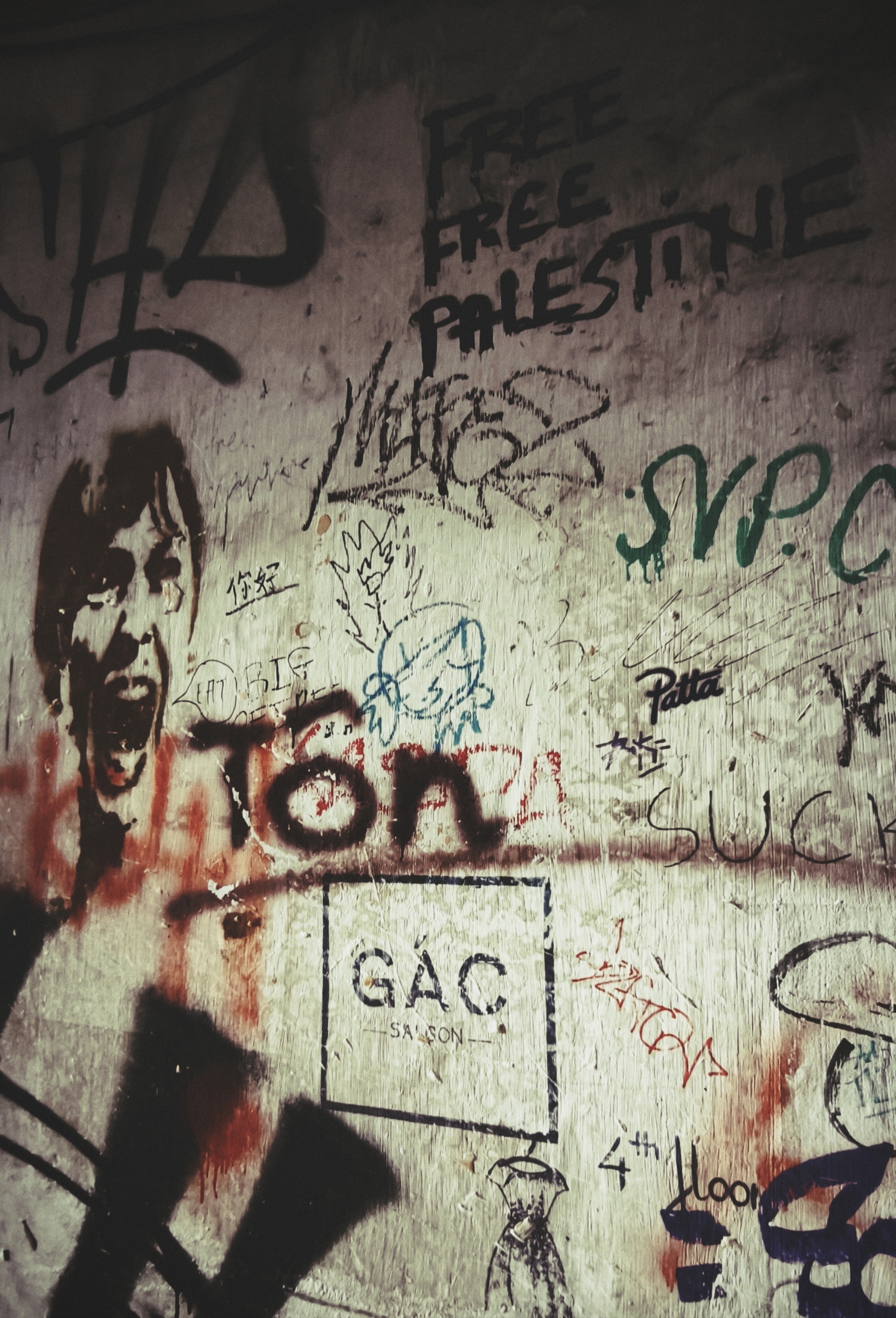
Meanwhile, Daddy’s putting together a real-estate deal.
He looks at the same building and sees neither its walls, nor its patina, nor its history.
Just a plot to conquer.
He’s already dreaming of bulldozing what still has texture to pour a glass-and-steel tower in its place.
The kids scream revolution on the walls.
Daddy fires up the bulldozer.
The Food Stays
In the shadow of History and the Bitexco Tower — which plays at being footloose but whose helipad no one has ever actually landed on, fair enough, we’re not far from what used to be called the Pointe des Blagueurs — for more than sixty years now has stood the cathedral of Saigon charcuterie.
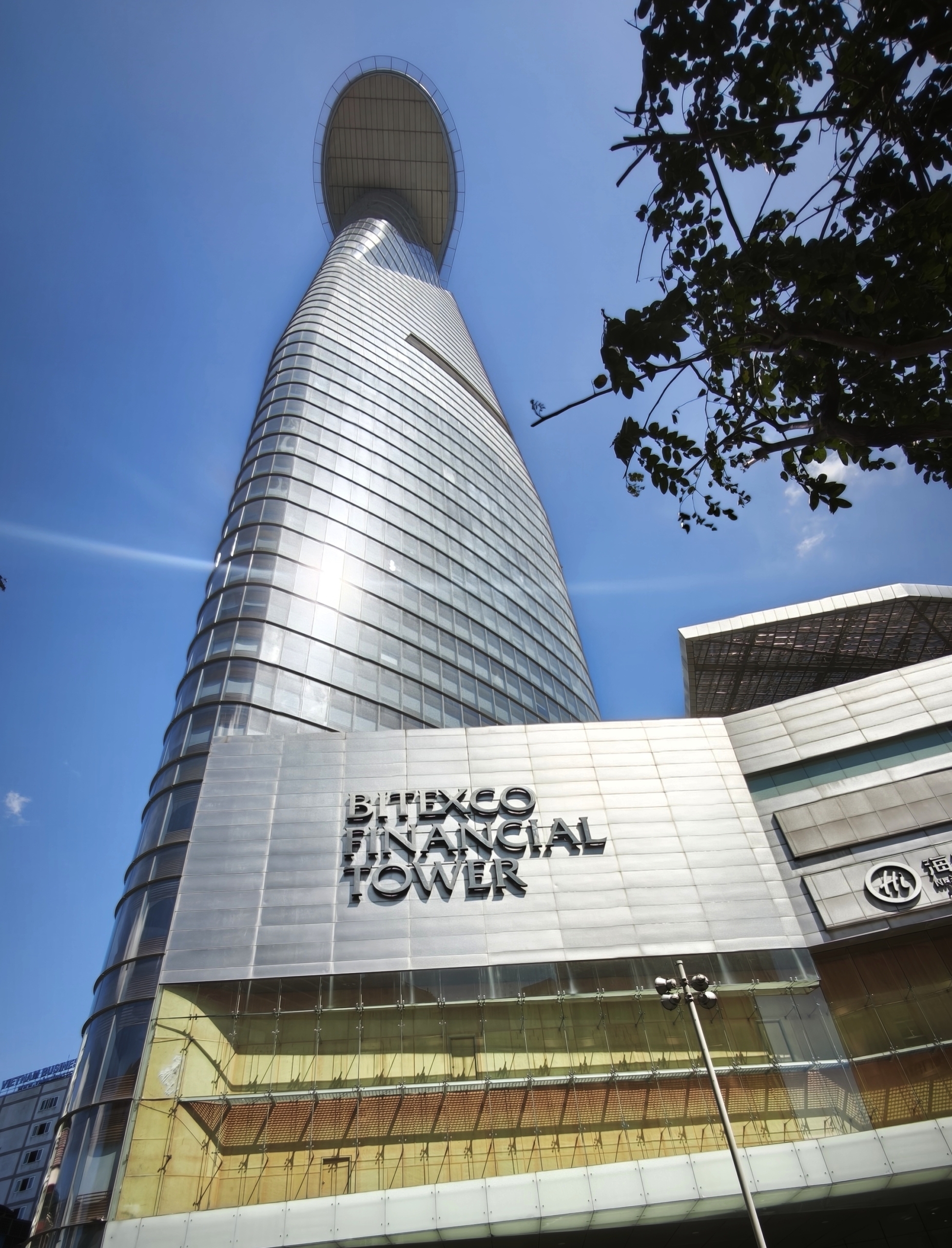
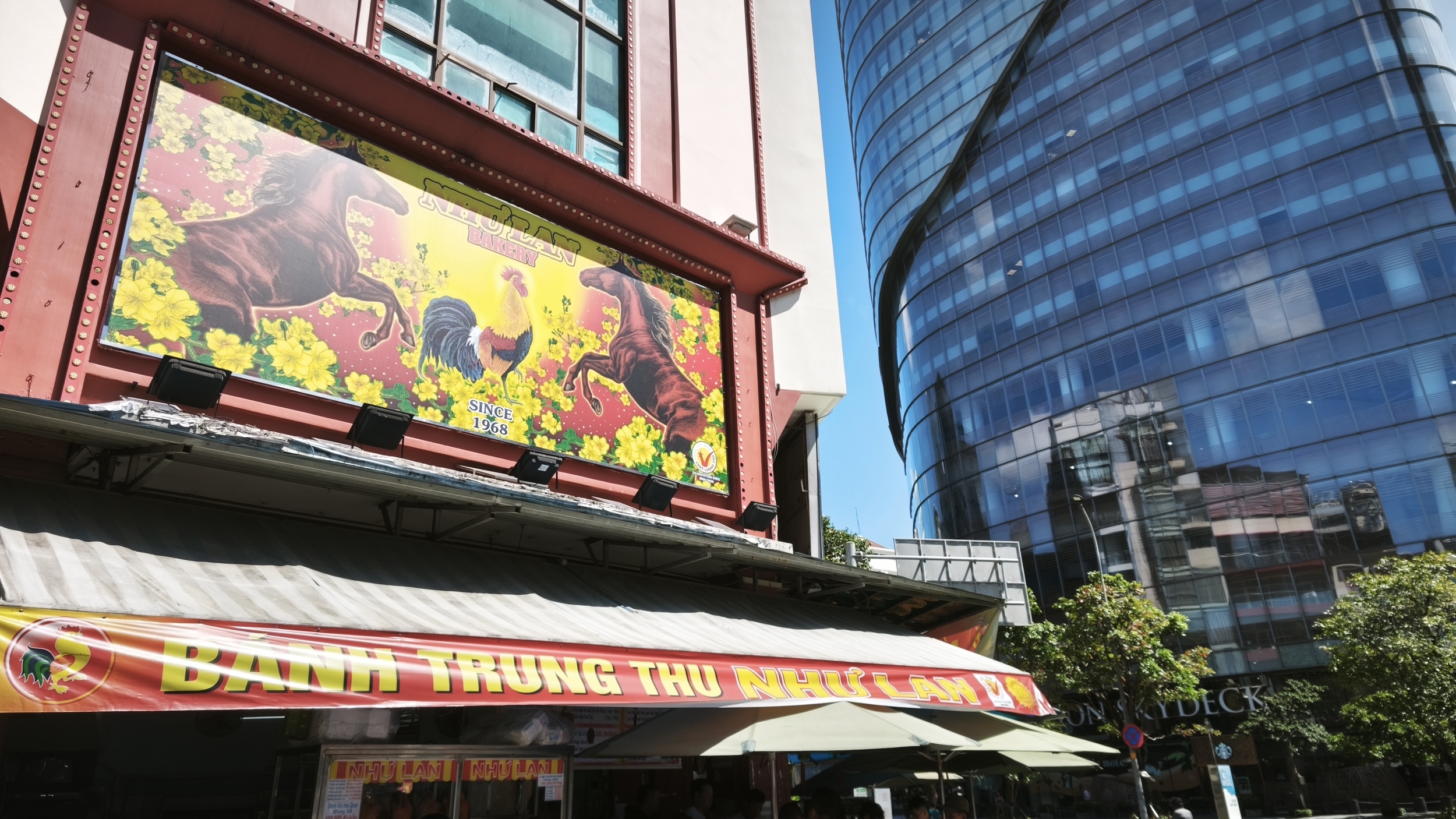
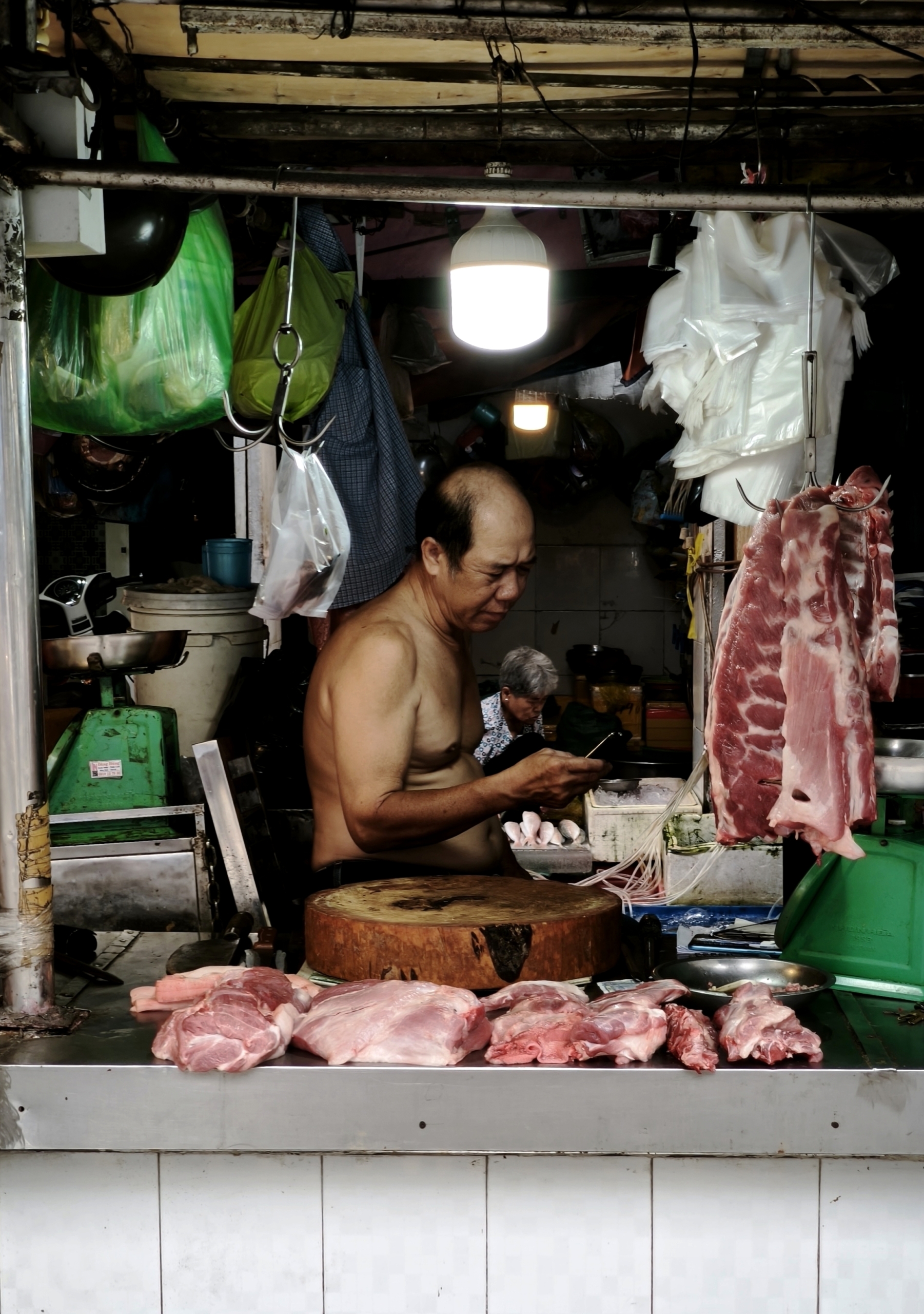
One climbs toward the sky, the other stays glued to the counter, cutting pork.
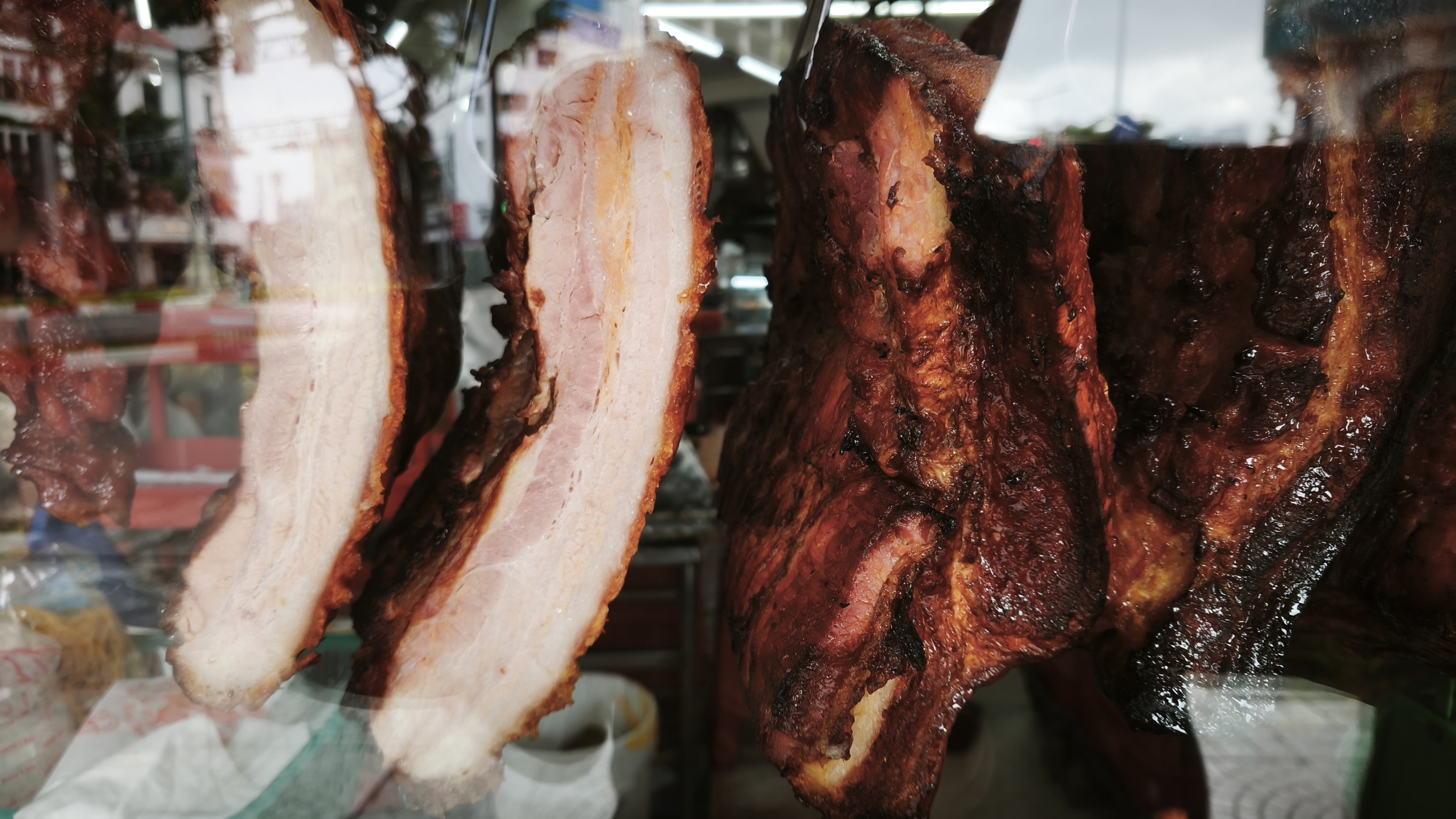
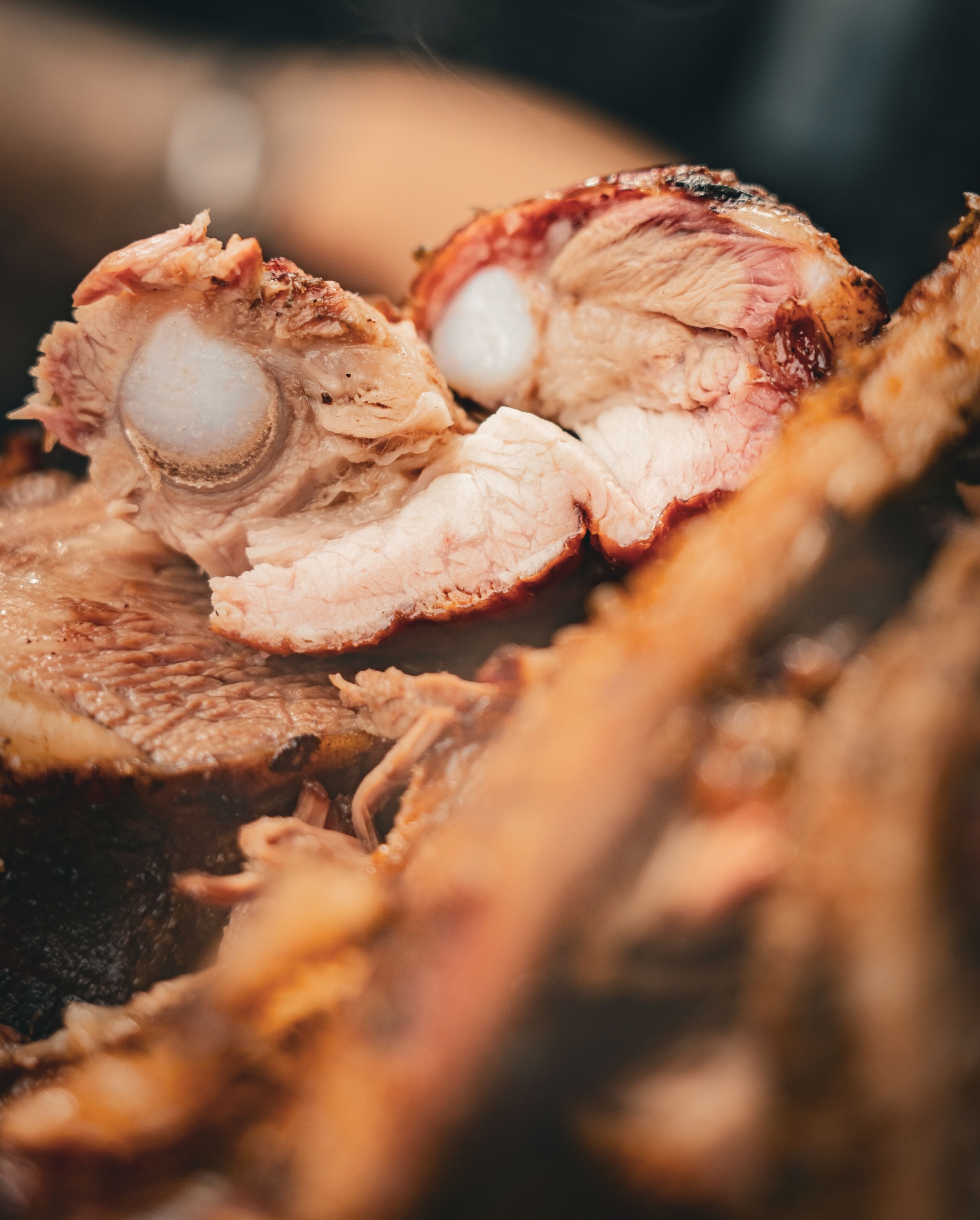
At Nhu Lan, you’ll find the whole grammar of the pig: steamed pork pâté, fermented pork, brioche-style pâté, mortadella, crispy pork skin, honey-roasted pork. Plus roast duck, banh mi, and other joys of Vietnamese cooking.
Empires come and go.
Power changes hands.
Embassies pack up and leave.
Wars break out, then end.
Street names change.
Saigon keeps eating.