
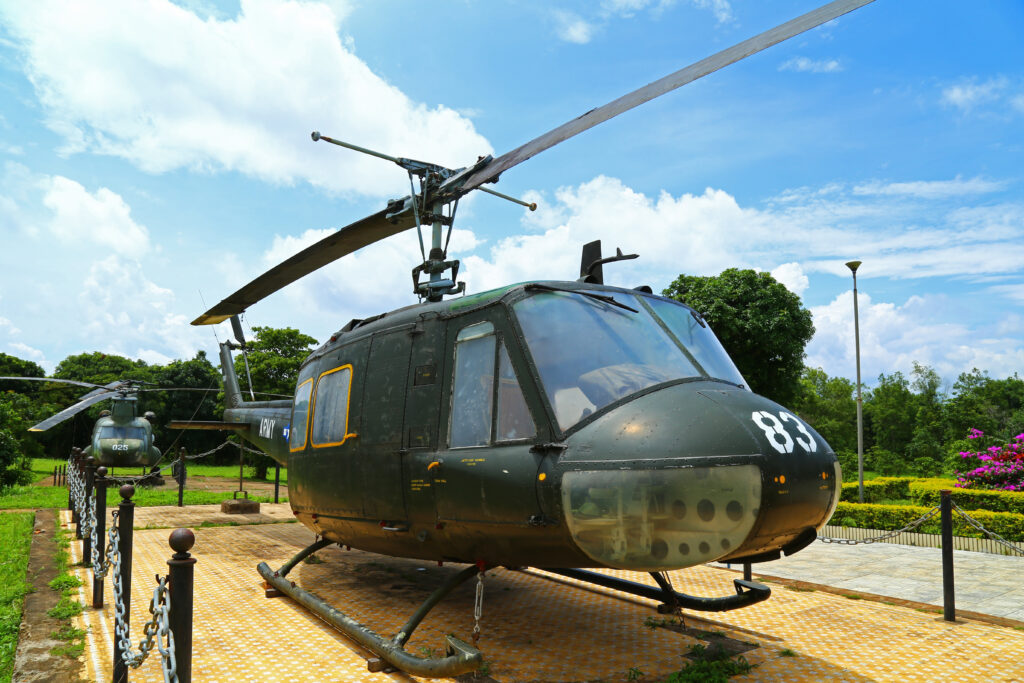
North of Hue, the ancient imperial capital of the Nguyen lords, the fighting reached a maddening intensity during the Vietnam War from 1964 to 1975. This area sat in the immediate shadow of the Demilitarized Zone (DMZ), that fragile and highly strategic demarcation line separating the communist North Vietnam from the American-backed South.
In this region, wedged between sea and mountain, lay one of the primary infiltration corridors for the People’s Army of Vietnam (PAVN) heading south. This strategic funnel turned the territory into a fierce battleground, hammered by airstrikes, ground operations, and continuous shelling by American and South Vietnamese forces. A bruised land, ploughed by years of warfare of unheard-of violence, it still bears the tangible scars of that conflict today.
The Quang Tri Citadel: 81 days of fire and steel
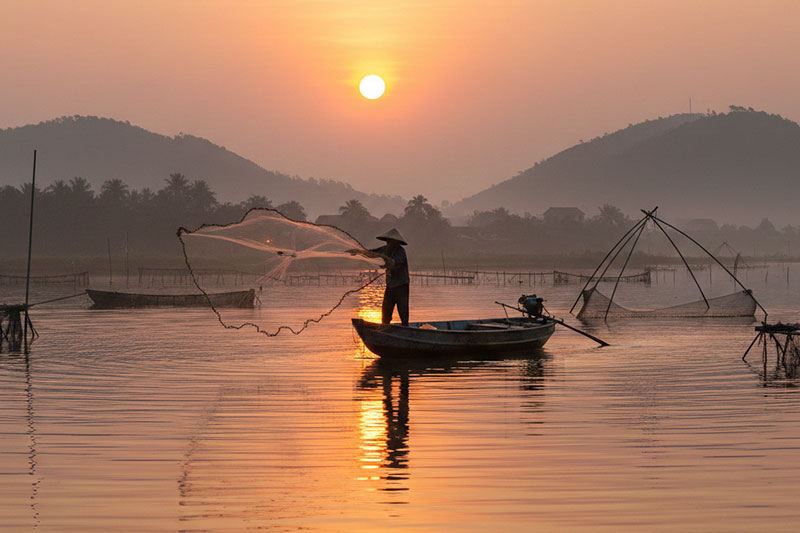
I leave Hue at four in the morning, like a thief of the dawn. At this hour, the Dong Ba market is already awake, crouching by the Perfume River, its belly wide open. The city breathes low, not yet putting on a show. The road streaks toward the Tam Giang Lagoon, one of the largest brackish lagoons in Southeast Asia. There, an infinite mirror of water unfolds, shrouded in golden dawn light. Upon this motionless surface, the silhouettes of fishermen and their nets hang suspended between sky and water. I find myself thinking of the American pilots, up there, in their helicopters. Did they see this? Did they have the time to look? Or was this landscape just one more backdrop to fly over, a calm floor beneath which fire is dropped? Had they even been able to appreciate the beauty of these Japanese-screen-like settings?
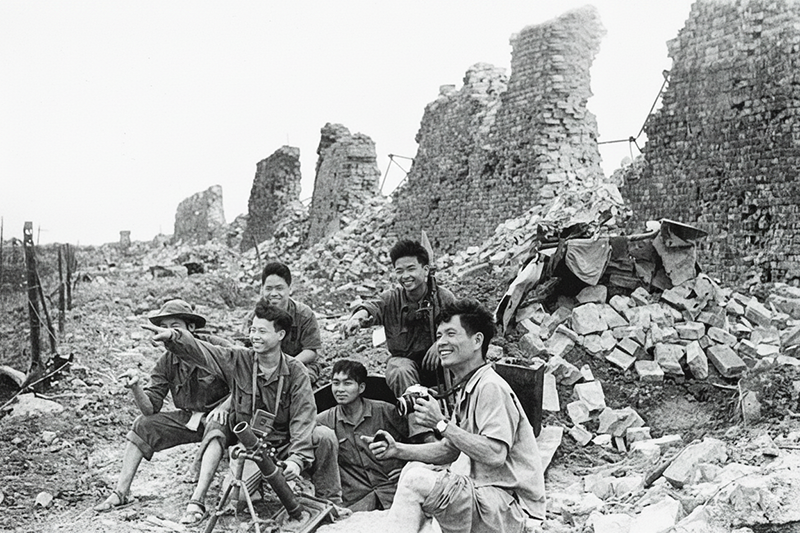
The road resumes. The North draws closer. And with it, the Quang Tri Citadel. Built under the Nguyen dynasty in the early 19th century in the Vauban style, it served as a provincial administrative and military hub. However, its current fame is entirely bound to the Battle of Quang Tri in 1972, during the Easter Offensive. The citadel was the stage for one of the most ferocious and devastating battles of the war. The fighting lasted approximately 81 days and nights, during which American bombing was so intense it reduced the citadel to a total field of ruins. Released in 2025, the film Mưa đỏ (literally translated as “Red Rain”) revisits this hell of steel and mud. The title itself is a metaphor for the thousands of lives sacrificed and the blood spilled, echoing the citadel’s nickname: “the cemetery of youth.” Its release, coinciding with the festivities for the 80th anniversary of Ho Chi Minh’s declaration of independence, met with phenomenal success.
Rather than being fully restored to its original architecture, the Quang Tri Citadel was renovated and partially rebuilt in the 1990s to serve as a memorial site. Today, it is recognized as a special national vestige.
The Demilitarized Zone (DMZ)
Further North, crossing a patchwork of rice paddies and villages through a maze of small secondary roads, I reach the famous Demilitarized Zone (DMZ). It was the demarcation line separating the North and the South at the 17th parallel, about a hundred kilometers from Hue, established after the Geneva Accords of July 20, 1954, which confirmed the French withdrawal after the stinging defeat at Dien Bien Phu. It became the border between the communist North and the nationalist South, awaiting elections that never took place. Marked on the ground by the Ben Hai River, the region was one of the primary theaters of fierce combat during the Vietnam War, each side desperate to claim this symbol of division.
The Hien Luong Bridge: A true historical monument
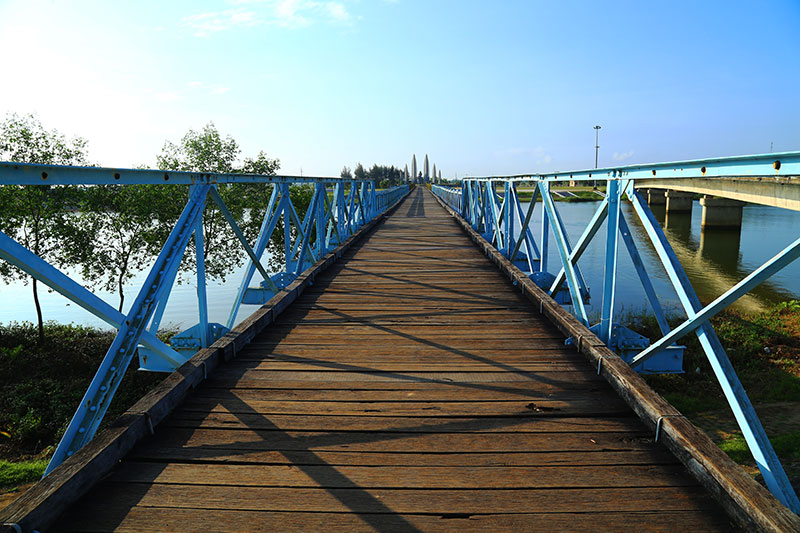
Built by France in 1950, the Hien Luong Bridge spans the Ben Hai River, marking the DMZ and the 17th parallel after 1954. Painted red in the North and blue and yellow in the South, it physically embodied the ideological division of Vietnam. It was the site of an unceasing sonic propaganda war via giant loudspeakers. Upon the grand victory of the North Vietnamese revolutionary army in the spring of 1975, the Hien Luong Bridge became the bridge of reunification, a symbol of the aspiration for reconciliation.
The Vinh Moc Tunnels: A symbol of the Vietnamese people’s resilience
About twelve kilometers from the Hien Luong Bridge lie the Vinh Moc Tunnels, a place that embodies the heroic resistance of the Vietnamese people. Much like the Cu Chi network in Southern Vietnam, these tunnels represent a remarkable feat of engineering, human labor, and perseverance in the face of relentless American aerial bombardment.
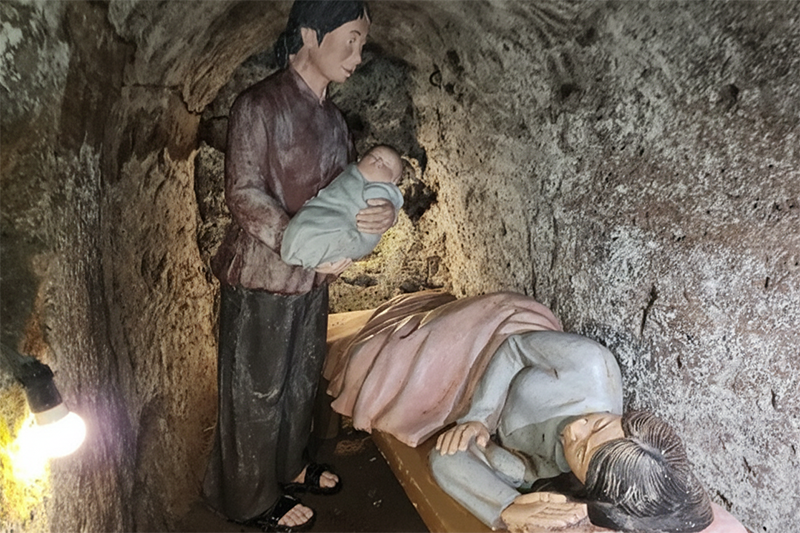
Secretly built by villagers between 1966 and 1967, this “buried citadel” stretches for several kilometers and is organized across three levels. It served as a vital refuge, not only for civilians but also for the military. A visit reveals that Vinh Moc was a true underground complex, including dormitories, meeting rooms, kitchens, schools, an operating room, a nursery, and even a maternity ward, which saw the birth of 17 children! Faced with General Curtis LeMay’s threat to “bomb them back to the Stone Age,” the people of Vinh Moc built an underground city, proving the failure of the strategy of continuous pounding. A perfect metaphor for the elephant and the mosquito!
Vietnamese military cemeteries
In this other Land of the Rising Sun, I rise before dawn. Not to enjoy it, but to beat the noise—to gain a few hours of silence before going to see what war leaves behind. Today: two military cemeteries: Vinh Linh and Truong Son. Calm names for places that are anything but.
Only a few weeks ago, I was walking among the white crosses of the American cemetery in Colleville-sur-Mer, Normandy. Perfect alignments, manicured lawns, a clean horizon. Here, it will be something else. Or perhaps not so different. Because deep down, whatever the cause, the flag, or the rhetoric, loss does not change languages. It aligns itself. It repeats itself. It always ends up occupying the landscape.
From Vinh Moc, a crossing of an immutable countryside, both redundant and comforting. This repetition of the same shades of green, the placid buffaloes, and the clusters of red roofs, far from being boring, offers a certain serenity—what I call “dynamic solitude.” For me, the motorcycle helmet has always been a mobile deliberation chamber, a place strangely conducive to introspection and creative or conflicting rumination. It is the perfect place to “settle scores” with oneself before reaching the destination.
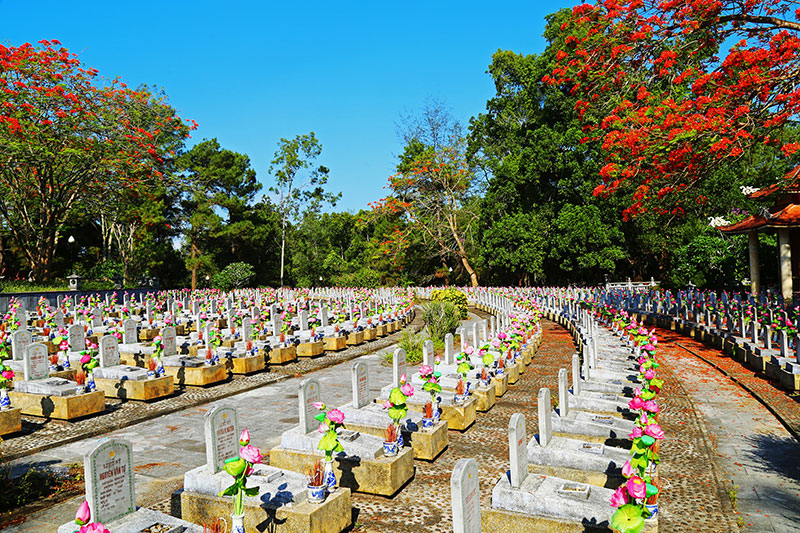
And here we are, at the Vinh Linh military cemetery. But I do not cross the gate. I see families arriving, and I understand from their expressions that they have undoubtedly come here to pay tribute to lost loved ones. Faced with these families who come to mourn, the space is no longer a historical site to visit, but a place of intimate grief. I resume my journey, but grant myself a detour to follow the Ben Hai River. It glides quietly from the Truong Son mountain range to the East Sea, indifferent to the lines drawn upon it. It irrigates, it crosses, it continues. The countryside is perfectly bucolic, and it is hard to believe that I am wandering through one of the regions most affected by the spraying of Agent Orange during the Vietnam War. Even if 50 years later it remains an open wound on a human and environmental level, it would seem that, visually at least, nature has reclaimed its rights with spectacular force and resilience.
Around a bend, Ben Tat Hill rises, where the Truong Son cemetery nestles among 8 other hills, resembling a giant lotus. It is nearly 11 a.m.; the heat is crushing in this month of May. The cemetery is empty, breathing a heavy peace. I am not a cemetery enthusiast, but I must admit I have rarely seen one so beautiful. Thousands of graves aligned in terraces, in the shade of tall pines and frangipani trees with waxy white flowers. A garden of remembrance with a dignity that matches the sacrifice.