

The Khe Sanh US Combat Base
As I head back out, the crushing tranquility of Truong Son clings to my skin. The lightness of the ride collides with the weight of the ten thousand lives resting behind me. Many of them flickered out during the famous siege of Khe Sanh in 1968, my next stop about 70 kilometers to the southwest. Along the way, on Route 9, a limestone peak bristles incongruously from the rice paddies: the famous “Rockpile.” An advanced observation post and long-range artillery base, primarily used by the U.S. Marine Corps. Supplied exclusively by helicopter, it allowed for the monitoring and control of the People’s Army of Vietnam (PAVN) movements infiltrating from the North and Laos via the legendary Ho Chi Minh Trail. About twenty kilometers further, still toward Khe Sanh, I discover the Dak Rong Bridge, spanning the river of the same name. Since rebuilt, this bridge marked the start of infiltration routes to the West and South. Suffice it to say, it was a constant target of American bombing, as destroying this point cut the vital supply line from North to South.
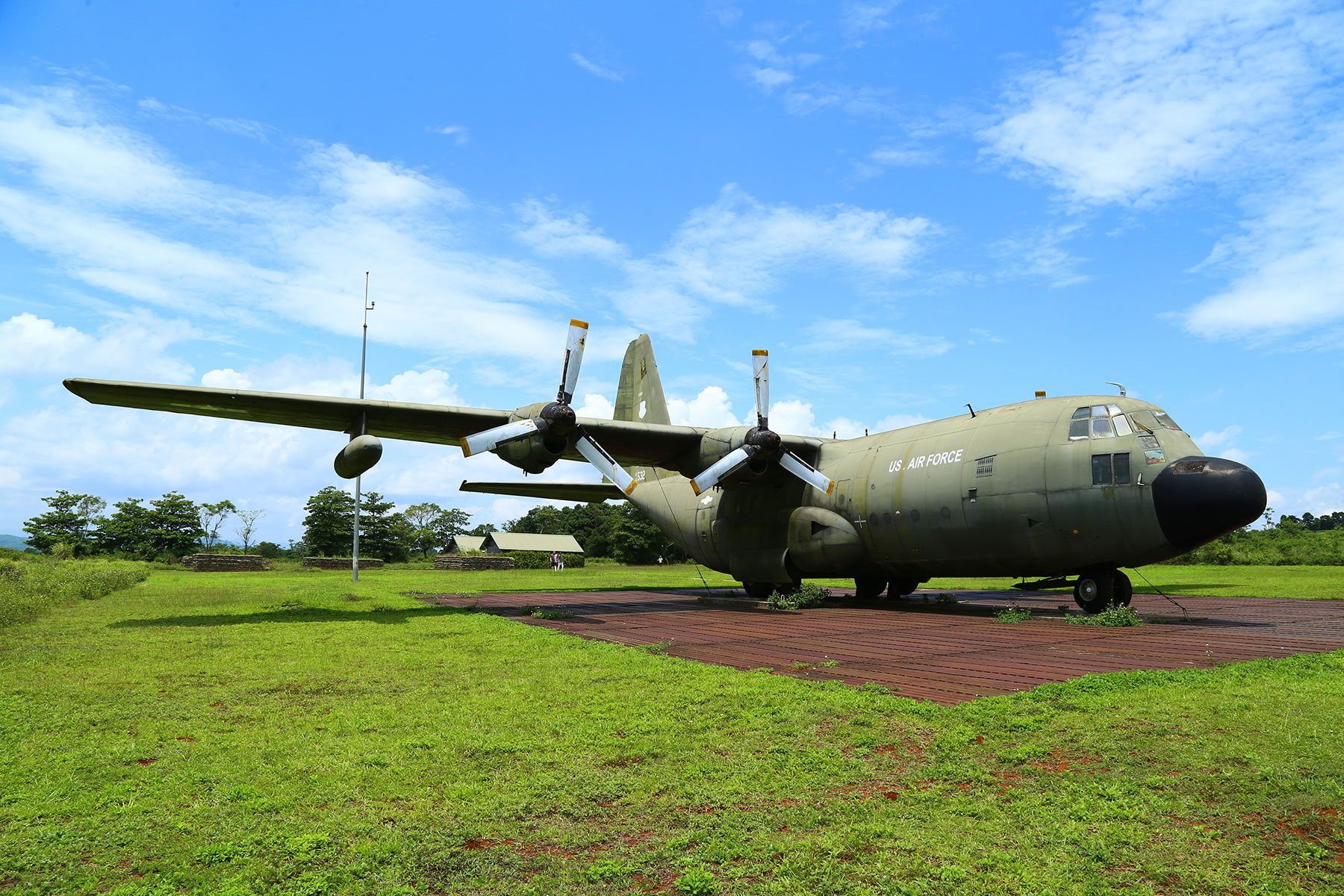
The road then veers northwest and snakes through a tormented landscape, climbing steadily toward the plateau where Khe Sanh stands. Two syllables that still resonate like a thunderclap in the memory of American veterans, with the same violence as Dien Bien Phu does for the French. Nestled in the highlands of western Quang Tri province, just a few kilometers from the Laotian border, the Khe Sanh airbase represented a vital lock on the Ho Chi Minh Trail and a forward observation point. Originally a simple special operations camp, it was transformed into a powerfully fortified combat base to block North Vietnamese infiltration and serve as a bridgehead. Today, the former Khe Sanh Combat Base is a preserved historical site featuring open-air vestiges (planes, helicopters, U.S. Army tanks) and a museum. The latter recounts the brutal siege led by the PAVN from January to July 1968, where thousands of American and Vietnamese soldiers faced off under a constant deluge of artillery and aerial bombardment. General Westmoreland, commander of U.S. forces in Vietnam, even asked the Pentagon to establish a contingency plan called “Fracture Jaw,” which planned for the secret deployment of nuclear weapons to a base in South Vietnam or the region, ready for use in the event of imminent defeat at Khe Sanh. Johnson categorically rejected it, demanding absolute secrecy to prevent the mere idea of such a plan from leaking to the press.
The base, which became a symbol of resistance for the Americans and determination for the Vietnamese, was eventually evacuated, marking one of the bloodiest and most strategically contested confrontations of the Vietnam War. Some historians suggest that Khe Sanh served as a strategic diversion, allowing for the surprise effect of the Tet Offensive—the true political and media shock of 1968.
Hamburger Hill
After a night spent at the foot of the old Khe Sanh base, I head south toward the A Shau Valley. The road zigzags across the foothills of the Truong Son, the Annamite Range that forms the natural border with Laos and Cambodia. A highly strategic sector during the war, its immediate proximity to Laos allowed North Vietnamese forces to retreat into neutral territory to escape American bombing and pursuit, making the valley a vital transit axis and an almost impregnable rear base.
Today, the roar of the cannons has fallen silent, but another battle rages. This time, it is the trees and wild animals being cut down. The Truong Son is home to rare and precious species, such as teak and rosewood, and remains one of the world’s biodiversity hotspots: home to the mysterious “Asian unicorn,” Indochinese tigers, gibbons, and a multitude of birds and reptiles. It is another battlefield. No less violent, no less disgusting. Under my helmet, the road unfolds and ideas tangle. What was done to men here seems to have shifted elsewhere. Same logic, different target. Less visible. Slower. The mountain says nothing. It just takes the hits.
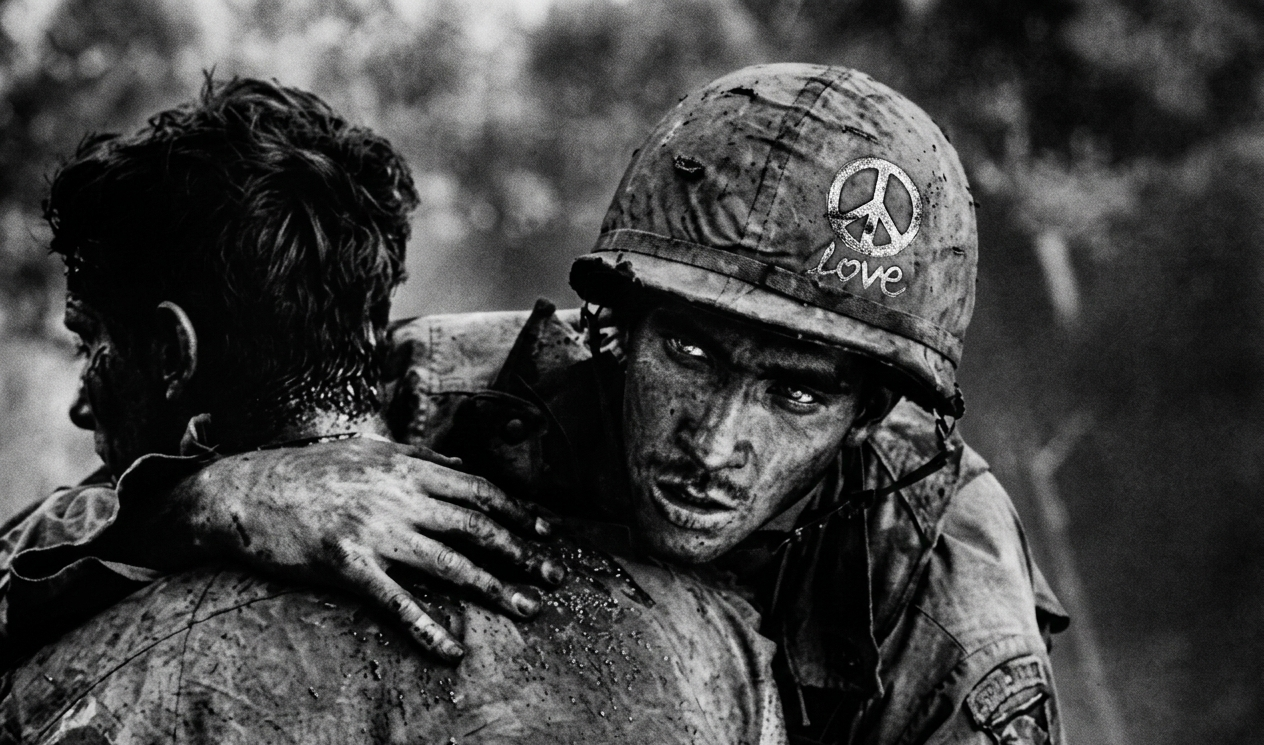
I arrive at Hamburger Hill via a beautiful road, almost pleasant. It’s hard to imagine what that name truly covers. Here, too, they ground things down. Intensely. Efficiently. The name, both ironic and cynical, was given by American soldiers to Hill 937, located on the steep massif of Dong Ap Bia. From May 13 to 20, 1969, the fighting was of extreme savagery: under artillery fire and machine-gun bursts, the bodies of American and North Vietnamese soldiers were quite literally shredded. It was said that the battle “turned men into hamburger meat.” After finally taking the hill, American forces abandoned it a few weeks later—an episode that sparked a heated debate over the true value of the objective and the strategy employed. In an ultra-consumerist society like the United States, throwing away meat or men amounts to the same thing.
Besides, it’s lunchtime, and in the small town of A Luoi, restaurants are few and close early. This quiet little town was once a key artery of the Ho Chi Minh Trail for North Vietnam, used to funnel troops and supplies to the South. American forces conducted massive aerial bombing operations and heavy artillery campaigns here. But powerless to dislodge the enemy from its protective jungle, the U.S. military heavily sprayed Agent Orange over the A Shau Valley, which was more than 80% forest before the war. Today, history offers a bitter sarcasm: the Vietnamese farmer, without hatred or desire for revenge, cultivates his land with fertilizers from Monsanto—the same chemical giant that once produced the Agent Orange that ravaged this very soil. That’s what you call knowing how to forgive!
Leaving A Luoi, I want to see the ruins of the old U.S. Special Forces camp at Ta Bat, but a rain as sudden as it is brutal forces me to take shelter in a café. Ta Bat is primarily associated with the first American special forces operations in these strategic war zones. The café owner dissuades me from going. According to him, nature has swallowed everything, devoured it. And then, there are the ghosts—the wandering souls that must not be disturbed. “Cô hồn, no good!” he tells me, pointing his finger toward the old camp.
So, I set off on the QL49 to return to Hue. To stay in the mood, I put Trinh Cong Son in my ears. This Vietnamese troubadour, a singer of peace, composed and sang melancholy and poetic ballads that spoke of love, death, and above all, the human condition in the face of the violence of the Vietnam War. Without ever having understood a single word of his lyrics in all the years I’ve listened to him, his songs have always moved me. Especially in this setting of secret peaks in the Annamite Range, from which the road unwinds in tight hairpins on the flanks of the A Ro Pass, crossing a dense, humid, and finally sovereign jungle. Gradually, the mountains soften, giving way to the emerald hues of the rice paddies and the villages of the coastal plain. Finally, the road finds its end along the serene Perfume River; Hue is there.
A strange irony to conclude this journey: these mountains, the theater of so much blood and fury, are considered in the feng shui of Hue as the sacred screen meant to protect the ancient imperial capital from evil spirits. The place destined to repel demons ended up giving birth to new ones.
