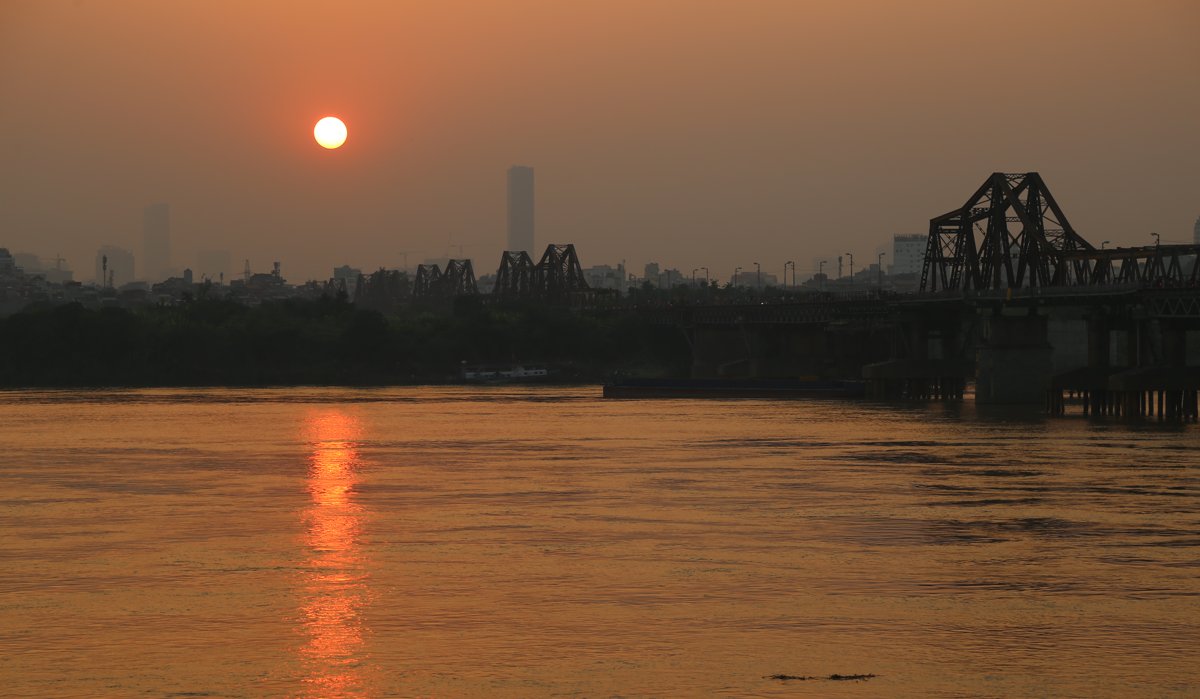
Long Biên Bridge is an old duchess who refuses the tomb.
She still stretches her carcass of rust and steel between the two banks of Hanoi, corseted in weary rivets, dragging her skirts of girders, her spine bowed by more than a century of crossings, bombs, and polite indifference.
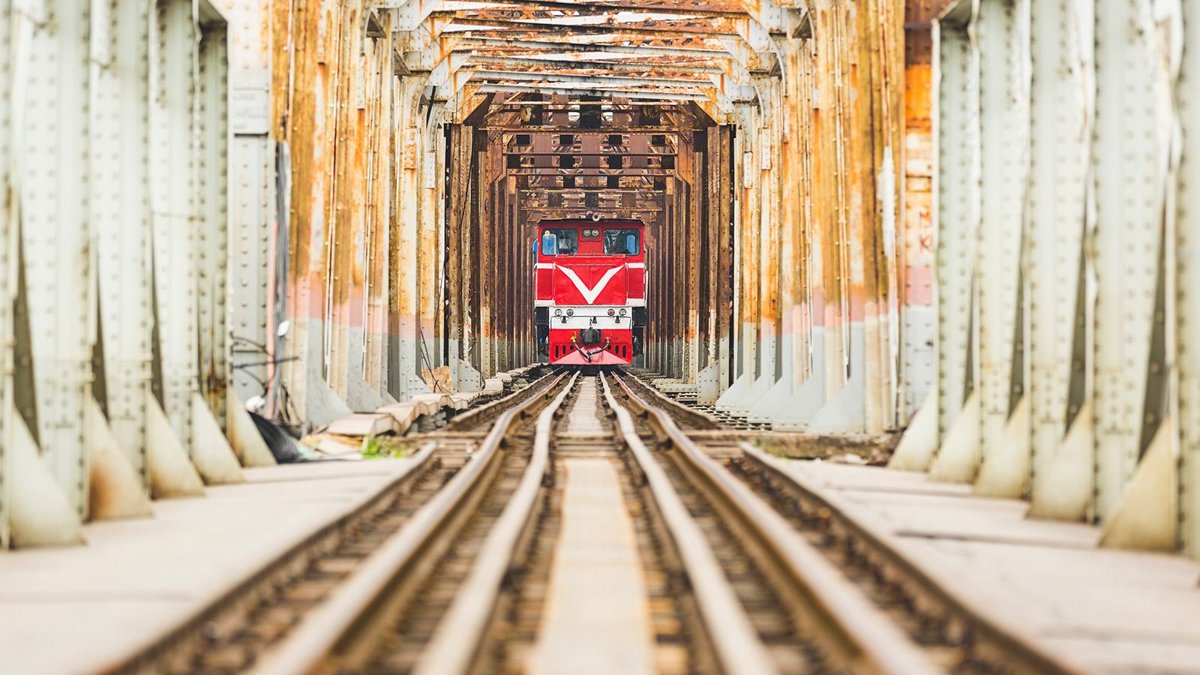
They say she’s obsolete, too slow, too fragile, but every morning, despite her broken silhouette, her original spans mangled with modern reinforcements, she silently absorbs the common folk: creaking bicycles, scooters, trains, hurried lives with no time for nostalgia.
Long Biên is no longer a bridge.
It’s an exposed bone in the landscape.
A piece of imperial logistics
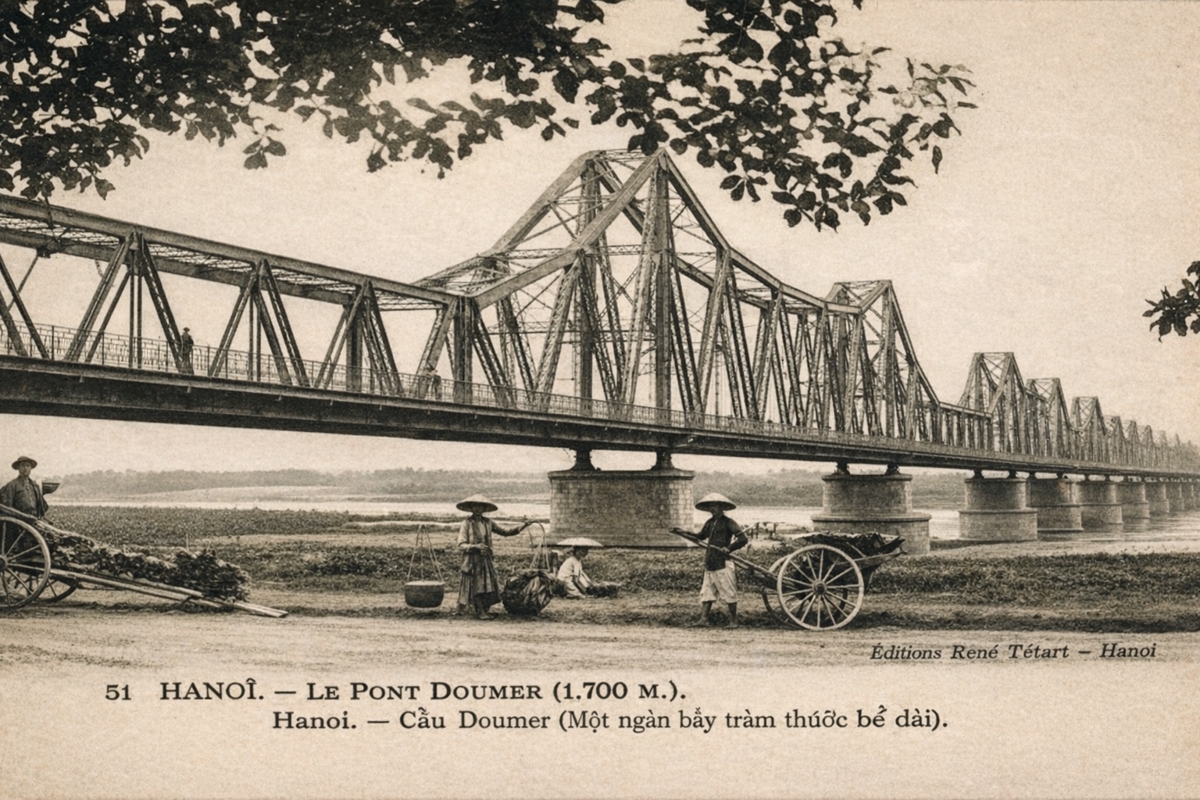
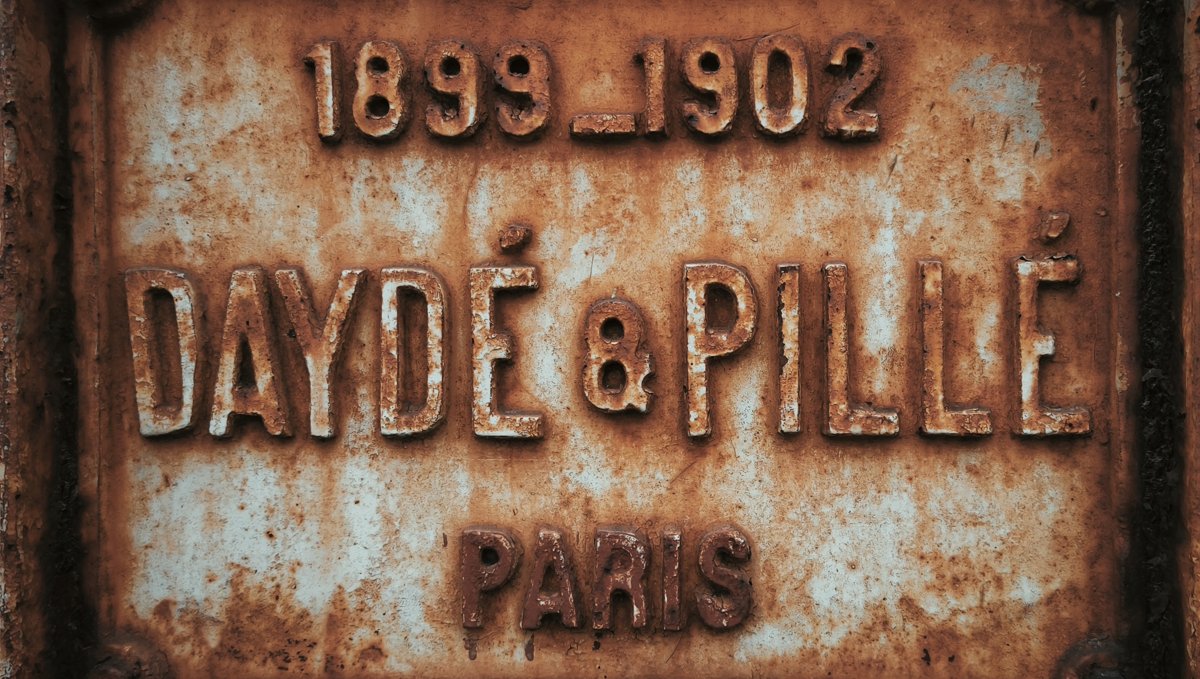
The Long Biên Bridge isn’t a nostalgic scavenger’s dream, but a raw creation of colonial Indochina: designed and assembled by the French firm Daydé & Pillé between 1898 and 1902, commissioned in 1903 after barely three years of struggle against the river and distant logistics.
Not a word of Eiffel in any of it, despite the legends. Originally christened the Paul-Doumer Bridge, named after the Governor General who sought to impose iron and rail as tools of domination, it was one of the largest steel bridges in the world at the time.
Its function was never poetic: to move rail, goods, and authority; to link Hanoi to the port of Haiphong; to accelerate colonial business. The bridge does not unite; it extracts.
It doesn’t connect two banks: it connects the capital to the Empire.
Long Biên is a tool before it is a symbol.
And like all good colonial tools, it was built to outlast the clear conscience of its creators.
A monument to survival
History didn’t let go of Long Biên after the colonial era; it simply changed the caliber.
Other “civilizers” took over: Americans, this time. In the 1960s, and especially in December 1972, American B-52s came to drop their Christmas gifts, heavy, loud, allegedly strategic. Spans blew out, steel twisted, and the Red River swallowed chunks of recycled Empire.
Long Biên became a target, and therefore, proof of existence. It was repaired by night, in haste, with whatever and whoever was left. The bridge bent but did not break, the stubborn reflex of a former servant to power.
Colonial yesterday, bombed the next, the structure absorbs ideologies just as it once absorbed trains. Long Biên no longer just crosses a river: it crosses the successive violences of History.
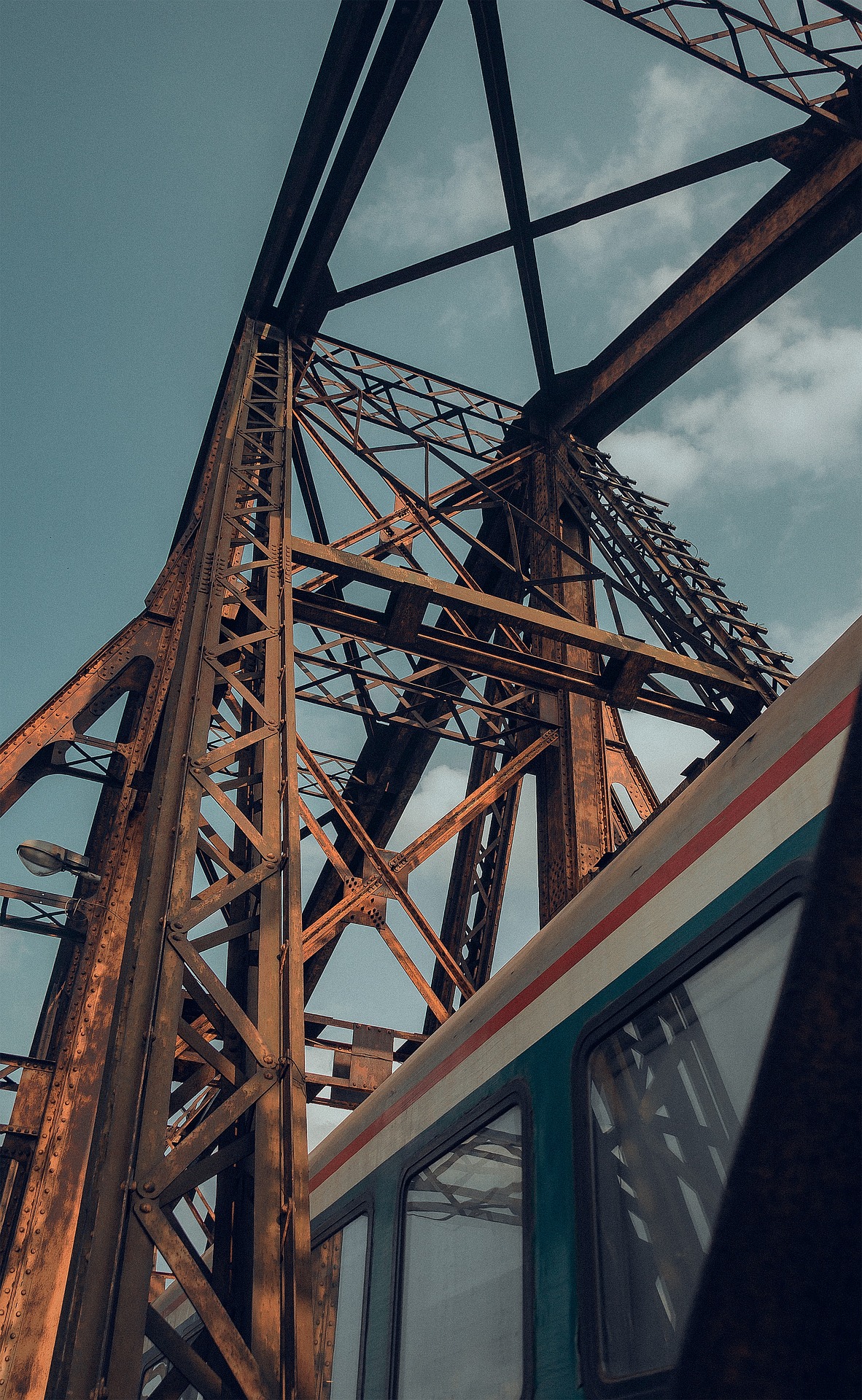
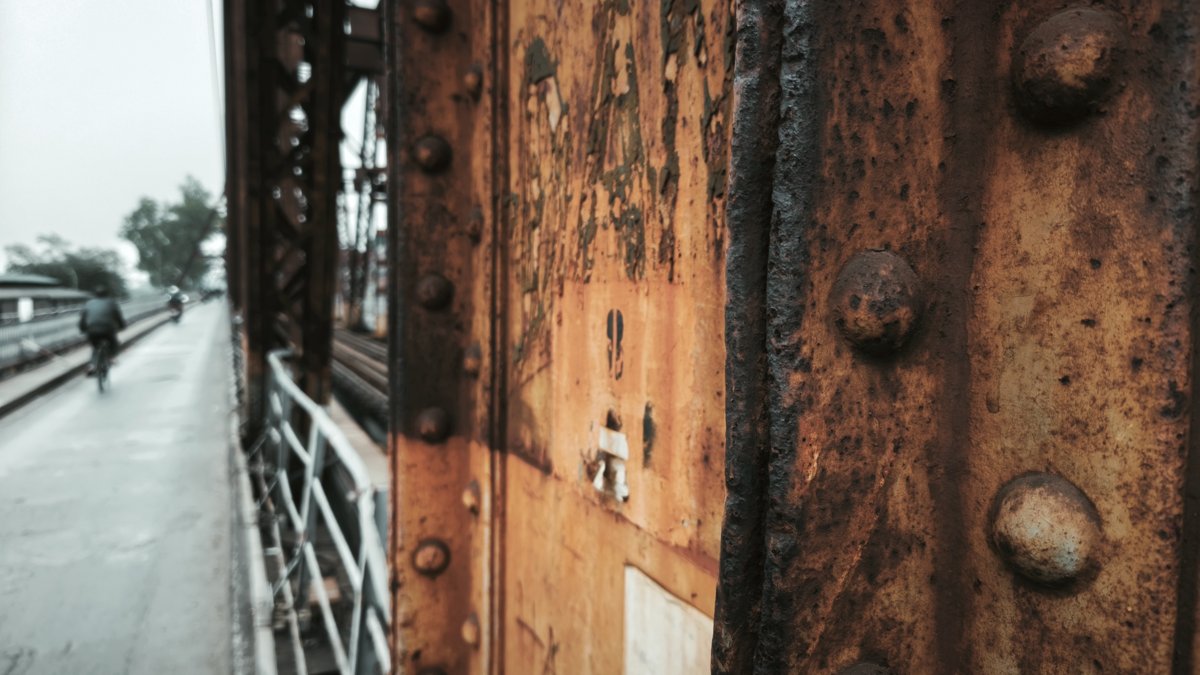
The rust you see today isn’t just oxidation; it’s the patina of a structure that has been twisted, straightened, welded, and re-welded to infinity.
Straddling the Grand Dame
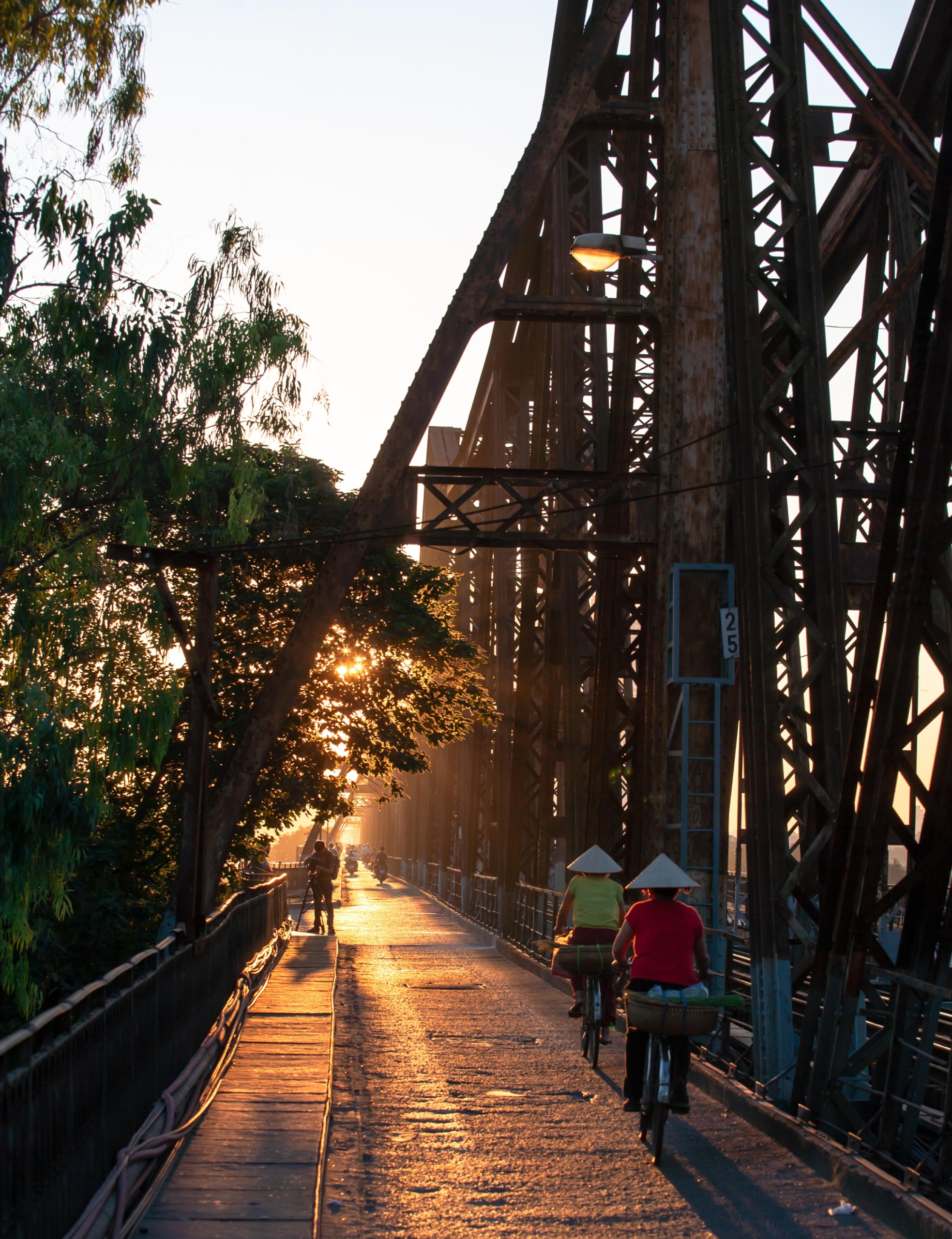
On foot, by scooter, or even by train: it’s the only honest way to feel the Long Biên Bridge living beneath you, groaning, even, forced into a century-long split.
Do all three, while you’re at it. The bridge has no love for the lukewarm. At the Long Biên station, delightfully anachronistic, almost ridiculous against the city’s chaos, buy a ticket to cross its steel lace toward Gia Lam.
Ten minutes of crawling over Long Biên, the train creaking at a snail’s pace, twisting like a dying dragon under the weight of history.
Every meter cracks, every rivet protests: here, the journey doesn’t advance; it resists.
The river below flows slowly, indifferent.
On the other side, grab a moto-taxi to head back toward the center. A hundred meters before the exit, have the scooter stop. Finish on foot. There, finally, one-on-one with the beast: its metallic flesh, its tremors, its scars.
Long Biên is not something you cross; it is something you endure. And if you felt nothing vibrating beneath your soles, it’s not the bridge that is dead. It’s your soul that missed the appointment.