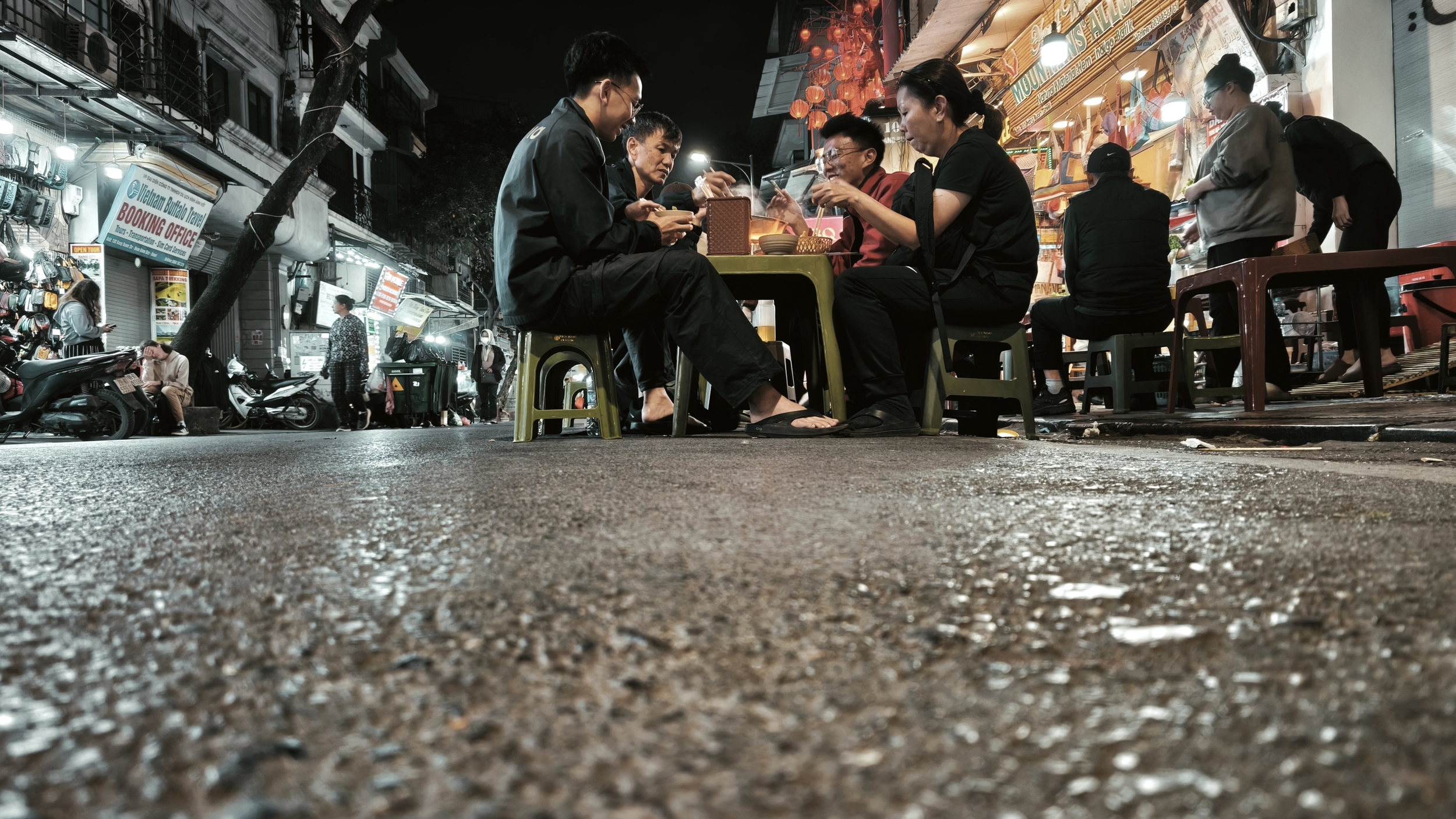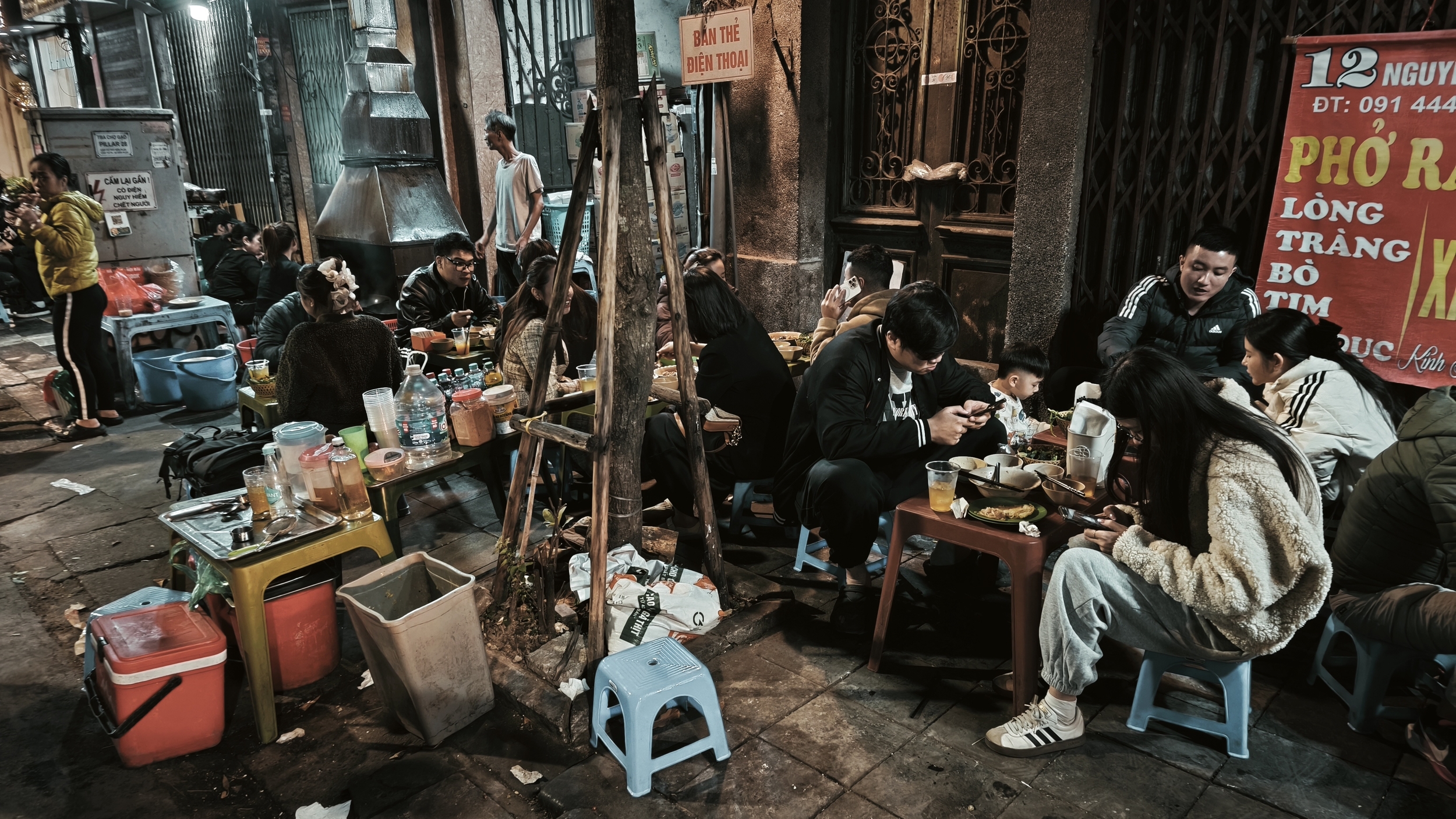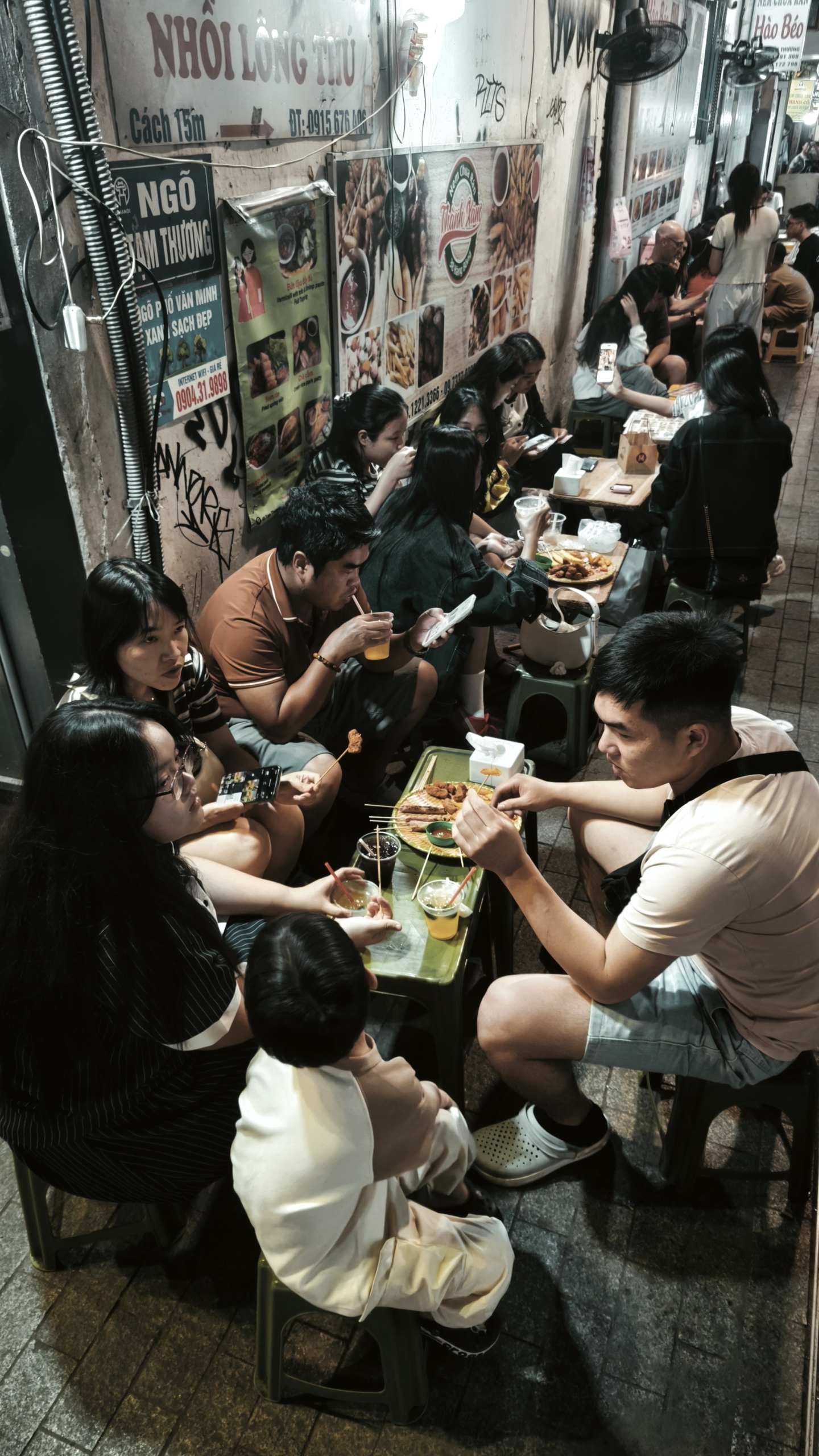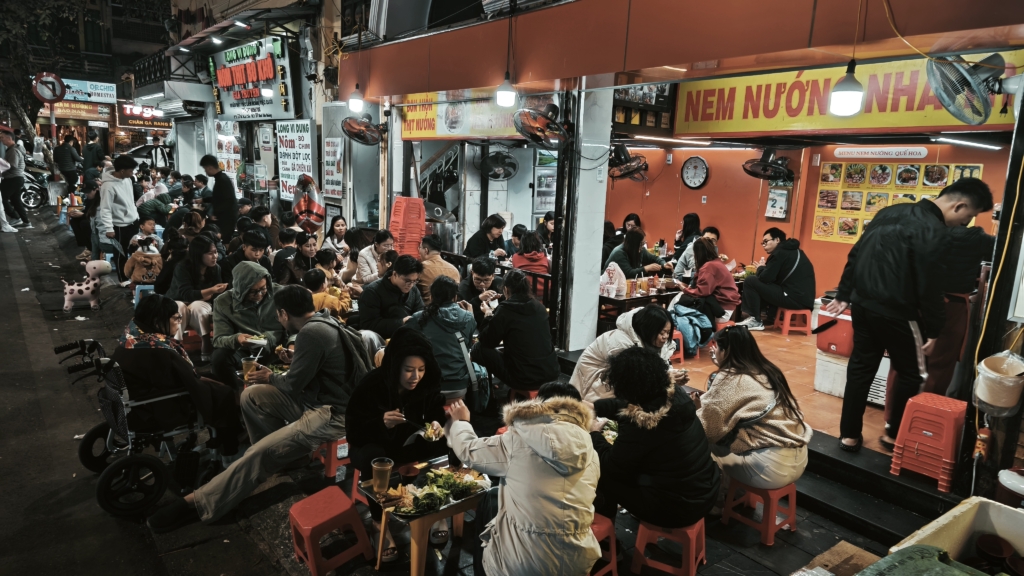
In Hanoi, real power doesn’t sit inside ministries or behind fading colonial façades. It rules at asphalt level, perched on plastic stools barely tall enough to humble your spine. Four inches off the ground, somewhere between the fumes, the shouting and the choreography of near-collisions, the Vietnamese pact of conviviality gets signed every single day.
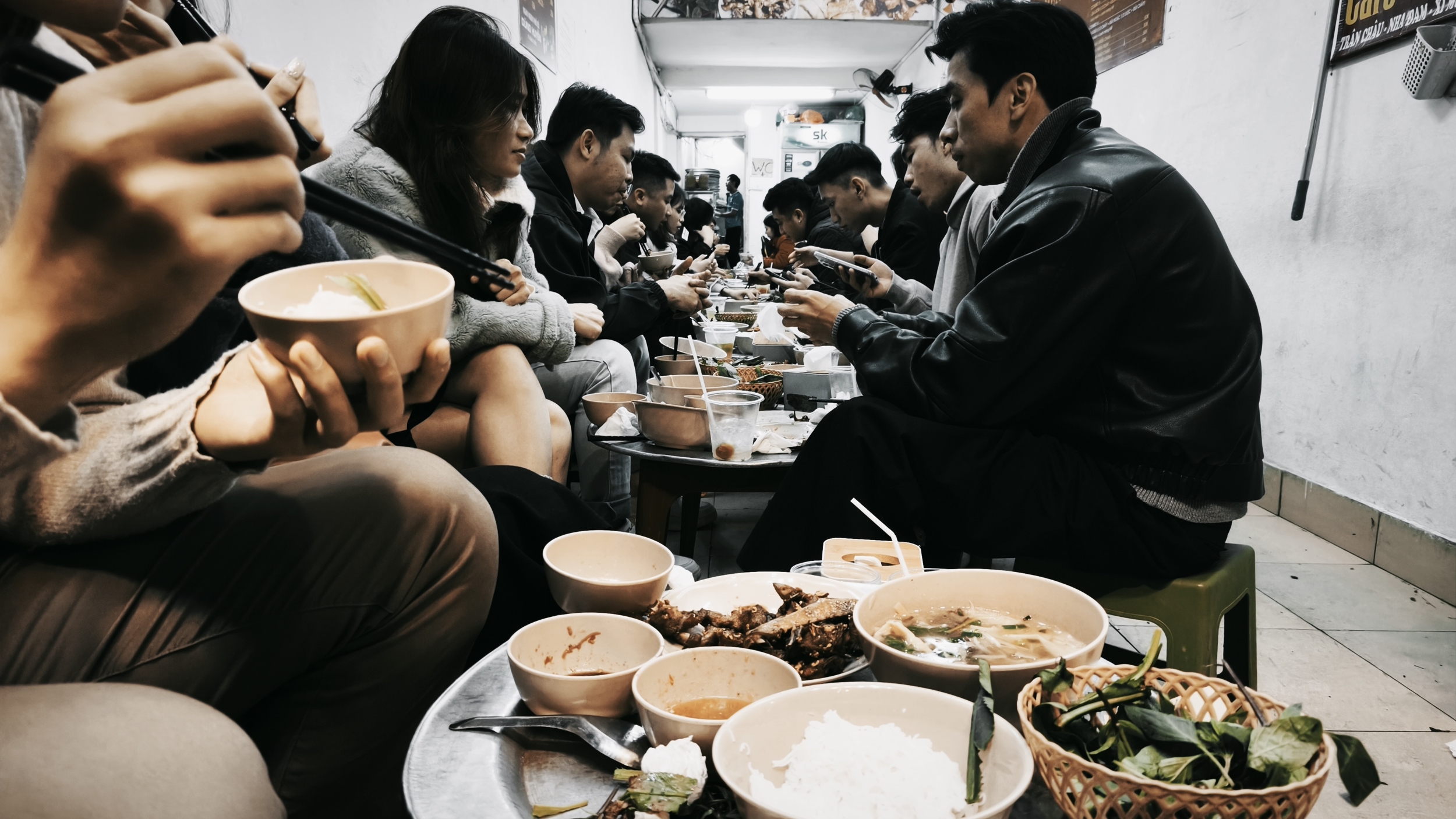
You eat shoulder to shoulder, fast, low to the ground, while scooters skim past your knees like bad intentions.
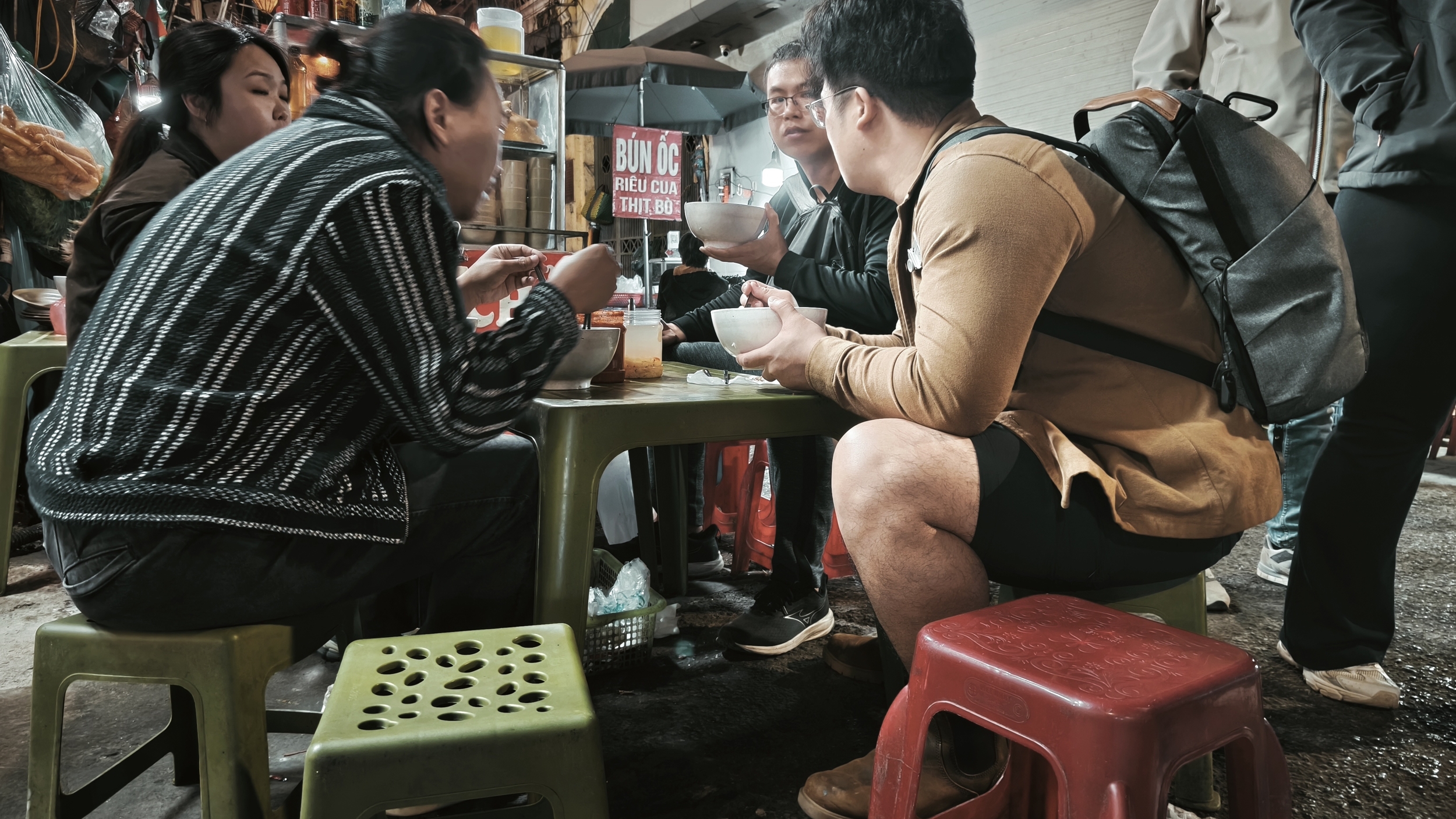
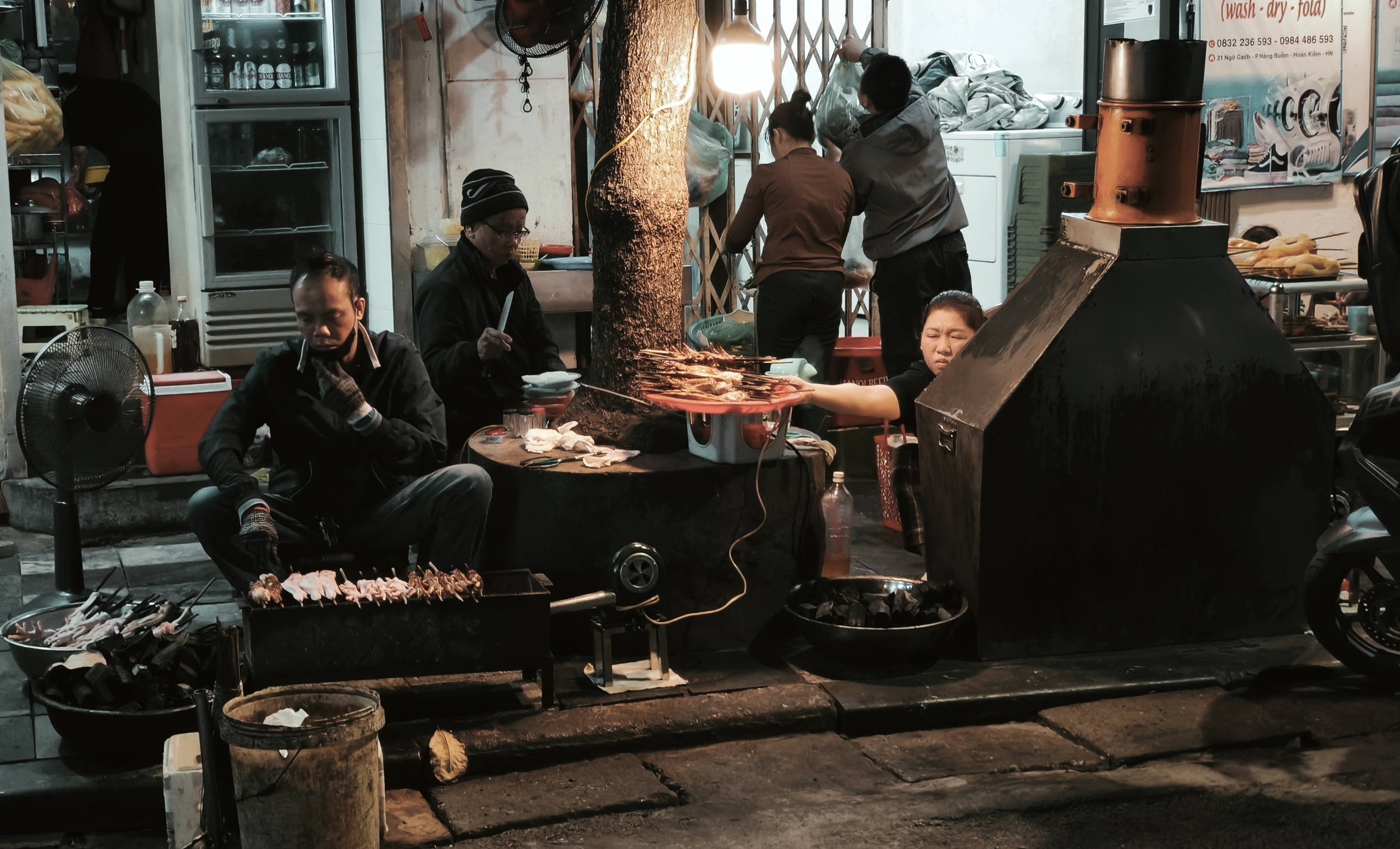
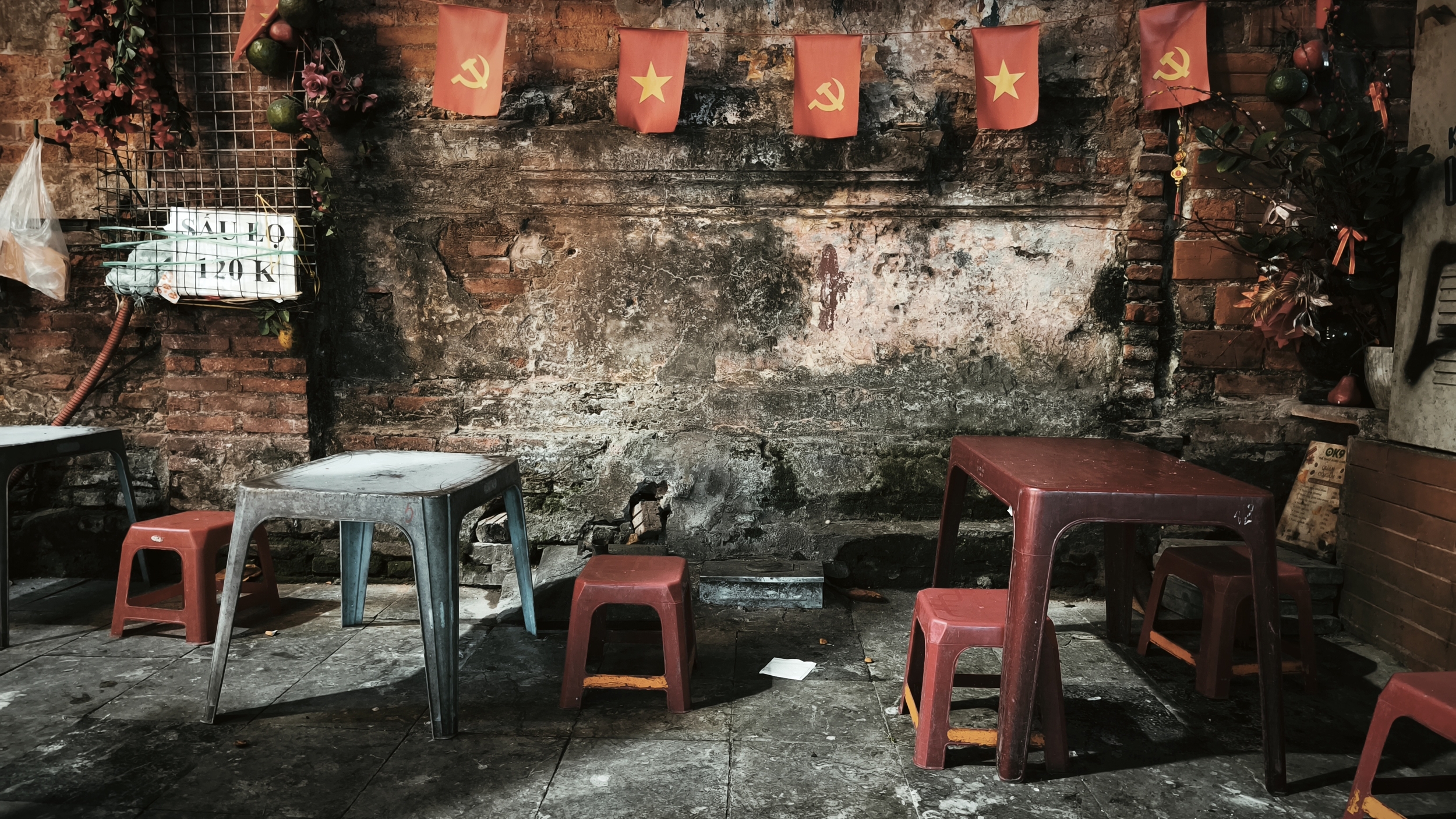
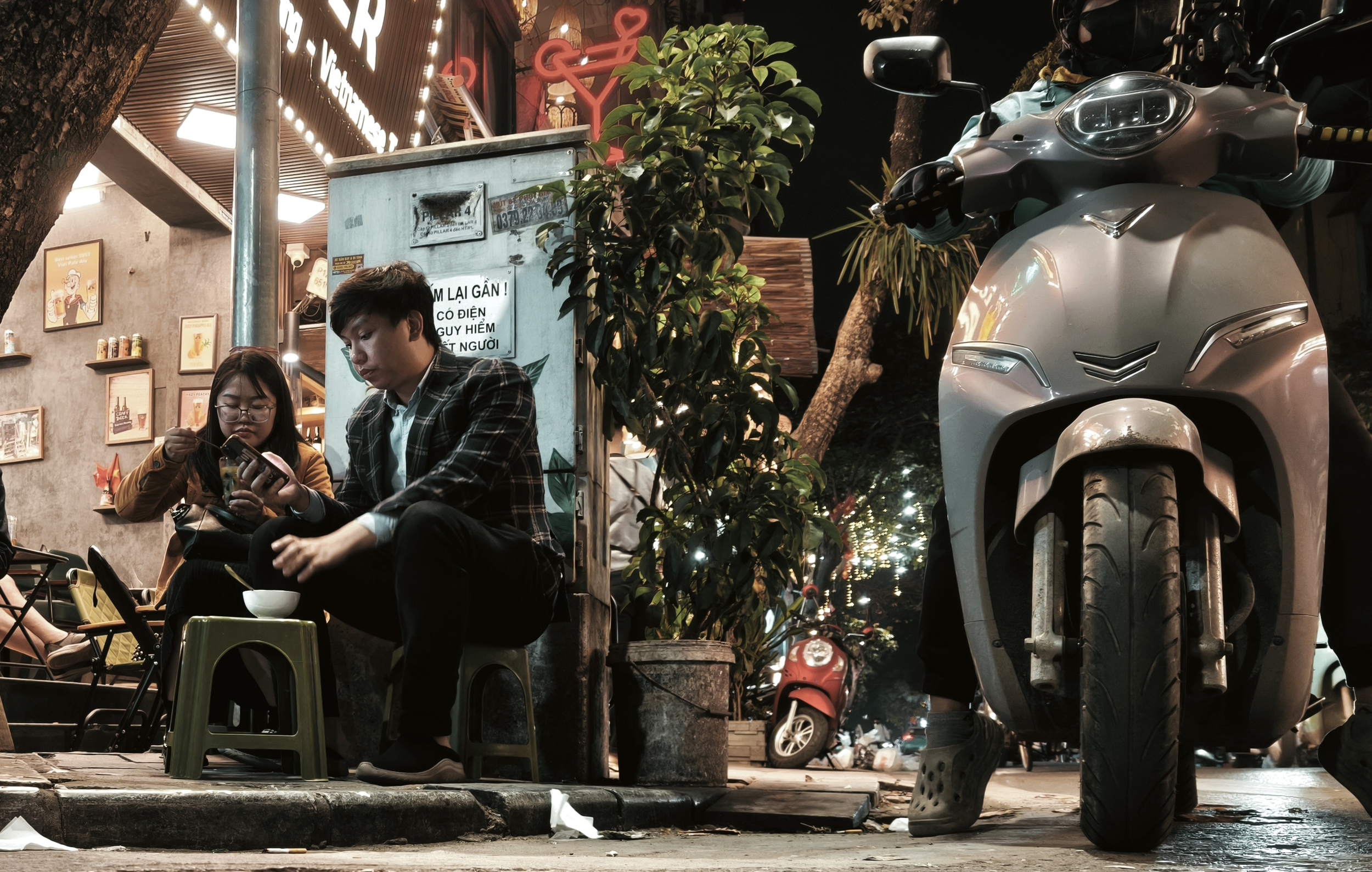
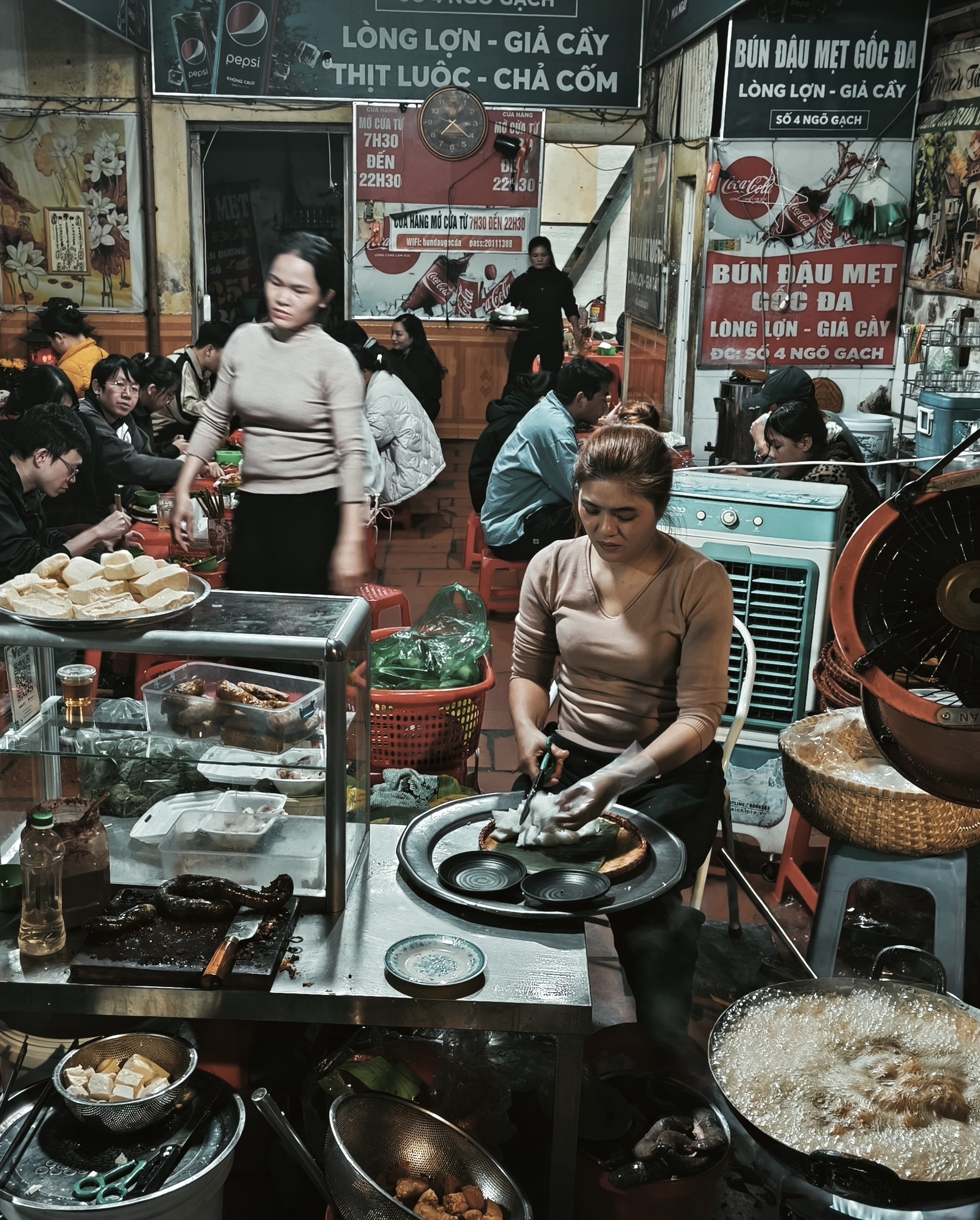
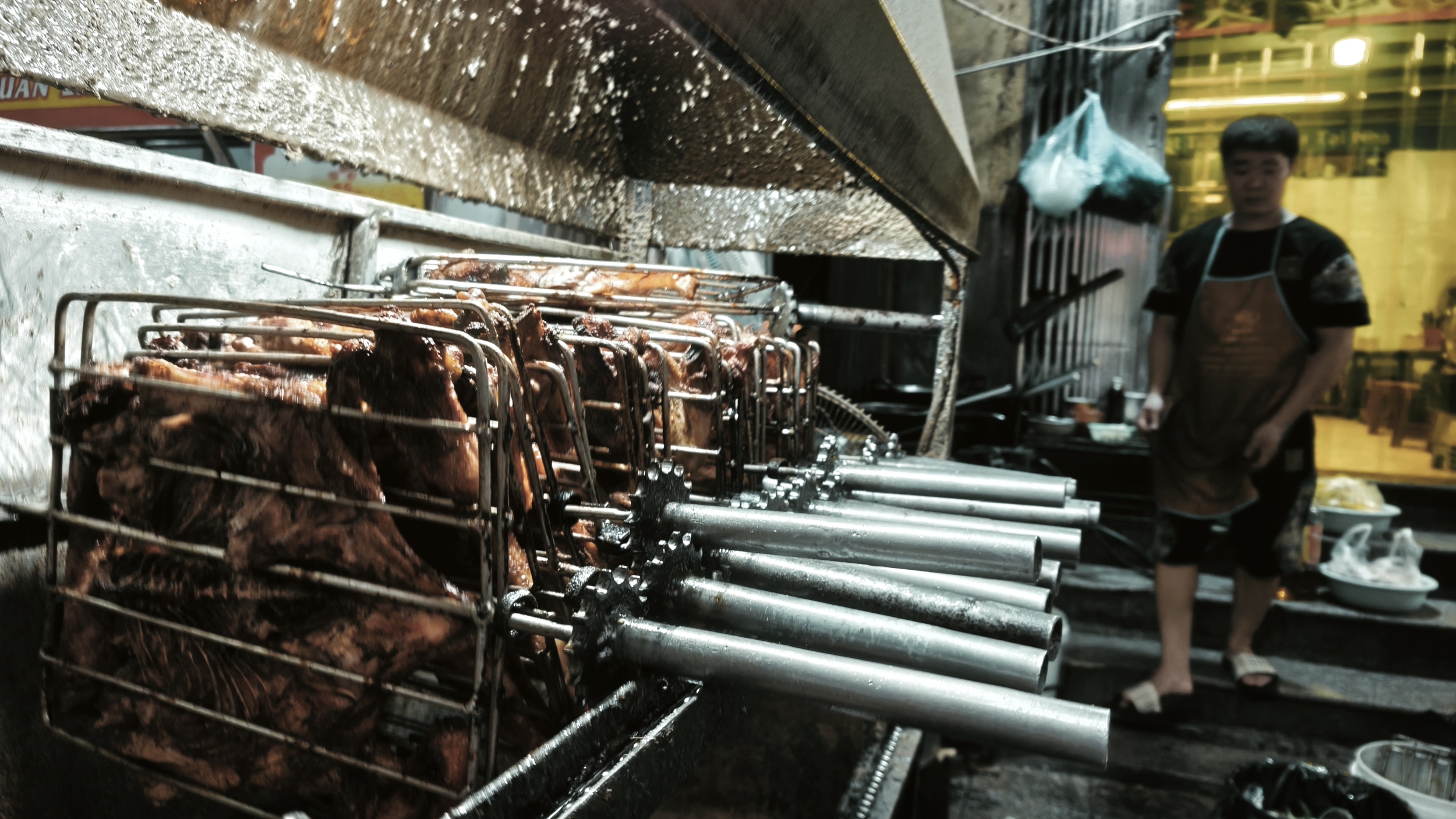
Here, food doesn’t hide behind velvet curtains or bloated menus swollen with self-importance. It spills onto the pavement — amid the crack of cleavers, the bright blood of meat butchered curbside, mountains of herbs collapsing into metal basins, and broth cauldrons breathing their animal warmth into the damp morning air.
It fries. It hacks. It simmers. It shouts.
Hanoi eats the way it breathes: without apologizing.
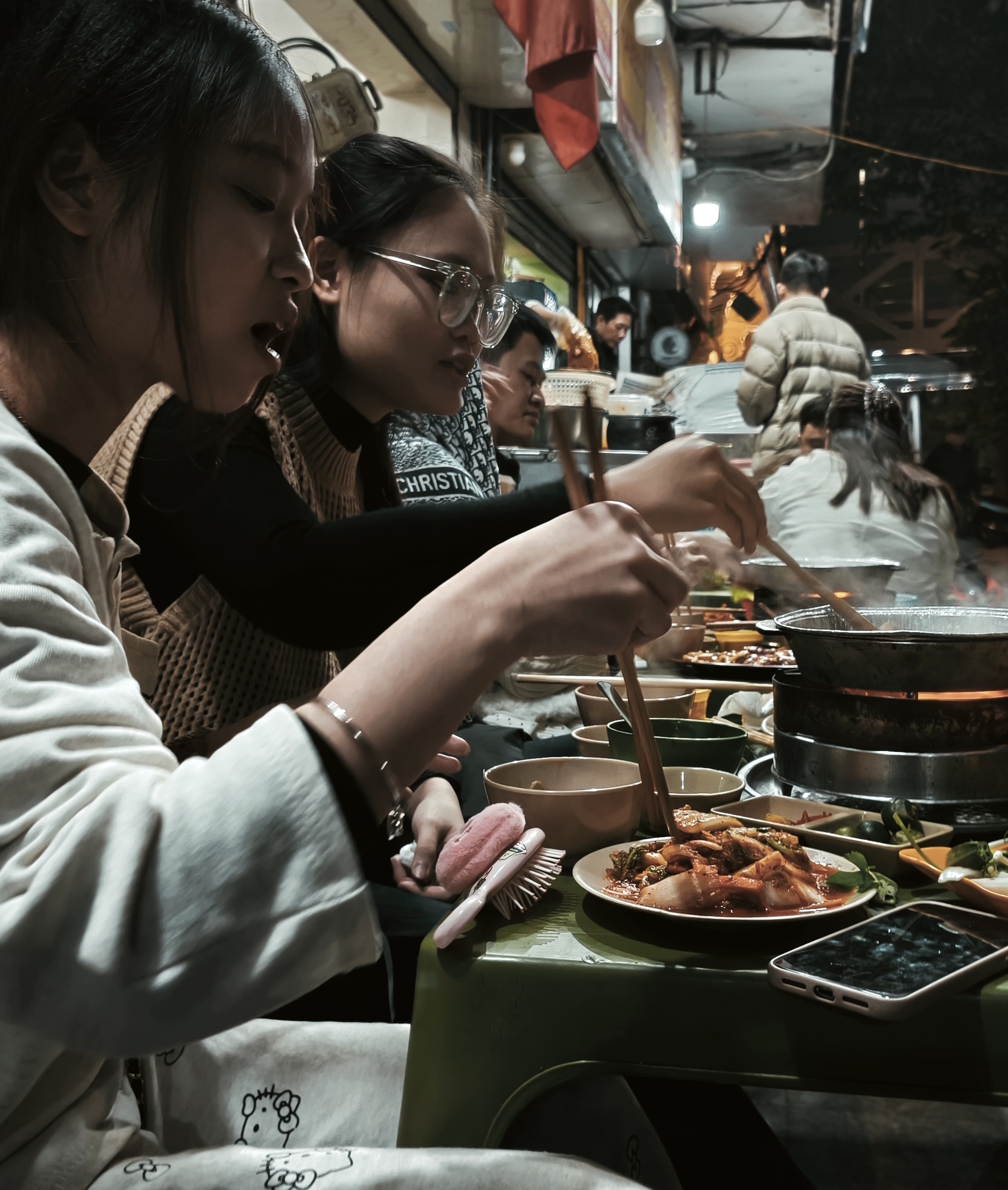
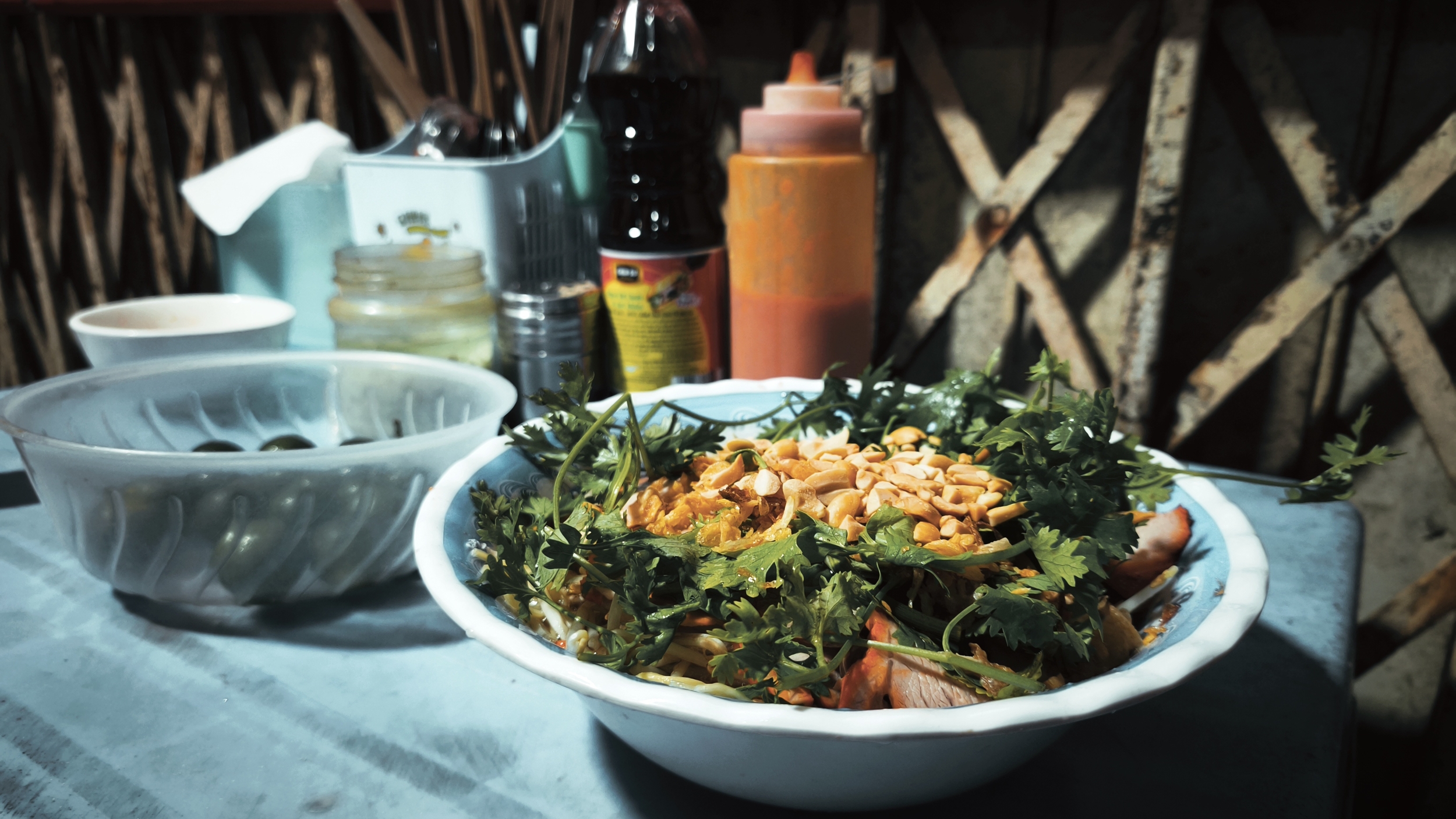
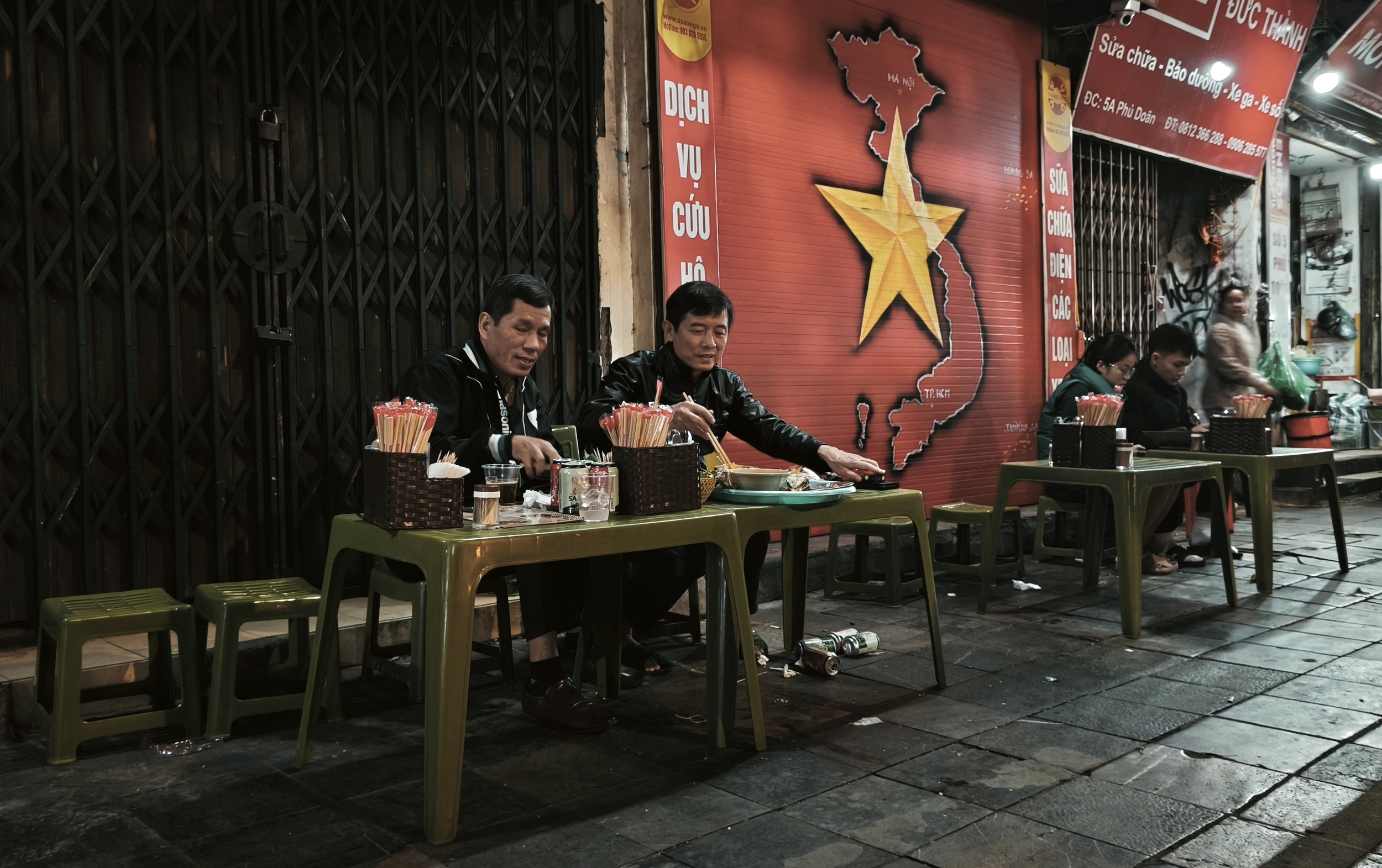
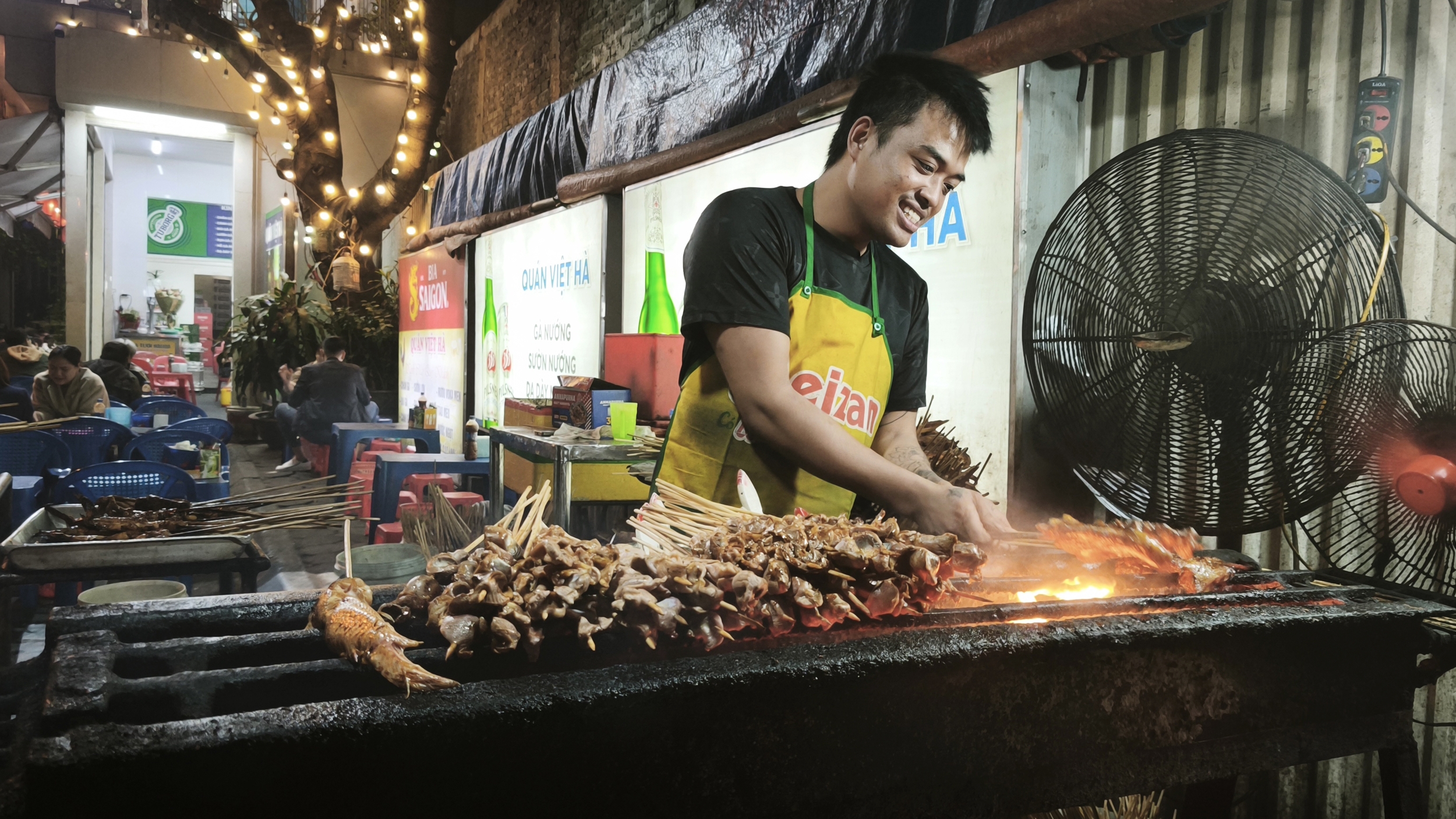
Street food here is not folklore for tourists hunting authenticity between two Instagram posts.
It is infrastructure.
A survival mechanism turned way of life. An economy of the everyday. A popular discipline bordering on civil religion. The sidewalk becomes canteen, confessional, courtroom.
And the bland?
Condemned on sight.
You eat low because Hanoi has never needed elevation to command respect. Luxury here isn’t silence, silverware or starched tablecloths. Luxury is a broth sharp enough to slap you awake. A chili fierce enough to remind you of your place. A stranger sharing your table without ceremony.
Hanoi never elevated street food into culture.
It built its culture on top of it.