
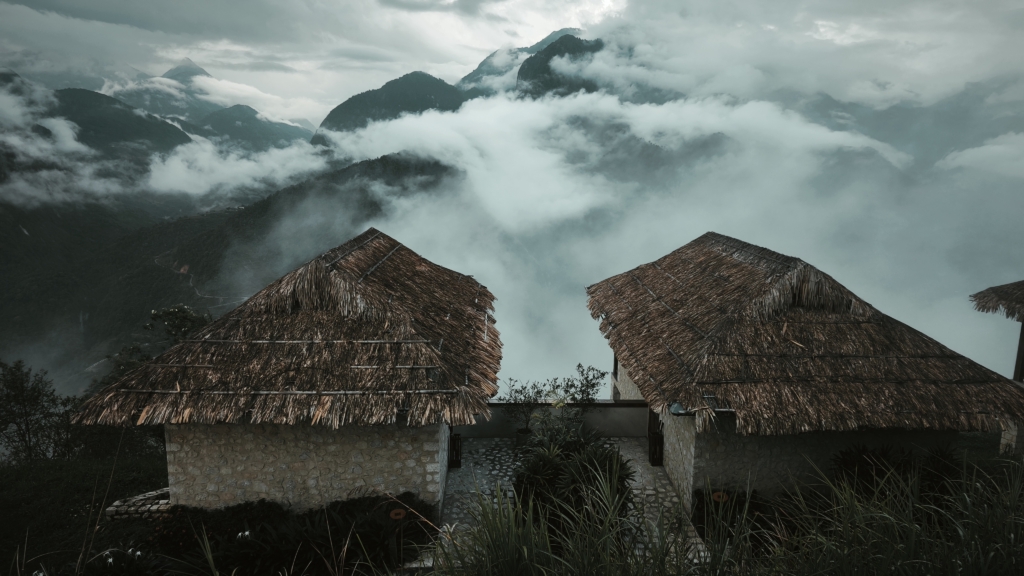
Topas Ecolodge is a dreamer that keeps to itself, head in the clouds, the one that stands apart, deliberately isolated.
Far from the open-air laboratory of ugliness that is Sapa, where apprentice sorcerers dare every kind of experiment: aggressive urbanization, incoherent hotels, neon lights, clashing architectures, fake Alpine pastiches, concreting, giant cable cars, parachuted tourist objects. Pure nausea.
Here, the ecolodge functions almost as Sapa’s counter-narrative. A withdrawal. A place that says: “look at the mountain instead of consuming it.” And by offering this hand-to-hand combat with the mountain, Topas reconciles me with a territory I thought was lost forever.
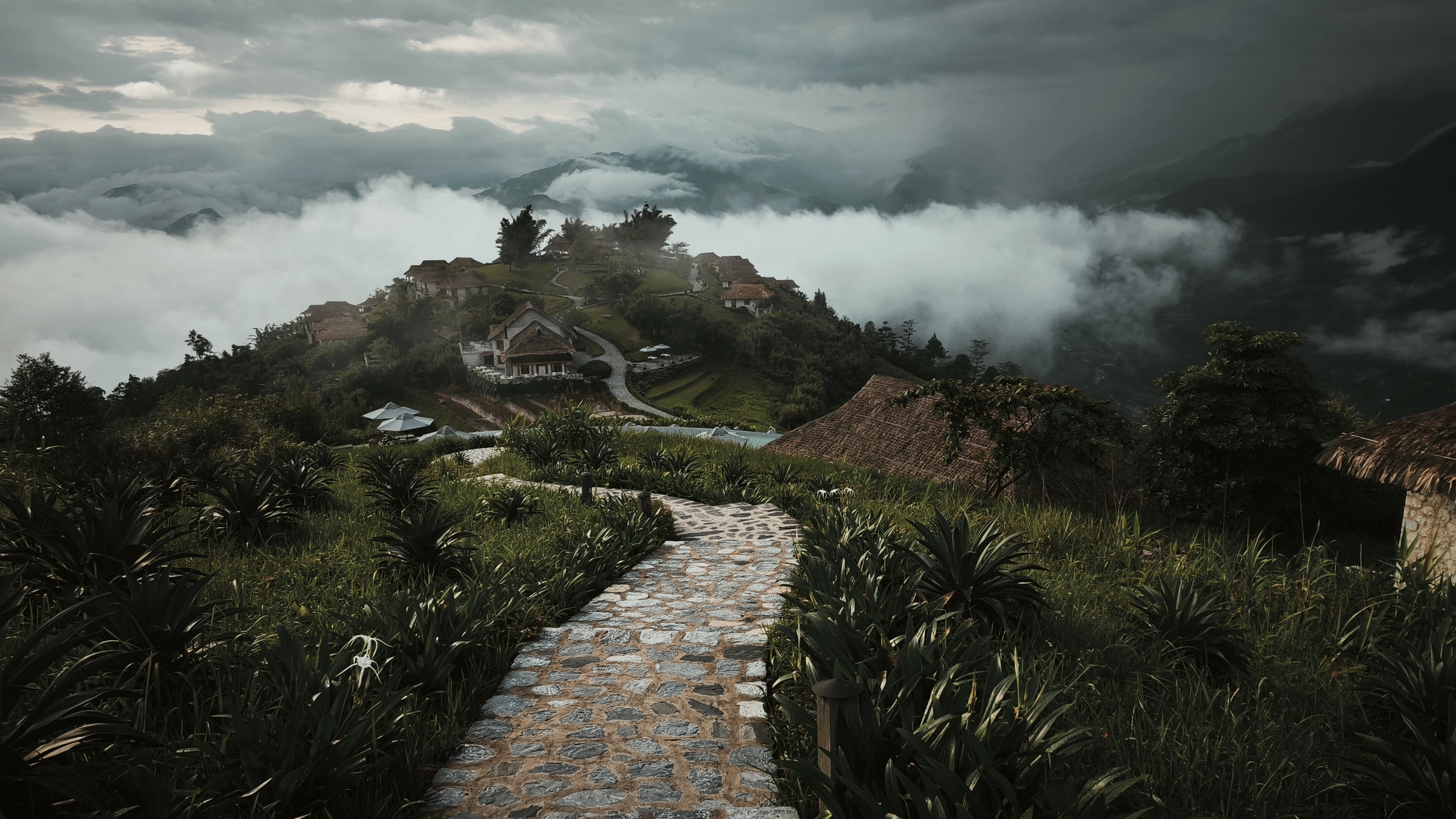
An architecture negotiating with the mountain
Where others preferred to dynamite the ridges to drop rectilinear volumes, Topas chose another path: working with the mountain rather than correcting it. Rather than butchering it.
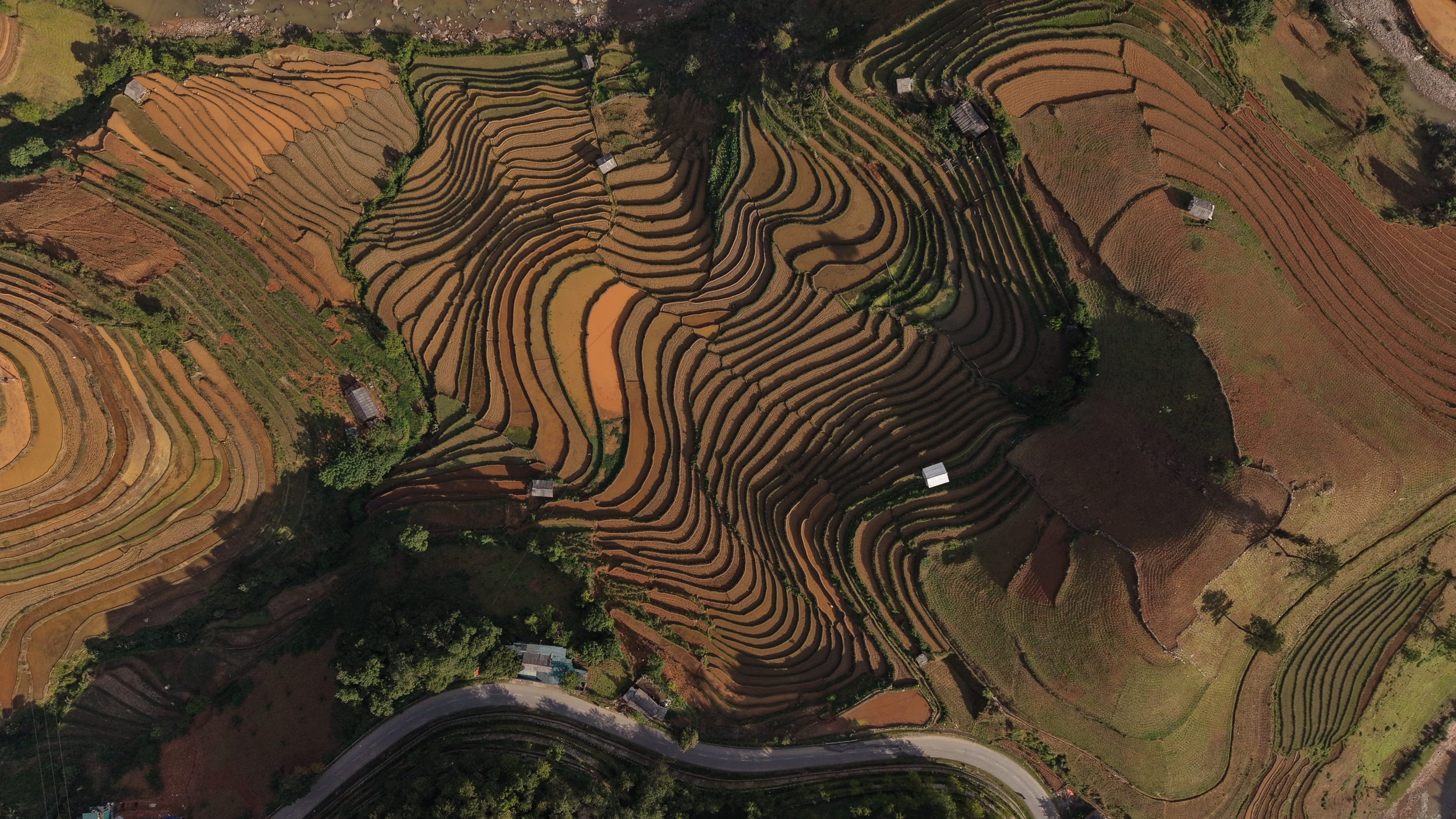
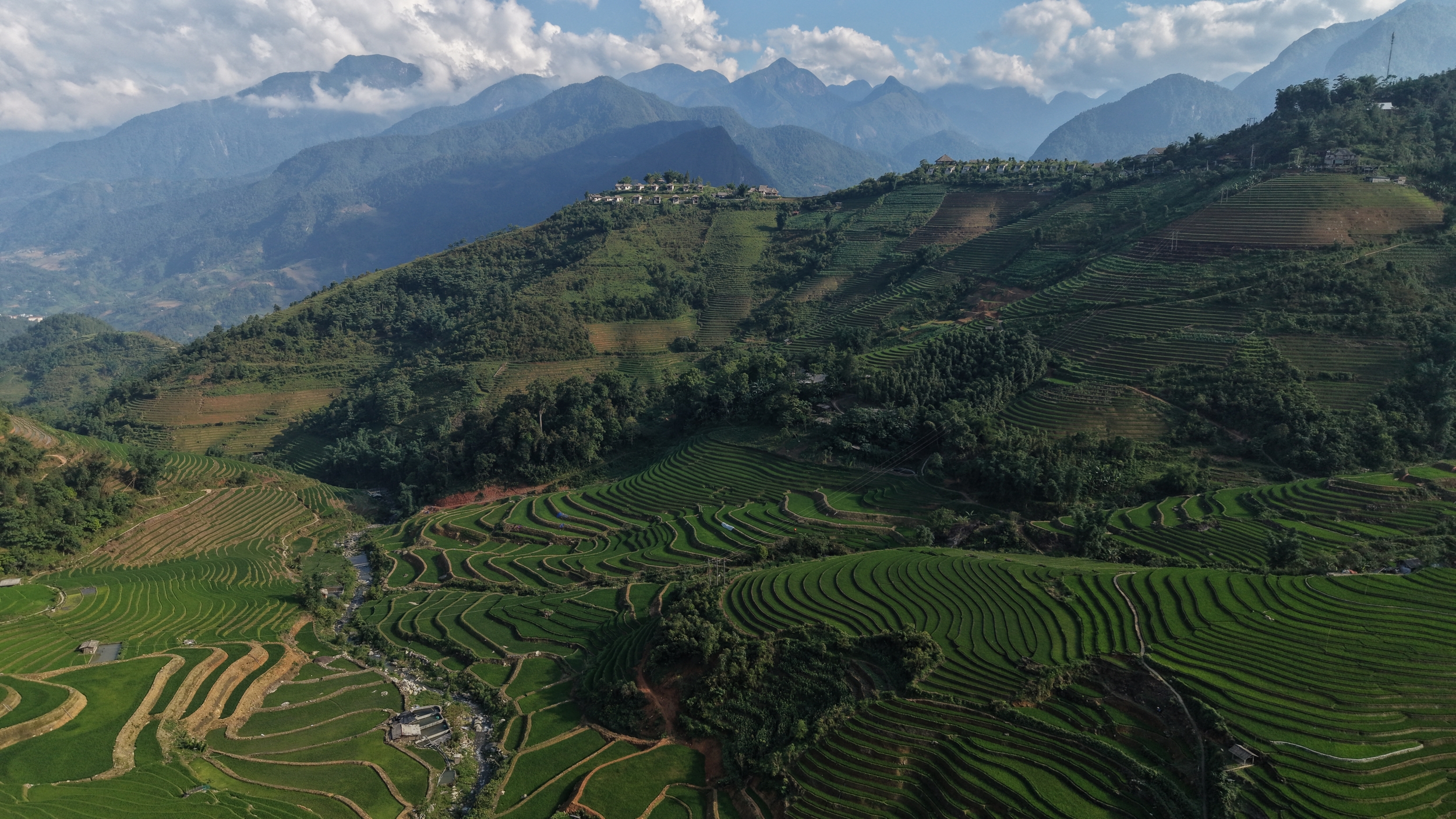
The cottages, built from local white granite, spiral across two conical hills. They follow the contours of the terrain without seeking to dominate them. From the sky, the ecolodge does not interrupt the landscape; it fits into its breathing, almost like a mineral extension of the terraced rice fields.
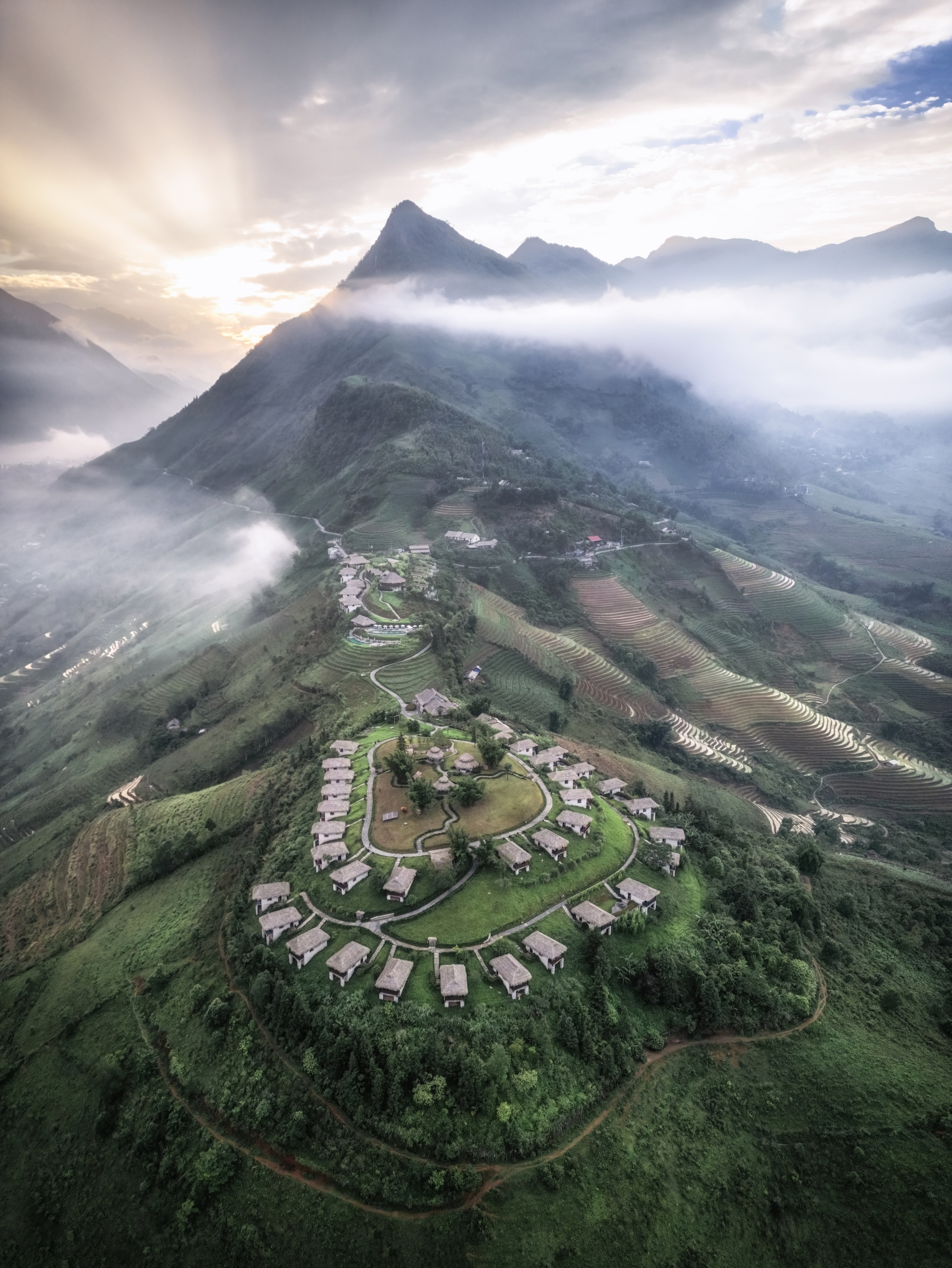
In these mountainous confines where the climate dictates the law, architecture could not be an authoritarian gesture. You had to observe before building.
Observe the elders.
Observe what resists.
In Sapa, the Notre-Dame church, standing since 1902, offers a lesson in architectural humility: local white granite, a simple mortar of sand, lime, and molasses, and more than a century of staring down time, cold, and humidity. And staring down the horrors that look down on it today.
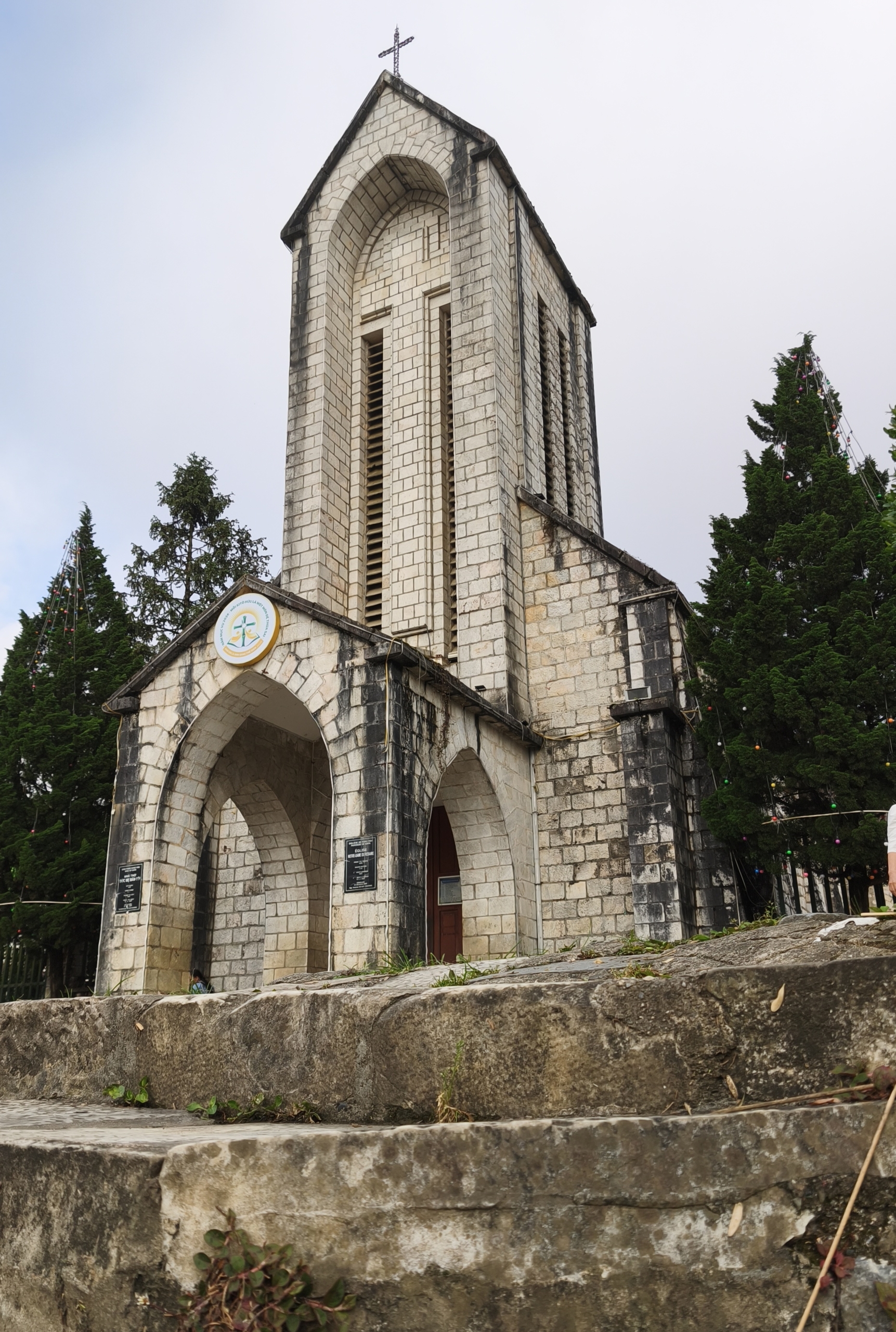
Stone imposed itself here not as an aesthetic gimmick, but as an obvious necessity.
Where others climbed into the heights with the delicacy of a rushed developer, the Danes at Topas had the rare intelligence to enter the landscape on tiptoe.
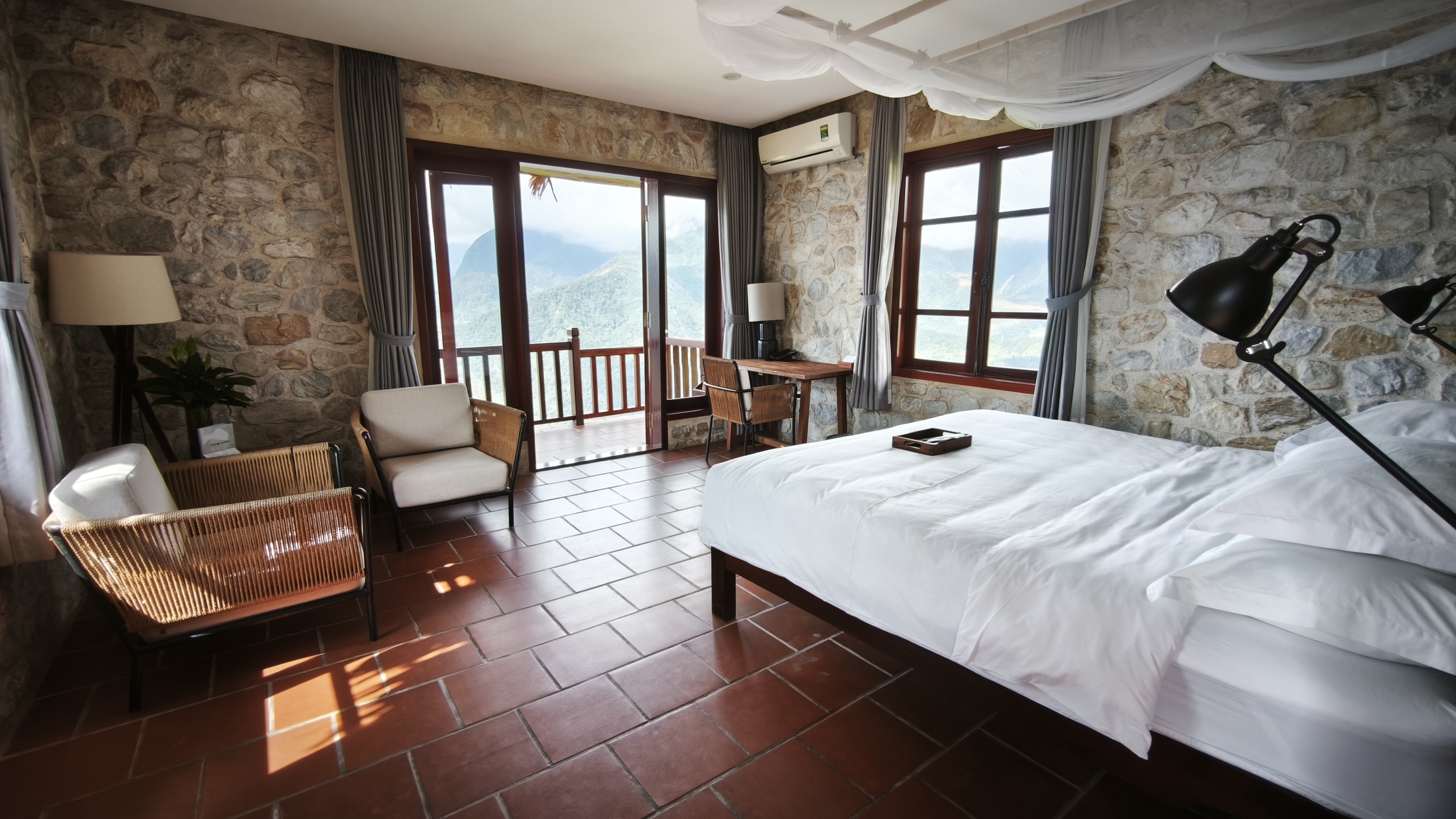
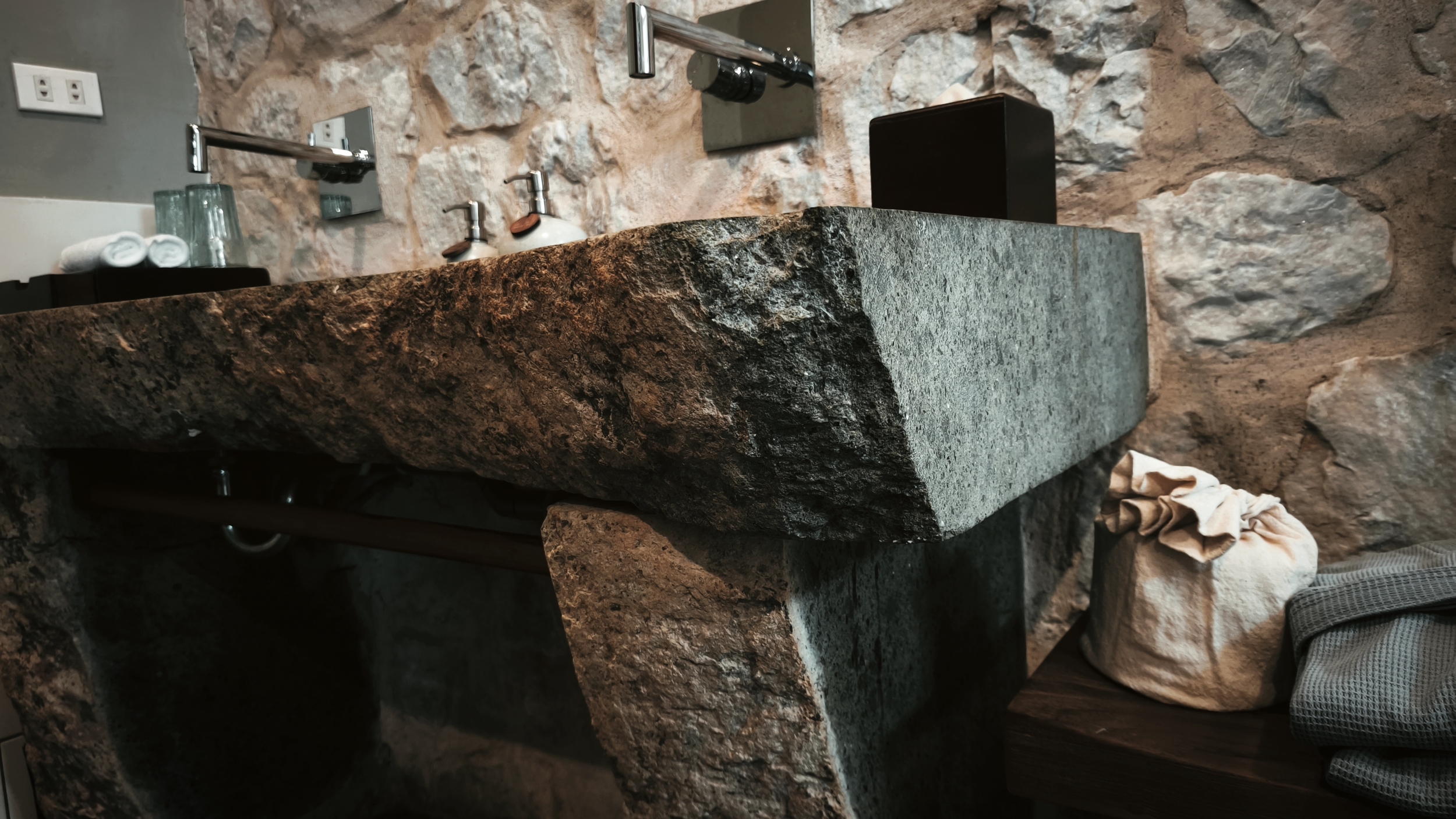
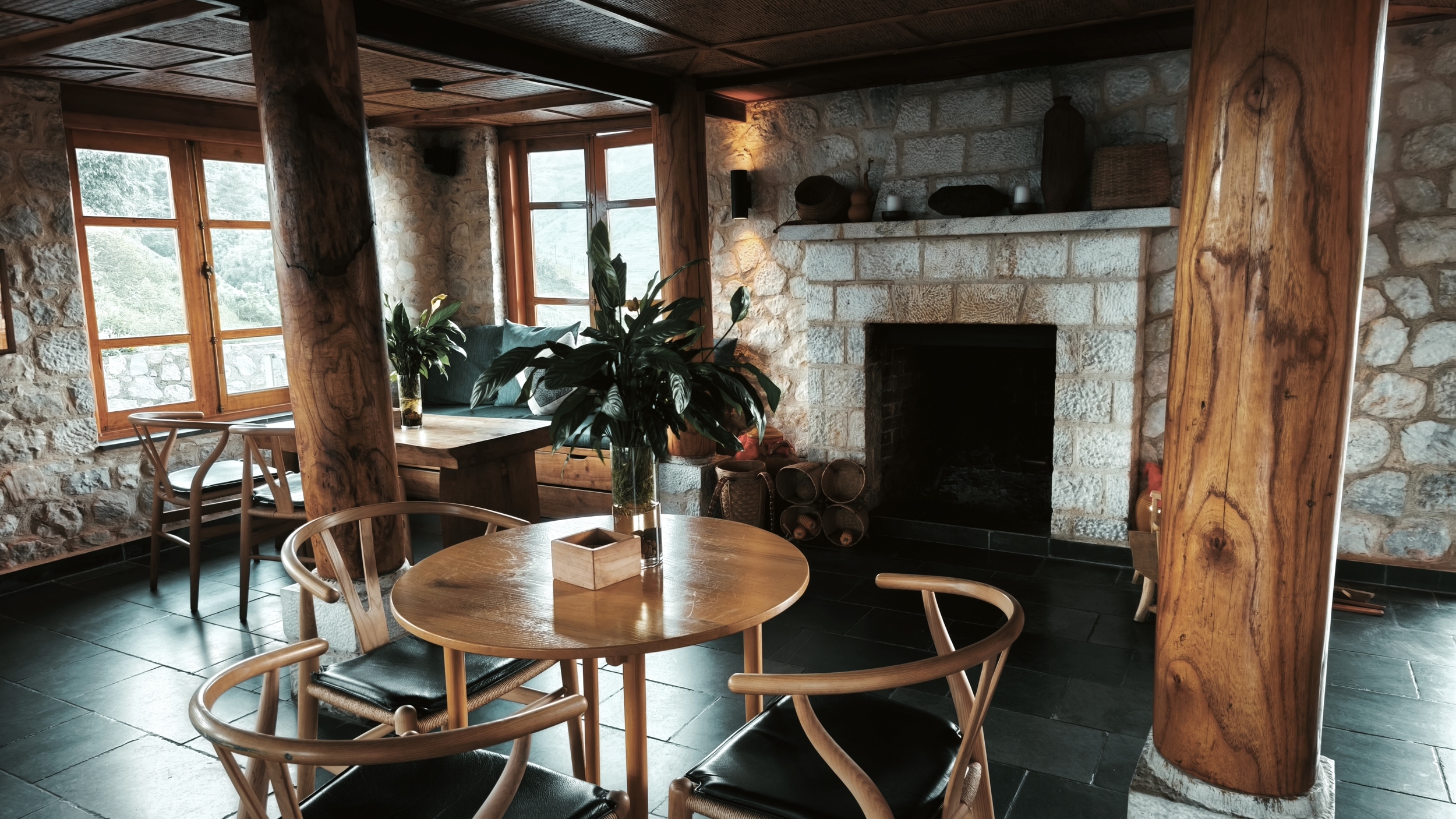
Visual silence
The asceticism of the place is not there to flatter the principles of Danish design.
It is there not to distract the eye.
Because here, the star is the view. Or rather: the views.
The shifting relief, the fraying mist, the mountain shrugging its shoulders.
The design strips away to become a reading frame.
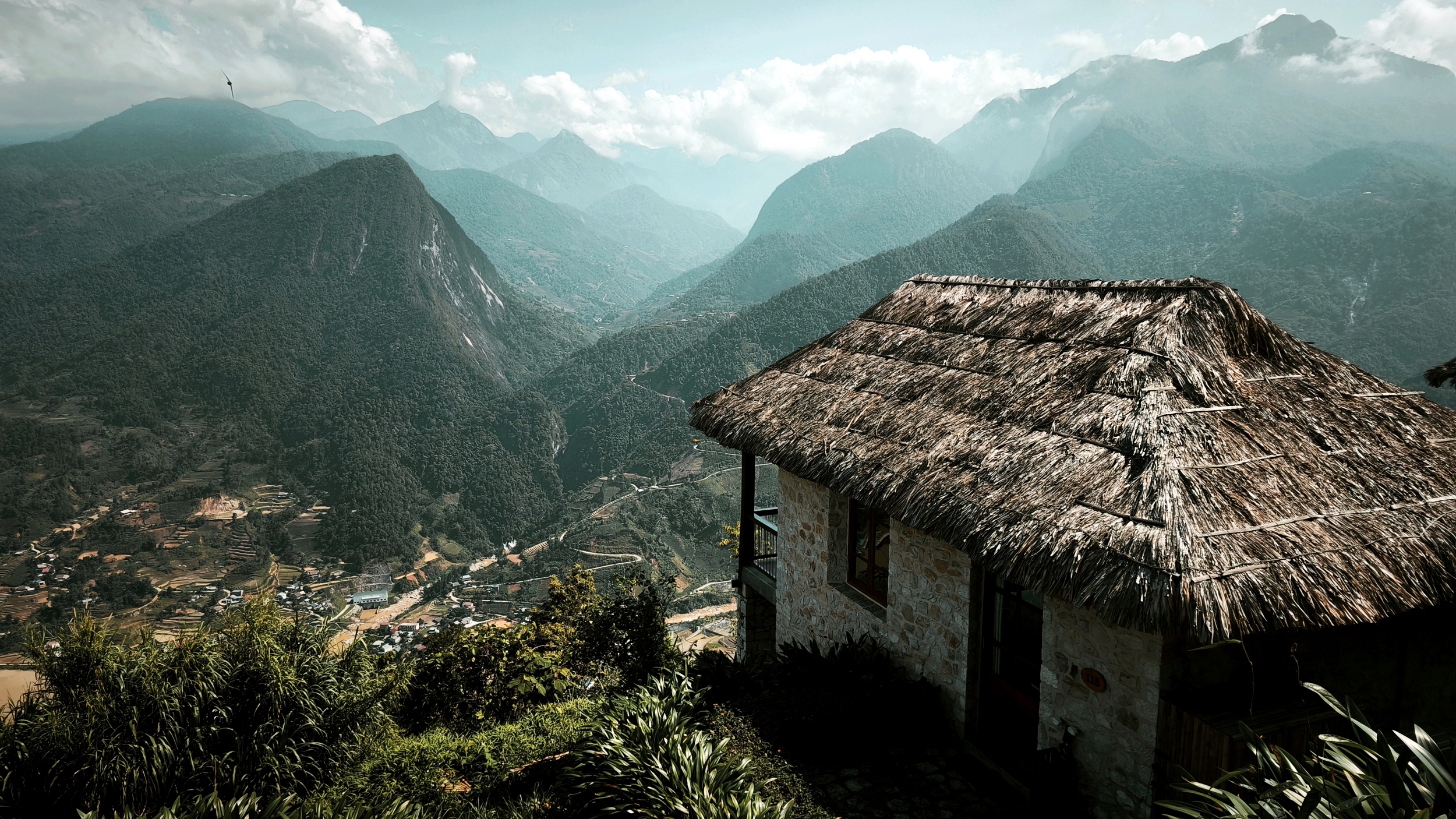
There is an almost physical urgency to capture this collision of textures before the mist swallows everything or the rest of the valley gets chewed up by excavators.
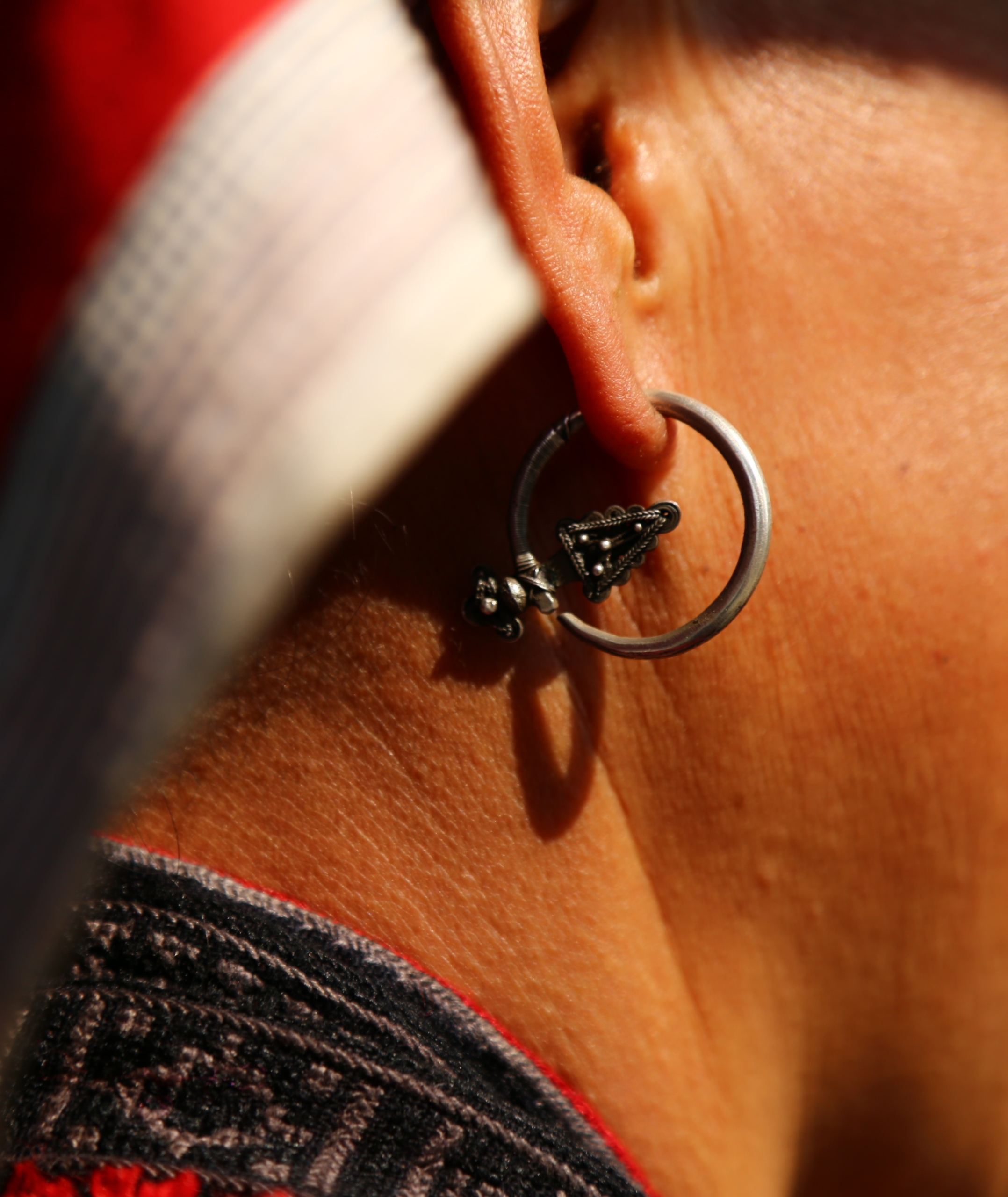
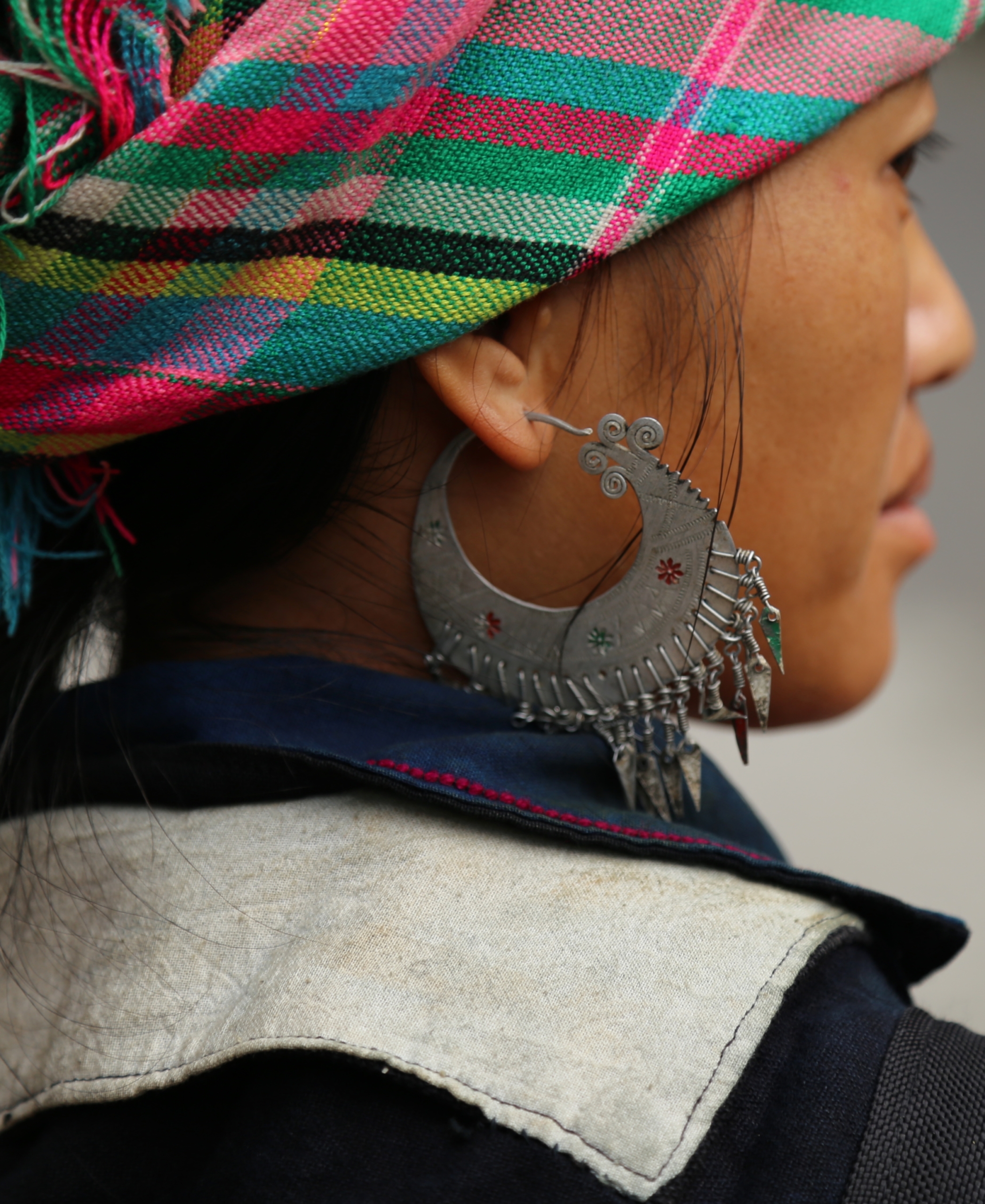
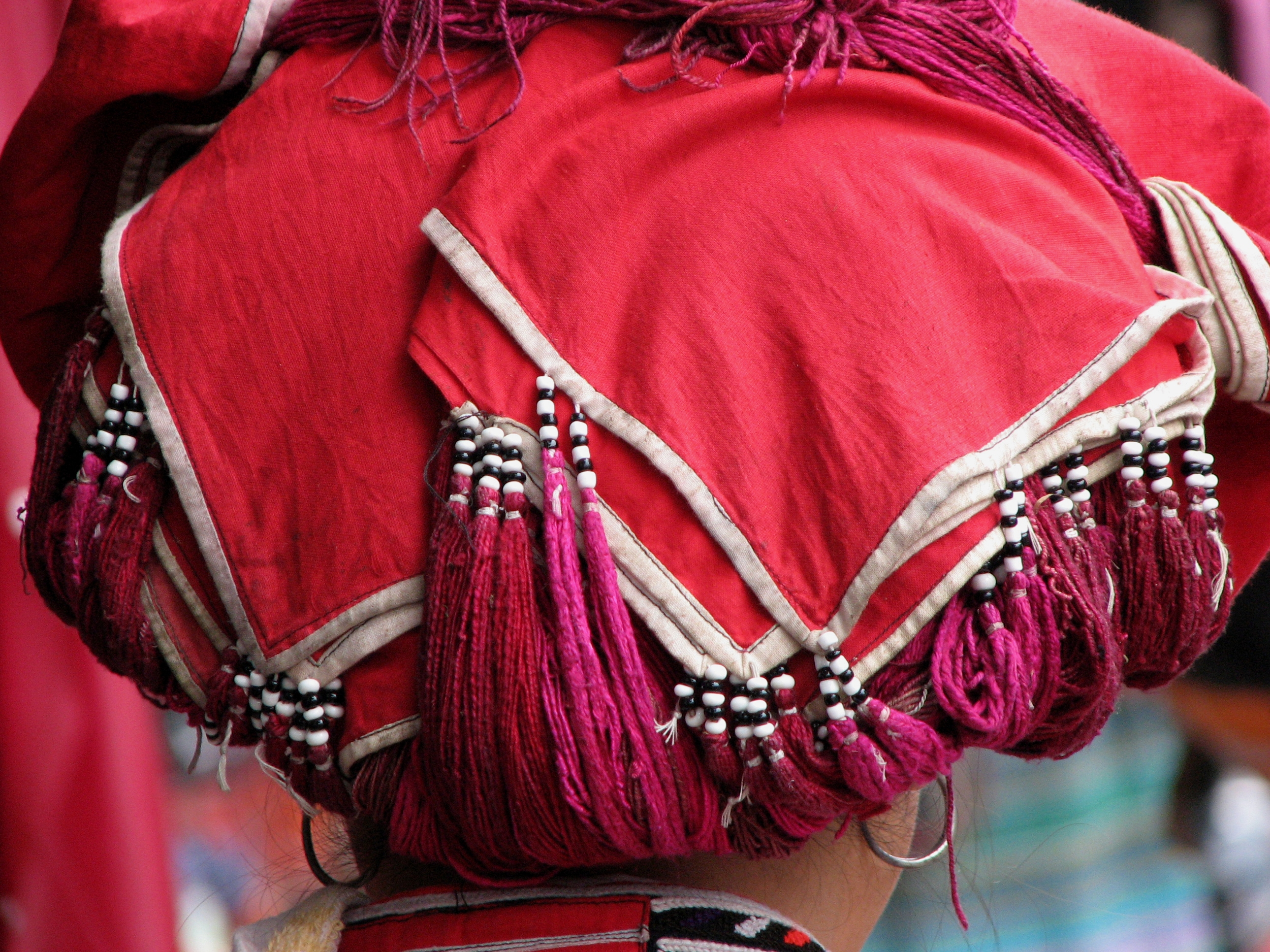
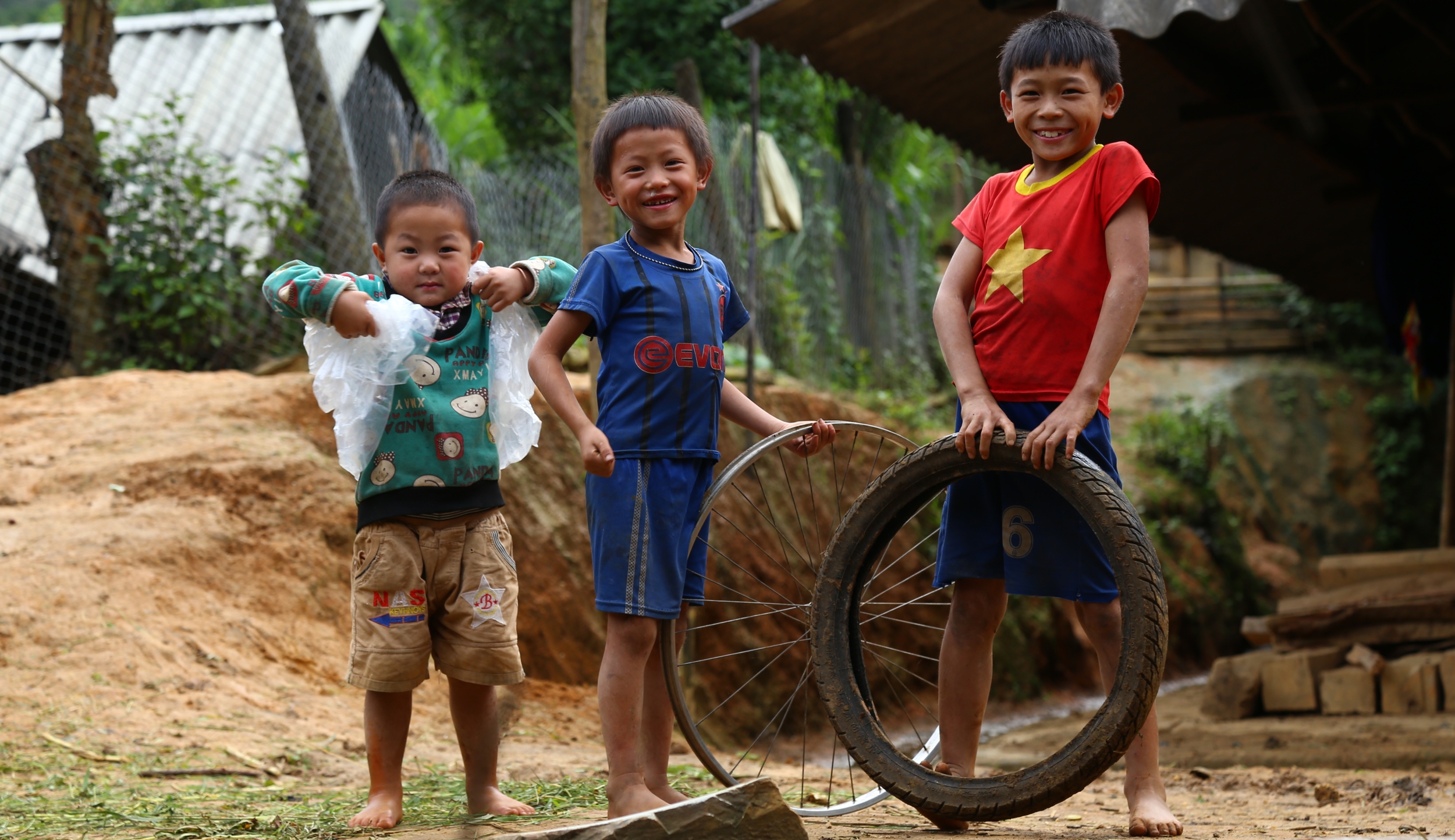
Early May imposes its raw rhythm. The rice fields gorge themselves on water—mirrors of mud and sky barely beginning to turn green. In the Hmong and Dao villages, the late afternoon light falls like a blade across weathered faces. No folklore here.
Just the repeated gesture of women scraping hemp on their doorsteps, the dry laugh of kids in the middle of the dust, and the monumental arrogance of the buffaloes freezing the landscape.
The mountain does not welcome you; it imposes itself.
The restaurant: a broken dialogue
This is perhaps where something cracks. Because after working so hard to compose with the mountain, the restaurant suddenly seems to change languages.
Feta, olives, Iberian ham, Australian beef, shrimp, squid.
As if, at the precise moment the territory could finally enter the plate, the dialogue snapped.
Back from a hike, I stop for a beer at the neighbors’ place.
Let’s say six.
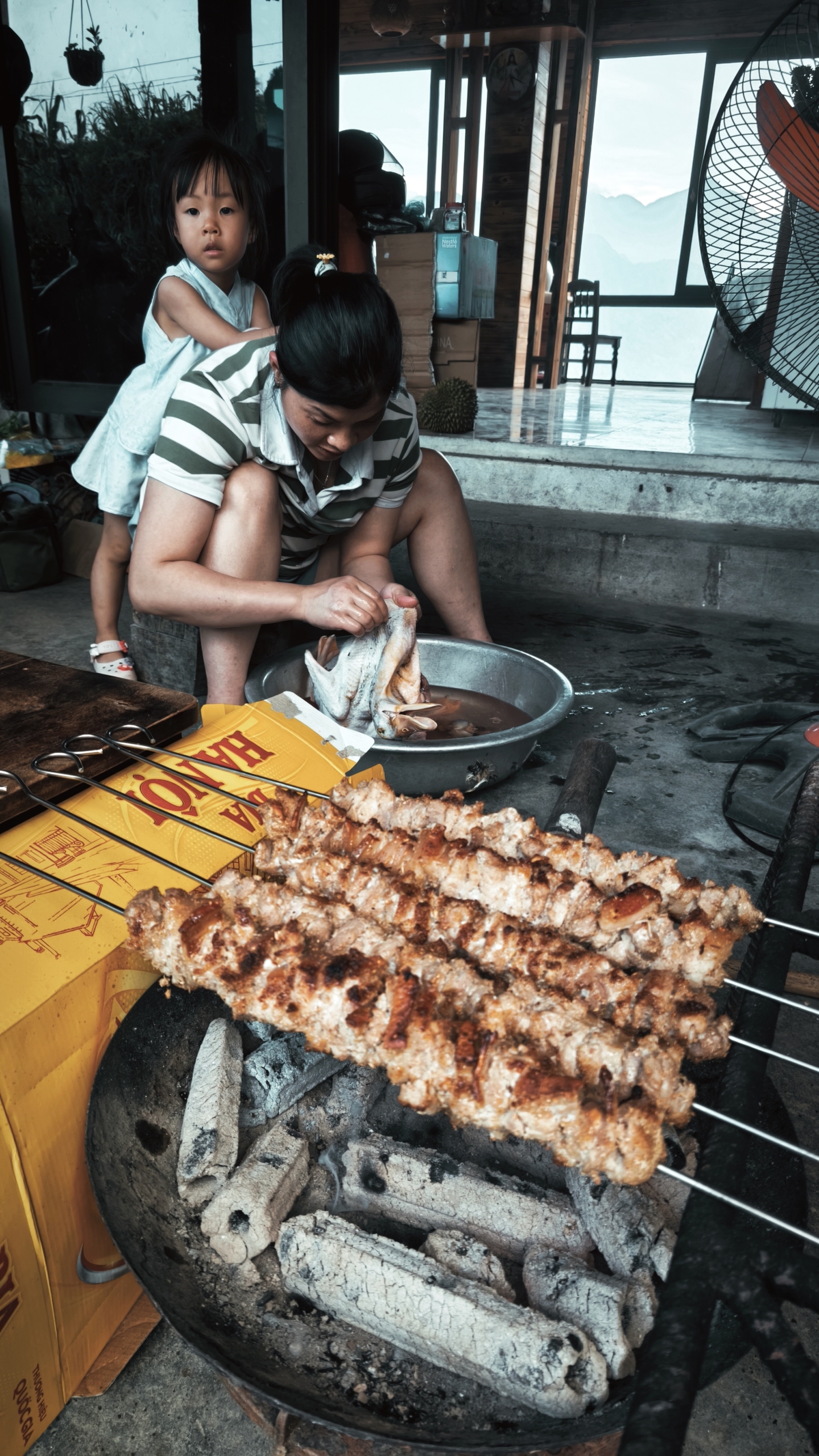
They are building too. A few rooms. A modest construction site clinging to the slope, with a view that has nothing to envy Topas. It’s the end of the day. The hour when bodies finally slow down. I am invited to share the workers’ meal.
And there, without any speeches on terroir or brochure storytelling: mountain pork skewers, strips of dried buffalo meat, aggressive herbs, sauces that punch you straight in the palate.
Cuisine without staging. Nothing sophisticated. Simply a territory speaking its own language.
After that, it is hard not to return to an obstinate question: why learn to listen to the mountain everywhere, except on the plate?
Because outside, everything tells the story of a living mountain: terraced crops, wild plants, livestock, aromatic herbs, Hmong and Dao craftsmanship, brutal seasons. I don’t hold a grudge against Topas.
The customer wants to consume the mountain with their eyes, but refuses to let it possess them. Because letting the territory onto the plate means accepting a part of unpredictability: textures that fight back under the tooth, herbs that jolt you, bitterness that shakes you, chili that makes you sweat.
In short: something less comfortable.
Raw life.