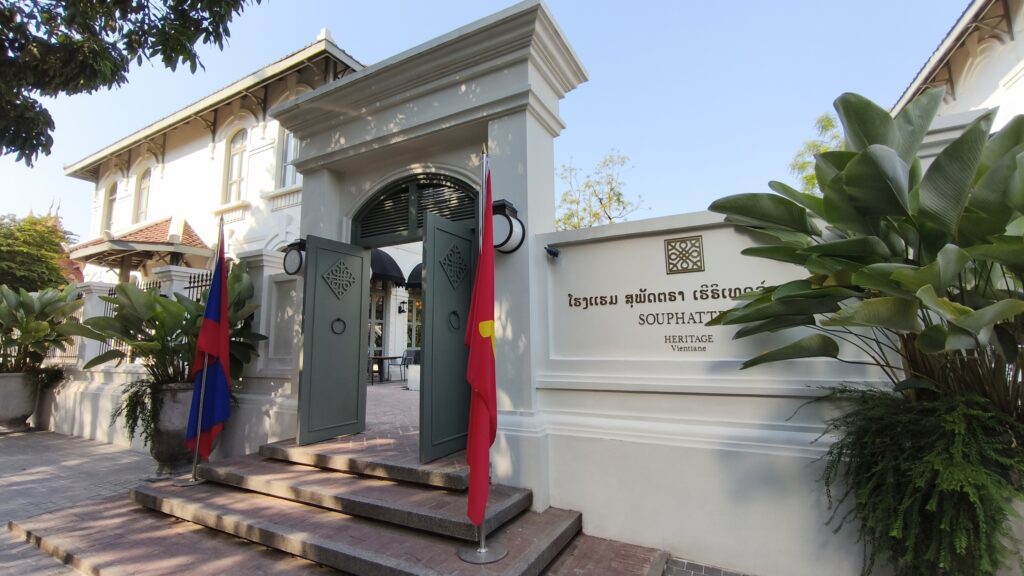
In this Vientiane streaked with glass towers and soulless concrete blocks, Souphattra Heritage plays the card of cordial understanding.
It doesn’t loom over its neighbors; it fits in.
It’s a luxury of good neighborliness that refuses arrogant verticality.
Perhaps that’s why I feel at ease here, despite the loss of the patina from its predecessor: the spirit of the place, its genius loci, survived the renovation because it preserved its proportions and its friendship with the street.
The real, old story
Souphattra Heritage Vientiane’s story begins long before the name change.
It’s rooted in the Ansara Hotel, a true boutique hotel, not the limp, overused label thrown around today.
Alongside Settha Palace, Ansara was an exception: a rare, precise, and charming address. A quiet alley, temples as neighbors, low houses framing the horizon, the Mekong a stone’s throw away.
Vientiane at a proper human scale, before it learned to tiptoe.
Originally, Ansara occupied several colonial-era residences from the first half of the twentieth century, dating from a time when the sleepy capital was merely an administrative center without pomp.
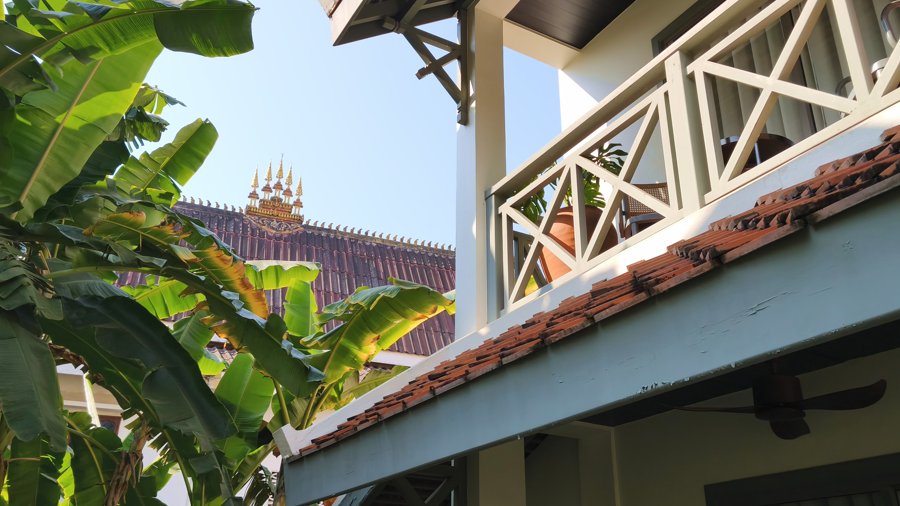
No palaces, no colonnaded colonial hotels: just officials’ houses, merchants’ homes, notable residences—the ordinary fabric of a modest, intimate, dense city. The Ansara project was intelligent reuse, architectural more than nostalgic. Low volumes, thick walls, natural ventilation, inner courtyards.
Everything conserved, connected, adapted without weight. Nothing overplayed.
The goal was never to rebuild colonial grandeur, but to stitch together what existed. That’s where its subtlety lay: one didn’t just stay in a decor, one inhabited it.
The transition to Souphattra Heritage
The shift came a few years ago.
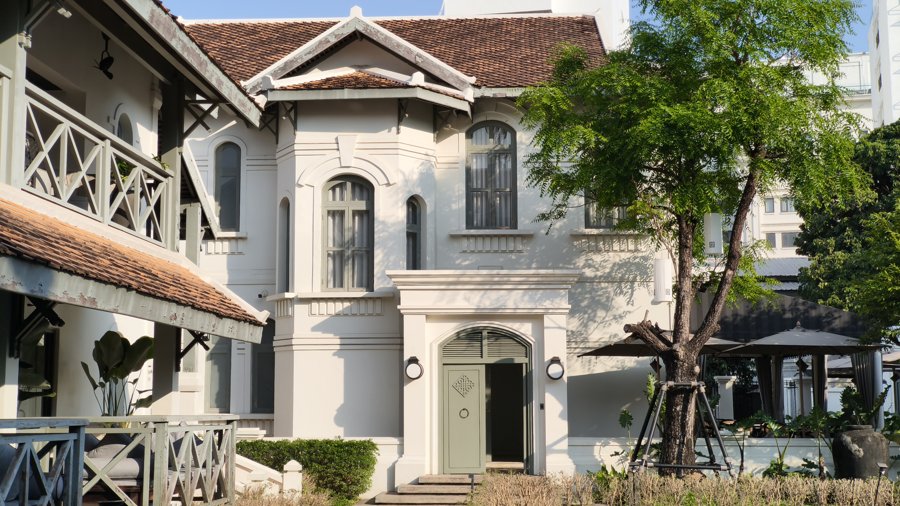
Not just a new sign, but a clear step up. Ansara’s worn charm gave way to a confident, controlled Lao-chic, never loud, or almost never.
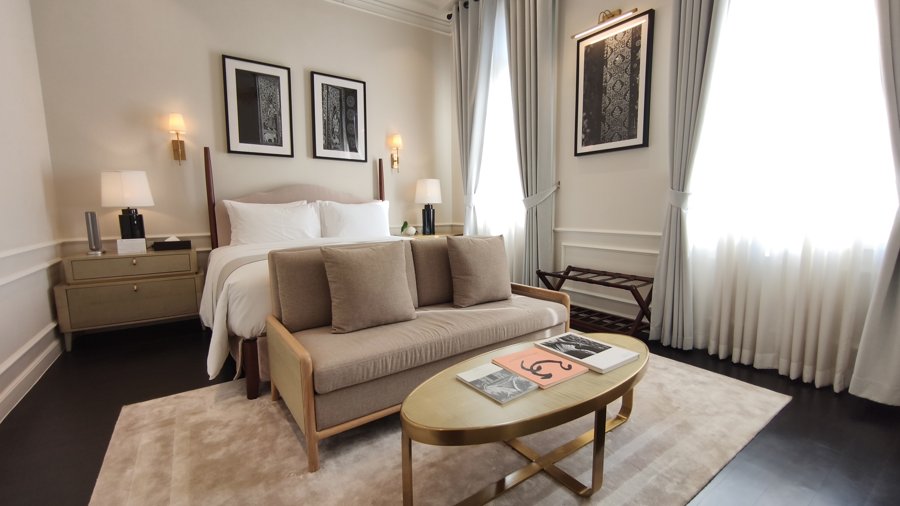
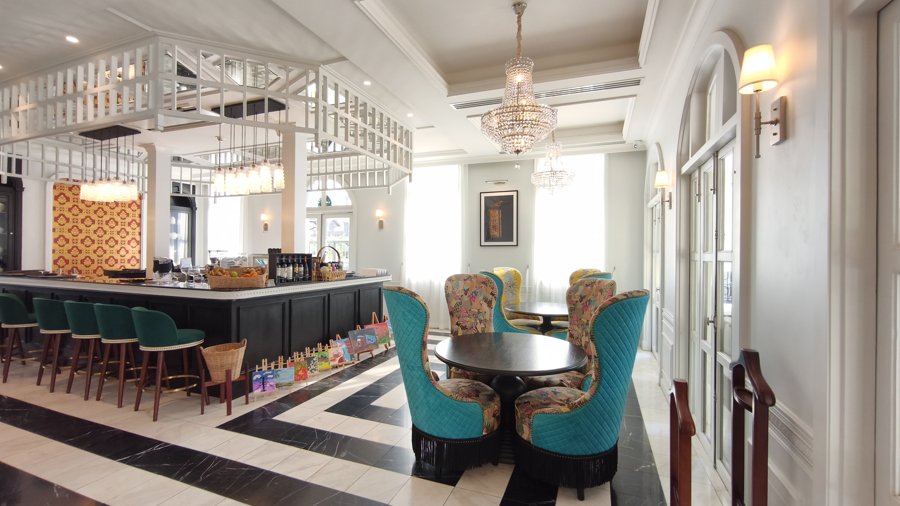
Bright whites, sharper lines, contemporary furniture that respects traditional codes, and an even keener eye for artisanal details. Everything is more precise, more deliberate. The word “Heritage” isn’t a slogan. It states an intention: to preserve Ansara’s inherited structures while elevating them. No more quiet corrections, now there’s pride in presentation. What was once a discreet rehabilitation has become a deliberate heritage showcase, in dialogue with Vientiane’s historical architecture.
It’s not betrayal, but it’s no longer the same spirit.
Where Ansara suggested you were living in a house, Souphattra reminds you you’re staying in a hotel. More luxurious, more legible, more self-assured. And yet, outside, the neighbor’s roosters still cough through the day, as if to remind you that Vientiane, despite everything, hasn’t changed its rhythm.
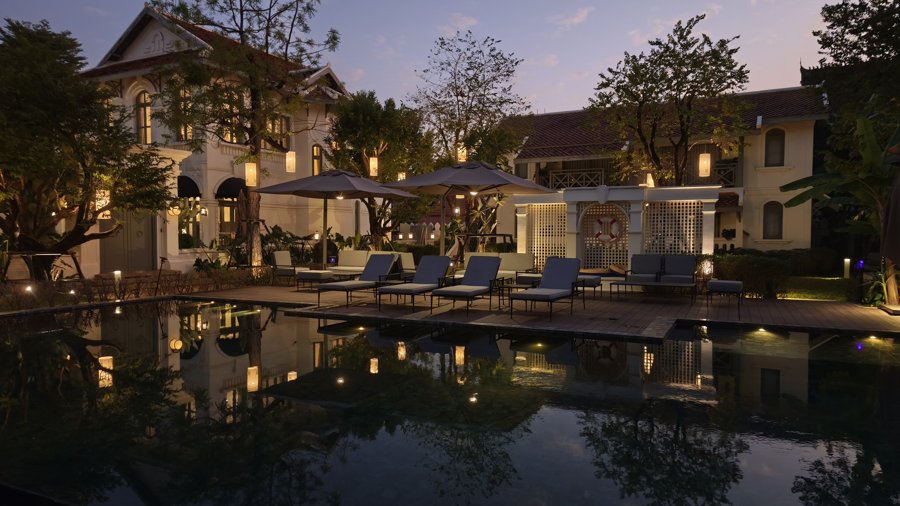
Why it works
Ansara was the luxury of passing time.
The patina wasn’t marketing—it was the slow accumulation of seasons: Mekong humidity, fine dust, travelers’ hands sliding along the railings. A luxury that didn’t announce itself, it accrued.
Souphattra is the luxury of mastery.
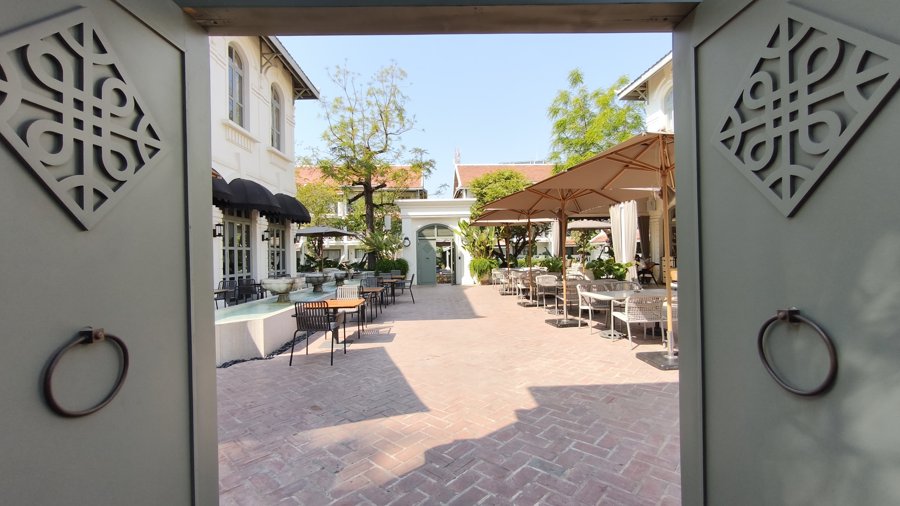
Everything is polished, yes, but polished in the sense of courtesy: impeccable, smooth, perfectly tended. A perfection crafted in a workshop, not earned over a century of life. Sometimes it shows. Chandeliers too bright? Yes. Too much crystal? Perhaps. Yet nothing suffocates. Everything stays at the scale of the neighboring wooden houses.
Service, too, is at human scale: restrained, discreet, unshowy, just a smile that says it all.
But in a city now trying to play the flashy girl, stacking floors without always remembering that the tallest spikes here belong to temples, Souphattra Heritage remains an exception.
An address that, despite its confident polish, hasn’t lost the essentials: human scale, a sense of place, restraint. Its great quality is in not trying to correct Vientiane. It doesn’t wake it, doesn’t modernize it by force. It flows with the city’s slow rhythm, its silences, its ordinary neighborhoods. Roosters still crow, pagodas still stand, the street lives gently.
The hotel inserts itself; it doesn’t impose.
The clash of hotel cultures
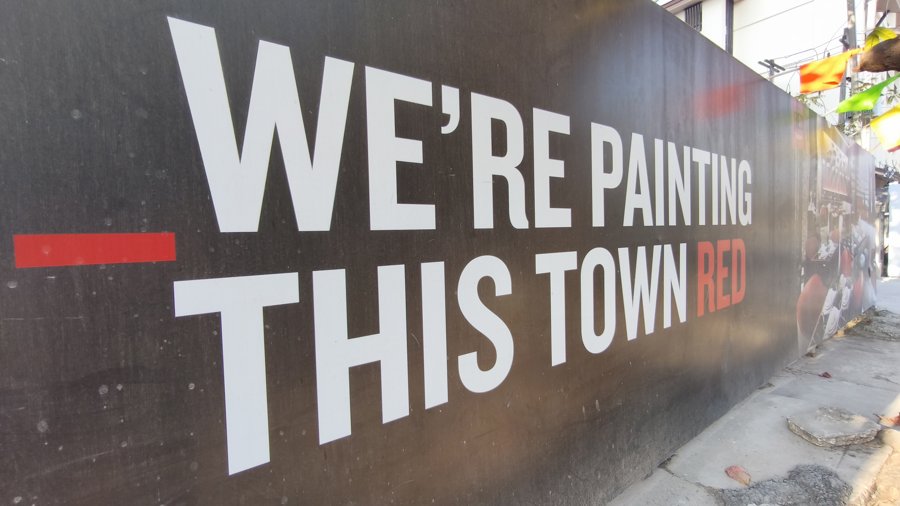
I wander through a perpetually under-construction Vientiane and stumble upon a poster: an American chain, full-throttle promise, slogan stamped in red: “We’re painting this town RED.”
The battle cry of modernity: Caterpillar boots, neon, ambition crushing the neighborhood.
On one side, Souphattra: luxury of discretion, mastery, restraint. On the other, conquest: hotels claiming territory, imposing rhythm, saturating space. Painting the town red promises noise, consumption, spectacle. It’s the clash between the Vientiane that wants to be seen from afar and the Vientiane you want to touch, smell, inhabit.
One seeks to dominate the city, the other simply wants to remain part of it.