

Every time I’ve tracked the mountain paths of Cao Bang, I’ve been hit by a double-blind of emotion: awe at the raw splendor of the landscapes—an inextricable wilderness of limestone peaks cloaked in dark forests—and horror at the violence once vomited into that suffocating, trap-ridden jungle, perfect for ambush.
This tormented nature, born from some primordial chaos, became the magnificent tomb of the French Expeditionary Corps in the autumn of 1950. That bitter defeat was a monumental electroshock for a smug, arrogant French army, the opening act for the disaster at Dien Bien Phu.

The context of the battle
From the jump in 1946, the French army was drowning.
It remained an army of aristocrats, humiliated in 1940, an army of noble gestures and old-boy networks, though the former had developed the nasty habit of seducing the wives of the latter. This old guard of bloated, red-faced careerists knew nothing of Indochina.
Their traditionally trained mindset, locked into conventional tactics, was fatally unfit for the subversive warfare waged by the Viet Minh.
This French army, obsessed with stripes and medals, was mentally and materially stuck in the wars of the past, facing an opponent wielding the principles of Maoist people’s war, a new and devastatingly effective doctrine in the Indochinese context.
Opposite them stood the Viet Minh, hardened by years of fire, learning from every bruise, raising an army of determined peasants galvanized by one idea: driving out the occupier and winning independence. For them, the war was total, existential, driven by iron political discipline and limitless endurance.
The landscape the French saw as hostile and suffocating became, for the Viet Minh, a deadly ally, a territory mastered and used with surgical precision to flip the scales of power.
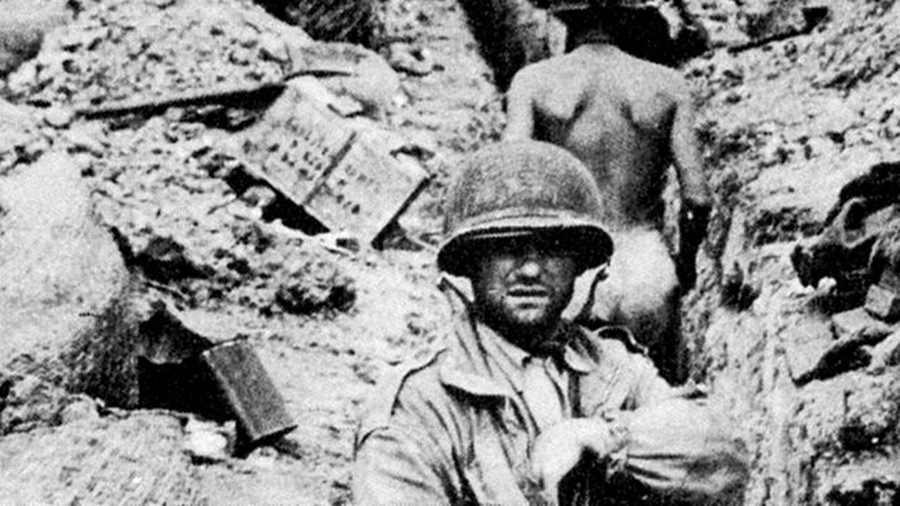
Courage, retreat!
Route Coloniale 4 ran from the port of Hai Phong through a labyrinth of limestone mountains. It was the lifeline for the garrisons of Lang Son and Cao Bang. Convoys traveling this “blood road” were constantly hit. After Mao’s 1949 victory, Chinese troops massed at the border, pumping weapons, training, and support to the Viet Minh.
Ego rivalries and bureaucratic paralysis choked the high command.
Finally, the order came: evacuate RC4, the garrisons, and the outposts. On paper, under the polished ceilings of headquarters, the plan looked simple: Colonel Charton would evacuate Cao Bang while a relief column under Colonel Lepage would depart from That Khê to meet him at Dong Khe.
On the ground, it was a slaughter.
The two columns never met. French troops were butchered in a cascade of ambushes and brutal fighting. The 1er BEP, the pride of the Corps, packed with former Waffen-SS and Wehrmacht soldiers, was annihilated, fighting with feral desperation to break the encirclement at Coc Xa, giving birth to the expression “se faire coxer” (to be wiped out).
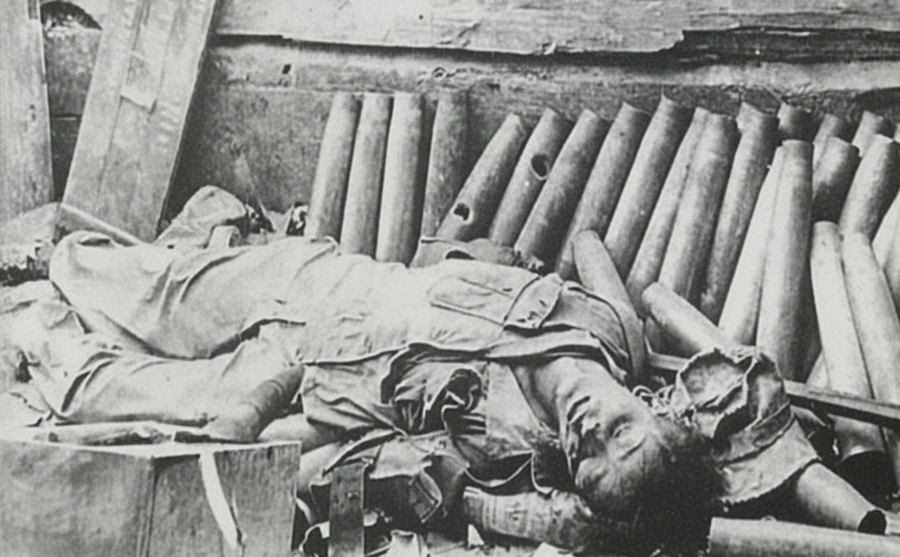
The victory was overwhelming, almost sublime in that supernatural, mineral, hallucinatory landscape.
The Viet Minh followed Sun Tzu to the letter: “When the enemy advances, we retreat. When he stops, we harass him. When he tires, we attack. When he retreats, we pursue.”
For France, it was a catastrophe and a humiliation.
Worst of all, the Lang Son garrison was ordered to abandon a position that wasn’t even under attack, leaving behind staggering mountains of equipment for the Viet Minh.
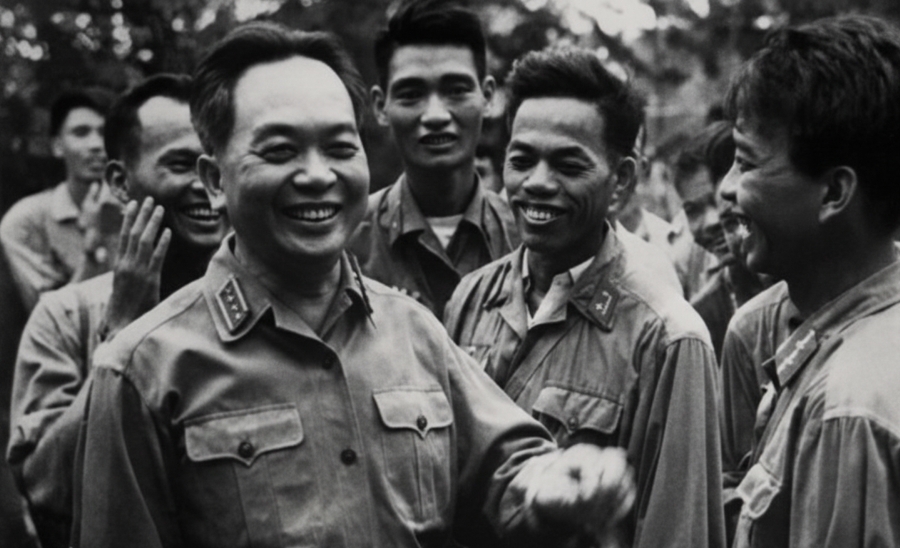
Collapse, then a blazing sursaut
The atmosphere is one of collapse.
The loss of thousands of men and tons of equipment, the annihilation of elite units like the 1st BEP, and above all, the decision to abandon the entire border zone is a national and military humiliation without precedent. The hypothesis of defeat is credible for the first time.
The military is gutted, the bourgeoisie terrified.
The Viet Minh at the gates of the Delta meant witnessing the end of a lifestyle and the confiscation of property. In the end, Bibiche is the one who fairs best. The air of Dijon suits her better than that of Hanoi.
To escape this strategic and psychological morass, the government sent to Indochina the most illustrious of its soldiers, the most charismatic, the most feared: King Jean.
Jean de Lattre de Tassigny—sabre-rattling aristocrat, loudmouth in uniform, with an innate sense of stagecraft—landed in December 1950 with full civil and military powers. Official mission: save Tonkin. Real mission: restore some dignity to an army already in decomposition.
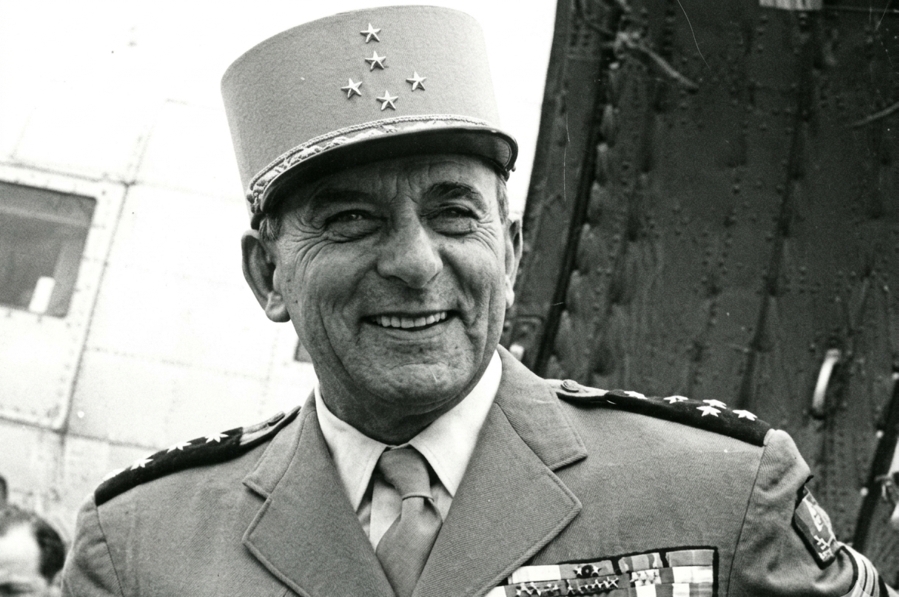
De Lattre would do what he did best: impose a style.
He galvanizes, harangues, parades.
In 1951, he won three defensive victories against Giap, just enough to provide the illusion of a resurgence and temporarily stabilize the Delta. Cogny, de Lattre’s tactical right hand and protégé, rejoices; Cogny couldn’t care less and redoubles his efforts in bedding the bourgeoisie while the war itself continues its course, indifferent to panache. For one does not reverse a historical dynamic with kepi-flourishes and martial speeches.
The curtain falls fast. Too fast.
The death of his only son in combat followed by illness put an end to the episode. De Lattre goes to lick the Americans’ boots one last time before going home to die in France. The illusion dissipates; the scenery remains. Posthumously, he is elevated to the dignity of Marshal of France. During the carnage of Dien Bien Phu, another aristocrat, Christian de La Croix de Castries, would have his second star parachuted in with a case of champagne. Both falling into enemy lines. The gesture, the gall, and the braid. The rooster, king of the farmyard, crows at the top of its lungs while standing feet-deep in shit!
History doesn’t repeat itself; it stutters
The high command’s fundamental failures—blind understatement and a chronic refusal to adapt—were never corrected.
Because of them, Dien Bien Phu and the whole of Indochina fell in May 1954. Even then, critics slammed the staff’s utter disconnection from the field. Even then, Paris was a government in gridlock, cycling through eleven successive cabinets between 1946 and 1954.
They had promised adventure to provincial kids craving the exotic. Instead, those boys found only blood, tears, sweat, disillusionment, and a bitter rancor they would carry all the way to Algeria. There, they would sometimes find themselves fighting their former brothers-in-arms from Colonial Route 4 (RC4)—all of them caught in the meat-grinder of colonial violence and Republican betrayal.
The tragedy of the RC4 is a blistering reminder that history doesn’t just repeat itself; it stutters.
Today, that same demand for sacrifice is being resurrected. On November 22, 2025, General Fabien Mandon, Chief of the Defense Staff, warned the mayors of France that with the Russian threat looming toward 2030, the Nation had to mentally prepare itself to “accept losing its children” in uniform.
Thinking back to those young boys on the RC4, I can’t help but chew on Anatole France’s grim verdict: “You think you are dying for your country; you are dying for industrialists.”
The “Great Silent One” is also amnesiac
To this day, France has officially erected no memorial monument on the actual sites of the combat, whether on the RC4 or at Dien Bien Phu, where the only monument honoring the fallen soldiers was built by a former legionnaire, Rolf Rodel, with his own money and his own hands in the 90s. France has commemorated Indochina far from the scene of the crime, out of modesty, out of shame, and above all, out of memorial cowardice.
And that too, deep down, is very French. Because losing to an equal is tragic. Losing to those one despised is intolerable!