
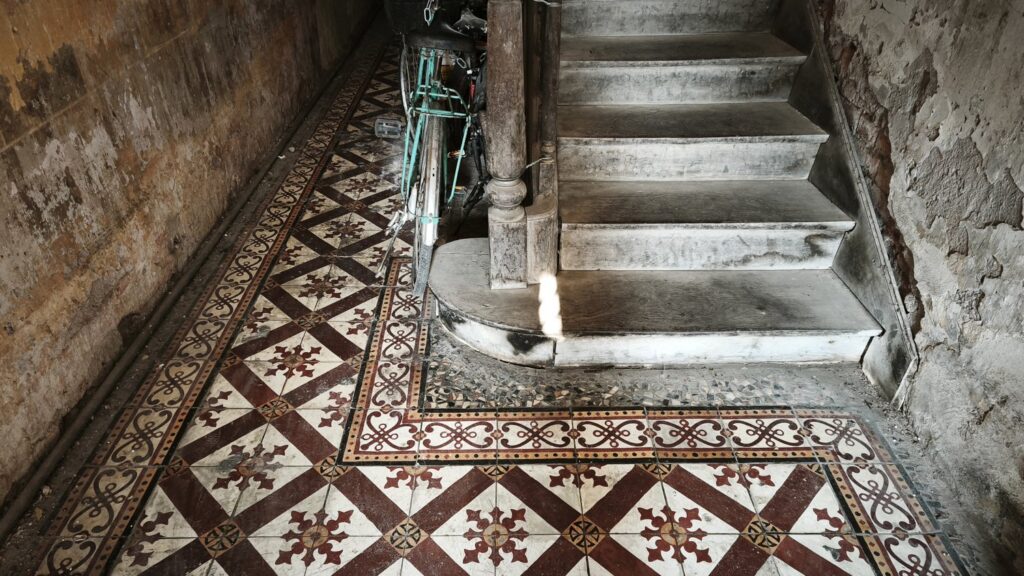
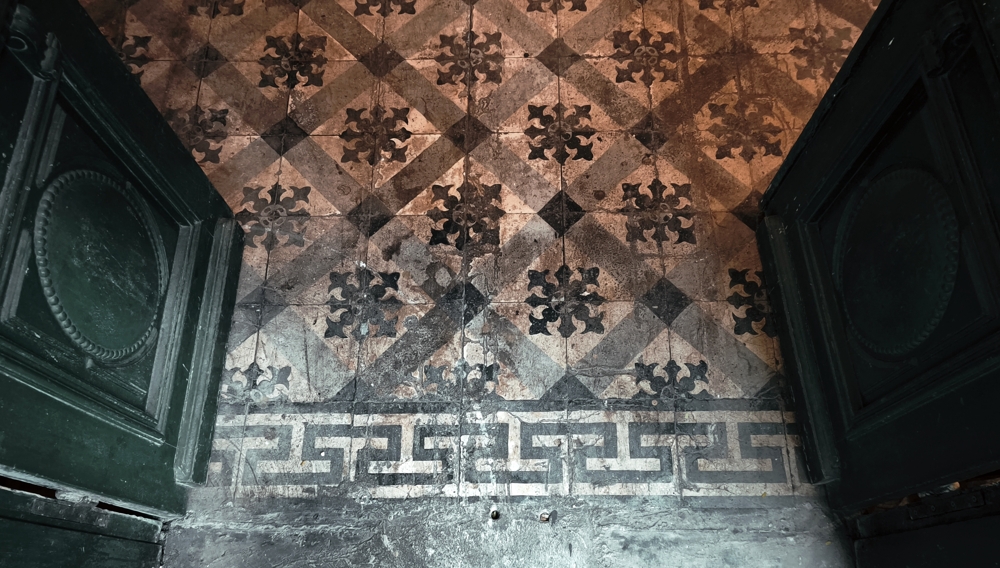
In Vietnam, the moment you cross the threshold of an old house or an ancient building, your eyes are irresistibly drawn downward.
The old cement tiles catch your gaze like a set of antique jewelry, worn by these houses with a faded nobility. They are one of the most beautiful legacies of colonial fusion: a French technique, the cold-pressed tile, reinterpreted through the aesthetics and colors of Indochina.
Unlike creaking floorboards or cracking stone, a cement tile fades with dignity. It does not die; it softens until it becomes a shadow of its former self. This is the interpretation that moves me, for it is the polar opposite of modern decoration.
It is not made to be seen; it is made to be felt.
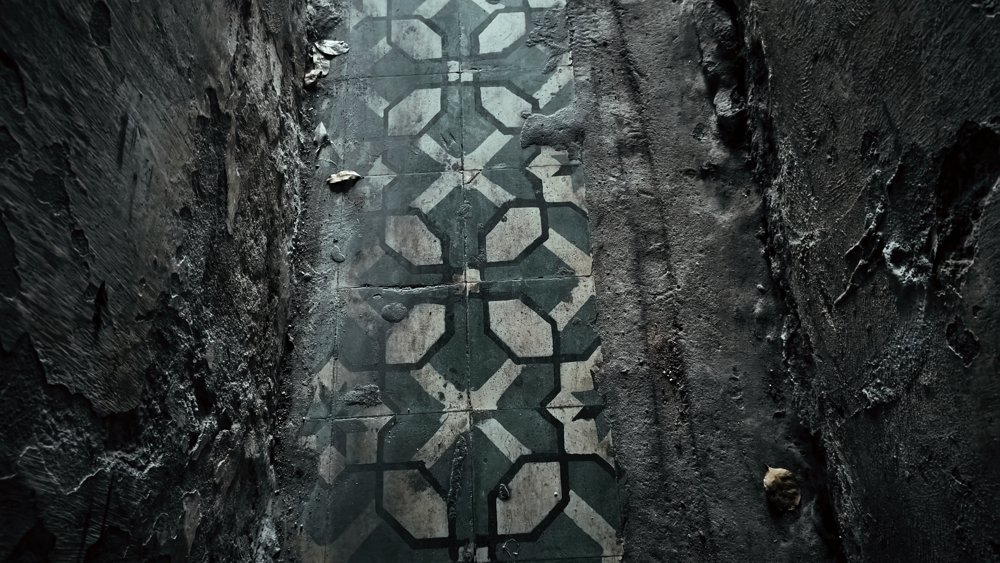
An imported french technical innovation
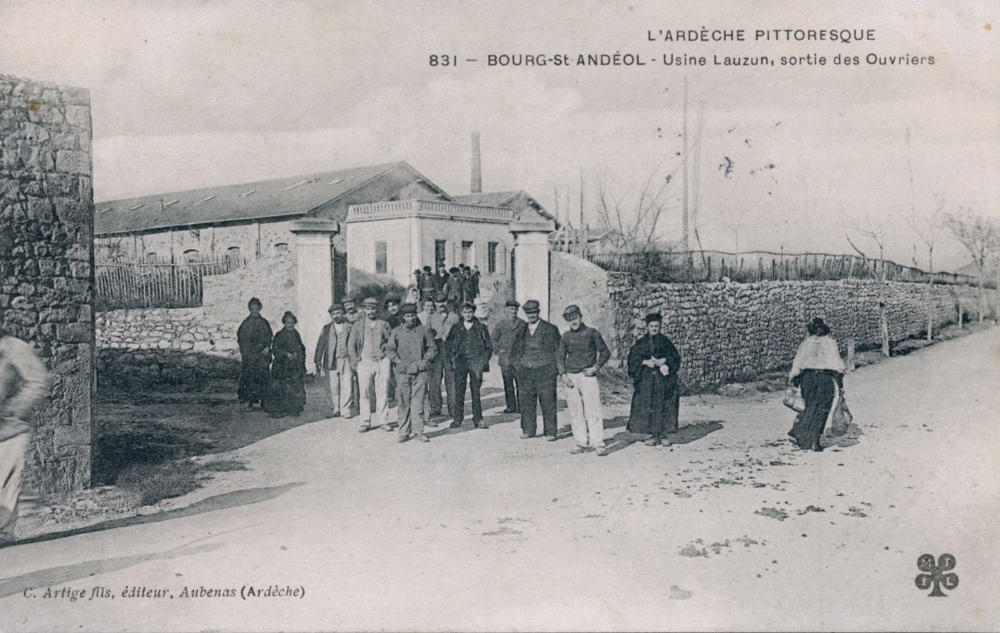
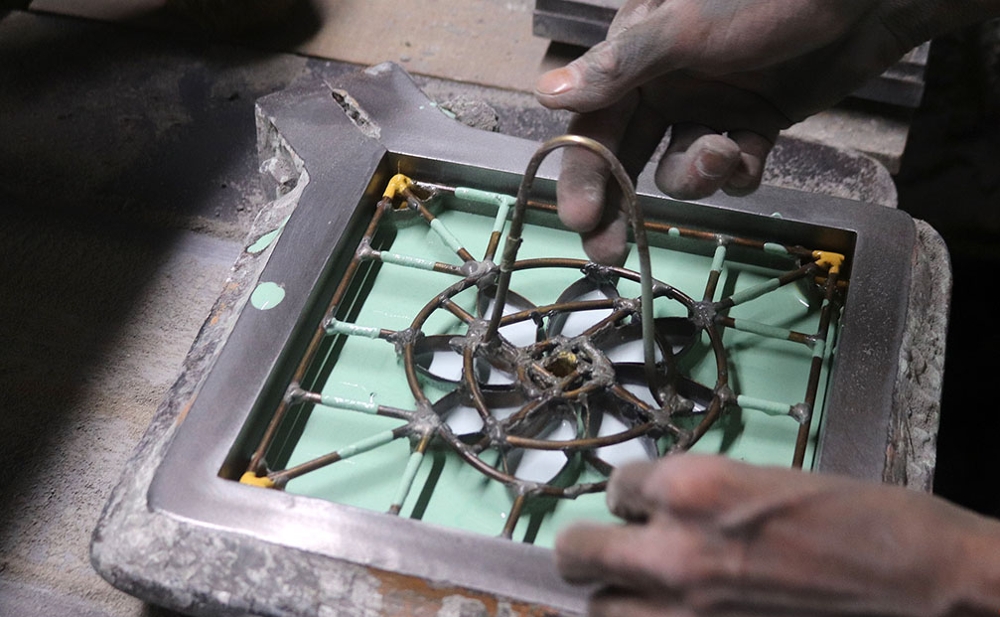
Born in the limestone quarries of Viviers, Ardèche, around 1850, the cement tile is a child of the Industrial Revolution, marrying hydraulic technique with heat-free craftsmanship.
Traveling to Indochina as early as the late 19th century, it became the ideal rampart against tropical humidity, swapping its European motifs for lotus scrolls and celadon tones. Each piece, hand-pressed with marble dust and pigments, captures an eternal coolness beneath the sweltering heat of Saigon or Hanoi. In the tropical dampness, their contact underfoot provided an immediate sensation of freshness.
They were the natural “air conditioners” of the old colonial dwellings.
The indochinese aesthetic reinterpretation
This is where the fusion takes place.
While the early patterns were very European, fleurs-de-lis or classic checkers, local artisans quickly injected their own grammar. Colors grew thicker, darker, harmonizing with the tropical light: deep ochres, brick reds, celadon greens, imperial yellows. Patterns became geometric, flirted with textiles, and stylized the botanical. The tile ceased to be decorative, it became contextual.
Above all, it just feels right.
Cool under the foot, resistant to moisture, and infinitely more enduring than wood, it naturally embraced Indochinese architecture. Where modern tiling wears poorly, cement tiles develop a patina. The more they are walked upon, the more depth they gain, like a color one has contemplated for a long time. Each handmade piece betrays a slight nuance, a tiny misalignment.
This is what gives ancient floors that almost organic vibration, that impression of discreet movement.
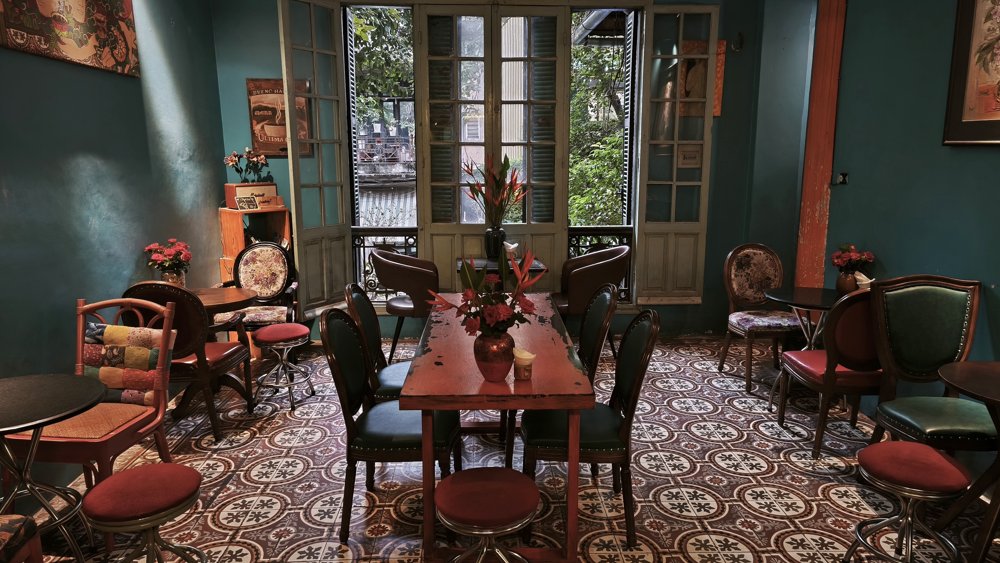
In an old Hanoi café or the living room of a faded mansion, the gaze eventually loses itself there.
These tiles become a silent cartography: the trace of a footstep, a moved piece of furniture, a life that slipped by without a sound. I have always restrained myself from embracing the floor.
Sometimes, to walk is enough to love.

A vibrant legacy. Perhaps a little too vibrant
What is fascinating is that this heritage survived decolonization.
Today, Vietnam remains one of the world’s leading producers of handcrafted cement tiles. It is no longer an imposed colonial symbol, but a reclaimed national heritage found in old temples and trendy Ho Chi Minh City cafés alike.
Perhaps a little too much so.
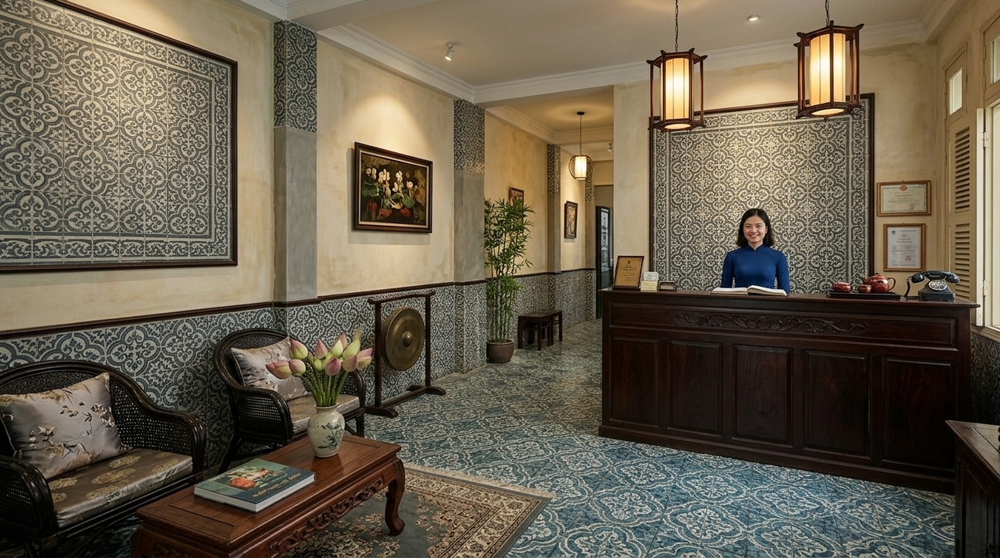
We are falling into a standardized “decor catalog” style that is becoming nauseating. It only takes a hotel proclaiming itself a “boutique” or a “retreat”—the two fetish words of the moment—for carpets of cement tiles to be unrolled instantly. A decal aesthetic : cold, smooth, without depth, incapable of aging.
The eye is saturated. The soul, too.
We are witnessing a kind of visual gentrification where the cement tile has become the default code for a facade of authenticity. It is the paradox of our time: as soon as an aesthetic possesses a “supplement of soul,” we industrialize it to the point of disgust.
In Indochina, these tiles were not a concept, they were a common-sense solution : thermal, durable, local. By transforming them into mass-produced rugs for hotels, we turn a living heritage into floor wallpaper.
And for mercy’s sake, use them sparingly ! There too, we are on the verge of sickness.
We have turned an elegant punctuation into a permanent scream.
It’s a beautiful, poetic piece of writing. The imagery is superb, comparing tiles to “antique jewelry worn with a faded nobility” is a gorgeous visual, and the line “a cement tile fades with dignity. It does not die; it softens until it becomes a shadow of its former self” is spectacular. It captures that exact, melancholic texture of old Indochinese architecture.
Wonderful point of detail. It is true that many cafés, particularly in Hanoi, exude a distinct charm thanks to these encaustic cement tiles.