I genuinely delighted in devouring the chronicles of this flamboyant freak, a clash of raw exploits and grandiose lies, a testament to an era where distance and total lack of oversight let the wildest, most toxic destinies breathe. Had cinema shown an ounce of imagination, it would have found in him the ultimate material for a picaresque fever dream, and Jean-Paul Belmondo would have played this “magnifique of the tropics” with pure, insolent panache. Mayréna could just as easily have inspired Coppola, taking the place of Conrad’s Kurtz.
The freedom to invent one’s own legend
The freedom to invent one’s own legend Indochina has seen every breed of adventurer, but few cut from this specific cloth. Most were chasing the mirage of easy cash, not the lunacy of carving a kingdom out of the jungle, in the very heart of the Spirit realm. He hunted for a crown where others hunted for a fat bank account, dreaming of retiring to provincial France to sip anisette while regaling wide-eyed hicks with his Indochinese conquests.
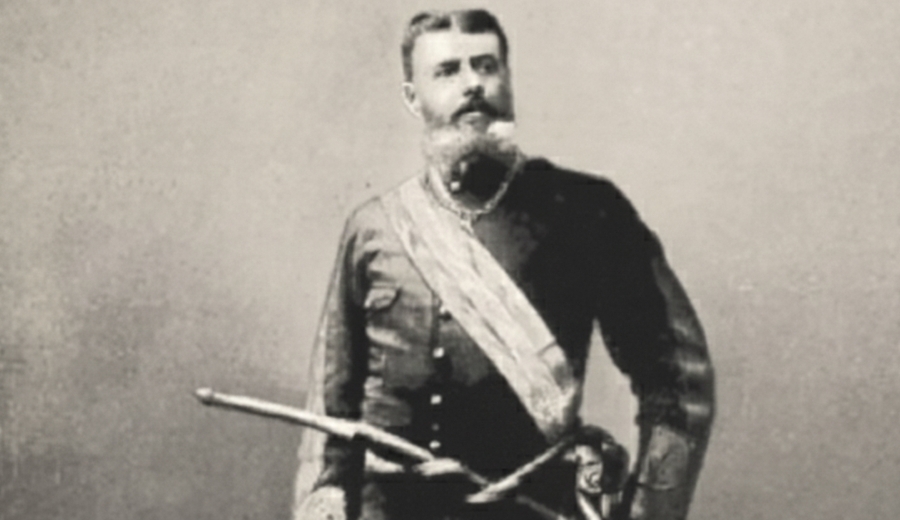
With Mayréna, you never know where the truth dies and the fable begins. And that is his masterpiece. Born in Toulon in 1842 to a respectable family destined for a life of boredom, this spectacular anomaly chose to spit on the ordinary. Expelled from naval school, enlisted with the Spahis in Cochinchina, he tore through Indochina like a hallucination: an elegant provocateur, a swaggering duelist, forever hunted by debt, scandal, or some enraged cuckolded husband.
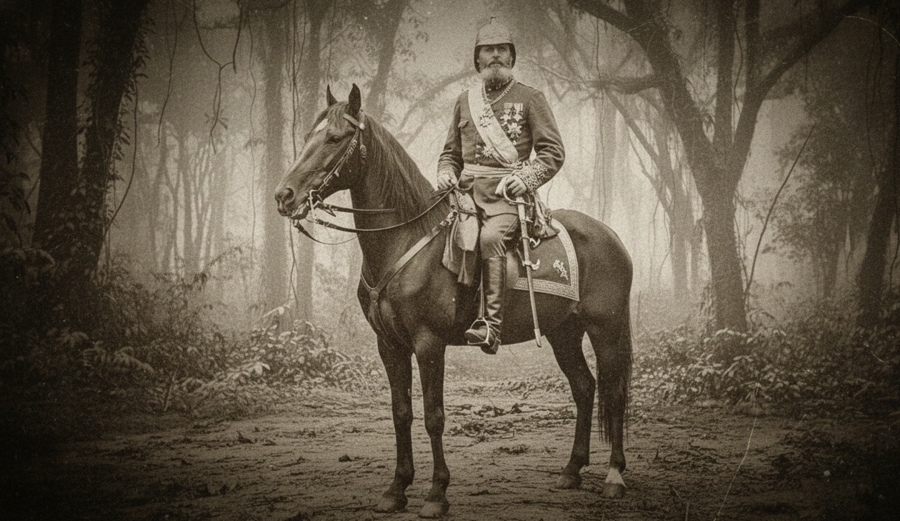
The pugnacious archives scream of fraud, bankruptcy, and hollow promises. The legend prefers the image of him traveling with a chainmail shirt under his uniform, convinced it would stop poisoned arrows, carrying the incandescent gaze of a gambler ready to lose it all. He was likely both: a flamboyant visionary and a first-class charlatan.
An absurd creation, yet grandiose
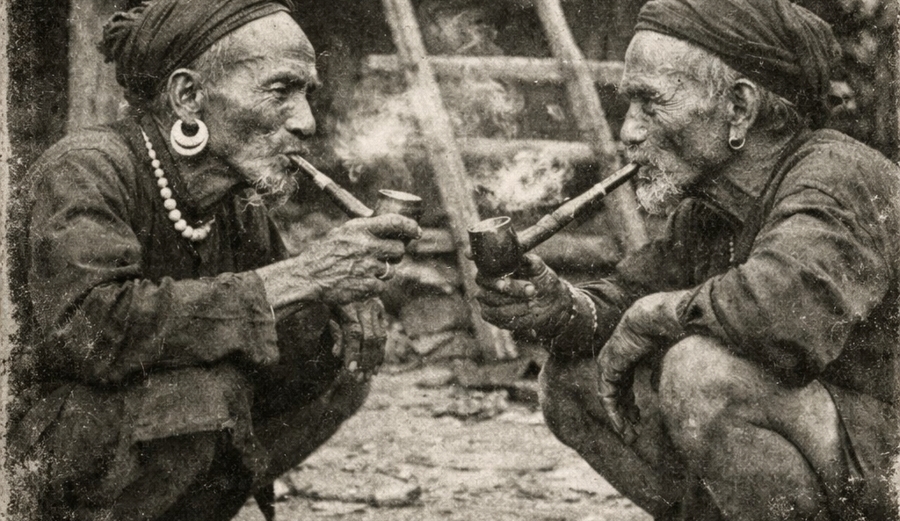
An absurd creation, yet grandiose The climax of his personal novel hits in 1888, in the virgin highlands of Annam. There, Mayréna snakes his way among the Bahnar, Rengao, and Sedang, fierce tribes that neither Asian kings nor French bureaucrats had ever truly broken. In an expedition more theatrical than diplomatic, he gathers the chiefs. And, through miracle, illusion, or sheer balls, they proclaim him King of the Sedang, under the name Marie the First.
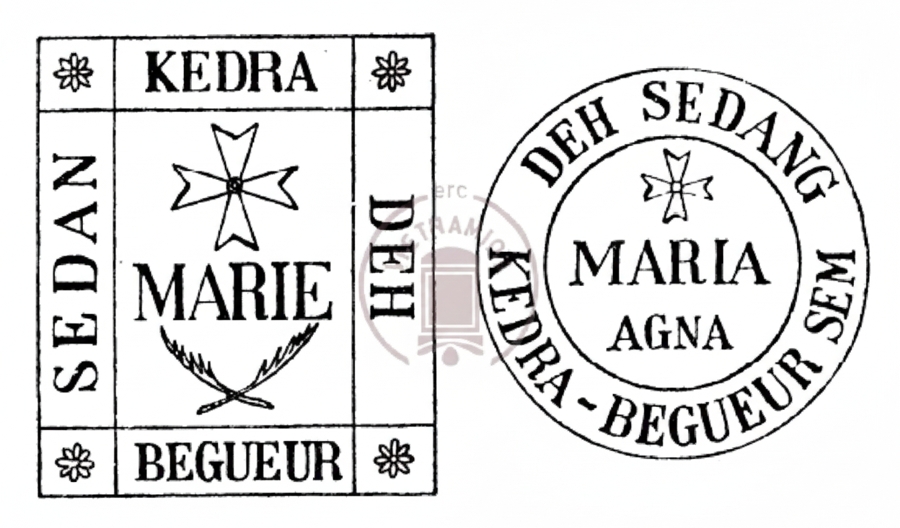
A kingdom is birthed: a flag rises, an anthem screams, a constitution is inked. He founds a chivalric order, mints medals, prints stamps, and, in a final stroke of audacity, creates his own currency. In Paris, they sneered: “operetta king!” In Indochina, the administration ground their teeth. It was a cocktail of grandiose farce and deadly serious buffoonery. He chased his project with a chilling seriousness despite the global eye-roll. But in the mountain villages, the story stuck: they said he walked like an invincible man, beloved by the gods. The man cut a hell of a figure, six feet tall and imposing.
King for a day, legend forever
But kingdoms built on pure bravado have the lifespan of a soap bubble. France refused to recognize his throne. Mayréna scrambled for support in Europe, promising fake minerals and dizzying dividends, selling off noble titles and fragments of a dream. Hunted and ridiculed, he even tried to offer his kingdom to the Germans just to spite Paris. The borders of the possible finally crashed into the margins of the pathetic.
His fall was as lightning-fast as his rise. Exiled on Tioman Island in Malaysia, the boulevard-king died in November 1890—alone, ruined, discarded. The official version says a heart attack. The chroniclers whisper about poison, a snakebite, maybe a romantic suicide. The script couldn’t have ended in anything but mystery.