
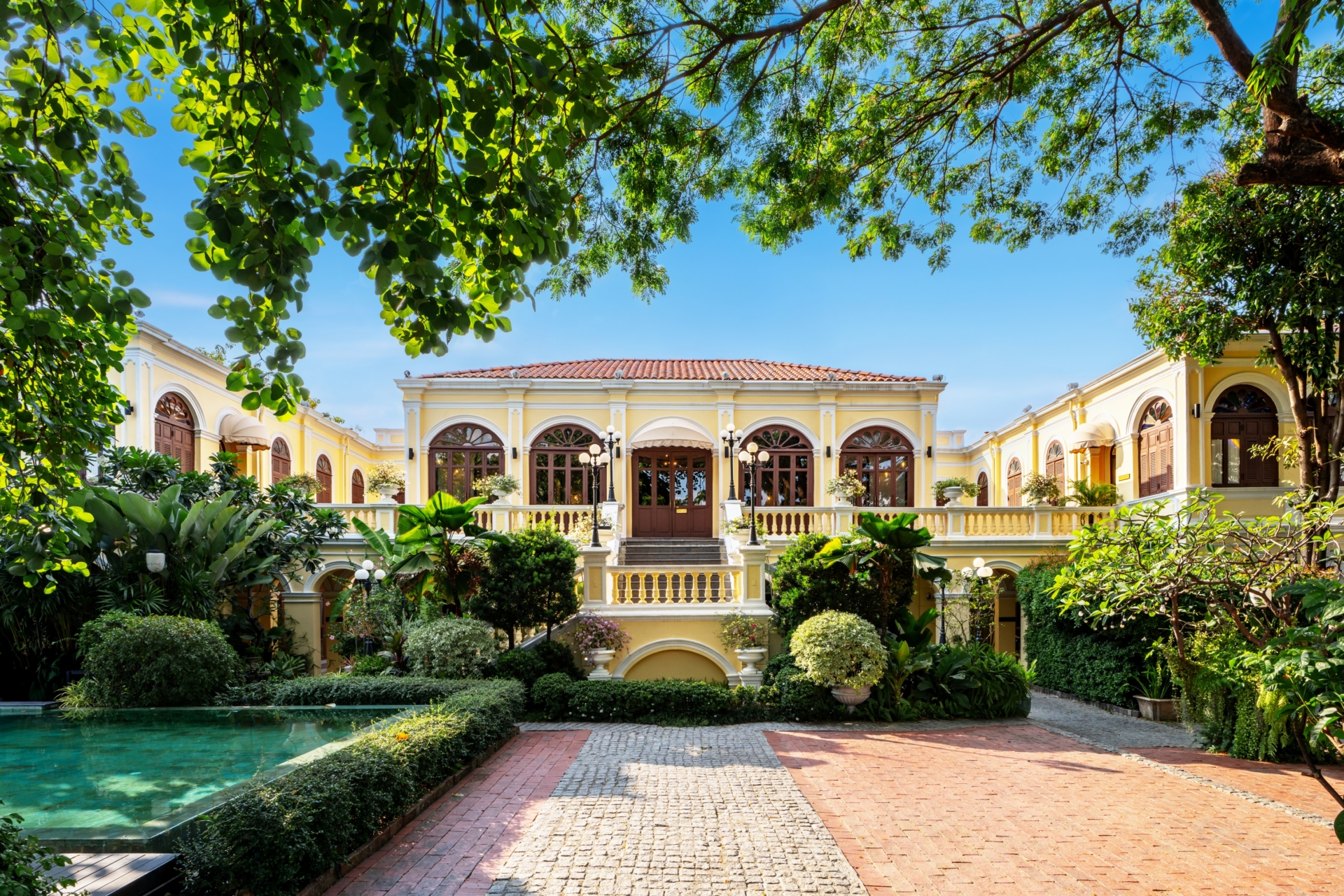
Beyond being a boutique hotel, the Praya Palazzo tells the story of a Siam that understood early on that architecture could become a diplomatic weapon.
Borrow Europe’s codes without surrendering your identity.
Receive the world without letting yourself be swallowed by it.
The house becomes a political statement in stone.
And that’s when it makes you want to let yourself be locked inside.
Not to sleep.
To understand.
To look. To read. To piece things together.
Run your hand over the wood, the velvet, the moldings.
Search the details for the scattered pieces of a Siam that built itself by staring Europe in the eye.
Because here, History isn’t behind glass.
It’s still under your fingers.
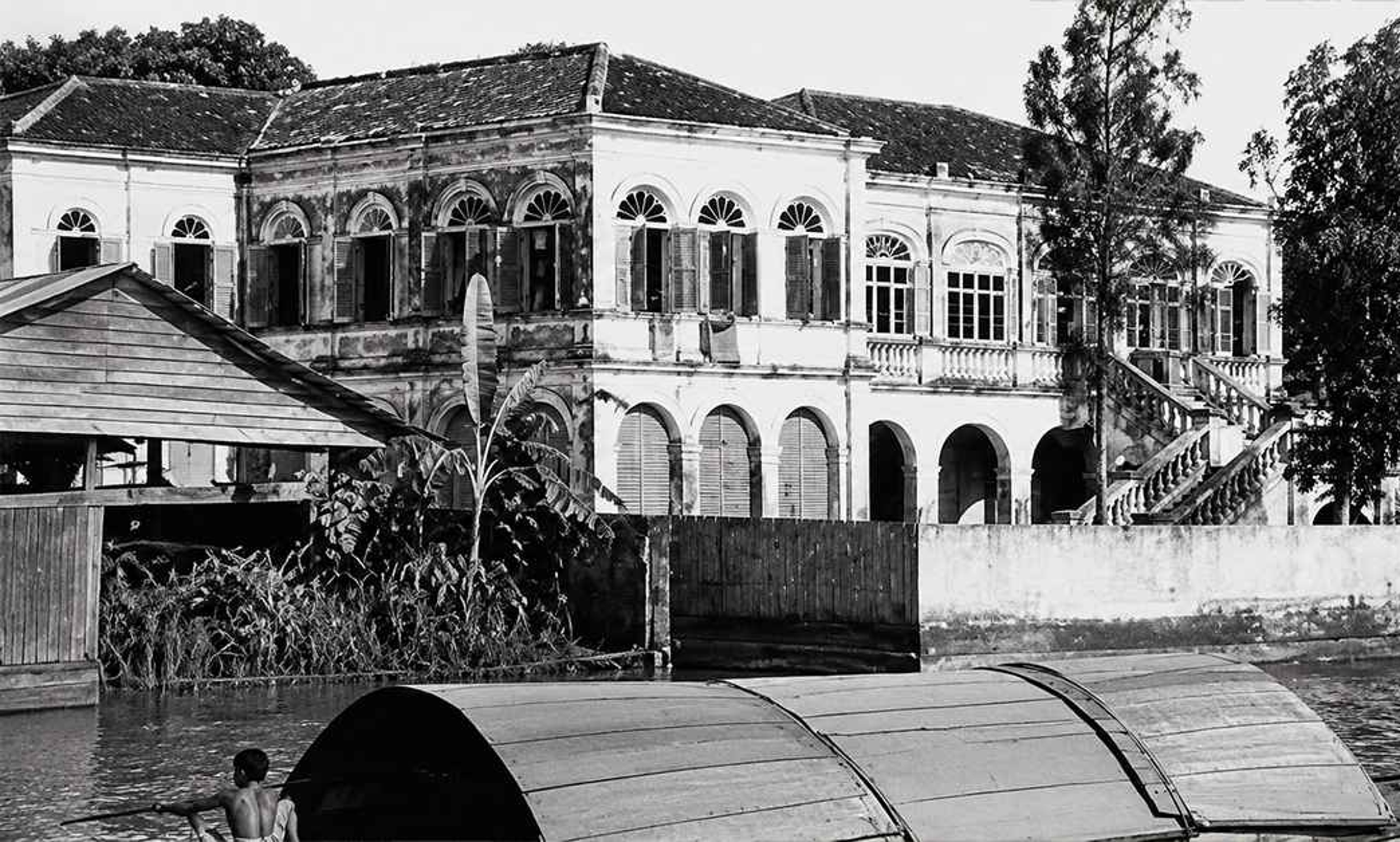
Bangkok Looked at Europe
It never suffered it.
At the turn of the 20th century, under Rama V, Bangkok set its clock to European time.
And not timidly.
The Italians arrived with their mustaches, their body gestures, their palaces, their bridges, their railway stations, their public buildings.
Turin, Milan and Rome came to plant their facades along the Chao Phraya.
But Siam didn’t convert to the West.
It used it.
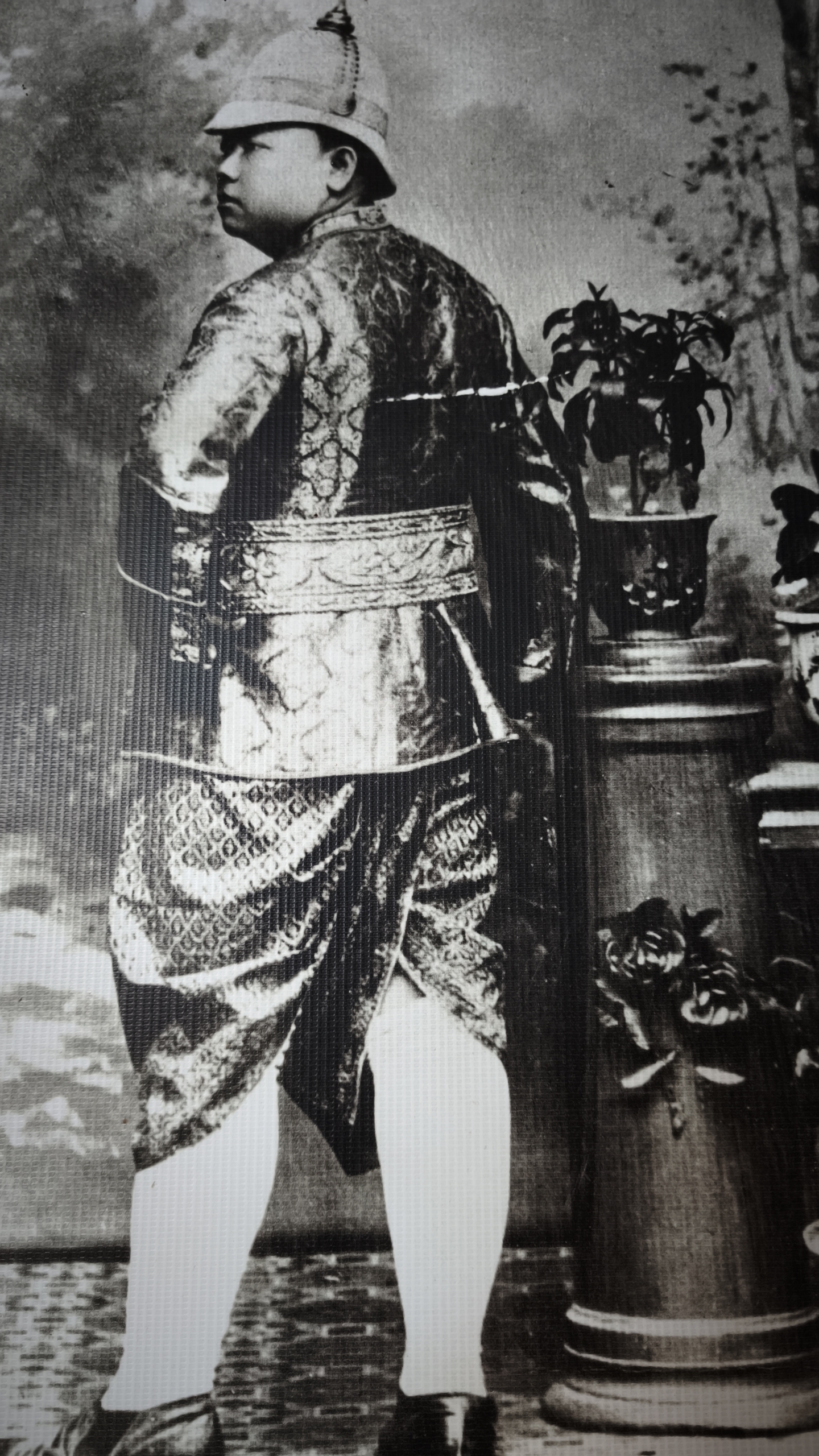
Rama V understood, before many others, that architecture could do politics.
Building European meant telling the colonial powers: we know what you know how to do. We can do it ourselves.
The Praya Palazzo was born into that Bangkok.
Built in 1923 under the name Baan Bang Yee Khan, on the western bank of the Chao Phraya, it doesn’t play at being an Italian palace.
It speaks its language.
Palladian facade, arches, symmetry, proportion: everything here breathes a learned Europe.
But the building isn’t a concession.
It’s a demonstration.
A stone’s throw from the foreign legations, Bangkok masters the codes of those who came to explain the world to it.
Across the river, Bang Khun Phrom doubles down in the same baroque register.
Two monsters of Italian pride planted in tropical silt, watching each other grow old across the river for a century.
One became a refuge.
The other, the Bank of Thailand.
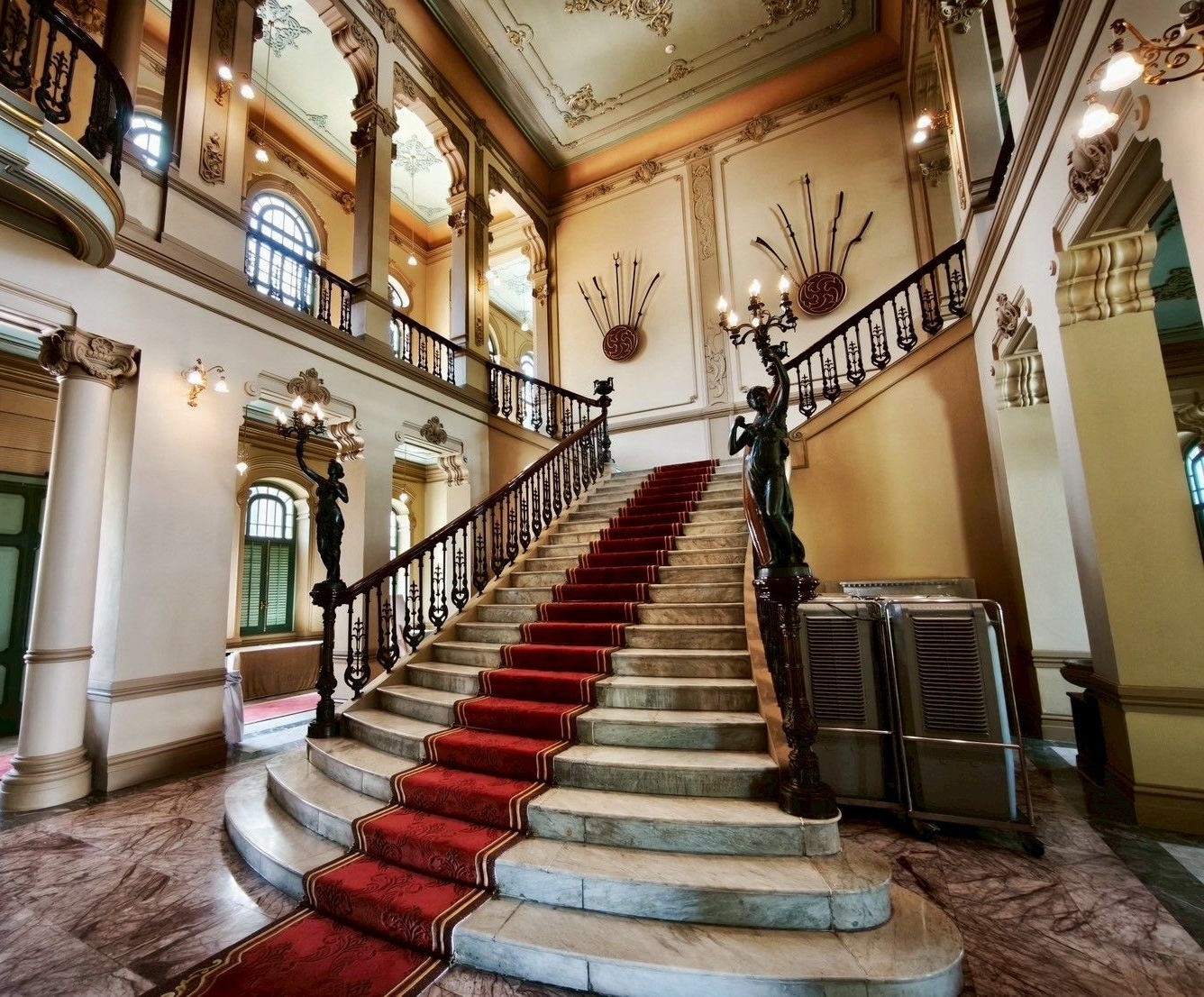
The stones have outlived kings, diplomats and currencies.
Enough to make you want to jump into a Riva, cut through the river’s ristretto-colored water from one bank to the other, a glass of Fiano in hand, with Nessun Dorma playing.
Since Bangkok brought Italy all the way here, might as well take its wine, its boats and its soundtrack too.
But the moment your foot touches the Praya Palazzo’s jetty, the cinema stops.
The boat engine fades.
The river’s lapping falls into the background.
And the trap closes.
Where Time Can Be Touched
At the Praya Palazzo, you become a captive because the place isn’t trying to distract you.
It holds you.
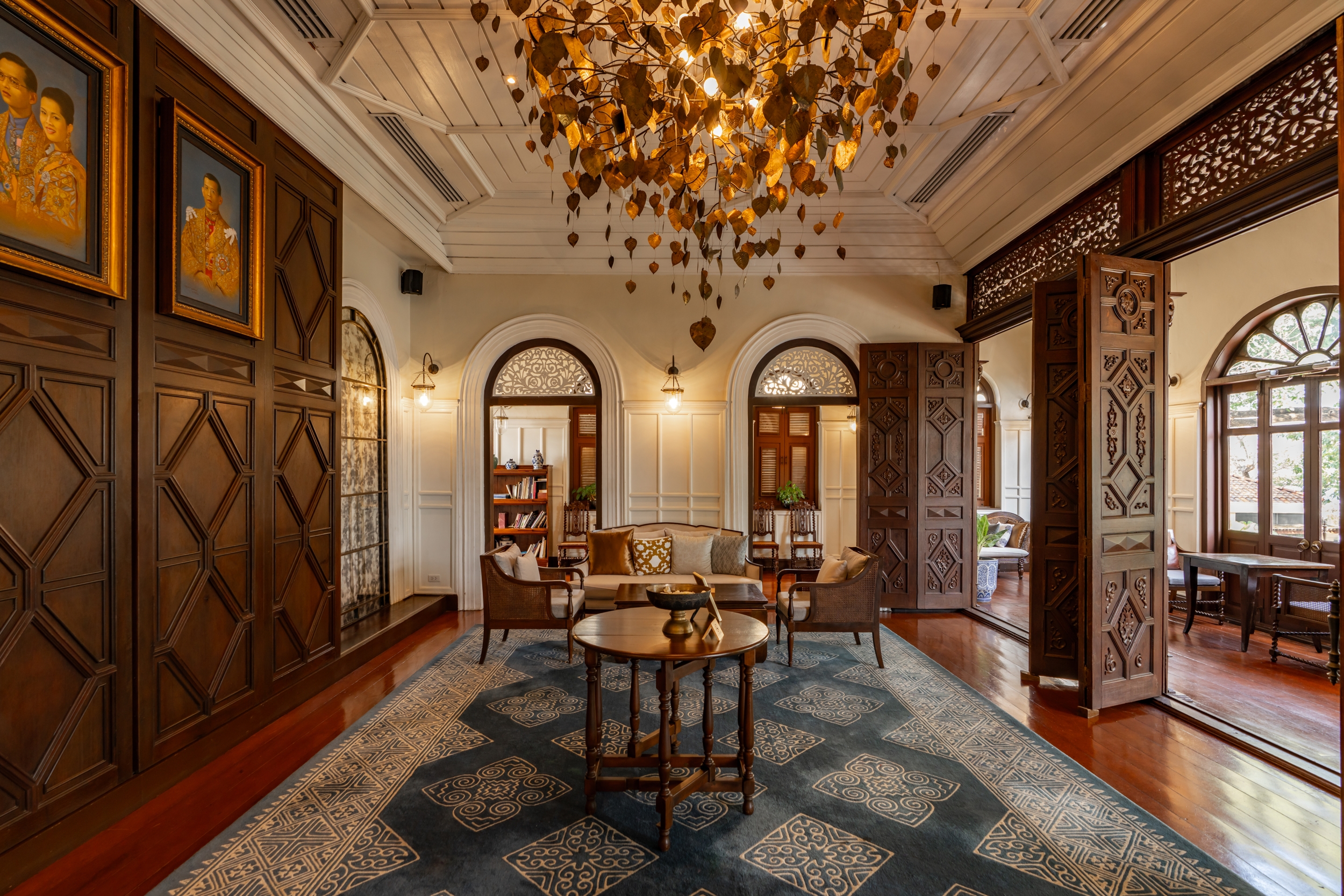
The dark teak, the coolness of the old parquet underfoot, the worked woodwork immediately impose a slower rhythm. The upholstered armchairs, heavy curtains, old frames, small irregularities, shadows and connecting spaces settle into an almost contemplative calm.
Nothing here looks as though it was bought yesterday to artificially manufacture the feeling of yesterday.
And above all, it’s tactile.
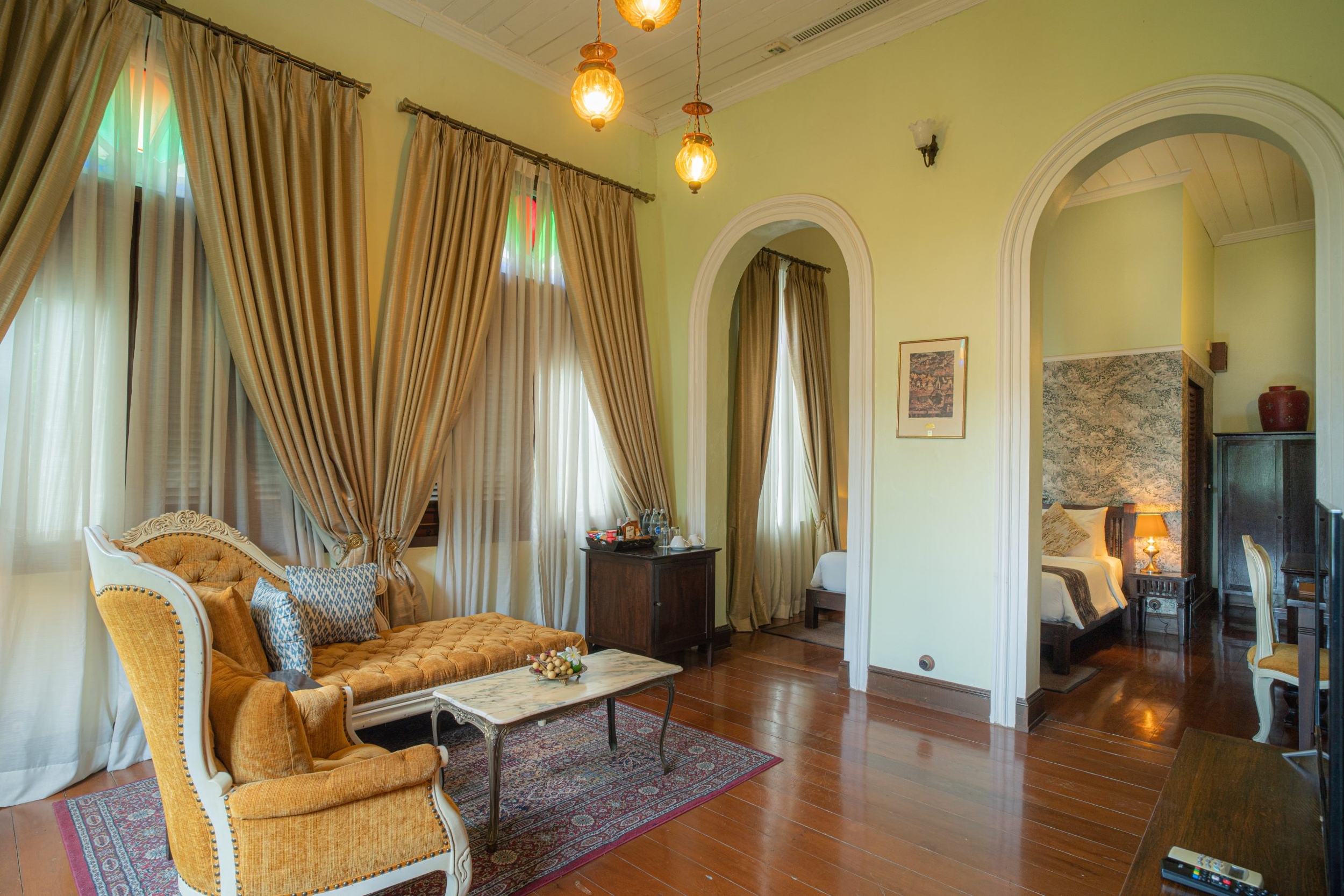
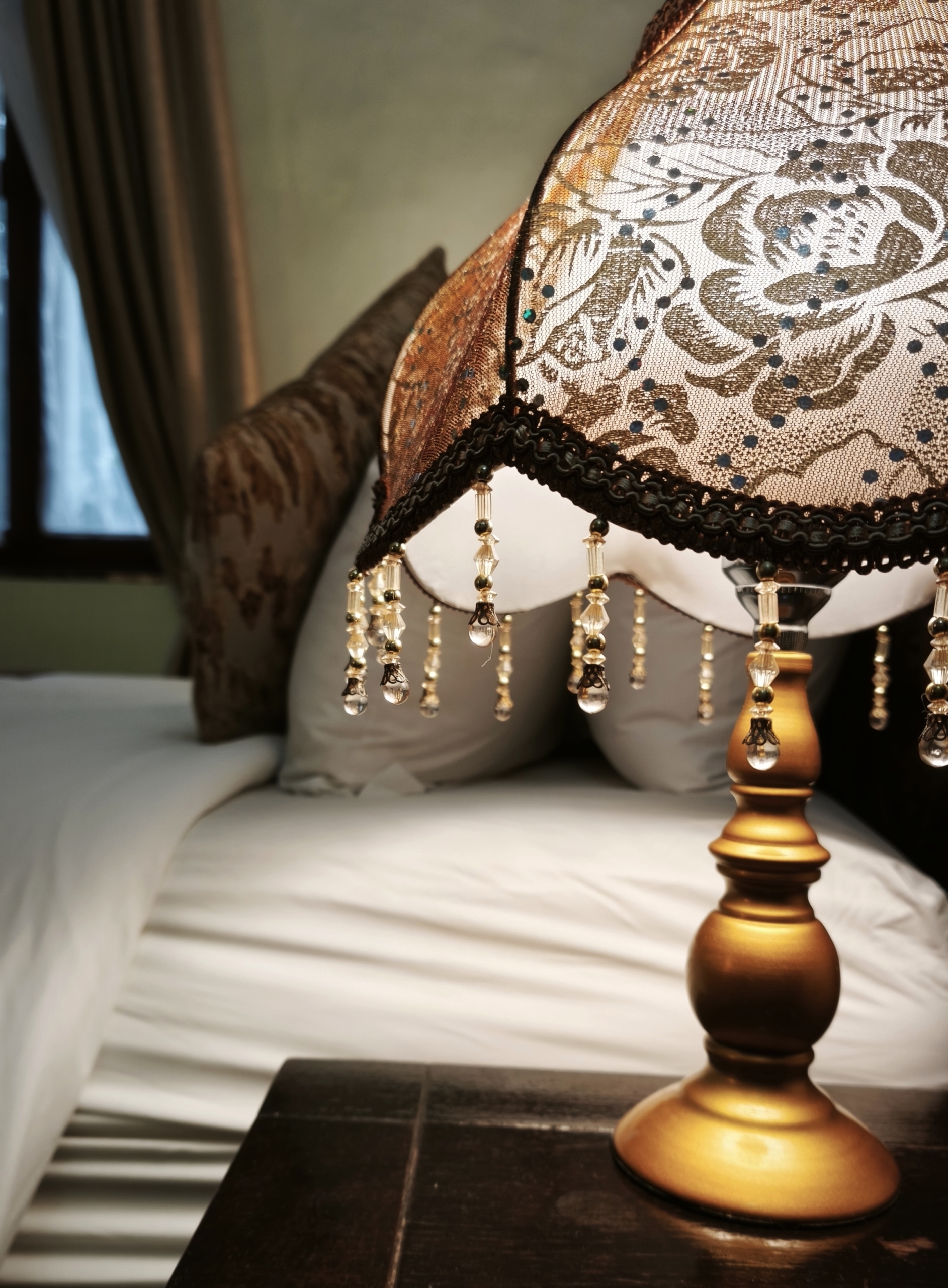
The velvet of the armchair.
The wood of the floor.
The heavy fabric of the curtains.
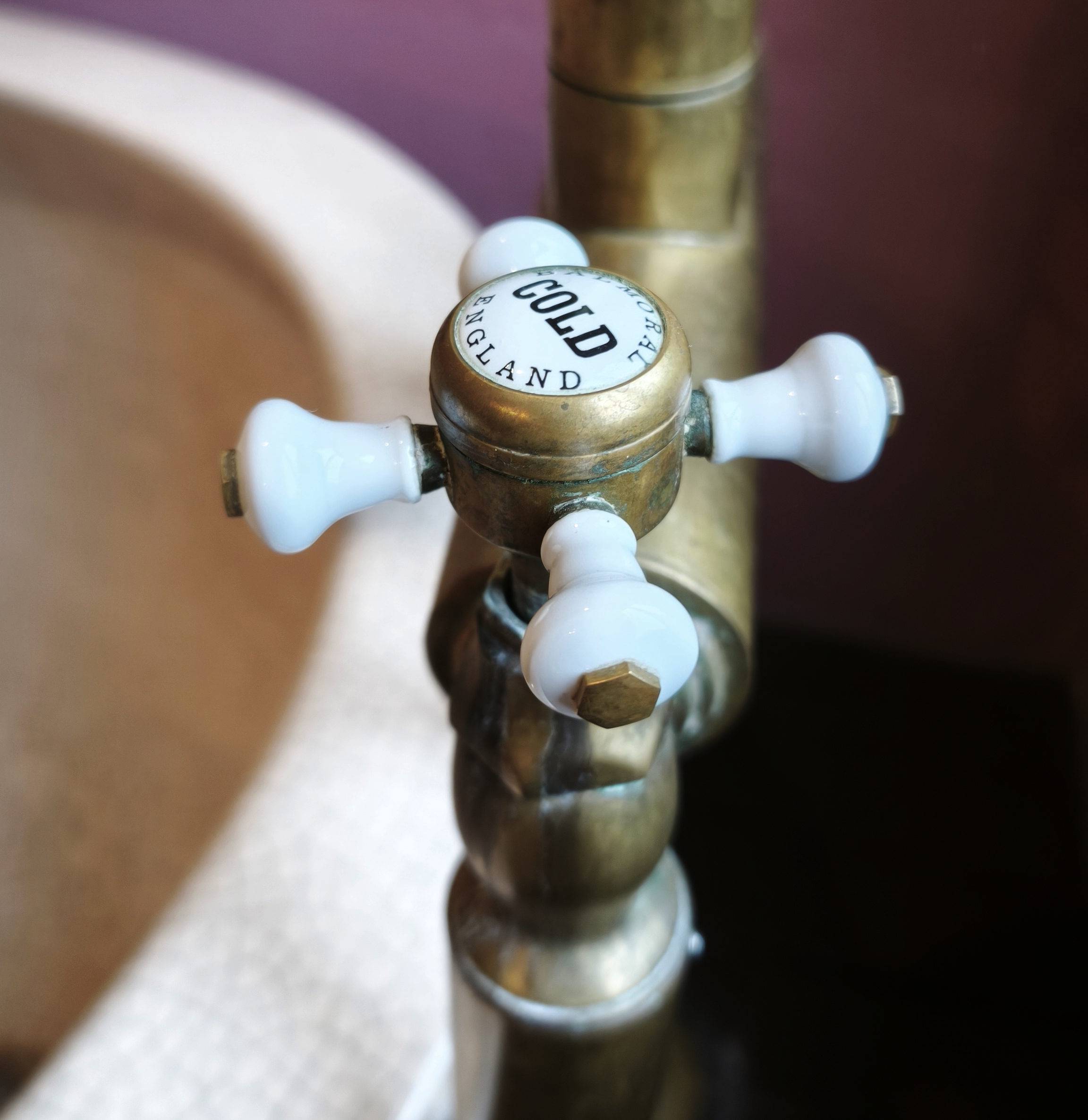
Patinated surfaces.
Warm light falling across them.
You want to sit down, run your hand over an armrest, stay five minutes longer.
This is architecture that appeals to the body, not just the camera.
The Praya Palazzo doesn’t use the old as an aesthetic quotation.
The old is still matter.
And that changes everything.
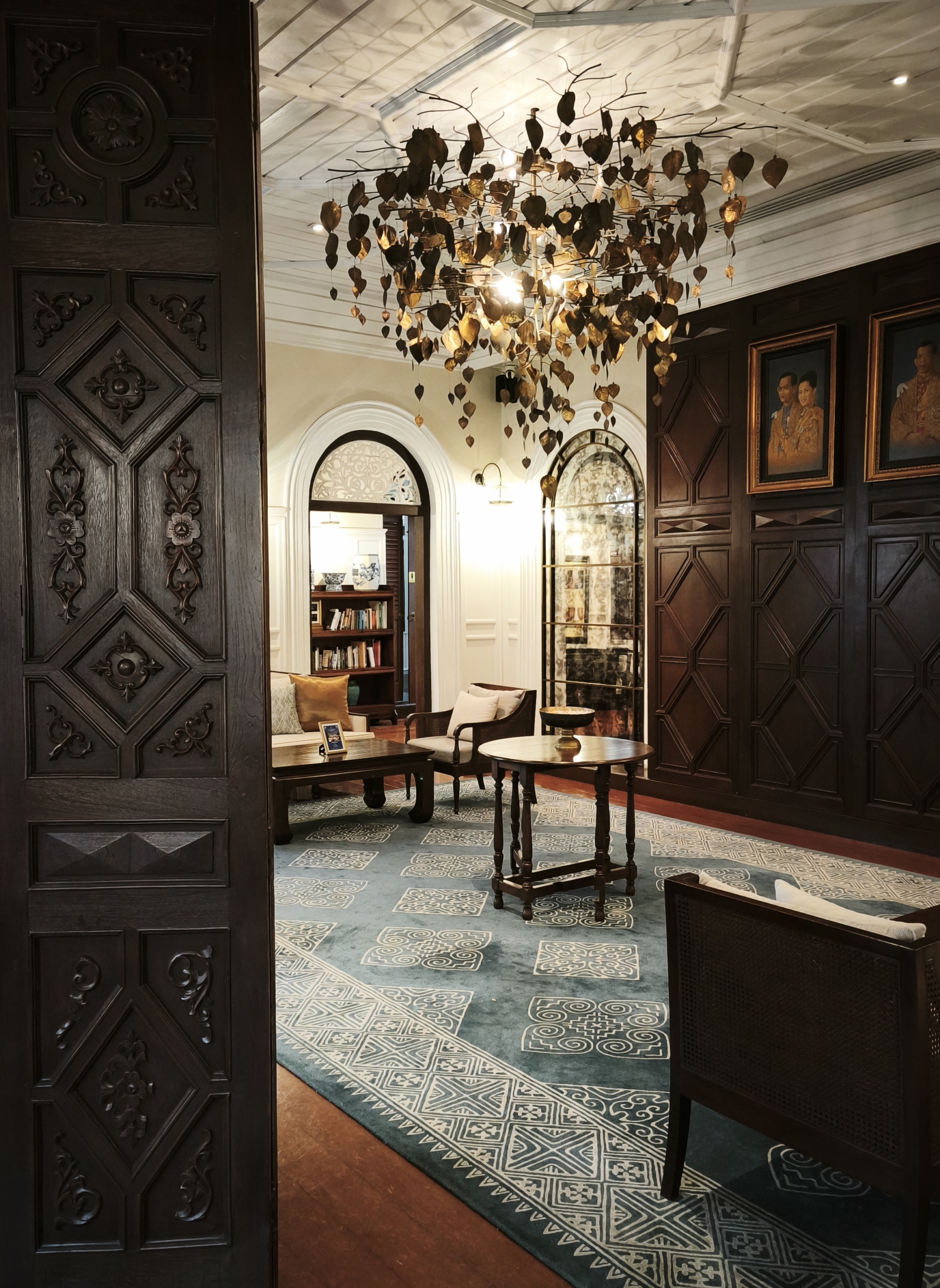
There’s even something deliciously perverse about this room: it doesn’t make you want to enjoy the luxury.
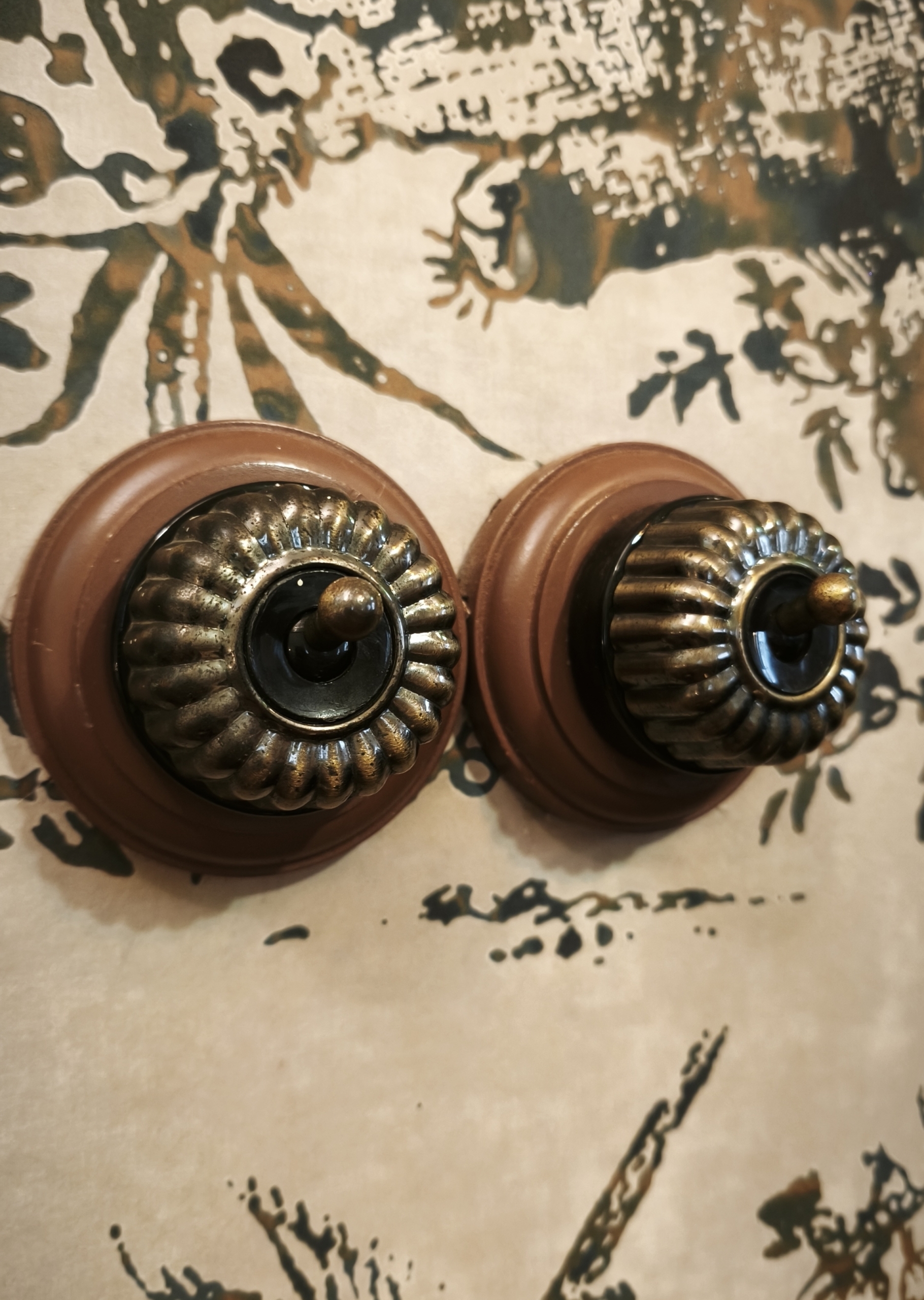
With its fluted brass lever switches, set into molded wooden rosettes, the simple act of turning a light on or off becomes a sensory experience in itself.
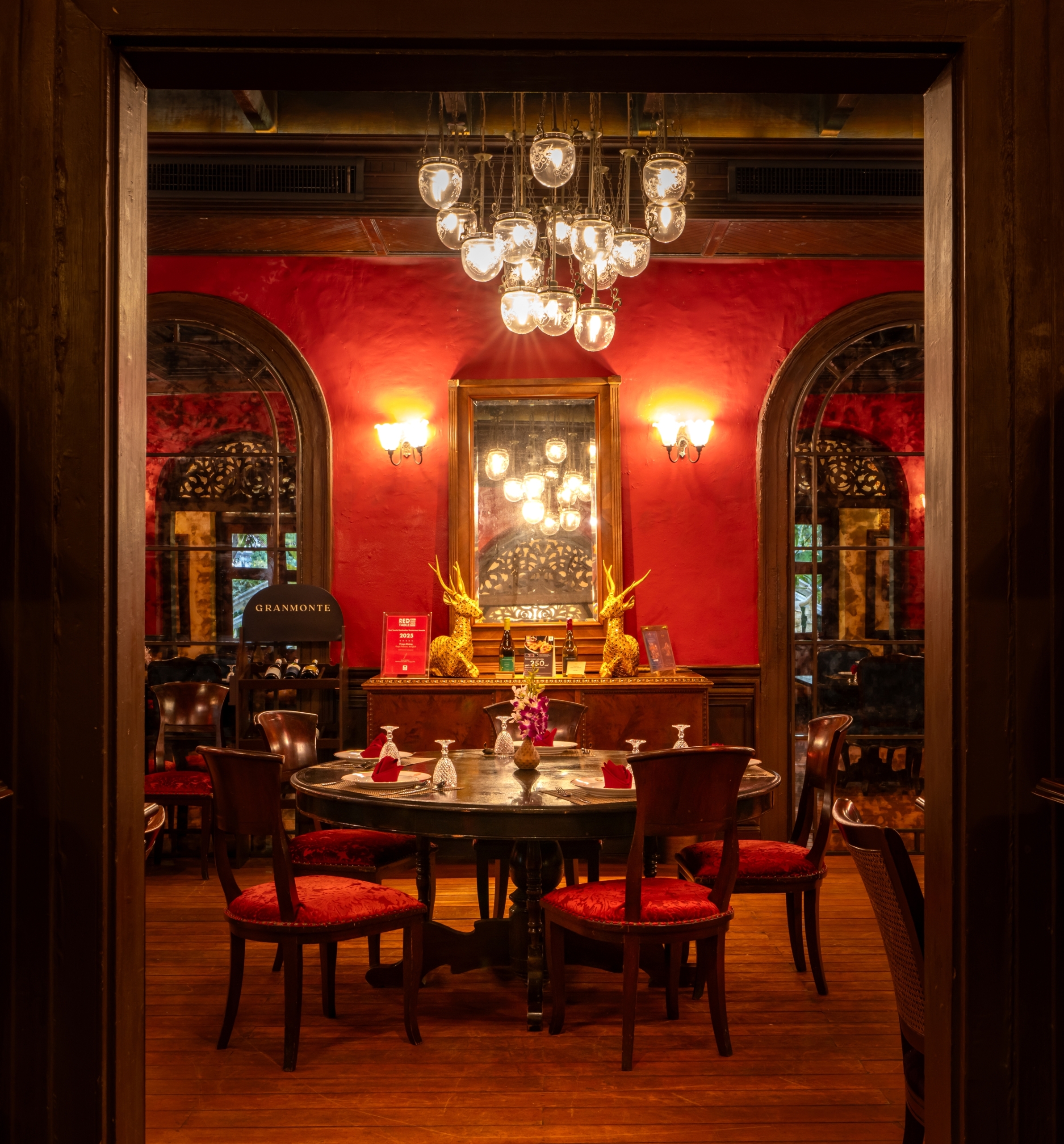
Then the dining room extends this experience so naturally that dining there stops being a convenience.
You’re no longer coming to dine at a restaurant.
You’re coming to dine at an old uncle’s place.
It wasn’t the Michelin star that decided it for me.
It was the density of the room.
Dark wood, worn parquet, deep red, mirrors, ironwork, low light, caning, an almost theatrical chandelier.
Everything is tactile, patinated, slightly excessive.
All that’s missing is a few strains of Rigoletto.
But the ambient music has chosen the elevator instead.
Shame.
The room deserved Verdi.
The Garden Gets Involved
And even nature seems to have decided to keep you here.
The building doesn’t dominate the garden.
It’s caught inside it.
Fig trees, banana trees, Indian flame trees, frangipani: the vegetation has had all the time in the world to grow, climb and spill over.
The great trees stretch their branches until they blur the lines of the house and nearly erase the river.
They screen out the world.
They break the light, thicken the shadow, slow the gaze.
Then the day fades.

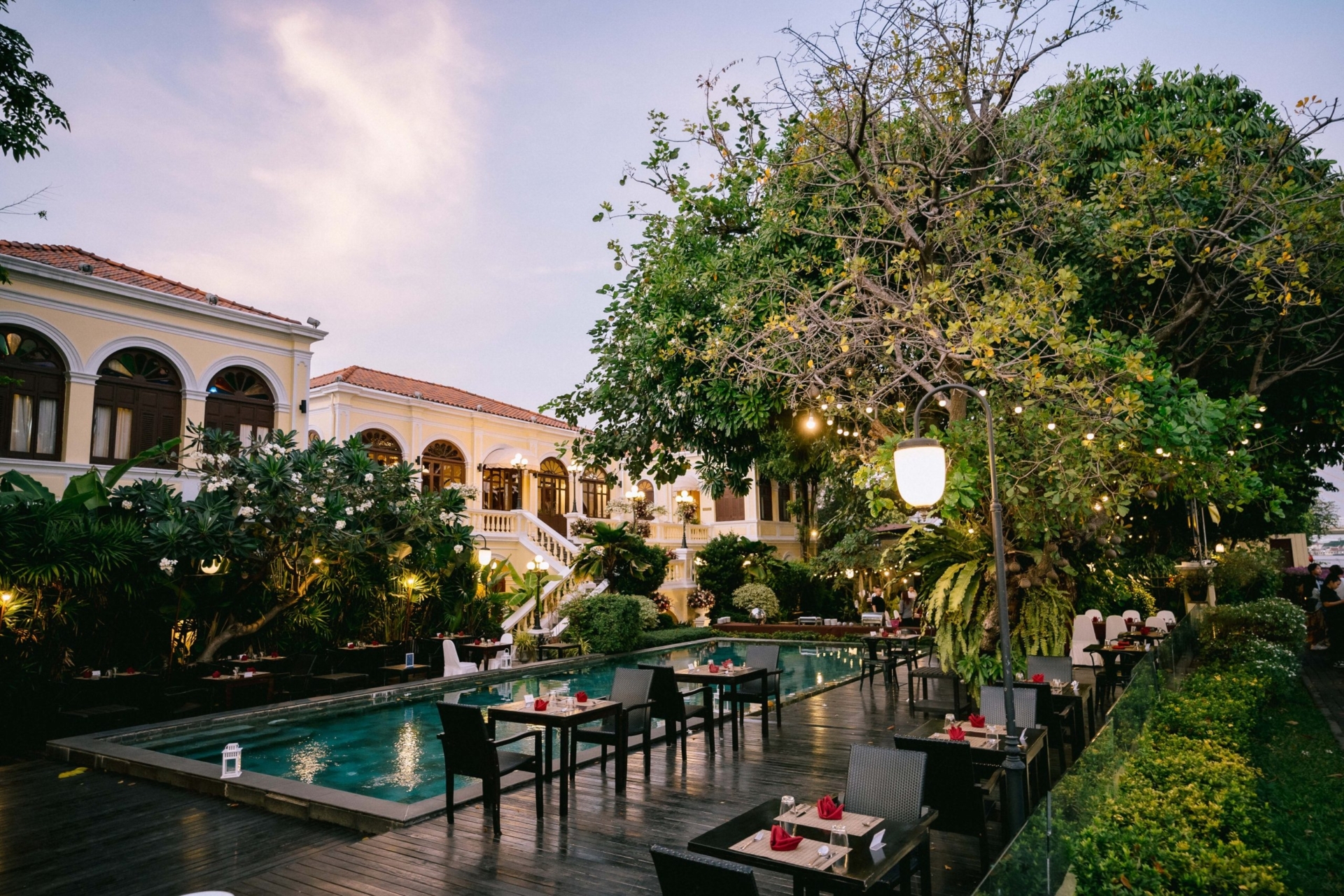
The sun still lingers in the foliage while the birds grow restless in the branches.
The garden starts playing its own music.
The house locks you in.
The trees finish the job.
And Bangkok, behind it all, can keep on blinking.
There’s a particular kind of writing that refuses to explain itself, it simply insists, and you follow. This piece on the Praya Palazzo does exactly that: architecture read as diplomacy, luxury read as trespass into memory.
The line between essay and seduction has rarely been this thin. More of this, please.
An absolute gem of a piece. What makes this article stand out is that it completely skips the usual luxury travel clichés and focuses on something far more compelling: the sense of place and historical continuity.
The angle is brilliant. Instead of framing luxury through modern, material pampering, the writer treats history itself as the ultimate luxury—the privilege of stepping back into 1920s Bangkok, accessible only by the river. That narrative pivot completely changes how you view the property.
As a history enthusiast, I found the background on standard Italian architecture seamlessly blending with traditional Thai motifs fascinating. It’s not just a review of a boutique hotel; it’s a vivid, beautifully crafted homage to Siam’s Gilded Age. A rare read that delivers real substance alongside style
Thank you so much. It is truly rewarding to see the historical angle and the spirit of 1920s Siam resonate so deeply with you.