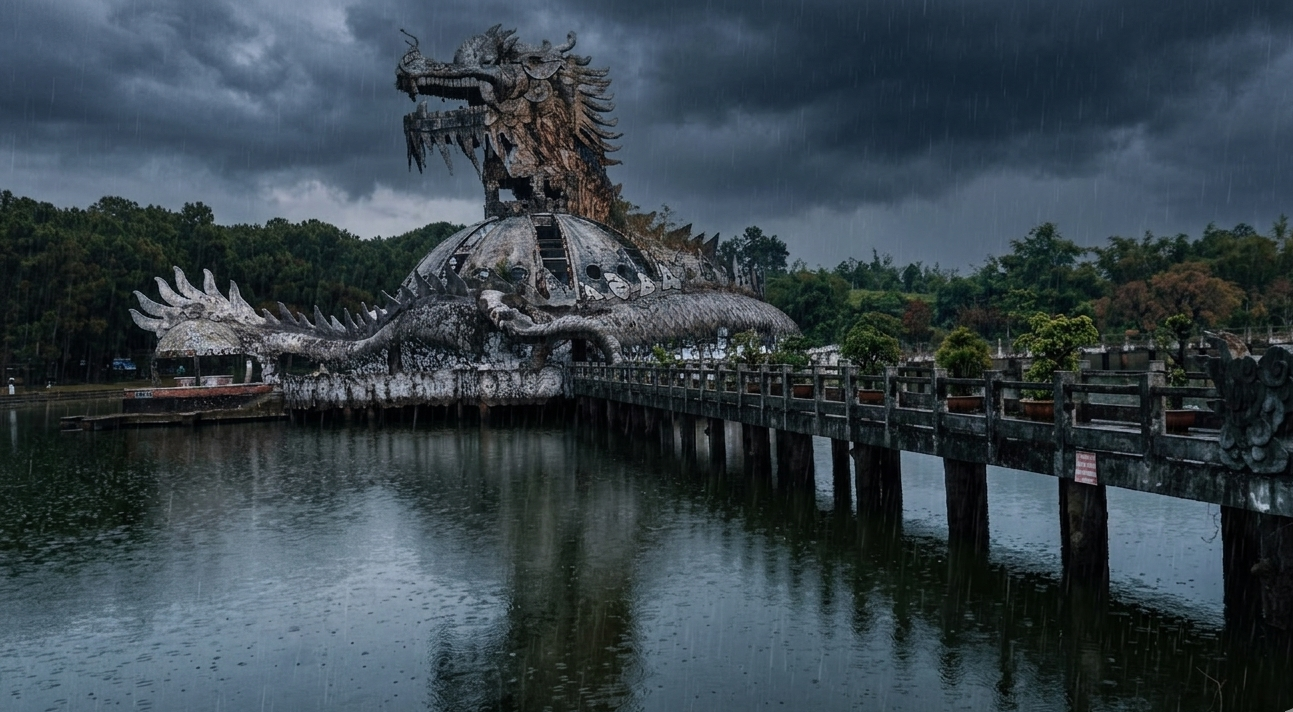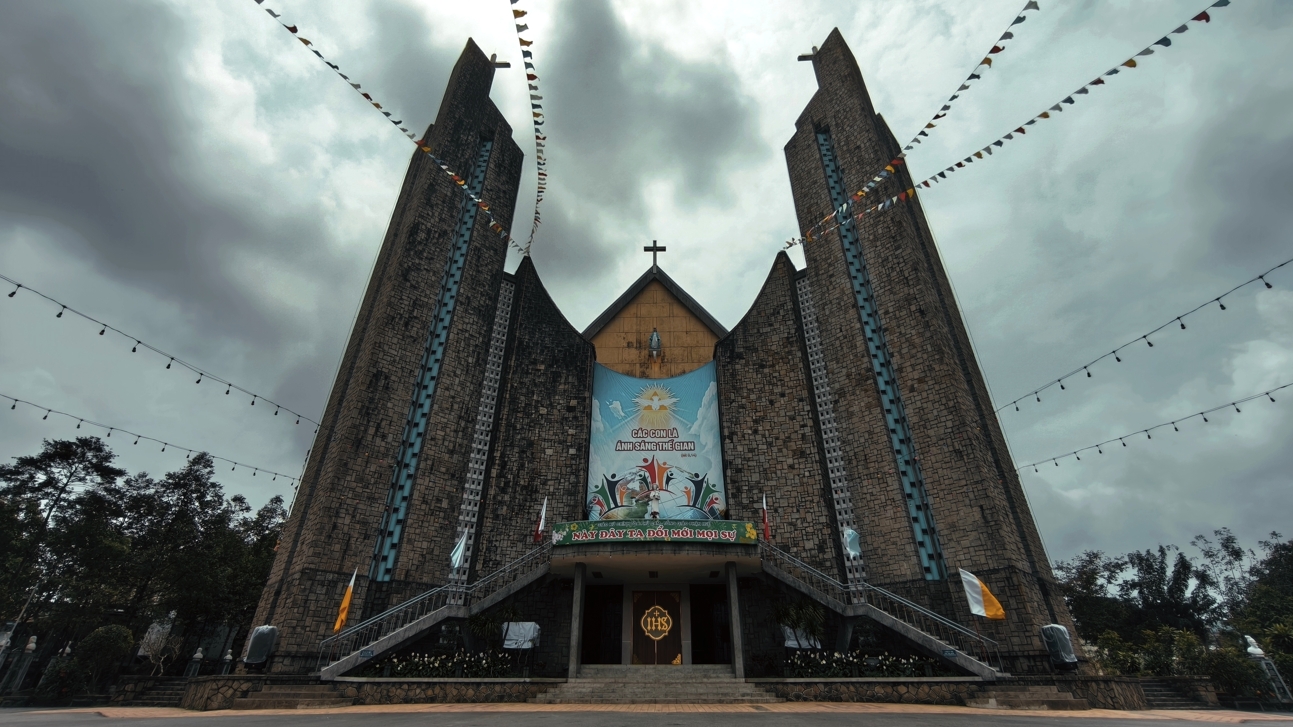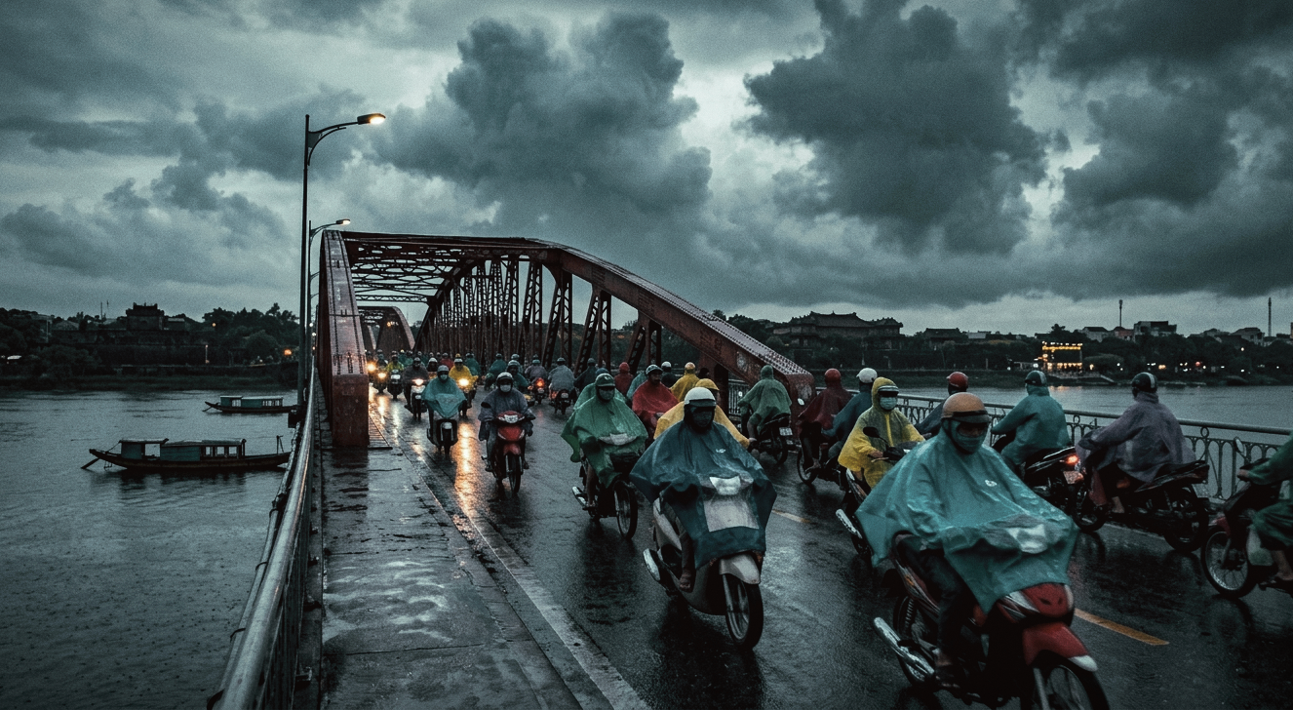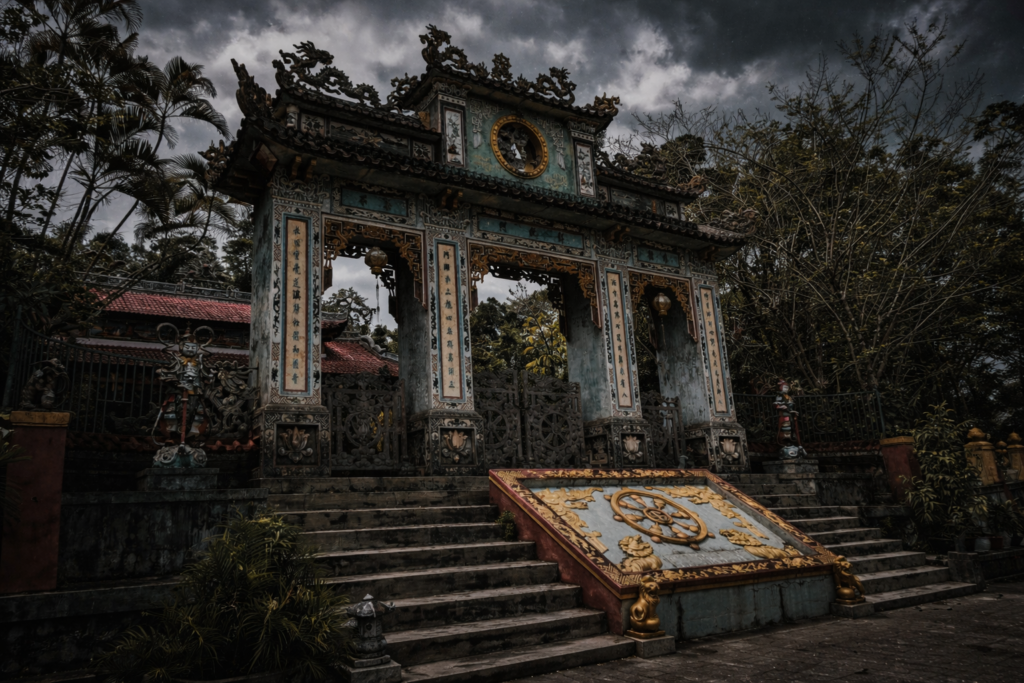
Hue under the sun is almost too clean.
The Imperial City gleams too hard, the tombs posture like aging aristocrats, and the whole place starts looking like a carefully arranged film set.
But when the sky closes in—low clouds, fine drizzle, sickly light, that’s when it finally exhales.
The stone drinks. The walls weep. Hue slips out of her floral ao dai and pulls on a grease-stained boiler suit.
The city takes on the color of metal being hammered in workshops slick with engine oil.
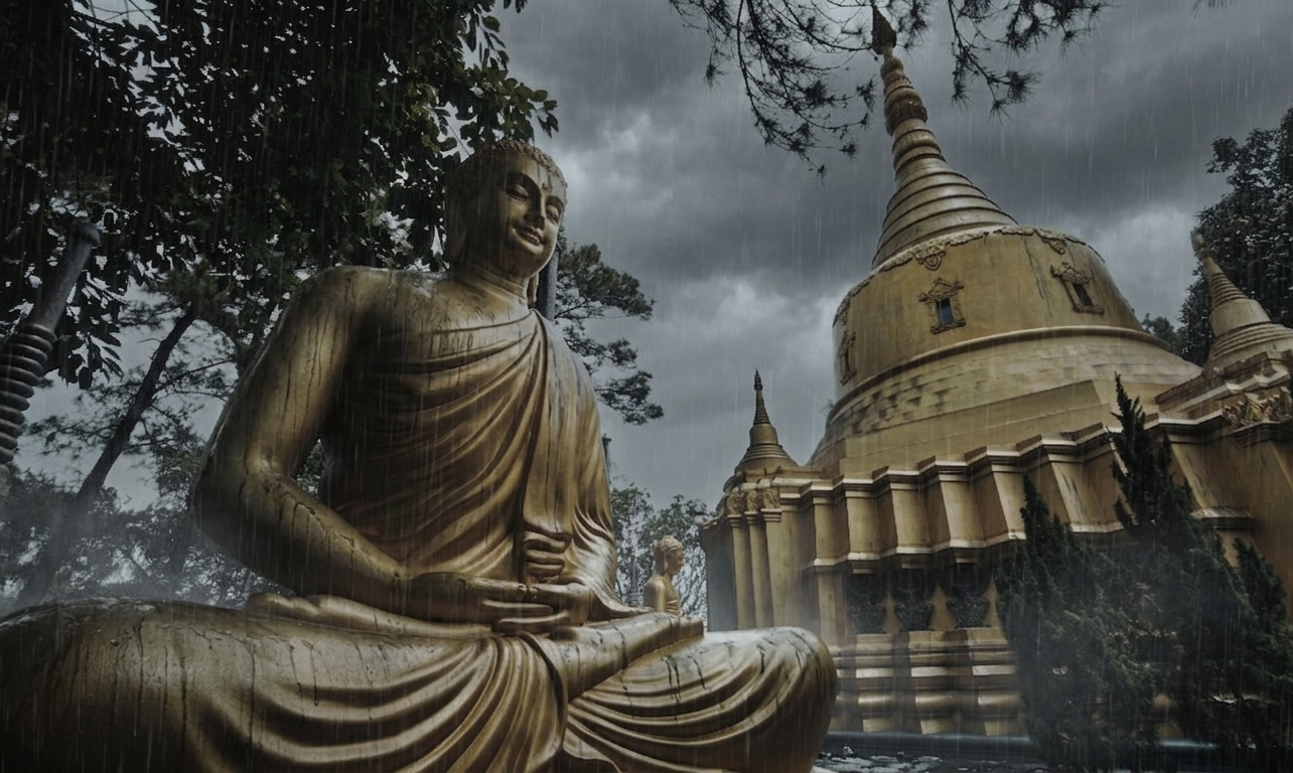
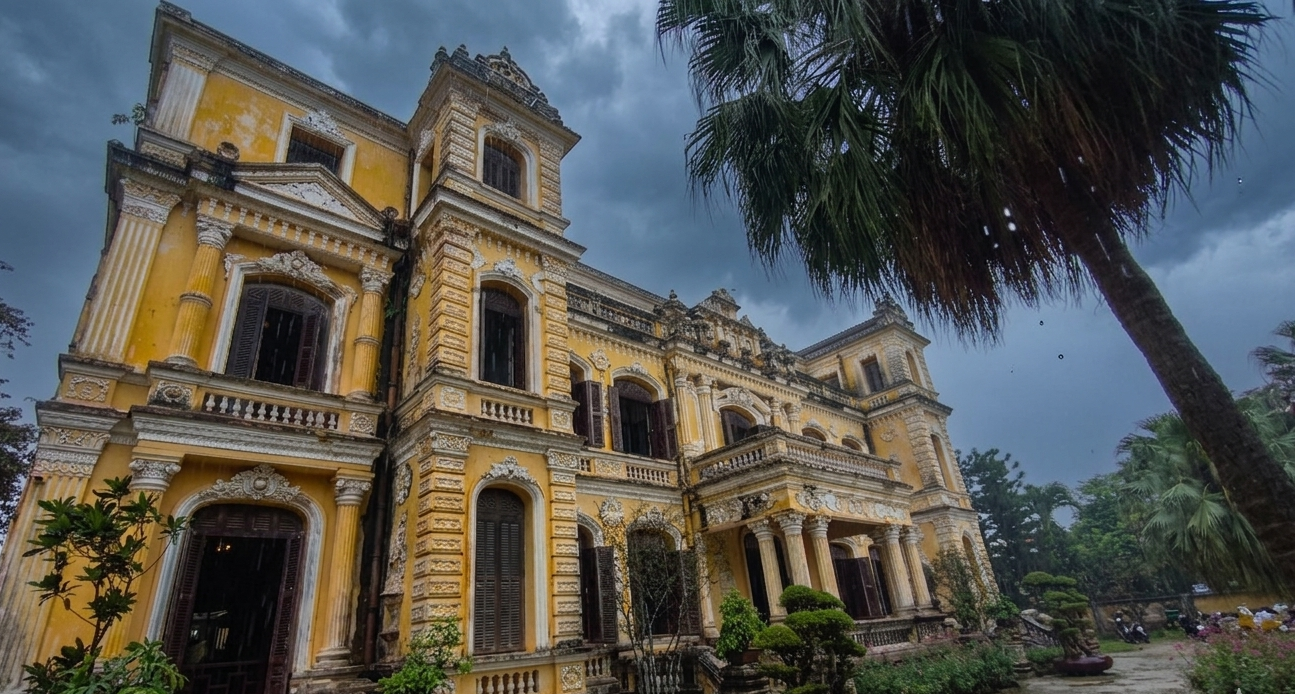
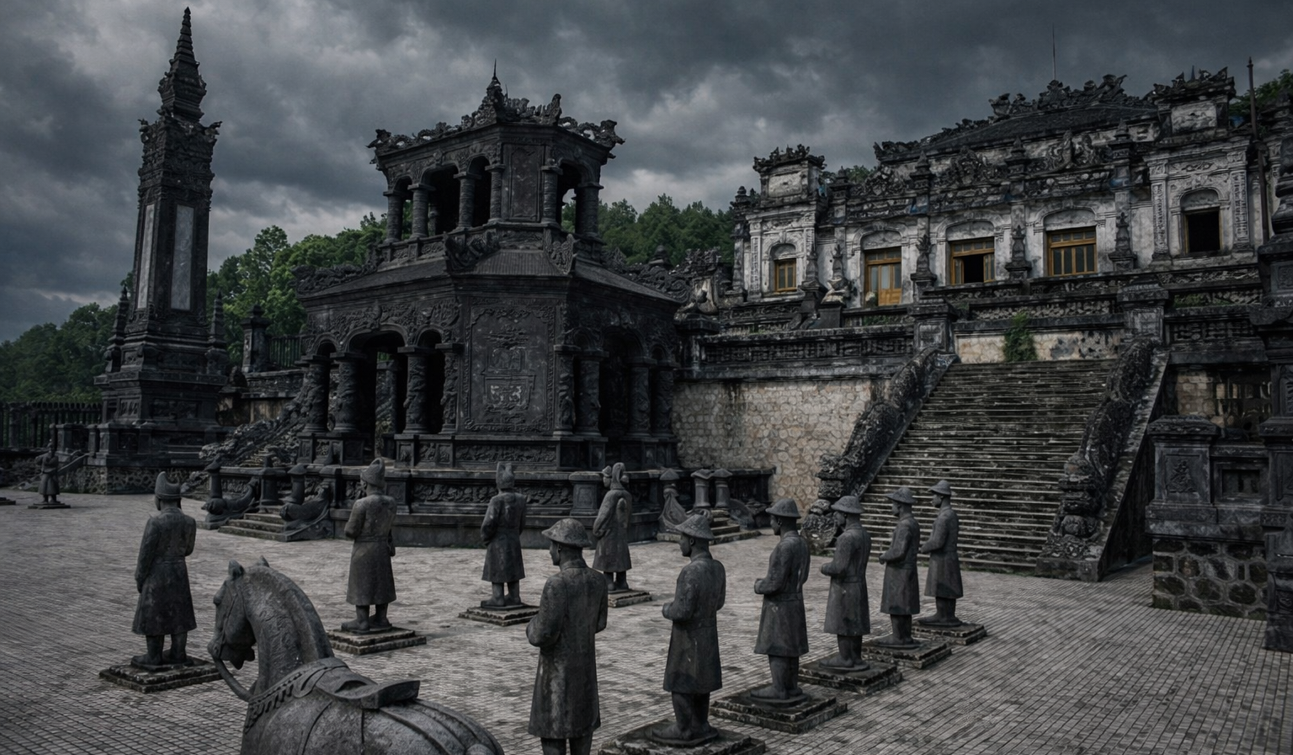
The colors fade like an old photograph abandoned in a drawer.
Concrete and landscape rot together into the same diseased body. Black hollow eyes stare from everywhere, like sockets dug out of the dead. Khai Dinh and Tu Duc begin to drool.
The mascara runs. And suddenly, Hue turns seductive.
The army of shadows, the masked ballet of scooter riders, keeps circling over a sluggish river. This is a city built for melancholy, not selfies.
In grey weather, Hue stops performing. She starts confessing.
That’s when she becomes beautiful.