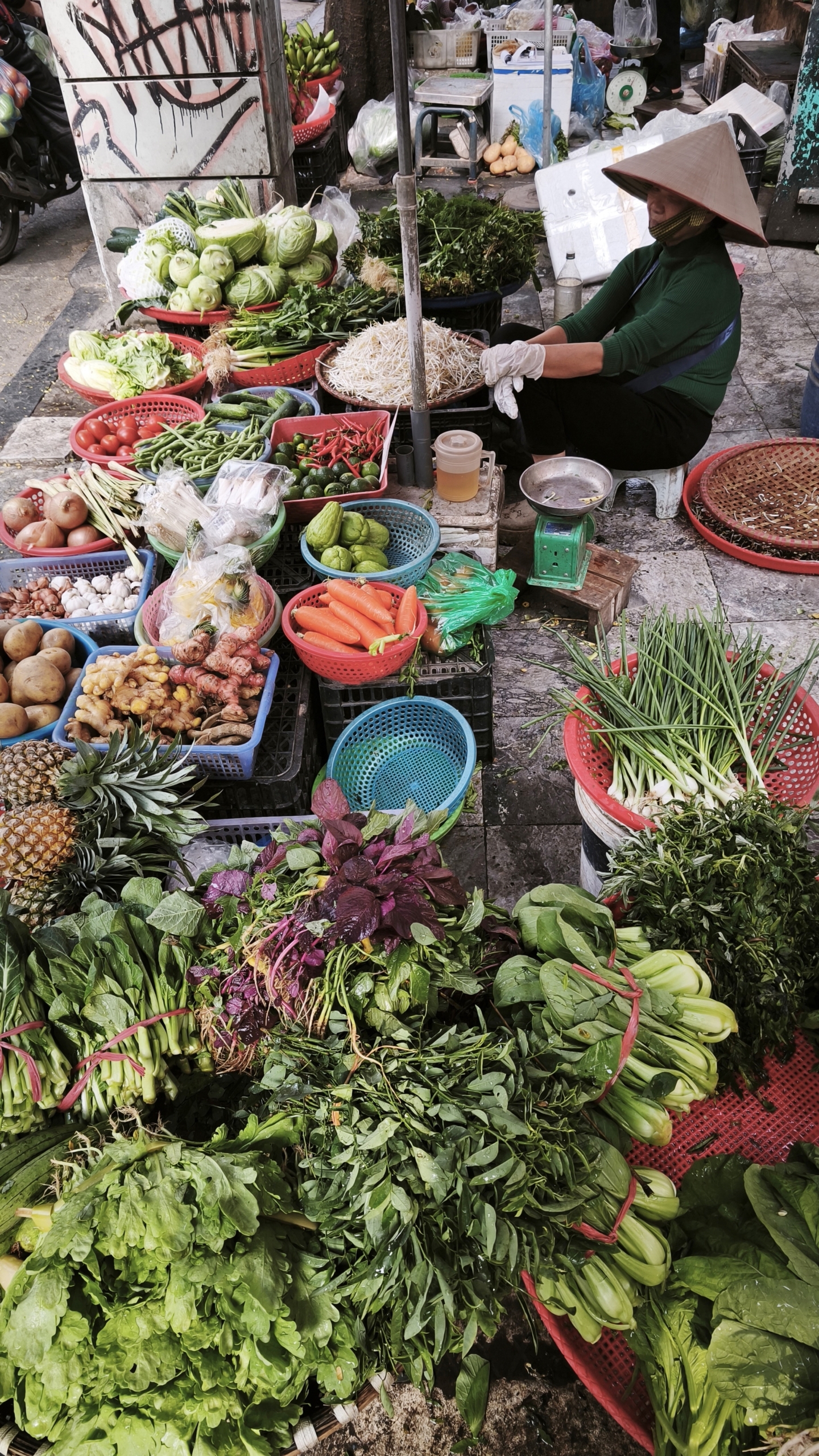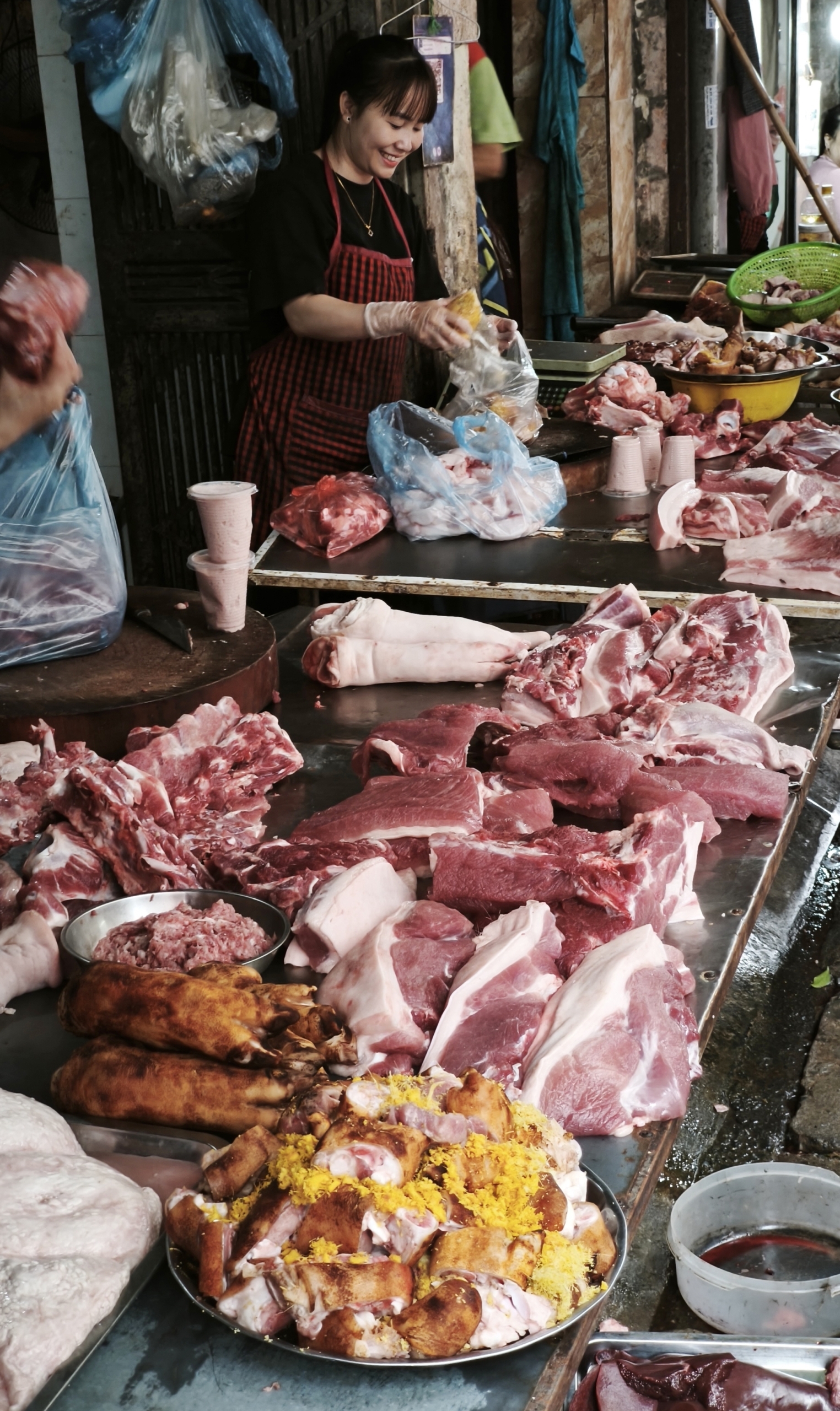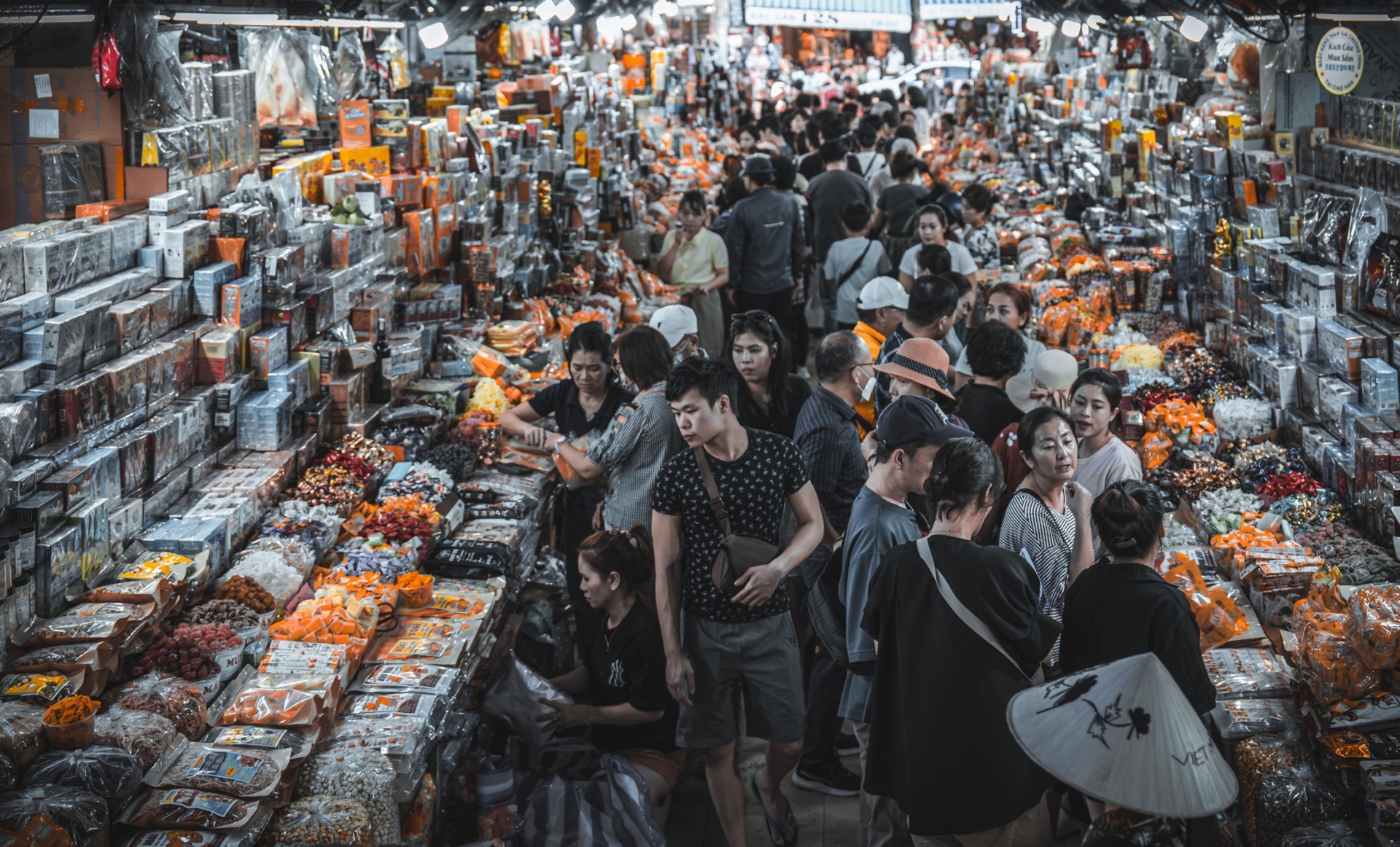
This is the music of everyday life.
A cacophony without a score. Everyone playing their own tune.
Amid this well-oiled racket, an architectural quartet from Saigon–Cholon turns up the volume.
Ben Thanh plays to the tourists.
Binh Tay piles on the scenery, purely for its own sake.
Tan Dinh catches the eye, near or far.
Thai Binh, meanwhile, settles quietly at the back of the hall. No clamouring for the spotlight. No forcing the beat.
Four markets.
Four scores.
Each with its own architecture, its own tempo, its own way of taking up space in the city.
Ben Thanh’s Smooth Variety Act
The market belts out its easy-listening hits.
A polished look, designed to siphon dollars from tourists.
Plastic trinkets, standard-issue souvenirs, knock-offs that won’t survive a wash, and áo dài to dress up your dog. A glossy fairground, all acoustic guitar and sugary tremolo, designed to leave passing tourists dizzy.
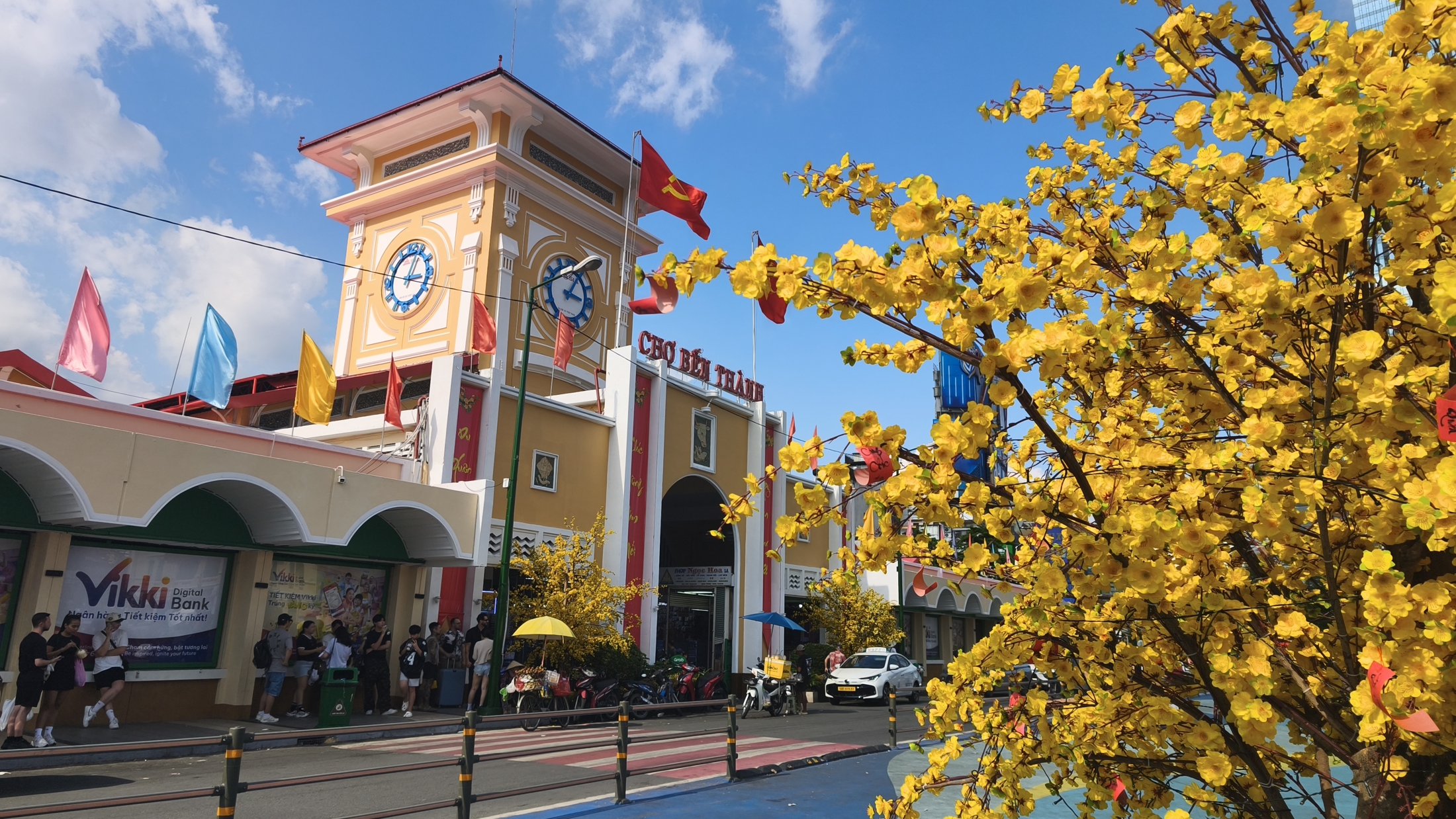
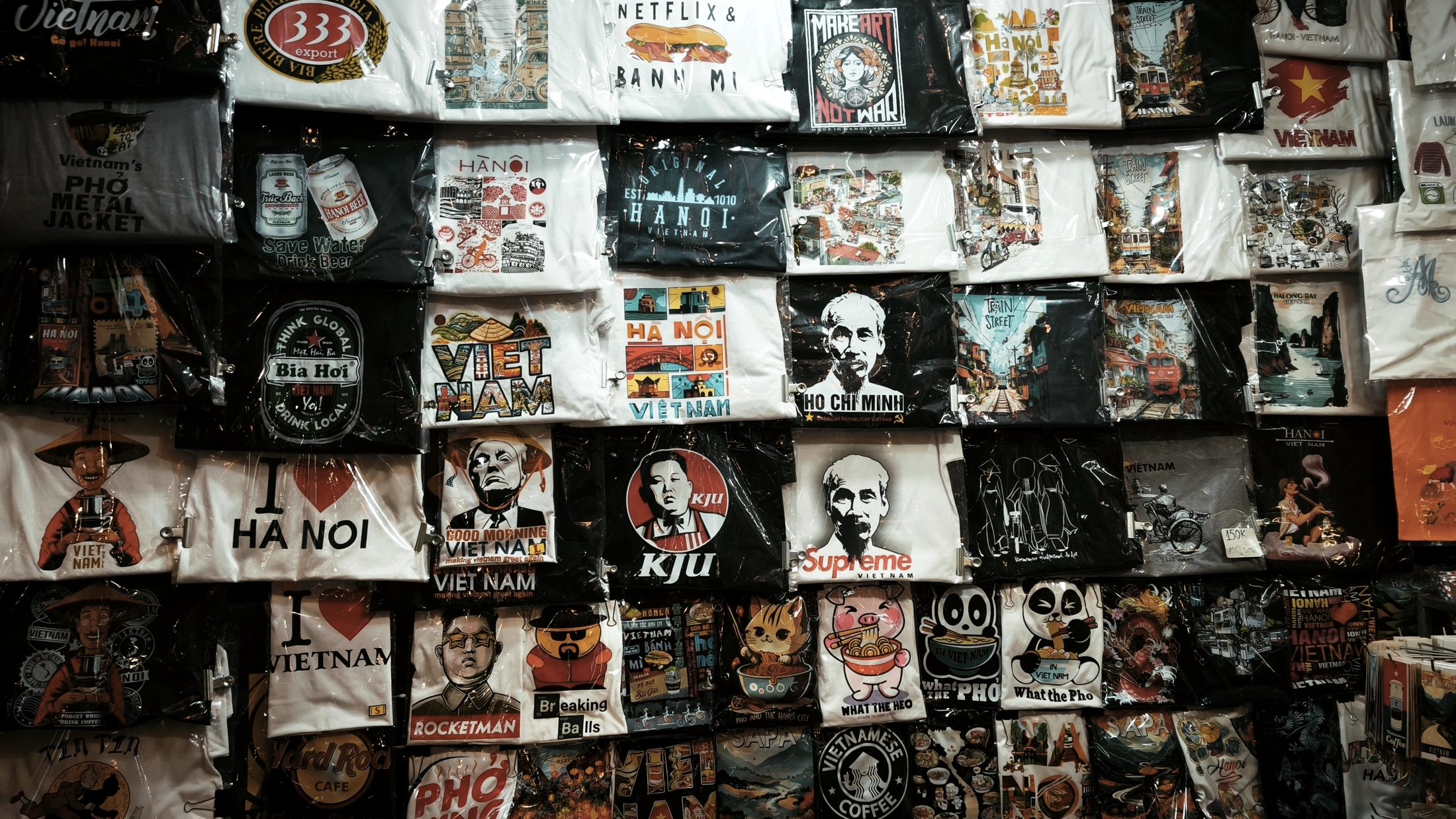
Noses buried in the consumerist muck, nobody looks up.
Shame.
Because up above, the crooner reveals his finest stage costume.
Colonial in the raw.
Reinforced concrete and riveted steel framework.
No Art Deco frills here.
Except for the bas-relief panels crafted by the master ceramicists of the Bien Hoa School of Fine Arts.
Pure Baltard, transplanted to the tropics.
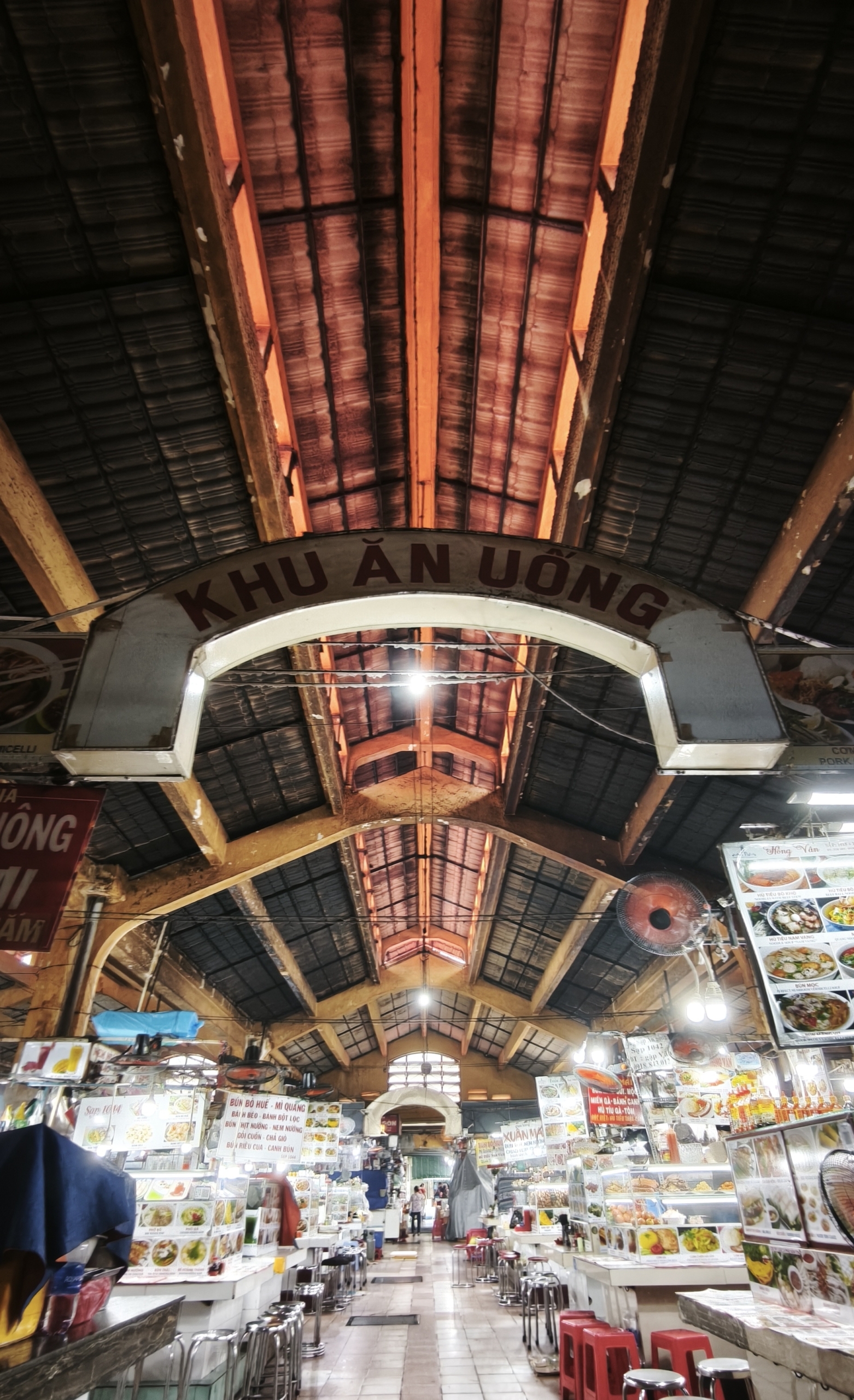
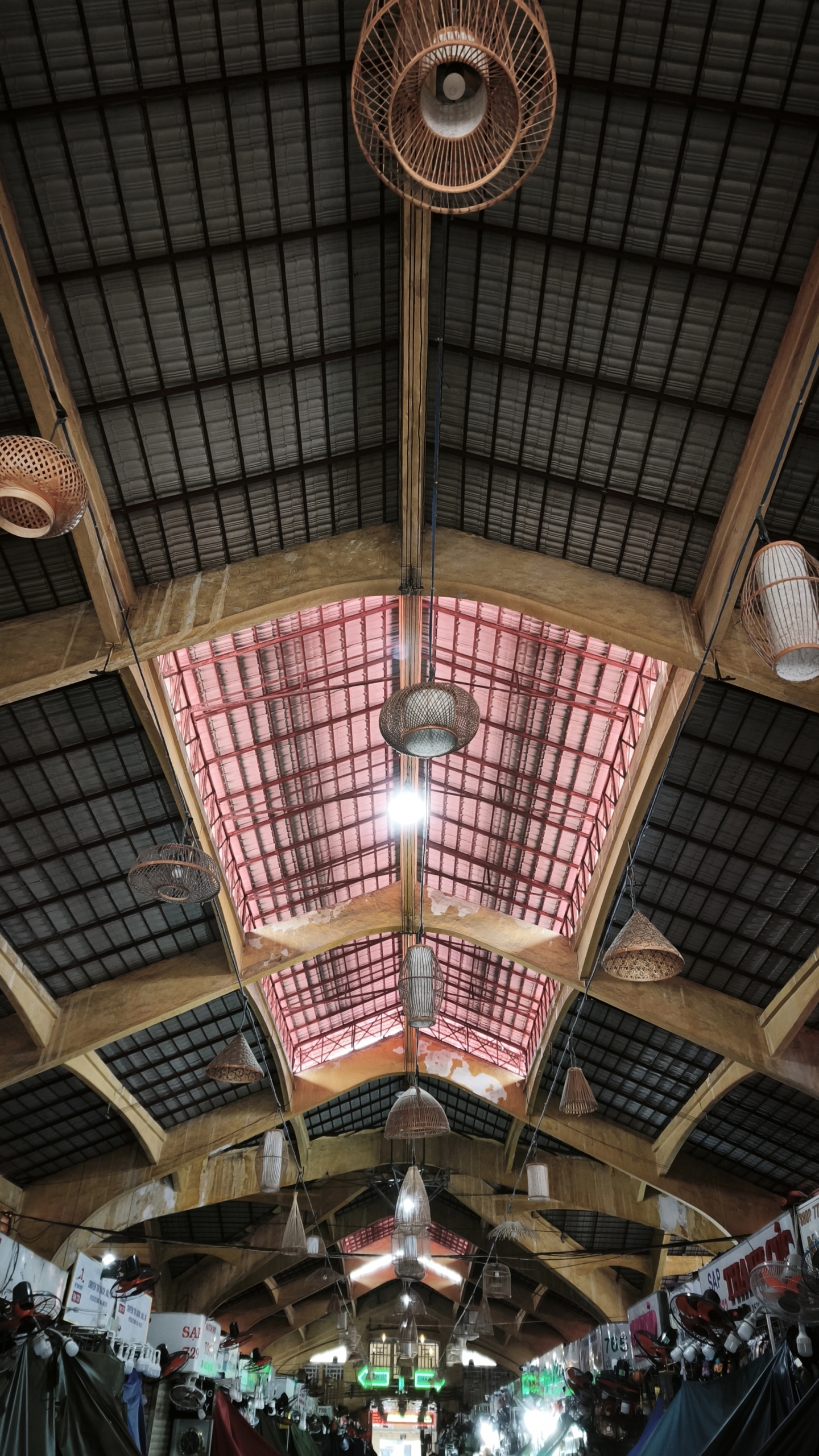
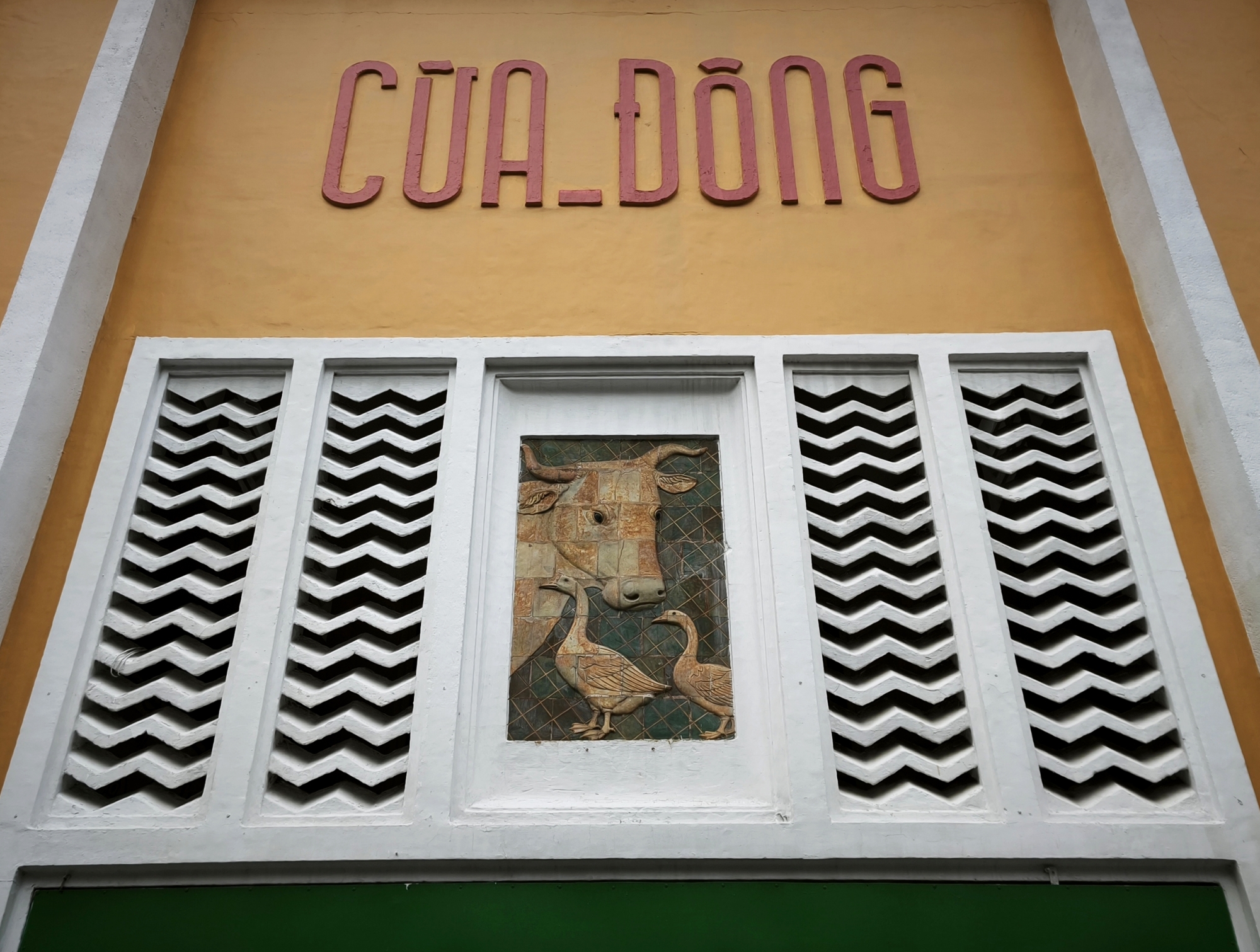
Instead of haggling over every last cent for a Good Morning Vietnam T-shirt, look up. That raised central roof, its broad clerestory windows and louvres, all built to spit out the heat and shrug off the monsoon deluges.
The façade may play the variety singer to lure in the punters, but the skeleton is a railway shed, machined to last for centuries.
Binh Tay’s Big Voice
In Cholon, Binh Tay comes on like a heavyweight tenor.
Staggering physical presence.
The ogre of Cholon.
Heavy artillery in concrete and glazed tiles, pounding away. A wholesale trading temple whose Sino-French monumentality draws the whole neighbourhood into the orbit of Chinese rice tycoon Quách Đàm.
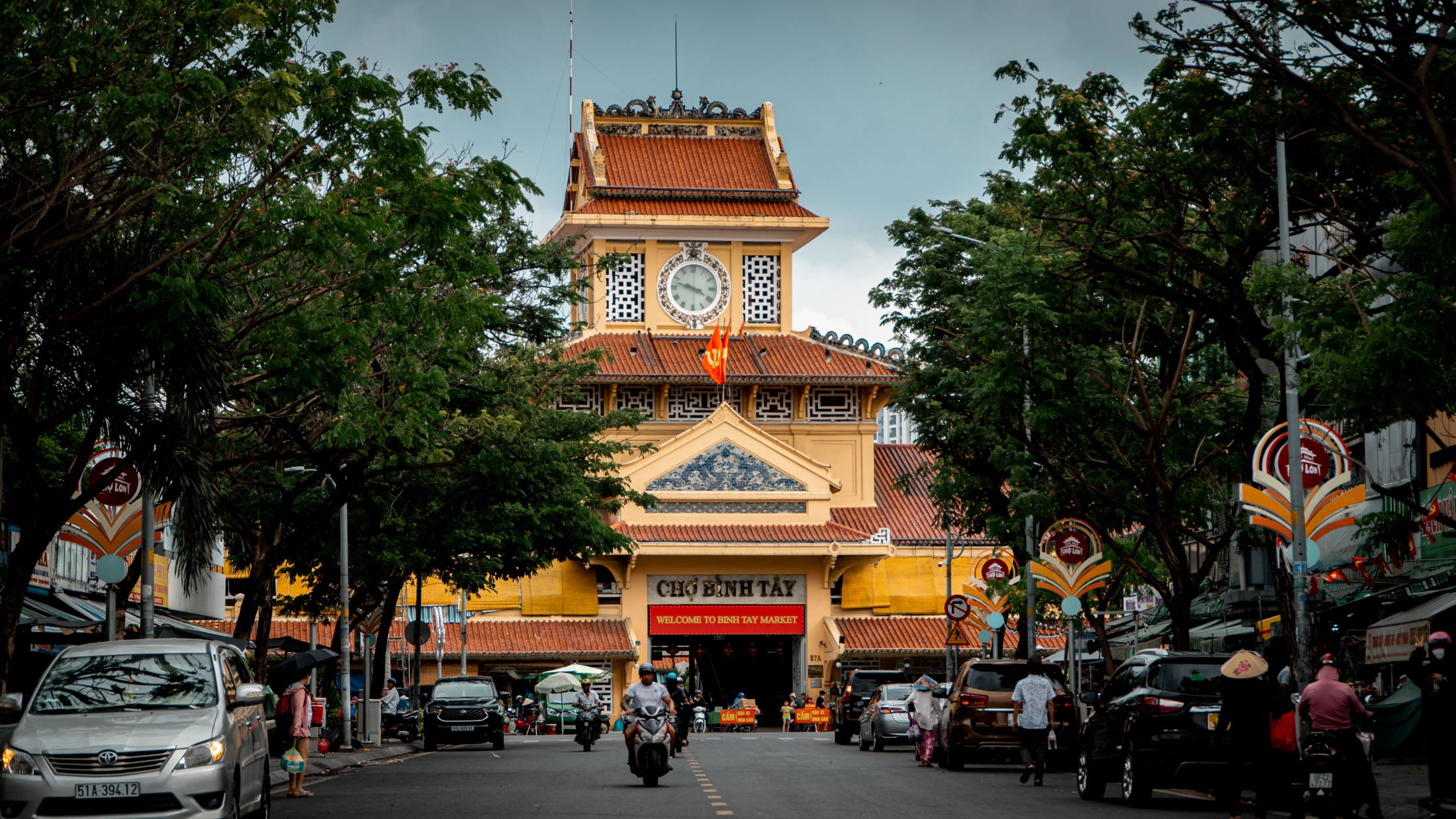
Not here to piss about.
It doesn’t sell by the piece. It shifts goods by the pallet.
No high-concept ballet. No slow-motion routines with three blokes in their underpants circling a chair beneath a sickly neon light.
This is syncopated rhythm, constant tension between sections, and an electric urban energy where every stall plays its part flat out.
Too intense? There’s always a granny outside ready to ladle you a soothing broth.
Ben Thanh sings to attract.
Binh Tay thunders because it works.
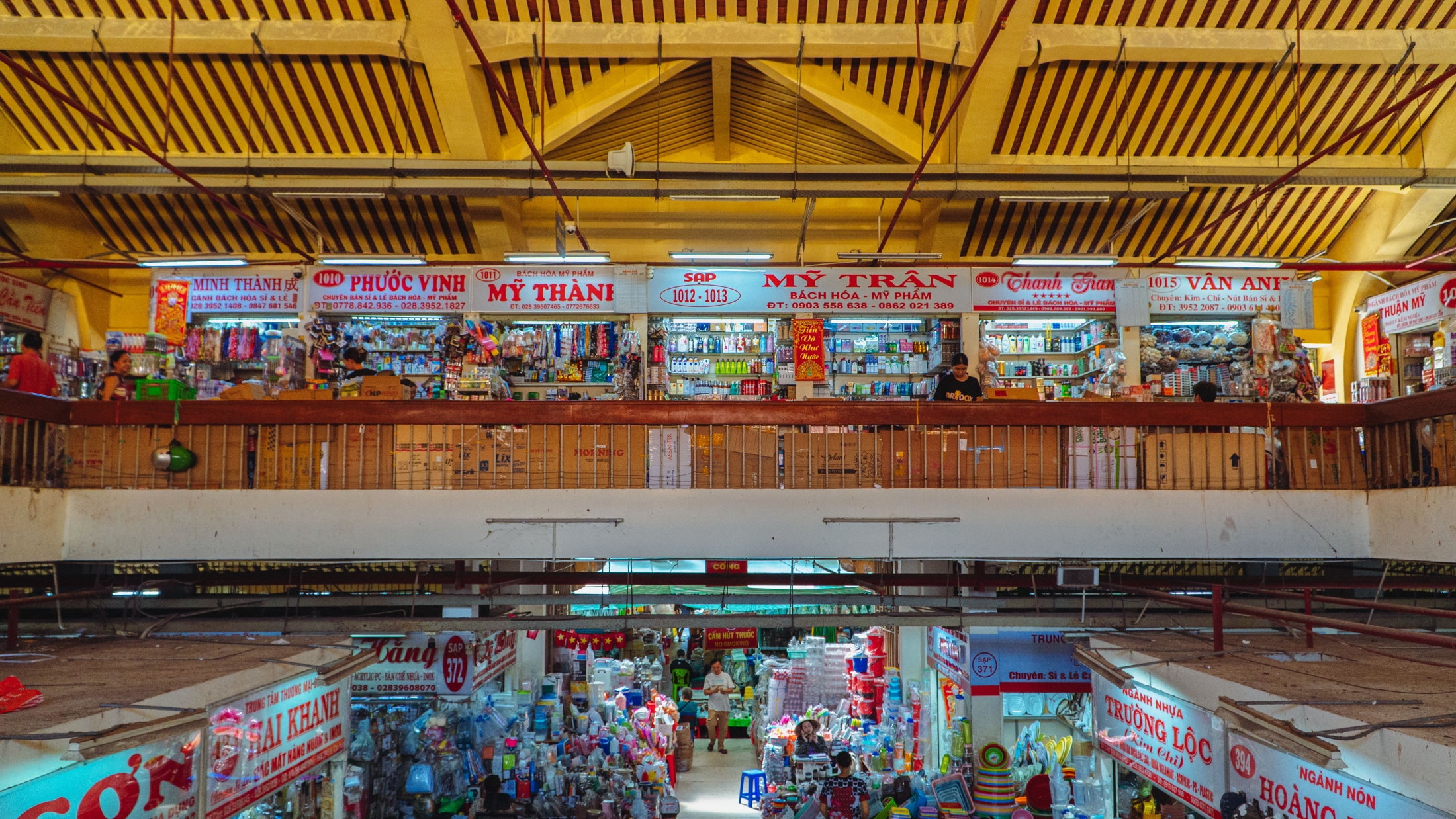
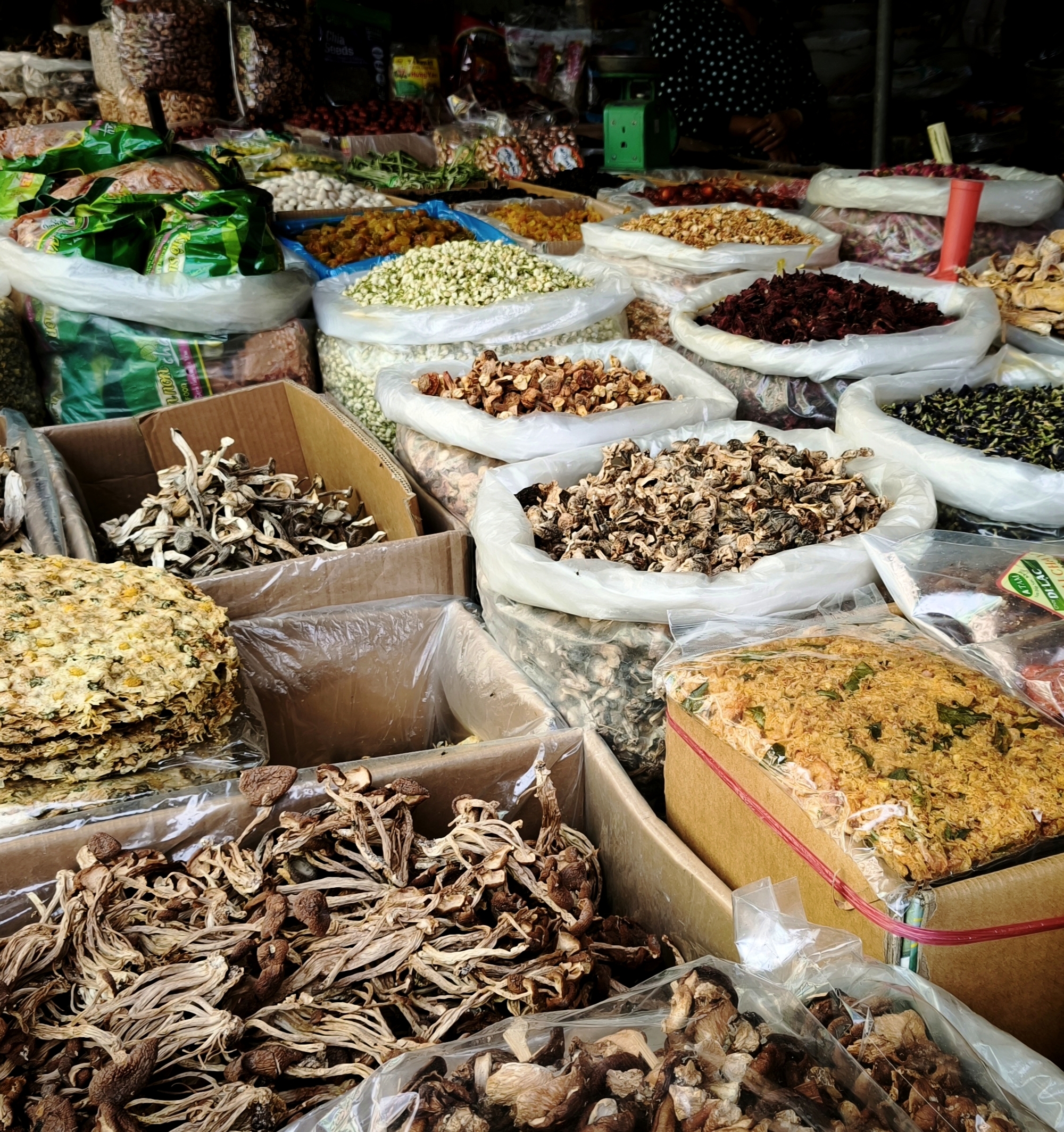
Tan Dinh, Stalin’s Organs
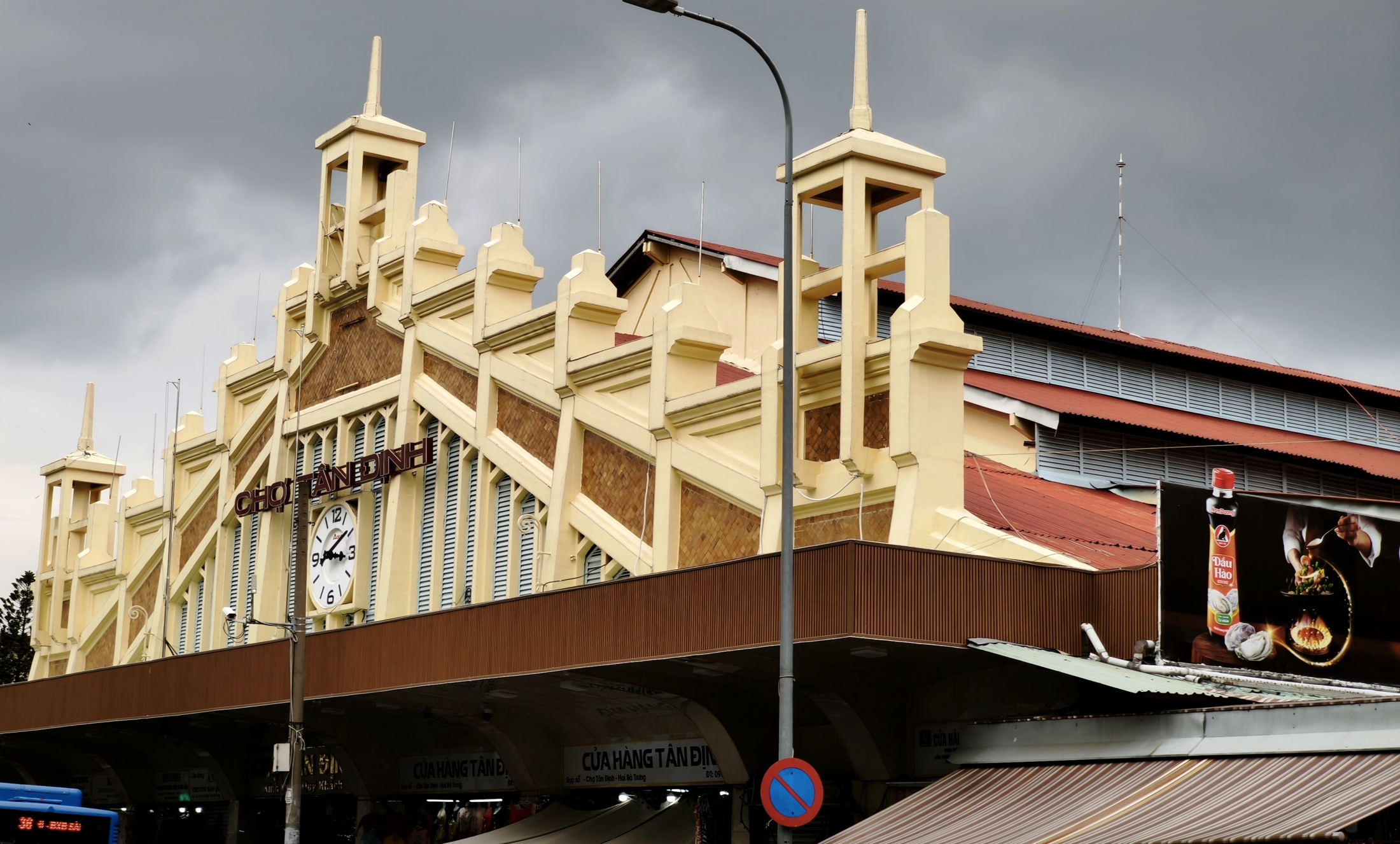
The market lines up its façade like a battery of Stalin’s organs.
A colonial yellow that blazes.
Three razor-sharp gables and a turret trained on the sky, ready to blast you at point-blank range.
Its lattice screens and clock hit you square in the face before you’ve even crossed Hai Ba Trung.
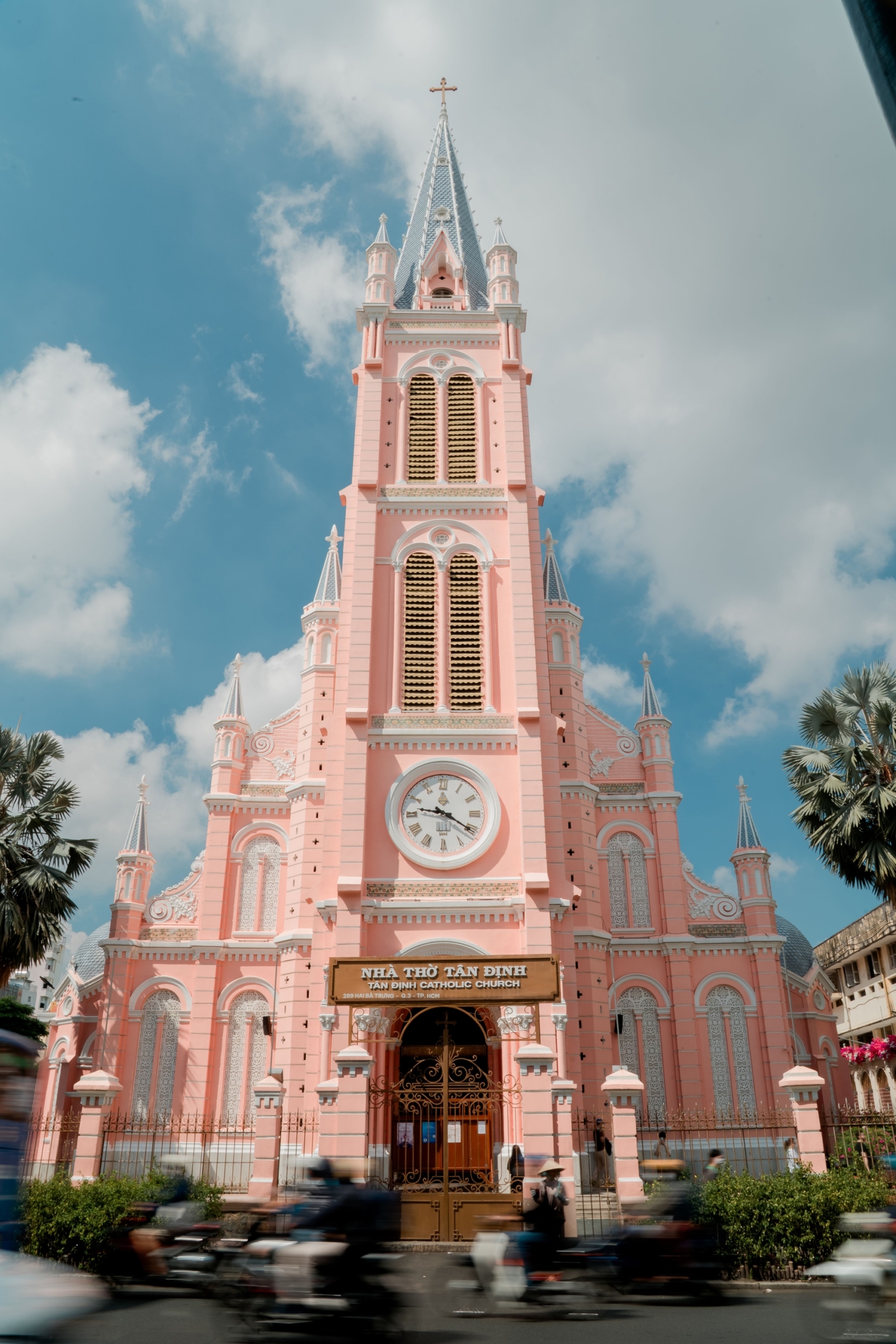
Across the street, the church of the same name takes the impact.
A Gothic monster repainted candy pink, hitting back blow for blow. Two visions of the sacred and the mercantile waging a colour war beneath a chorus of jeering horns.
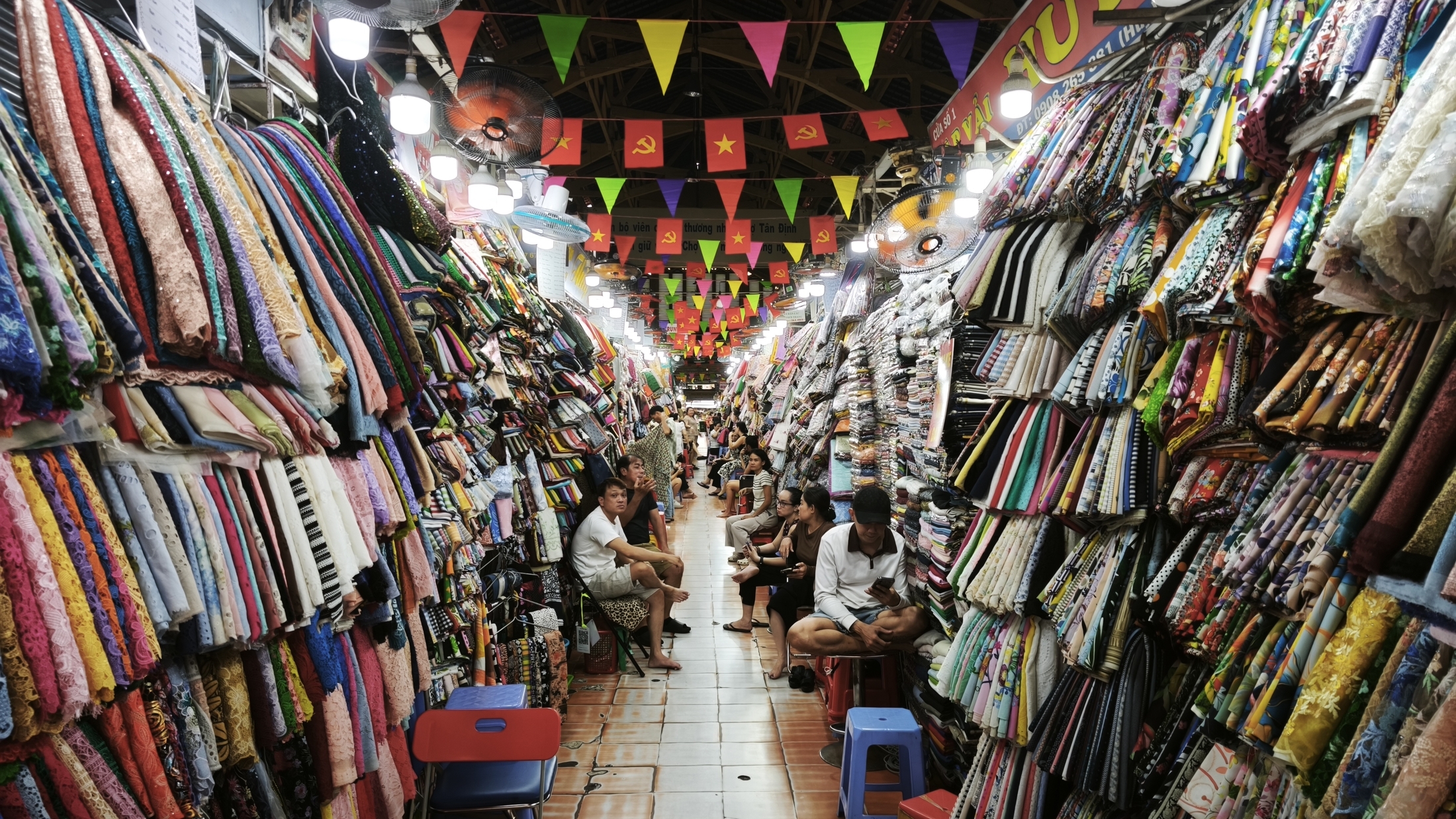
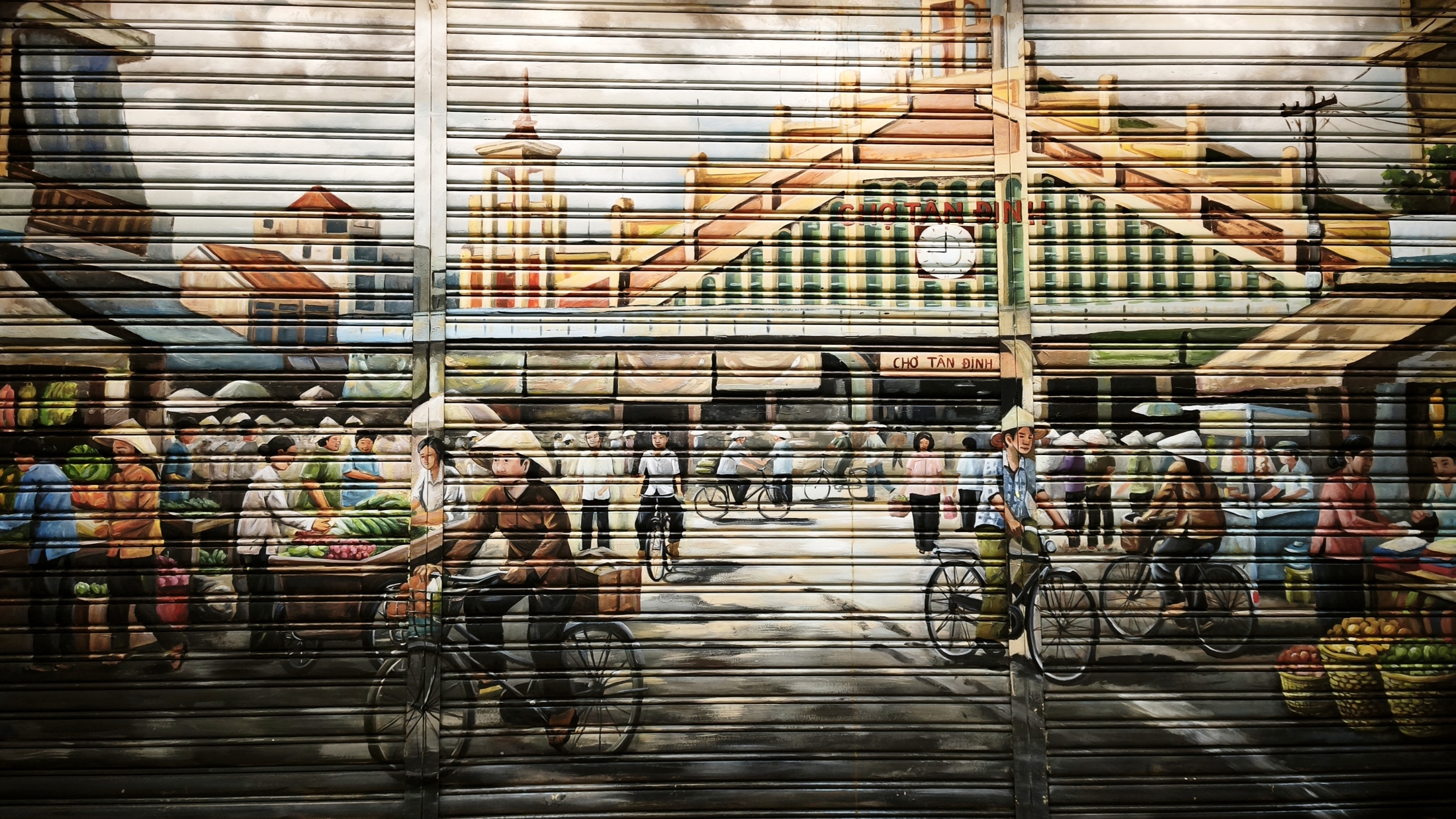
And when the fabrics are folded away and the market pulls down its shutters, Tan Dinh slips on the hoodie. Street art takes over the steel shutters.
But don’t panic. It’s still state-sanctioned graffiti.
Well-behaved. Almost too neatly pressed for an Art Deco façade that was playing the hooligan barely an hour earlier.
Thai Binh, the Offbeat
And in the shadow of this crossfire, Thai Binh slips in.
Despite its proximity to the backpacker quarter, it has never needed to dress up or sing loud to make itself heard.
No grand solo. No gilding. No need to toot its own horn.
The main façade is sober and utilitarian.
Horizontal lines, lattice screens to let the air through, geometry without frills.
Art Deco with nothing to prove.
Raw calibre.
Masonry that has chewed through the century, and real meat hanging from hooks.
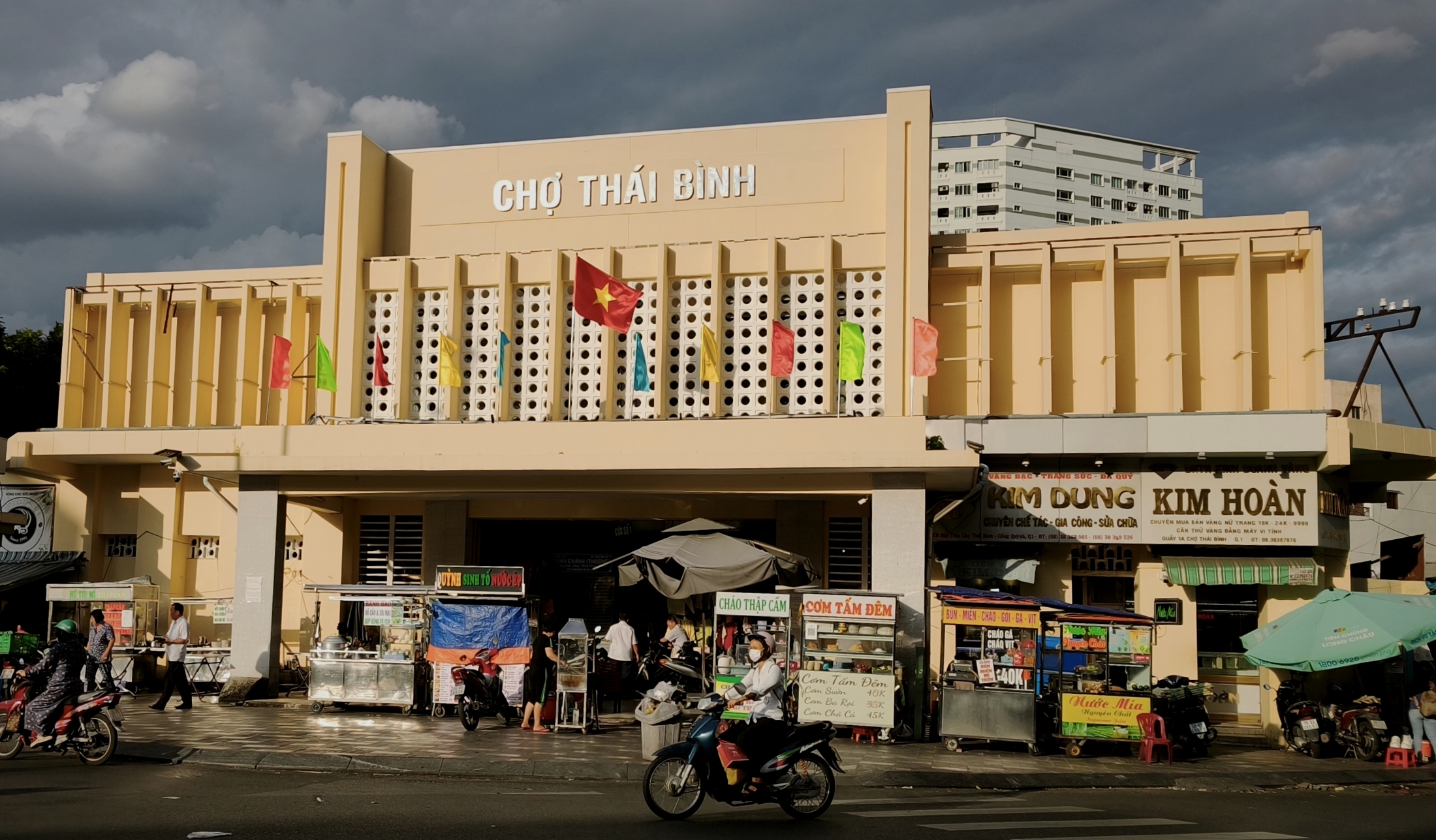


Here, the music of everyday life starts at dawn.
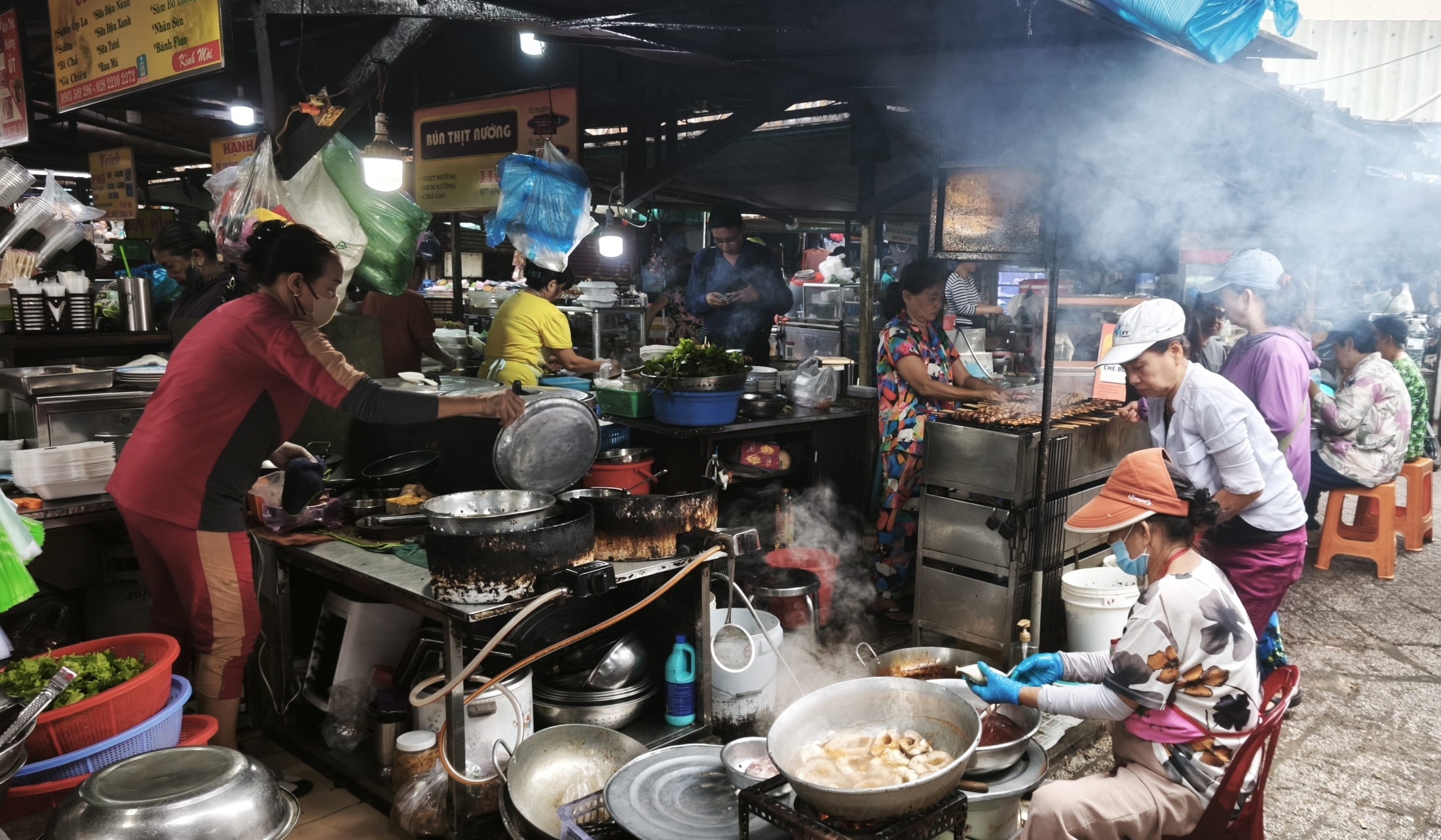
It drops you straight into Saigon’s breakfast culture.
Face-first into a bowl of noodle soup with pork meatballs and mushrooms, as a blind man barrels up behind you, a cane in one hand, hauling a wheeled speaker with the other, volume cranked to the max.
Distorted bass.
Reverb off the ceiling.
Breakfast kicks off with a fanfare.
The Neighbourhood Buskers
And then there are all those little neighbourhood markets, the buskers who work for whatever you drop in the hat.
A little street waltz to wrap your ginger, three words to sort out the change. And what’ll it be, madam? A boulevard ditty to go with your mackerel?


No market hall. No architecture flexing its muscles.
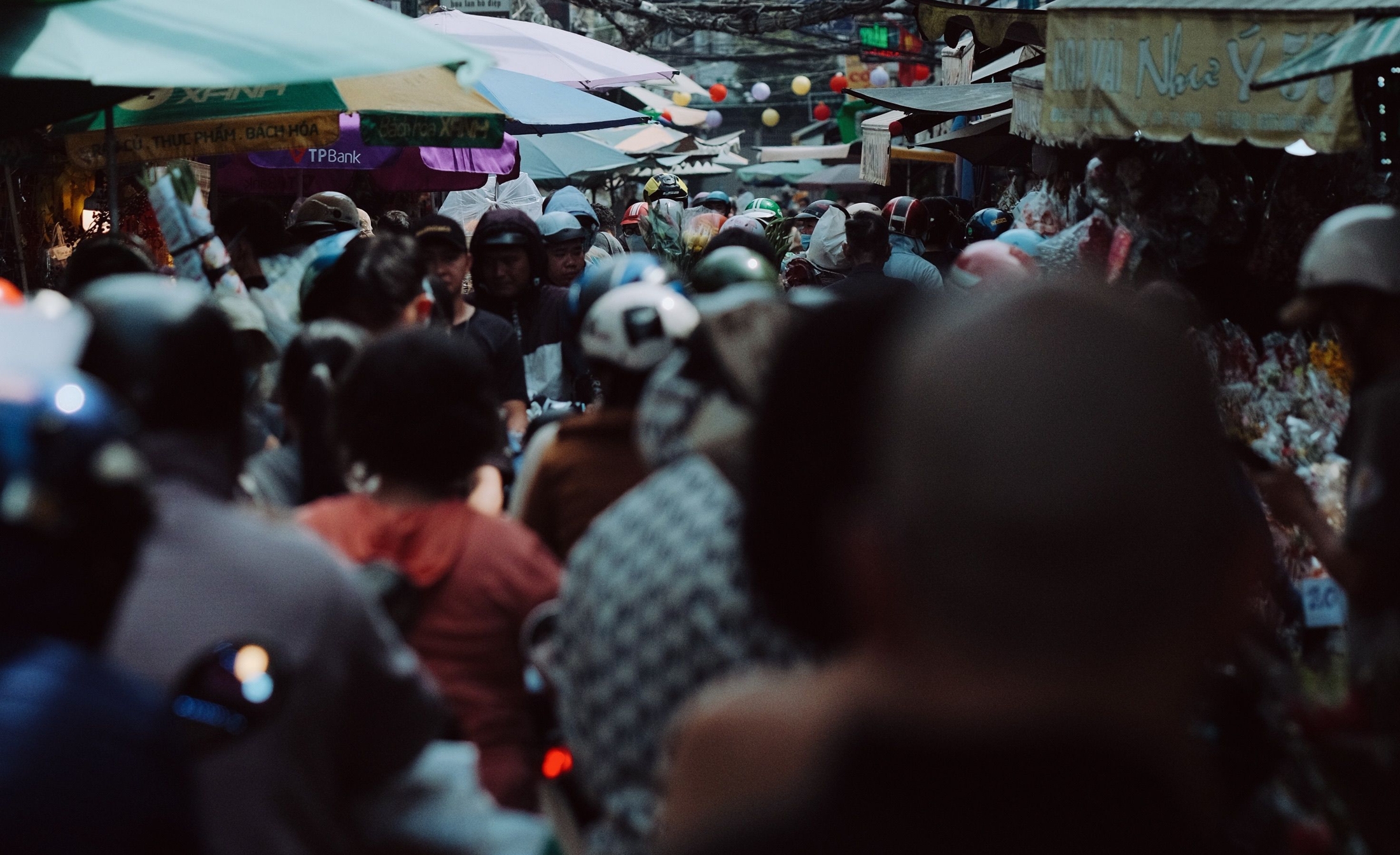
These markets, wedged into the tangle of alleyways, have atmosphere written all over them.
They’re not trying to seduce.
They just want to be loved for what they are.
The belly of the neighbourhood.
A market with guts—and guts on the menu.
Next door, the malls look like giant dentist’s waiting rooms.
Or purgatory.